
Do you feel tight after sitting all day? You are not alone. Most adults struggle with stiff legs. It is not just about age. Your daily habits play a big role too. But you can fix this gently. You do not need to be flexible to start. Small changes make a big difference quickly. We will share the best yoga poses for stiff hamstrings for beginners today. Get ready to feel loose and pain-free. In this Blog I will also share my personal experience along with real stories from my followers who dealt with the same stiffness.

Why Your Hamstrings Feel Tight Even If You Stretch
Your hamstrings act like rubber bands. Sitting shortens them for hours every day. When you finally stand up, they pull tight. This constant tension significantly limits your movement. Even daily stretching might not fix it immediately. You need to change how you sit, too.
Muscles adapt to the positions they maintain. If your knees remain bent, muscles shrink. This is called adaptive shortening in medicine. It makes it feel impossible to touch your toes. The best yoga poses for stiff hamstrings for beginners can reverse this. Consistency is key for lasting relief.
The Hidden Link Between Tight Legs and Lower Back Pain
Your hamstrings attach directly to your pelvis, acting like strong cables that constantly pull downward. When these muscles become too tight, they forcefully rotate your hips backward into a posterior tilt. This unnatural rotation flattens the lower spine, which destroys its ability to absorb shock effectively.
Your lower back muscles must work incredibly hard to counteract this constant downward-pulling tension. Many patients treat their spine for pain, but the root cause actually originates in their legs. Releasing tight hamstrings restores neutral pelvic alignment and immediately reduces significant pressure on your lumbar discs. Also, try these yoga poses to improve back flexibility for extra relief.
Essential Gear and Safety Tips Before You Start
Safety remains vital when treating spinal stiffness, even though you do not need expensive equipment. Rushing the process often leads to muscle strain, so you must always warm up first. A firm surface provides the necessary balance while preventing any accidental slips or falls today.
Here Are Some Safety Tips Before You Start:
- Use a non-slip mat for essential body stability.
- Keep yoga blocks nearby for extra physical support.
- Stop immediately if you feel any sharp pain.
- Breathe deeply to relax your tight back muscles.
- Wear loose clothing for a full range of motion.
Listen to your body’s signals constantly, because sharp pain is a serious warning sign. Respect your limits today so you can progress safely without causing any unnecessary tissue damage.
The 5 Best Poses for Instant Relief (Step-by-Step)
Practicing specific yoga poses targets deep muscle fibers to safely lengthen shortened hamstrings. These movements increase blood flow and immediately restore flexibility to tight legs.
- Modified Standing Forward Fold
- Pyramid Pose (Parsvottanasana)
- Head-to-Knee Pose (Janu Sirsasana)
- Reclined Hand-to-Big-Toe Pose
- Downward-Facing Dog (Adho Mukha Svanasana)
Consistent practice of these gentle shapes corrects poor posture and relieves chronic back pain. Start slowly to avoid strain as you rebuild your natural range of motion.
1. Modified Standing Forward Fold (Uttanasana)

This pose releases deep back tension. It helps lengthen tight hamstrings safely. You must protect your spine here. It works perfectly for beginners today.
How to do it:
- Stand tall with your feet hip-width apart and knees soft.
- Hinge forward from your hips to fold down slowly.
- Bend your knees until your chest touches your upper thighs.
- Let your head hang heavy to release neck tension.
- Hold opposite elbows and breathe deeply into your back.
This position allows gravity to gently decompress your vertebrae while safely stretching the entire posterior chain. You will feel immediate relief in your lower back without risking any serious spinal injury.
2. Pyramid Pose (Parsvottanasana)

This shape isolates each leg well. It fixes muscle imbalances very quickly. You build significant foot stability now. Hamstring belly stretches deeply without pain.
How to do it:
- Step one foot back three feet, keeping legs straight.
- Turn back toes out slightly to maintain steady balance.
- Square your hips forward towards the front of the room.
- Hinge over your front leg with a flat spine.
- Place your hands on blocks if the floor feels far away.
Engaging your quadriceps triggers a physiological reflex that allows your hamstrings to relax more effectively. This active engagement protects your knee joint while ensuring the stretch targets the muscle belly.
3. Head-to-Knee Pose (Janu Sirsasana)

This seated fold is very calming. It targets lower back tightness effectively. The floor offers safety from falling. It prevents unwanted injuries during practice.
How to do it:
- Sit on the floor with one leg extended straight.
- Place your foot sole firmly against the inner thigh.
- Turn your torso to face over the extended leg.
- Fold forward gently without rounding your spine too much.
- Hold your shin or foot comfortably while breathing slowly.
This asymmetrical forward fold helps isolate tightness on one side without straining your sensitive lower back. You can control the intensity easily by adjusting how far you reach forward today.
4. Reclined Hand-to-Big-Toe Pose (Supta Padangusthasana)
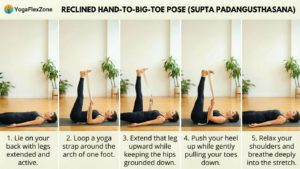
This is clinically the safest option. Your spine remains neutral on the floor. The mat supports your back completely. It prevents dangerous spinal rounding.
How to do it:
- Lie on your back with legs extended and active.
- Loop a yoga strap around the arch of one foot.
- Extend that leg upward while keeping the hips grounded down.
- Push your heel up while gently pulling your toes down.
- Relax your shoulders and breathe deeply into the stretch.
The floor provides essential feedback to ensure your spine remains perfectly neutral throughout the entire movement. This support eliminates common cheating mechanisms that often occur during standing hamstring stretches for beginners.
5. Downward-Facing Dog (Adho Mukha Svanasana)

This inversion strengthens arms and shoulders. Gravity lengthens legs and spine naturally. Circulation improves efficiently throughout your body. The spine decompresses effectively right now.
How to do it:
- Start on hands and knees with wrists under shoulders.
- Lift your hips up and back to form an ‘A’.
- Gently pedal your feet to warm up tight muscles.
- Press the chest toward the thighs while keeping the ears aligned with the arms.
- Keep the knees slightly bent to maintain a straight spine.
Pressing down through your knuckles engages the kinetic chain, taking pressure off your delicate wrists. Holding this shape builds upper-body endurance while lengthening the posterior chain for greater flexibility.
What to Do If You Are Too Stiff for These Poses
Some days, the floor feels too far away, which is completely normal today. You can easily use a sturdy chair to support your hands during folds. Walk your feet back slowly until your spine becomes flat like a table. This simple modification targets the hamstring belly effectively without straining your lower back.
The Best Yoga Poses For Stiff Hamstrings For Beginners often require helpful props. Using yoga blocks brings the floor closer to prevent dangerous spinal rounding now. There is absolutely no shame in modification because it represents smart training today. You prevent injury and ensure long-term progress by respecting your body’s limits.
How These Poses Changed My Life and My Readers’ Too
Sitting at my desk caused severe back pain that ruined my daily flexibility completely. I started practicing these specific movements daily to heal my stiff, painful leg muscles. The relief I felt in my lower back was honestly nothing short of miraculous. I realized that my issue was not spinal damage but simply extremely tight muscles.
Many of my loyal readers reported similar physical breakthroughs after trying this exact routine. They found the Best Yoga Poses For Stiff Hamstrings For Beginners highly effective and safe. Their chronic morning stiffness vanished completely because they remained consistent with their daily practice. Everyone agreed that gentle consistency worked much better than forcing deep stretches too early.
You can achieve this same freedom if you commit to gentle daily movement now. Consistency matters far more than intensity when retraining your deep connective tissues for health. We proved that patience delivers a pain-free life without the need for expensive medical interventions today. Trust the process because your body has an incredible natural ability to heal itself.
10 Minutes a Day for Better Flexibility
You do not need long classes because short sessions often work much better. Connective tissue requires consistent daily signals to change effectively, so ten minutes fits easily. Performing these movements before breakfast creates a sustainable habit that truly lasts forever.
Select three poses from this guide and hold each for about one minute. Focus on slow nasal breathing because it signals safety to your nervous system. The Best yoga poses for stiff hamstrings for beginners are actually simple and effective.
Make this a non-negotiable daily habit because your body adapts to the routine. Stiffness will return if you stop, so treat this routine like brushing teeth. Maintenance is always easier than fixing an injury, so consistency remains the key. You can also pair this with our 10 minute yoga routine for hip flexibility.
How Long Until I Can Touch My Toes?
Everyone asks this timeline question, but the answer depends heavily on your consistency. It also depends on your starting point because genetics plays a major role. Some people see changes in two weeks, while others might take a few months.
Pain reduction happens before full flexibility, so focus on how your body feels. Old injuries can slow down progress, so do not compare yourself to others. Celebrate small wins along the way because touching toes is just a milestone.
Better movement is the real goal, not simply reaching your toes today. Consistent practice gradually lengthens muscle fibers to restore your natural range of motion. Patience ensures long-term health benefits while protecting your lower back from unwanted strain.
FAQs
Can tight hamstrings cause back damage?
Answer: Tight hamstrings pull forcefully on your pelvis, which flattens the natural spinal curve. This misalignment creates constant strain that frequently leads to serious disc injuries eventually. You must release tension to prevent chronic lower back pain issues.
How often should I practice yoga?
Answer: You should aim for about ten minutes of gentle practice every single day. Short, frequent sessions work much better than occasional, long classes for flexibility. Consistent daily movement keeps your muscles long while maintaining spinal health.
Is sharp pain okay during stretching?
Answer: Sharp pain acts as a clear warning signal that indicates potential tissue injury. You must never push through sharp sensations, as they are not healthy muscle tension. Stop immediately if you feel any pinching or burning sensations.
Why are my legs stiff every morning?
Answer: Your body temperature drops significantly while muscles stay inactive for many hours overnight. This lack of movement causes fluids to thicken, which creates that temporary morning stiffness. Moving gently in the morning restores fresh blood flow immediately.
Can yoga help my office posture?
Answer: Yoga effectively reverses the physical damage caused by daily desk sitting. Specific poses restore your natural alignment by lengthening the tight hip flexor muscles. This correction reduces lower back pain when sitting.
Why is breathing important during stretching?
Answer: Deep breathing signals your nervous system that it is safe to relax muscles. Holding your breath actually increases tension, making stretching much harder and more painful. Exhaling deeply helps you move more deeply into poses safely.
Conclusion
Stiff hamstrings are a common byproduct of our modern, chair-bound lives today. You do not have to accept this stiffness as your permanent physical reality. Incorporating the Best yoga poses for stiff hamstrings for beginners restores your mobility. You are actively reclaiming your health rather than just stretching your tight muscles.
My experience practicing these movements daily for months has delivered truly incredible results. Consistency matters far more than depth, so simply show up for yourself today. Start with just 10 minutes a day, and your back will thank you tomorrow. Share this guide with friends who also suffer from tight, painful legs. For a full body transformation, start our 30-day yoga flexibility challenge today.
Additional Sources Used in This Guide
- Harvard Health – The importance of stretching
- Mayo Clinic – stretching guide
- Yoga Journal – Forward fold techniques
Medical Disclaimer: Here, I have shared my personal and Case study experience. Before starting, please make sure to consult a professional gym instructor or a doctor.
Reviewed & Compiled by: “YOGA FLEX ZONE” Editorial Team