
Do you wake up feeling like your spine is rusted shut? Sitting all day quietly locks up your lower back. You do not need expensive gear to fix this. Simple Yoga poses to improve back flexibility for beginners work fast. These moves are gentle, safe, and truly effective. We will guide you through every single step. You will also learn easy modifications for stiff joints. Stick with us to finally move freely again.

Why Does Your Back Feel Like a Brick Wall?
Your spine relies on consistent daily movement to stay properly lubricated. Prolonged sitting often reduces vital fluid exchange within your spinal discs. Tight hip muscles pull forcefully on your sensitive lower back area. This constant mechanical tension creates that uncomfortable, stiff, heavy sensation. Blood flow slows down, trapping inflammation within your stiff, tight tissues.
Your body often naturally produces stiffness to protect itself from injury. Chronic stress also triggers immediate physical tension in your sensitive muscles. Gentle yoga for spine relief helps counteract these common physical issues. Severe dehydration often makes your connective tissue feel sticky and restricted. Weak core muscles force your lower back to work much harder. Since tight hips are a major cause of back pain, try adding our 10 minute yoga routine for hip flexibility to your practice.
Before You Start Essential Gear and Safety Rules
Safety remains your top priority when treating chronic spinal stiffness effectively today. You do not need expensive equipment to start practicing these exercises safely. These simple back stretches for beginners require only a quiet, open space. Performing yoga poses to improve back flexibility for beginners requires immense patience.
- Always use a non-slip mat for essential stability.
- Keep yoga blocks nearby for extra spinal support.
- Stop immediately if you feel sharp, electric pain.
- Breathe deeply to fully relax tight back muscles.
- Wear loose clothing for a full range of motion.
Listen closely to the signals your body sends you during practice. Respect your current physical limits to progress safely without any injury. Consistency matters far more than intensity for your long-term spinal health.
The 6 Best Yoga Poses for Gentle Back Relief (Step-by-Step)

Cat-Cow Stretch (Warm-up)
Think of this movement as gently oiling a stiff, rusty chain. It mobilizes the spine while helping increase circulation to tight areas. You are not forcing any deep stretch during this warm-up phase. These simple back stretches for beginners reduce friction in your spine. It prepares your back safely for deeper movements later in the practice.
Start on your hands and knees with a comfortable, neutral spine. Inhale deeply to drop your belly while lifting your chin slightly. Exhale slowly to round your back upward like an angry cat. Tuck your chin firmly toward your chest to release neck tension. Repeat this fluid motion for six to ten slow, deep breaths.
Sphinx Pose (Gentle Spinal Extension)
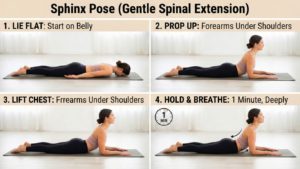
This pose acts as a gentle undo button for daily slouching. It supports healthy spinal extension without causing heavy or painful compression. You create a mild arch that opens up a tight chest. This gentle yoga for spine relief helps counter prolonged desk sitting. It encourages a neutral posture without overwhelming your lower back muscles.
Lie flat on your belly to start this passive extension pose. Prop yourself up gently on your forearms, with your elbows under your shoulders. Press your palms down into the mat to lift your chest. Keep your hips heavy while looking forward with a long neck. Hold for 1 minute while breathing deeply into your abdomen.
Cobra Pose (Progression)
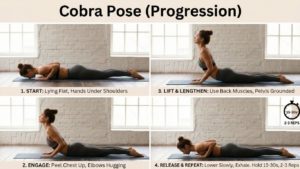
Cobra goes slightly deeper to build real strength in spinal muscles. It actively engages weak areas to help correct poor postural habits. Focus on lengthening your spine first rather than pushing for height. This movement strengthens your back muscles while stretching the front of your body. This creates a balance between flexibility and necessary muscular stability now.
Place your hands directly under your shoulders, with your elbows hugging your ribs. Press down to peel your chest up using your back muscles. Keep your pelvis grounded comfortably to protect your sensitive lower spine. Lower down slowly on your exhale to reset your spinal alignment. Hold for 15 to 30 seconds, and repeat 2 to 3 times.
Bridge Pose (Glute & Core Support)
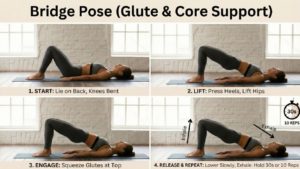
This move targets the glutes to provide essential support for the spine. A strong posterior chain helps stabilize your lower back muscles securely. It also opens up tight hip flexors caused by daily sitting. Practicing beginner yoga for lower back stability reduces strain over time. You create essential strength for your lumbar area through safe engagement.
Lie on your back with knees bent and feet hip-width apart. Press through your heels to lift your hips high toward the ceiling. Squeeze your glutes firmly at the top to stabilize the lift. Inhale to lift up and exhale to lower down slowly now. Repeat ten times or hold steady for thirty seconds for stability.

Child’s Pose (Rest & Release)
This pose provides essential rest and gentle spinal lengthening for relief. It stretches the lower back muscles safely without any active strain. You relieve pressure from the vertebrae to calm the nervous system. This gentle yoga for spine relief serves as a safe way to recover. It helps elongate the spine comfortably between more active yoga postures.
Start by kneeling comfortably on your mat with your big toes together. Sit your hips back onto your heels while reaching your arms forward. Rest your forehead gently on the floor to release neck tension. Place a bolster under your hips if your knees feel any strain. Hold for thirty to sixty seconds while breathing into the back ribs.
Supine Spinal Twist (Cool Down)
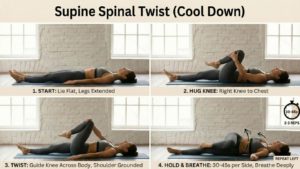
This twist neutralizes the spine safely after performing active backbends. It encourages gentle spinal rotation to release deep tension in the hips. The motion relaxes the outer hips without forcing the lumbar spine. Incorporating easy back exercises at home helps you relax. Your nervous system switches to rest mode through this passive movement.
Lie flat on your back with your legs comfortably extended on the floor. Hug your right knee in and guide it across your body. Keep your right shoulder grounded while turning your head only slightly. Keep your head neutral if your neck feels strained or tight. Hold for thirty to forty-five seconds before switching to the left.
Can’t Touch Your Toes? Simple Modifications for Stiff Bodies
You do not need extreme flexibility to start. Bone structure often limits the natural range of motion. Forcing a stretch can cause muscle tears or strains. Your goal is sensation, not a perfect shape. Respect your current limits with patience today. Modifications allow you to practice safely without pain.
- Place yoga blocks under hands for added height.
- Bend your knees deeply to protect your lower back.
- Use a strap to reach without rounding shoulders.
- Widen your foot stance for easier balance control.
- Reduce the range of motion to avoid pain.
Adjust the pose until you breathe freely. Never sacrifice your spinal alignment for depth. Modifications keep your joints safe from unnecessary stress. Safety matters more than depth.
What Beginners Commonly Notice With Consistent Practice
Many beginners report that mornings feel significantly easier with steady, consistent practice. Getting out of bed often feels much less stiff during the early morning. Simple movements like bending gradually become much more comfortable throughout your daily routine. Your back generally feels lighter and less guarded during regular daily activities. To wake up pain-free every day, start your morning with these easy morning yoga stretches for full body flexibility.
Internal healing happens naturally when you establish consistent, gentle movement patterns every week. Synovial fluid effectively lubricates stiff spinal joints, reducing friction between bones. Inflammation in tight tissues slowly decreases as blood flow to the area improves. Oxygen reaches tired back muscles more efficiently, supporting the tissue recovery process.
Several clinical studies suggest that yoga significantly reduces chronic discomfort over extended periods. (Source: Annals of Internal Medicine) notes that movement effectively improves long-term function. Gentle yoga for spine relief supports steady progress without causing unnecessary physical strain. Confidence in movement returns naturally as deep aches fade away with time.
3 Daily Habits That Reduce Your Flexibility
Everyday lifestyle choices often stiffen your muscles without any obvious warning. Sitting motionless for prolonged periods physically shortens your tight hip flexors. Proper hydration plays a massive role in maintaining total tissue elasticity. Dehydrated fascia can become sticky and restrict your natural range of motion.
- Sitting for long periods tightens the hip flexors significantly over time.
- Low hydration can make muscles feel stiff and less flexible daily.
- Poor phone posture strains the sensitive neck and upper spine areas.
Small lifestyle changes can lead to meaningful improvements in your overall spinal mobility. Gentle movement and stretching at home help counter these bad habits. Drink plenty of water daily to keep your connective tissues elastic. Building daily awareness acts as your first step toward lasting recovery.
5 Common Mistakes That Cause More Back Pain
Postural mistakes often cause more pain than sudden, acute physical injuries. You might think you are resting, but poor posture can cause strain. Improper sleeping positions can twist your spine throughout the entire night. Lifting heavy objects while keeping a rounded back remains very dangerous. Ignoring minor aches often leads to chronic spinal discomfort over time.
Here are 5 Common Mistakes:
- Slouching constantly while sitting at your office desk creates spinal tension.
- Lifting heavy objects with a rounded, curved spine is very unsafe.
- Sleeping on a mattress that lacks proper support hurts the back.
- Ignoring early warning signs of sharp back pain is dangerous.
- Wearing unsupportive shoes for long periods of walking causes pain.
Your daily movement patterns dictate your long-term spinal health. Correcting these harmful habits can help protect your lower back effectively. Simple beginner stretches can help prevent unnecessary physical strain and tension. Start building better postural habits today for lasting relief and comfort.
How Often Should Beginners Practice Yoga?
Consistency matters far more than intensity for absolute beginners in yoga today. You do not need hour-long sessions every single day of the week. Short, frequent bursts of gentle movement work much better for mobility. Aim for fifteen minutes of focused practice daily for better health. This keeps your connective tissues properly hydrated and completely mobile now.
Practicing three times a week builds essential physical momentum. It allows your muscles ample time to recover between active sessions. Overdoing it too early often leads to physical burnout or injury. Beginner-friendly yoga gently guides your body into safe movement patterns. Patience remains the vital key to lasting spinal health and wellness. If you want a structured plan to follow, join our 30-day yoga flexibility challenge to stay on track.
FAQs
Is it normal to feel pain while stretching my back?
Answer: It is crucial to distinguish between good stretch and bad pain. Mild tension indicates that the muscles are lengthening properly. Sharp, stabbing sensations signal injury risks immediately. Stop instantly if you feel anything sharp or electric.
How long should I hold each yoga pose?
Answer: Beginners should aim for thirty seconds to one minute per pose. This duration allows connective tissues to relax safely. Bouncing is dangerous; hold still and breathe deeply to let muscles release tension naturally.
What is the best time of day to practice?
Answer: You can practice whenever you feel stiff or tight. Mornings are excellent for relieving sleep-related stiffness quickly. Evenings help decompress the spine after a day of sitting. Choose a time you can stick to consistently.
Can yoga help with sciatica pain?
Answer: Gentle movement often significantly relieves pressure on the sciatic nerve. However, deep forward bends might aggravate specific conditions. Always move slowly and consult a specialist first. Avoid any movement that triggers shooting pain down your leg.
Do I really need yoga blocks or straps?
Answer: You do not strictly need them, but they help immensely. Blocks bring the floor closer to you. Straps help extend your reach without straining. Using them prevents poor form and protects your joints.
Am I too old to start improving flexibility?
Answer: You are never too old to start caring for your spine. Yoga benefits every single age group. Older adults often see rapid improvements in mobility. Just listen to your body and modify poses freely.
Conclusion
Your journey to a mobile spine begins right now. You do not have to accept stiffness as permanent. Small, daily efforts create massive long-term changes safely. Listen to your body and respect its current limits. Consistency is your most powerful tool for recovery. Do not rush or force any deep positions. Treat your spine with the extreme care it deserves.
Pain-free movement is absolutely achievable for everyone today. These specific Yoga poses to improve back flexibility for beginners work wonders. Treat your practice as daily medicine for your spine. You will feel lighter and move with more ease. Start your path to a healthier back right now.
Additional Sources Used in This Guide
Disclaimer: This content is for educational purposes only. It includes general guidance and real-world case experiences. Before starting, please make sure to consult a professional gym instructor or certified yoga instructor.
Reviewed by: “YOGA FLEX ZONE” Editorial Team