
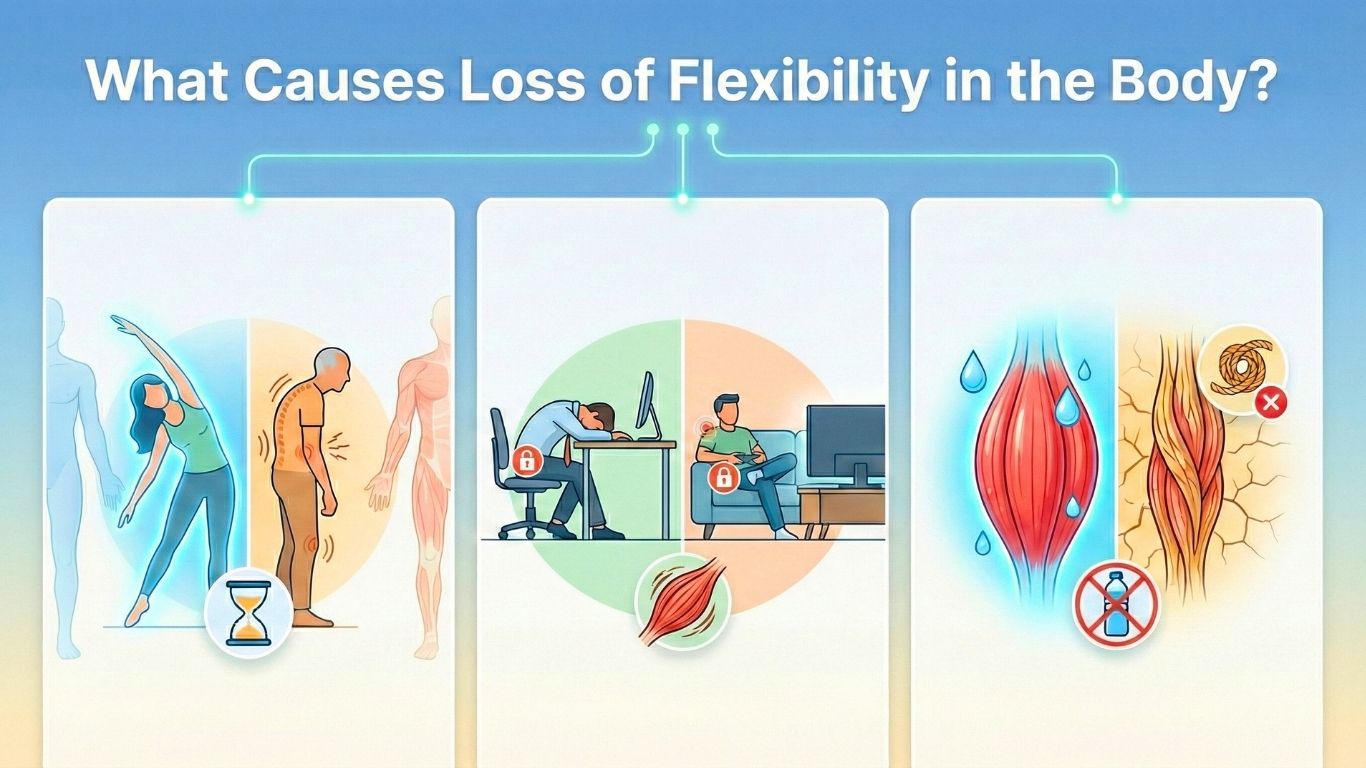
What Causes Loss of Flexibility in the Body?
Your body naturally loses tissue elasticity as you age each year. Sitting for long periods quietly locks your hips without you even noticing. Blood flow slows, restricting oxygen to your lower back muscles. This lack of daily movement causes connective tissues to become stiff and rigid.
You might not realize that hydration plays a massive role in movement. Dehydration makes your fascia sticky, like glue, limiting your range. Chronic stress also triggers immediate tension in your neck and shoulder areas. You must address these hidden causes to regain your full physical mobility.
The Science Behind Yoga and Improved Range of Motion
Yoga works by retraining your nervous system to tolerate deeper muscle elongation. When you hold a pose, you signal your brain to finally relax. This process allows your muscle fibers to lengthen effectively and safely over time. Consistent practice changes the structure of your fascia, leading to better flexibility results.
Think of synovial fluid as natural oil for your rusty body joints. Regular movement produces this fluid, helping your bones glide without pain. Yoga poses to improve range of motion target deep connective tissues effectively. This helps prevent injury by keeping your joints healthy and fully mobile.
Essential Gear and Safety Rules Before You Start
Safety remains your top priority when treating chronic spinal stiffness effectively today. You do not need expensive equipment to start practicing these exercises safely. Performing beginner yoga stretches for stiff muscles requires immense patience and care daily. Always listen to your body to prevent any unnecessary strain or pain.
Here are some simple safety guidelines before you start::
- Always use a non-slip mat for essential stability.
- Keep yoga blocks nearby for extra spinal support.
- Stop immediately if you feel sharp, electric pain.
- Breathe deeply to fully relax tight back muscles.
- Wear loose clothing for a full range of motion.
Listen closely to the signals your body sends you during practice. Respect your current physical limits to progress safely without injury. Consistency matters far more than intensity for your long-term spinal health.
The Best Yoga Poses to Increase Flexibility Safely
Unlock stiff joints instantly with this safe, beginner-friendly sequence designed for relief. Each of these poses targets a different muscle group to open your body.
- Standing Forward Fold
- Pigeon Pose
- Cobra Pose
- Seated Forward Fold
- Butterfly Pose
Regular practice of these specific movements quickly restores your natural mobility safely.
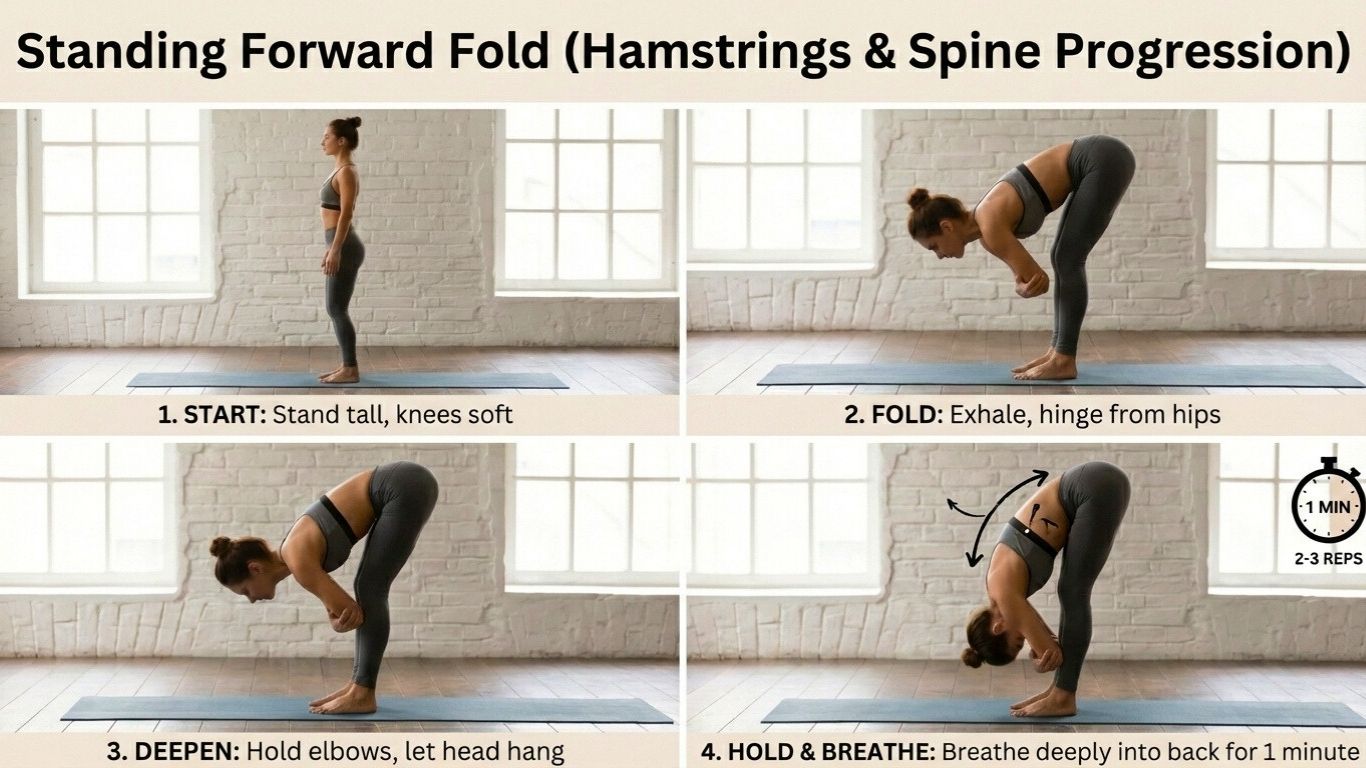
Standing Forward Fold (Hamstrings & Spine)
This pose gently lengthens tight hamstrings while decompressing the entire spine. It encourages fresh blood flow to your brain, boosting mental clarity. Gravity does the heavy lifting to help you release deep back tension.
Here’s how to do it step by step:
- Stand with feet hip-width apart and knees soft.
- Exhale slowly as you fold forward from your hips.
- Let your head hang heavy toward the floor.
- Hold opposite elbows to deepen the gentle stretch.
- Breathe deeply into your back for one minute.
You can bend your knees deeply if your hamstrings feel too tight. Never force your legs straight if it causes back pain.

Pigeon Pose (Hips & Glutes)
This powerful posture targets deep hip rotators to release stored emotional tension. If tight hips are your main struggle, check our dedicated hip flexibility guide for details.
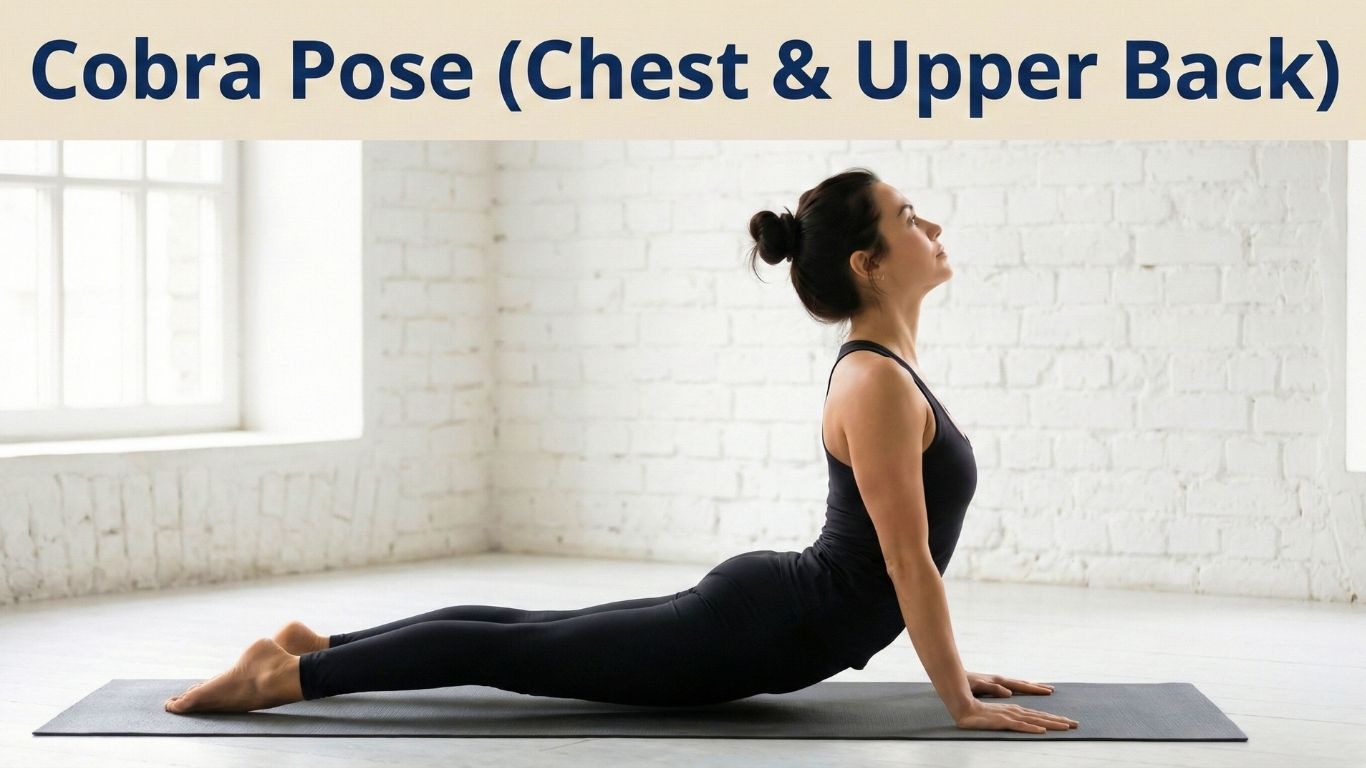
Cobra Pose (Chest & Upper Back)
This backbend strengthens the spine while effectively opening the chest and lungs. For a complete safety breakdown, please read our specific back flexibility guide.
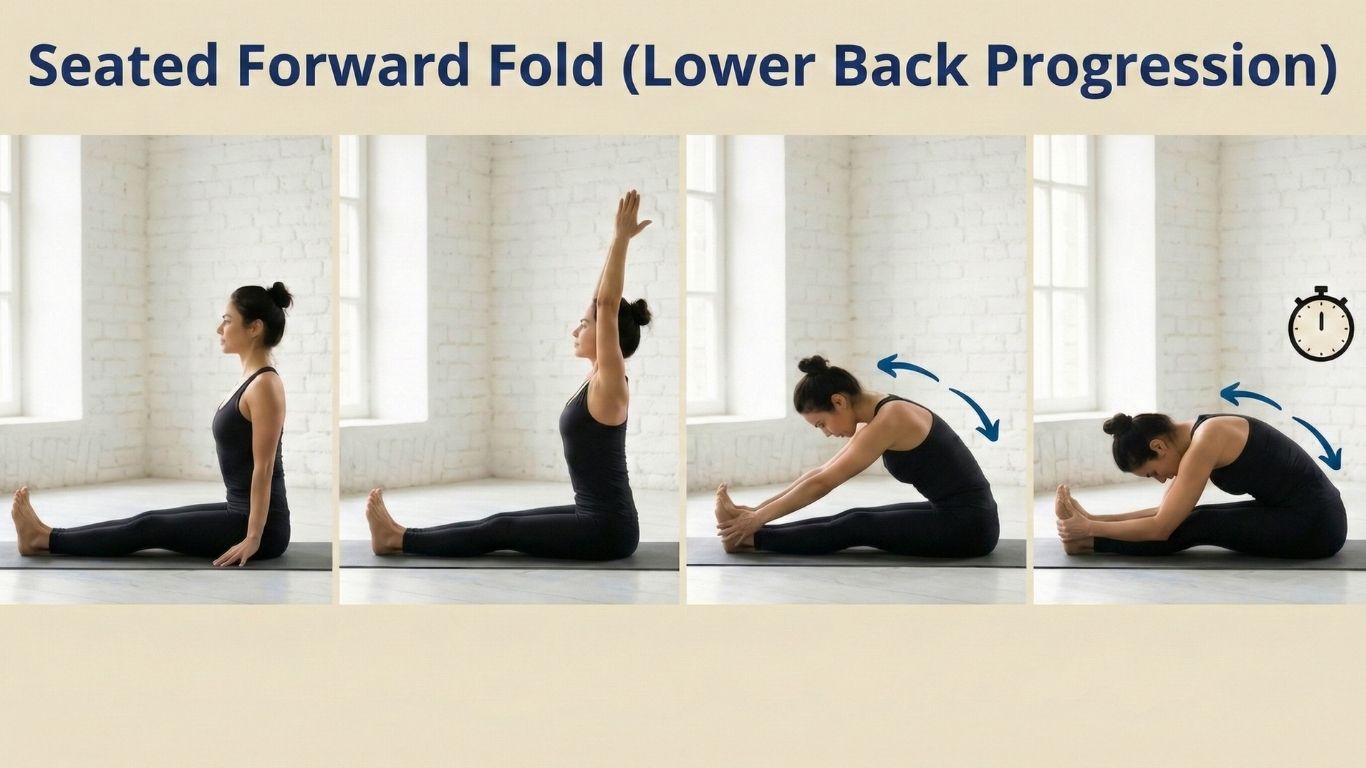
Seated Forward Fold (Lower Back)
This seated variation provides a safe environment to stretch the entire back. It calms the nervous system while lengthening the spine and tight hamstrings. You can easily control the intensity by adjusting how far you reach.
How to Perform Seated Forward Fold
- Sit on the floor with legs extended straight.
- Inhale to lengthen your spine toward the ceiling.
- Exhale and hinge forward from your hip joints.
- Reach for your shins, ankles, or feet.
- Relax your neck and breathe slowly and deeply.
Use a strap around your feet if you cannot reach them easily. Keep your spine long rather than rounding your back to reach forward.
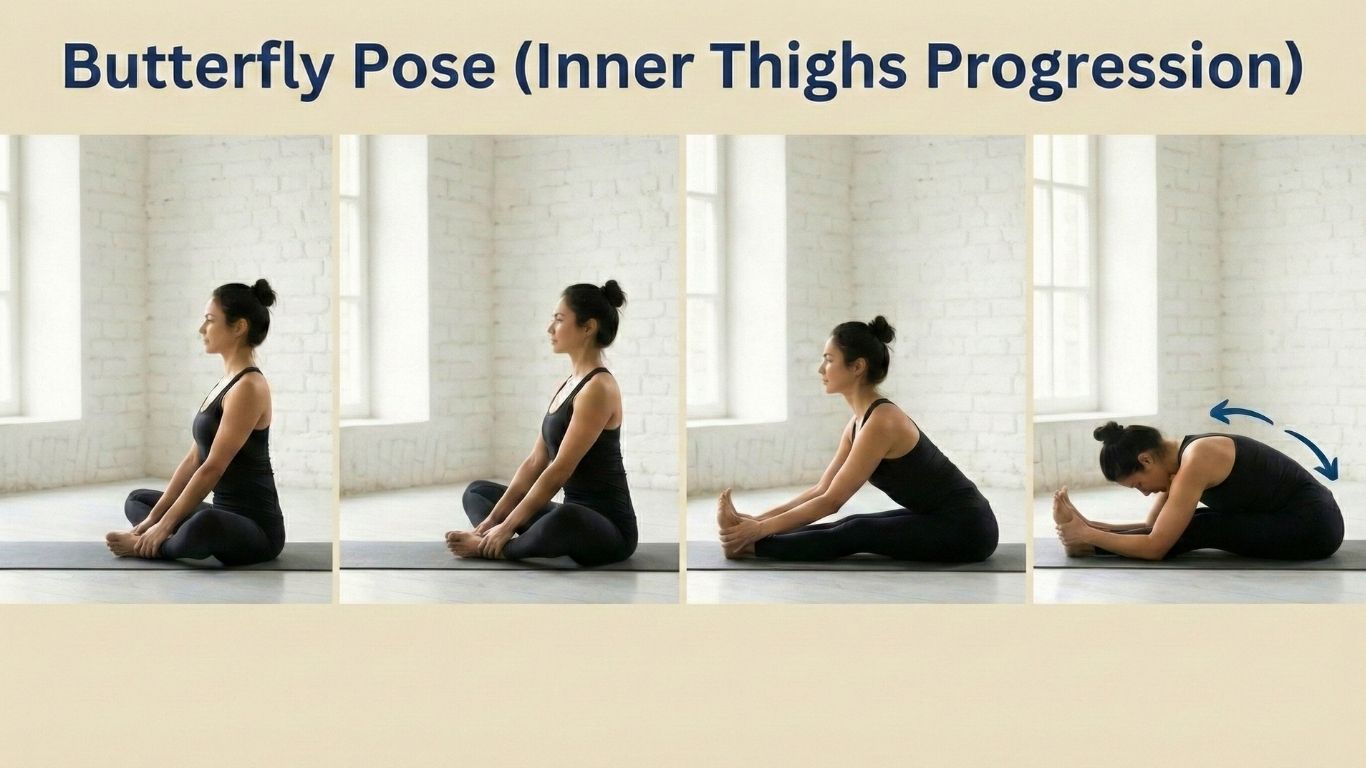
Butterfly Pose (Inner Thighs)
This pose effectively targets the adductor muscles found in your inner thighs. It helps open tight hips, significantly improving your overall seated posture. Gravity gently helps your knees lower without any need for forceful pushing.
Simple Steps for Butterfly Pose:
- Sit tall and bring the soles of your feet together.
- Let your knees fall open to the sides.
- Hold your feet and lengthen your spine upward.
- Hinge forward slightly to deepen the inner stretch.
- Breathe deeply and hold for one full minute.
Place blocks under your knees if the stretch feels too intense today. This modification protects your joints while still providing a very effective stretch.
Your Step-by-Step 30-Day Yoga Flexibility Challenge
You need a structured plan to see real results in one month. This schedule balances active work with necessary rest for optimal tissue recovery. Learning how to increase flexibility with yoga in 30 days requires consistency. Stick to the daily plan to safely improve your total body mobility. You will build momentum by practicing daily.
Week 1: Awakening the Muscles
During the first week, many beginners start realizing how little they actually move on a daily basis. This is when a daily yoga routine for flexibility begins to feel important rather than optional. Simple poses may feel harder than expected, especially in the hips, hamstrings, and lower back.
Some people notice light muscle soreness, while others feel a gentle release after each session. Both are completely normal. The biggest change most beginners report this week is improved body awareness and a growing habit of showing up on the mat each day.
Weeks 2–3: Deepening the Stretch
Around the second and third week, many people notice that daily movements feel easier. Bending down, sitting on the floor, or standing up feels less stiff than before. Morning tightness usually doesn’t last as long.
Some days the body feels very open, while on other days it feels tight again. This fluctuation is extremely common. Beginners often say that consistency matters more than how deep the stretch looks. The body adapts gradually, not overnight.
Week 4: Full Mobility & Flow
By week four, your practice starts to feel more natural and connected. Movements flow together smoothly, and poses that once felt uncomfortable now feel familiar. This is when a 30-day yoga flexibility plan really shows its value.
Many beginners say their body feels lighter, more mobile, and easier to move throughout the day. Flexibility continues improving, but the biggest reward is confidence—knowing your body can move well without strain or fear.
Hidden Lifestyle Habits That Kill Your Flexibility
Your daily habits outside the mat significantly impact your progress in flexibility. Sitting in one position for hours causes muscles to shorten and stiffen. You must take frequent breaks to stand and move around. Even sleeping in a curled position can tighten your hips overnight.
Water keeps your connective tissues elastic and ready to move freely. Dehydrated muscles are like dried jerky, making them prone to injury. High stress levels also cause your muscles to contract and stay tight. A 30-day yoga challenge for beginners effectively combats these negative lifestyle factors.
5 Common Stretching Mistakes That Lead to Injury
Many beginners unknowingly hurt themselves by pushing their bodies too hard, too quickly. Stretching should never feel painful or cause sharp sensations in your joints. Avoid these common errors to ensure your journey remains safe and effective. Always priorities proper form over the depth of your stretch today.
Here are 5 Common Stretching Mistakes That Lead to Injury:
- Bouncing while stretching tears your delicate muscle fibers.
- Holding your breath increases tension in tight muscles.
- Stretching cold muscles can lead to severe strain.
- Pushing past pain signals causes immediate tissue damage.
- Skipping rest days prevents proper tissue recovery.
Always listen to your body and back off if pain comes on suddenly. Gentle consistency yields far better results than aggressive force ever will today. Patience is your most important tool for safely gaining long-term flexibility.
Realistically: What Results Can You Expect in 30 Days?
Many beginners who follow a daily yoga routine for flexibility say the first changes feel small but encouraging. Mornings become easier, joints feel less stuck, and moving around the house doesn’t feel like a chore. Even five to ten minutes of gentle movement starts making the body feel more cooperative.
After a few weeks, people often notice that yoga poses to improve range of motion feel less intimidating. Stretches that once felt tight slowly become familiar. There’s no sudden breakthrough—just steady comfort. Many describe feeling looser during walks, while sitting, or after long hours at a desk.
By the end of 30 days, most people don’t talk about extreme flexibility. Instead, they talk about feeling better in their body. Movements feel smoother, posture feels more natural, and stiffness no longer controls the day the way it used to.
FAQs
Can I do this if I am very stiff?
Answer: Yes, this program is designed specifically for people with limited mobility. Start slowly with modifications and use props, such as blocks, for support. Beginner yoga stretches for stiff muscles are safe for everyone.
What is the best time of day to practice?
Answer: Mornings are great for reducing stiffness, while evenings help you relax. Choose a time that you can stick to consistently every day. Consistency matters more than the specific hour of the day.
Will it hurt to stretch my muscles daily?
Answer: You should feel mild tension, but never sharp or stabbing pain. Discomfort is normal, but pain indicates you are pushing too far. Back off immediately if you feel any sharp sensations.
How long should I practice every single day?
Answer: Aim for fifteen to twenty minutes of focused practice every day. This duration is sufficient to trigger changes in your connective tissues. Short, frequent sessions are better than long, sporadic ones.
Can I skip days if I am busy?
Answer: Try not to skip more than one day in a row. A 30-day yoga challenge for beginners relies on cumulative momentum. If you miss a day, just resume the next day.
What if I have an injury right now?
Answer: Consult your doctor before starting any new exercise program if you have injuries. Specific poses may need to be modified or avoided completely. Safety must always come before your desire for flexibility.
Do I need a teacher to learn this?
Answer: This guide provides clear instructions, but a teacher can offer corrections. Online videos are also helpful for visualizing proper alignment and form. Listen to your body as your primary teacher today.
Conclusion
Regaining your natural flexibility is a journey that requires patience and consistency. You do not need to be naturally flexible to start this program. Small daily efforts compound over time to create massive physical changes. Trust the process and listen to what your body tells you.
You have learned exactly how to increase flexibility with yoga in 30 days. Flexibility is not about forcing your body into perfect shapes. It is about moving daily and letting time do its work. Stay consistent, and your body will reward you with freedom.
Additional References & Trusted Sources
- Mayo Clinic – Stretching and Flexibility Basics
- Harvard Health – Yoga Benefits Beyond the Mat
- Johns Hopkins Medicine – 9 Benefits of Yoga
Disclaimer: This content is for educational purposes only and does not replace medical advice. Always consult a certified instructor or healthcare professional before starting any new yoga or exercise routine.
Reviewed & Compiled by: YOGA FLEX ZONE Editorial Team