
Starting yoga feels exciting, but small mistakes can quietly lead to pain. Many beginners rush into poses without understanding their body limits. This often puts pressure on the wrists, knees, and lower back. Minor mistakes can turn into lasting discomfort over time. Safe movement should always come before trying advanced poses. These Yoga Safety Tips for Beginners to Prevent Injury will help you practice with confidence. You will learn how to move correctly, avoid strain, and build strength slowly. A careful approach keeps your body safe and your progress steady.
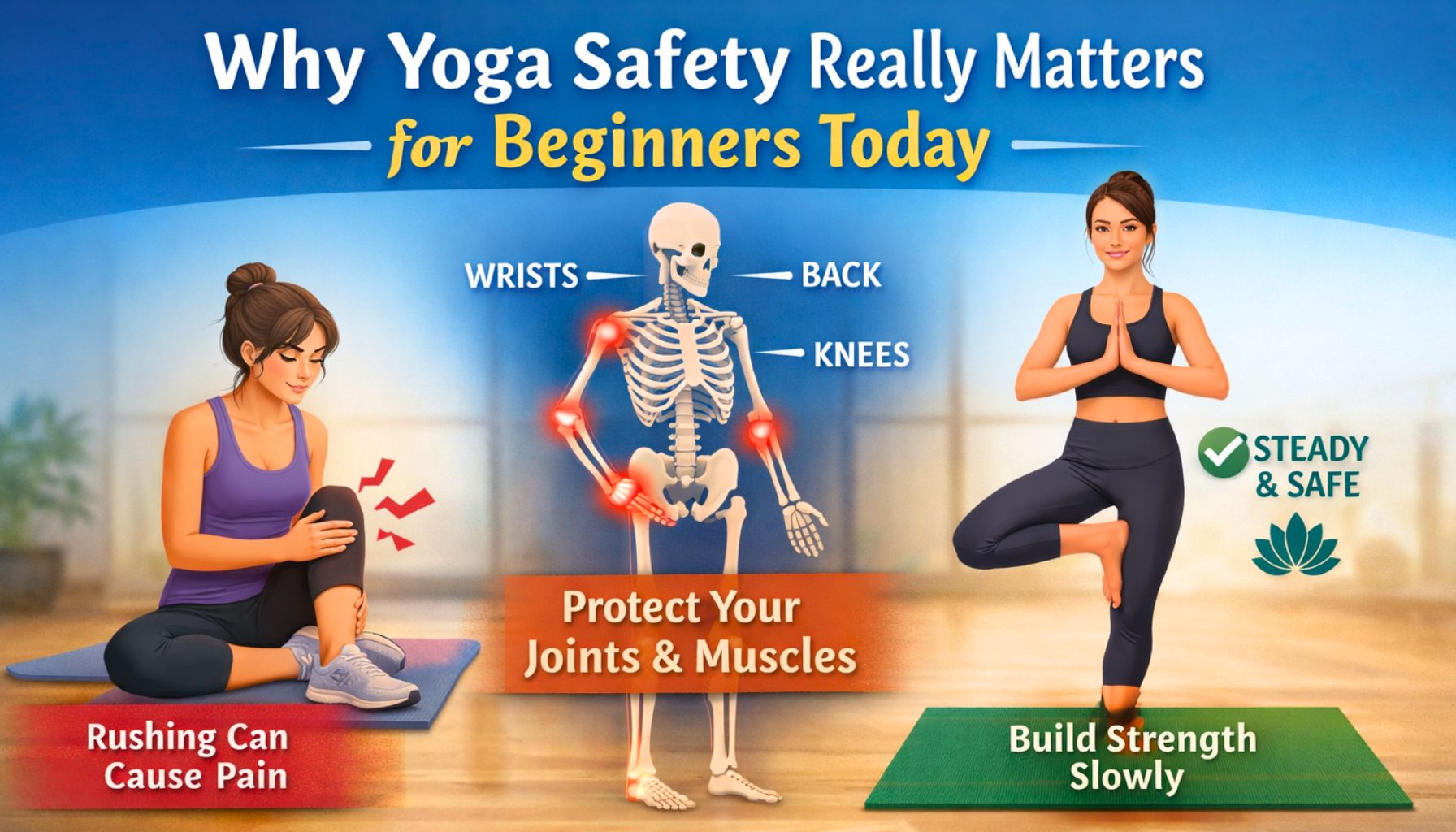
Why Yoga Safety Really Matters for Beginners Today
Starting yoga feels simple, but the body needs time to adjust. Many beginners move too fast without understanding their limits. This often leads to small strains that build into real pain. In many cases, beginners lose confidence after experiencing avoidable injuries, especially when early mistakes are not corrected. Following proper yoga safety practices helps you stay consistent. A safe start allows your body to gain strength without stress.
- Your joints are not ready for deep stretches on day one.
- Sudden pressure on wrists and knees can cause lasting pain.
- Poor posture slowly affects the spine and muscle balance.
- Ignoring discomfort can turn minor strain into serious injury.
- Safe practice builds control, not just flexibility.
A careful approach in the beginning protects your body for the long run. It allows you to progress with confidence instead of setbacks.
Beginner Yoga Safety Rules You Should Always Follow
Yoga may seem gentle at first, but the body needs guidance to stay safe. Many beginners focus only on poses and ignore small safety habits that matter more. This often leads to discomfort that could have been avoided with simple awareness.
Following basic beginner yoga safety rules helps your body adjust without pressure. A steady pace, controlled breathing, and proper alignment create a safe foundation. When these elements are in place, progress feels natural instead of forced.
Rushing the process usually leads to strain, especially in the early stages. A calm and careful approach allows the body to build strength gradually. This is what keeps your practice safe, consistent, and sustainable over time.
Start Slow and Always Listen to Your Body Signals
The body does not adapt instantly, especially in the early stages of yoga. Moving too quickly often creates unnecessary pressure on muscles and joints. A slower pace allows better control and reduces the risk of strain.
Simple habits like these can help you stay safe:
- Begin with simple movements before increasing intensity.
- Notice how your body feels during each pose.
- Avoid pushing through discomfort or sharp pain.
- Take short breaks if your body starts to feel tired.
Taking time to understand your body builds long-term stability. It keeps your progress steady without setbacks.
Properly Warm Up Before Every Yoga Session
Starting without a warm-up is one of the most common reasons for early discomfort. Muscles need gentle activation before deeper stretches or balance work. Many beginners skip this step because the poses look simple. This often leads to stiffness during practice.
A short and controlled warm-up helps improve blood flow and prepares the joints. Gentle stretches and slow movements allow the body to respond better. It also makes each pose feel more stable and controlled. This helps reduce unnecessary pressure on muscles.
Skipping this step can lead to stiffness and small strain over time. A few minutes of preparation can make each session feel smoother. It keeps your practice more comfortable and consistent.
How to Avoid Injury During Yoga Practice at Home
Practicing at home feels comfortable, but it also means you are responsible for your own pace and safety. Without proper guidance, small mistakes can go unnoticed and slowly lead to discomfort. Many beginners try to follow routines too quickly without understanding correct form. Learning how to avoid injury during yoga practice at home starts with awareness and control. A steady and careful approach helps the body adapt without unnecessary strain.
Don’t Push Beyond Your Physical Limits Too Fast
The body needs time to adjust, especially in the early stages of yoga. Trying to go too deep into a pose too quickly often puts stress on muscles and joints. Many beginners feel pressure to match advanced movements, which increases the risk of strain. A slower pace allows better control and stability during practice.
Simple reminders like these can help you stay within your limits:
- Move gradually instead of forcing deeper stretches.
- Pay attention to any discomfort during a pose.
- Stop if you feel sharp or unusual pain.
- Give your body enough time to recover between sessions.
Respecting your limits helps prevent unnecessary setbacks. It allows steady and safe progress over time.
Focus on Proper Breathing and Control Techniques
Breathing plays a key role in maintaining control during yoga practice. Many beginners hold their breath without realizing it, which creates tension in the body. Slow and steady breathing helps muscles stay relaxed and improves balance in each pose.
Simple techniques like these can help:
- Inhale slowly through your nose before starting a movement.
- Exhale gently as you move deeper into a pose.
- Keep your breathing steady instead of holding your breath.
- Match your breathing rhythm with each movement.
Controlled breathing keeps the body relaxed and focused. It makes your practice safer and more effective over time. Understanding common breathing mistakes beginners make in yoga can also improve posture control and movement stability during practice.
Safe Yoga Practices for Beginners to Follow Daily
Building a safe routine is more important than doing many poses in one session for beginners. Many beginners try to follow long workouts without understanding what their body can handle. A simple and steady approach works better over time. Following safe yoga practices for beginners helps reduce unnecessary pressure on joints and muscles. It also makes your daily practice feel more controlled and comfortable.
Consistency matters more than intensity, especially in the early stages. Short and focused sessions allow the body to adapt without stress. Paying attention to posture, breathing, and pace creates a strong foundation. Small habits practiced daily often lead to better results than occasional intense effort. This approach supports long-term progress without increasing the risk of injury.
You can build a safer routine by keeping these points in mind:
- Practice for a fixed time instead of pushing until you feel tired.
- Keep your movements slow and controlled throughout each pose.
- Maintain proper posture rather than focusing only on depth.
- Take short breaks when your body starts to feel strained.
- Stay consistent with simple routines instead of changing plans often.
A steady and mindful routine keeps your body protected as you improve. It allows you to build strength and flexibility without setbacks or discomfort.
Common Yoga Injuries and Prevention Tips for Beginners
Minor discomfort is common in the early stages of yoga, especially when the body is not used to certain movements. Many beginners experience strain in joints and muscles due to incorrect posture or rushing through poses. Understanding common yoga injuries and prevention tips helps reduce these risks. A careful and controlled approach makes the practice safer and more effective over time.
Paying attention to body signals plays an important role in avoiding injury. Small adjustments in posture and movement can prevent unnecessary pressure on sensitive areas. Regular breaks, proper warm-up, and steady breathing also support safer practice. These simple habits make a noticeable difference in how the body responds during yoga sessions.
Wrist and Shoulder Injuries During Yoga Practice
Wrist and shoulder discomfort is often seen in poses that require body weight support. Beginners may place too much pressure on these areas without proper alignment or strength. This can lead to strain, especially during repeated practice.
To reduce the risk, consider these simple steps:
- Distribute your weight evenly instead of pressing only on the wrists.
- Keep your shoulders stable and avoid collapsing into the joints.
- Use a soft support or adjust hand position if needed.
- Take breaks when you feel tension building up.
A balanced approach helps protect your joints from unnecessary strain. It allows you to build strength gradually and safely. If wrist pressure continues during support poses, read why do my wrists hurt during yoga to understand common causes and simple correction techniques.
Lower Back and Knee Injuries in Yoga
Lower back and knee discomfort often comes from improper alignment or forcing deeper stretches. Many beginners try to go beyond their current flexibility, which puts pressure on these areas. This can lead to stiffness or mild pain during or after practice.
Keeping movements controlled and within your comfort range helps reduce this risk. Proper posture, especially in standing and bending poses, supports joint safety. Paying attention to how your body responds during each movement makes the practice more controlled. Over time, this helps build strength without unnecessary strain.
Importance of Proper Alignment in Yoga Practice
Proper alignment keeps the body balanced and reduces unnecessary stress on joints. Many beginners focus on how deep a pose looks instead of how it feels. Small misalignments often go unnoticed but can lead to discomfort over time. Learning correct positioning helps distribute weight evenly across the body. This is a key part of safe yoga practices for beginners.
Alignment also improves control and stability in each movement. When the body is positioned correctly, muscles work more efficiently without extra strain. This makes poses easier to hold and reduces the risk of injury. Even simple adjustments can make a noticeable difference in comfort. Over time, better alignment supports steady and confident progress.
Keep these simple alignment cues in mind:
- Keep your spine neutral instead of forcing deep bends.
- Align your knees with your toes during standing poses.
- Engage your core to support balance and control.
- Avoid locking your joints during movements.
- Keep your shoulders relaxed and away from your ears.
- Distribute your body weight evenly in each pose.
Focusing on alignment builds a safer and more controlled practice. It helps your body improve gradually without unnecessary stress. This beginner yoga pose alignment guide explains how proper positioning supports safer movement and better balance during yoga practice.
Choosing the Right Yoga Equipment for Safety
The right equipment can make a noticeable difference in comfort and safety. Many beginners overlook this part and practice on unstable or slippery surfaces. This often leads to poor balance and unnecessary strain on joints. Choosing proper gear supports better control and reduces the risk of slipping during poses. It also helps maintain correct posture throughout the session.
A stable mat and basic support tools can improve your overall experience. Soft cushioning protects joints, especially during floor poses. At the same time, proper grip keeps your movements steady and controlled. These small details make daily practice safer and more comfortable.
Here is a simple guide to choosing the right equipment:
| Equipment | What to Look For | Why It Matters |
|---|---|---|
| Yoga Mat | Non-slip surface, medium thickness | Prevents slipping and protects joints |
| Yoga Block | Firm but lightweight material | Helps maintain proper alignment |
| Yoga Strap | Adjustable and durable | Supports flexibility without strain |
| Towel | Absorbent and non-slip | Keeps hands and feet dry during practice |
Using the right equipment reduces unnecessary pressure on the body. It helps you stay balanced, comfortable, and consistent in your practice.
Common Beginner Mistakes You Should Avoid for Safety
Many beginners make small mistakes without realizing how they affect the body over time. Rushing poses, ignoring posture, and skipping preparation can slowly create discomfort. These habits often seem harmless at first, but they increase the risk of strain. Understanding how to avoid injury during yoga practice starts with recognizing these patterns early. A careful and mindful approach keeps your routine safe and steady.
Common mistakes to watch out for:
- Moving too fast without proper control
- Holding your breath during difficult poses
- Ignoring early signs of discomfort
- Skipping warm-up before practice
- Trying advanced poses too soon
- Practicing on an unstable surface
Correcting these habits early makes a big difference. It allows your body to improve without unnecessary stress or setbacks. Many of these habits are part of the common yoga mistakes beginners must avoid for safer and more stable yoga practice.
Final Practical Tips to Stay Safe and Consistent
Staying consistent with yoga depends on how safe and comfortable your routine feels. Many beginners lose motivation when they experience avoidable discomfort. A balanced approach helps maintain both safety and progress. Following Yoga Safety Tips for Beginners to Prevent Injury supports long-term consistency. It allows your body to adapt without unnecessary pressure or strain.
Keep these simple habits in mind as you continue your practice: move at your own pace, stay aware of your body signals, focus on controlled breathing, take rest when needed, and keep your routine simple and steady.
Consistency comes from feeling safe, not from pushing limits too quickly. A calm and mindful routine helps you stay committed without setbacks.
FAQ
How can beginners avoid injury during yoga practice?
Answer: Beginners can avoid injury by moving slowly, maintaining proper form, and listening to their body. Many people try to follow routines too quickly and lose control of alignment. Keeping movements simple and steady helps reduce strain on joints. Following basic yoga safety tips makes practice more controlled and comfortable. Slowing down and maintaining proper form usually prevents this issue and keeps your practice safe.
Is it normal to feel pain after starting yoga?
Answer: Mild soreness is normal in the beginning, but sharp pain is not. The body often needs time to adjust to new movements and stretches. Light stiffness usually fades within a short time. However, sudden or intense pain should not be ignored. If the discomfort continues, consider professional advice to stay safe.
How long should a beginner practice yoga each day?
Answer: Beginners can start with 15 to 20 minutes of daily yoga practice. Short sessions are easier to maintain and feel less overwhelming. Many beginners find consistency more helpful than longer sessions. A steady beginner yoga routine allows the body to adapt gradually. Over time, duration can increase without pressure.
What is the most common yoga mistake beginners make?
Answer: The most common mistake is trying to go too deep into poses too quickly. Many beginners focus on appearance instead of control. This often leads to loss of balance or minor strain. It is a pattern that appears frequently in early practice. Focusing on safe yoga practice helps correct this and improves stability.
Do I need special equipment to practice yoga safely at home?
Answer: Basic equipment like a non-slip mat is enough for safe practice at home. A stable surface helps maintain balance during movements. Some beginners also use blocks for extra support and alignment. Without proper grip, poses can feel unstable. Keeping your setup simple often works better than using too many tools.
Should beginners do yoga every day?
Answer: Beginners can practice yoga daily if the routine stays light and controlled. Many people feel motivated at first and try to do too much. This can lead to fatigue or early discomfort. A balanced beginner yoga routine with rest when needed works better long term. Consistency matters more than intensity.
What should I do if I feel discomfort during a yoga pose?
Answer: If you feel discomfort, pause and adjust your position instead of pushing through pain. Many beginners ignore early signals from the body. This often leads to unnecessary strain. Taking a short break can help the body recover. If the discomfort continues, consider professional advice for safety.
Conclusion
Yoga becomes truly effective when it feels safe and controlled from the beginning. Many beginners focus on progress and overlook the small habits that protect the body. A steady approach with proper form, breathing, and awareness creates a strong foundation. This is where simple yoga safety tips make a real difference in daily practice.
Building a safe routine takes patience, but it helps avoid unnecessary discomfort over time. Consistency improves when the body feels supported instead of strained. Small adjustments in posture and pace often lead to better long-term results. This is how a safe yoga practice becomes more sustainable and effective.
Staying mindful of your limits keeps your progress steady and reliable. It allows you to build strength and flexibility without setbacks. If discomfort continues, consider professional advice to stay on the safe side. Consulting a qualified doctor or certified yoga instructor can help you practice more safely and with better confidence.
Start with a simple and safe beginner yoga routine today, and focus on steady progress rather than quick results.
Trusted Sources Referenced in This Article
- Harvard Health – Why Stretching Matters for Your Body
- Mayo Clinic – Safe Stretching Techniques and Guidelines
Note: This content is created for educational and informational purposes only.
It combines practical insights with general health guidance to help beginners practice more safely.
Before beginning any new routine, it is advisable to consult a qualified fitness professional or certified yoga instructor.
Reviewed by: Yoga Flex Zone Content Team