
Most beginners do not realize they are doing poses incorrectly until discomfort starts. Small alignment mistakes can slowly create pressure on joints and muscles without immediate pain. Over time, this affects balance, control, and confidence during practice. This beginner yoga pose alignment guide helps you understand how your body should move in each pose. It focuses on control, positioning, and awareness rather than depth. When alignment improves, movements feel more stable and less forced. This reduces strain and makes it easier to stay consistent.
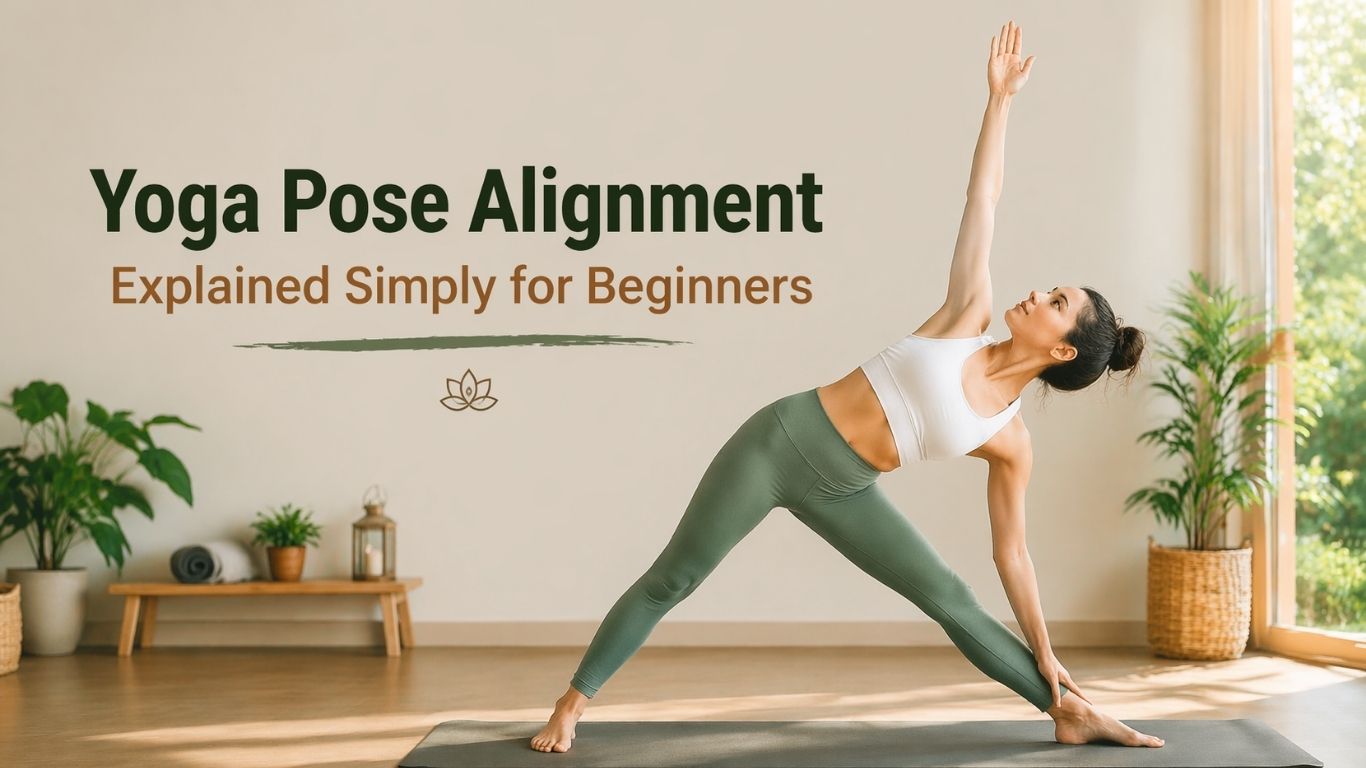
Yoga Pose Alignment Explained Simply for Beginners
A beginner yoga pose alignment guide is about positioning your body correctly so each movement feels balanced and controlled. Instead of forcing depth, it teaches you how to maintain stability through proper posture and awareness.
When alignment is correct, your joints stay protected and your muscles work more efficiently. This makes your practice safer and helps build strength and flexibility gradually without unnecessary strain.
What Is Proper Yoga Alignment for Beginners
Proper yoga alignment for beginners means keeping your body stable and properly supported during each pose. It focuses on maintaining balance, stability, and correct form rather than pushing beyond your limits.
Many beginners try to go deeper into poses without understanding alignment. This often leads to imbalance and unnecessary strain on the body. A more controlled approach helps reduce pressure and improves overall posture and movement quality.
Key points to understand alignment better:
- Keep your spine neutral instead of forcing deep bends.
- Align your joints naturally without locking them.
- Distribute your weight evenly in each pose.
- Move with steady control and stay aware of your body position.
When alignment becomes a habit, your practice feels smoother and more stable. It allows your body to improve safely without added stress.
Why Proper Yoga Alignment Matters for Safety
Proper alignment plays a key role in keeping your body safe during yoga practice. When your posture is off, even simple poses can place extra stress on joints and muscles. This often leads to discomfort that builds up over time. This beginner yoga pose alignment guide explains why proper positioning is essential for safety. It also supports your body staying balanced and properly positioned during movement.
Many beginners try to go deeper into poses without understanding how their body should be positioned. This usually increases pressure on sensitive areas like the lower back, knees, and shoulders. A better approach is to maintain correct form and allow the body to adjust gradually. This minimizes joint pressure and improves overall posture and movement quality.
Simple reasons why alignment matters:
- Keep your joints properly supported in each movement.
- Reduce unnecessary pressure on muscles and ligaments.
- Improve body control and stability in every pose.
- Support better positioning throughout practice.
- Build a safer and more consistent routine.
Paying attention to alignment from the beginning creates a stronger foundation. It allows your practice to stay safe, controlled, and effective over time. This is a key part of safe and effective yoga practice. Following proper yoga safety tips for beginners to prevent injury can also improve posture control and reduce unnecessary joint strain during practice.
How to Align Your Body in Yoga Poses Correctly
Understanding how to align your body correctly in yoga poses is essential for maintaining balance and preventing unnecessary pressure. Many beginners focus on copying poses instead of understanding how their body should be positioned. This often creates imbalance and uneven load on joints. A better approach is to move with control and adjust your posture step by step. This allows better stability and reduces the risk of strain during practice.
Proper alignment is not about perfection but about keeping your body supported in every pose. Small adjustments in posture can make movements feel more stable and comfortable. Over time, this improves body control and coordination. It also allows your body to respond better without forcing any position.
Head and Neck Position in Basic Yoga Poses
The position of your head and neck affects your overall balance in a pose. Many beginners unknowingly tilt or strain their neck, which creates tension. Keeping the head aligned with the spine improves control and reduces pressure.
Simple cues to follow:
- Keep your neck in line with your spine.
- Avoid looking too far up or down.
- Relax your shoulders and neck muscles.
A relaxed and aligned head position keeps your body balanced and steady. It also reduces unnecessary tension during practice.
Spine and Core Alignment Basics
The spine plays a central role in maintaining balance and posture during yoga. Many beginners either over-arch or round their back without noticing it. Keeping the spine in a neutral position reduces strain and improves overall stability. Engaging the core lightly supports the spine and allows better control in each movement. This also helps prevent long-term joint stress patterns that can develop from poor posture. Over time, it builds strength and makes poses feel more stable and controlled.
Steady breathing also supports posture control. Read common breathing mistakes beginners make in yoga to improve movement stability and coordination during practice.
Hand and Foot Placement for Stability
Proper hand and foot placement distributes weight evenly across the body. Many beginners place uneven pressure, which affects balance and control. Small adjustments in positioning can make a noticeable difference in stability.
Quick alignment check:
- Keep your hands firm and evenly pressed into the ground.
- Spread your fingers or toes for better balance.
- Avoid placing all weight on one side.
- Adjust your position if you feel unstable.
Balanced placement improves control and reduces unnecessary pressure. It allows your practice to feel more stable and secure over time. If support poses feel uncomfortable, explore why do my wrists hurt during yoga to understand proper pressure distribution and wrist support techniques.
Step-by-Step Beginner Yoga Pose Alignment Guide
Following a step-by-step approach makes alignment easier to understand for beginners. Most beginners tend to move into poses without checking how their body is positioned. This often creates imbalance and uneven pressure on joints. A more structured method improves control and reduces common alignment mistakes.
Starting with simple cues and adjusting one part of the body at a time makes the process easier. In early practice, small corrections often create noticeable improvement in balance and stability. Proper alignment also helps prevent long-term stress patterns caused by repeated imbalance. Over time, this builds a safer and more controlled routine.
🎥 Watch Beginner Yoga Alignment Video
Alignment Tips for Sitting and Floor Poses
Sitting and floor poses require proper support to avoid strain on the lower back and hips. In early practice, it is common to round the back or sit unevenly, which creates discomfort over time. Keeping the body supported helps maintain correct posture.
Quick alignment check:
- Sit with your spine straight and avoid slouching.
- Keep your hips evenly placed on the ground.
- Support your lower back by engaging your core slightly.
- Adjust your position if you feel pressure or imbalance.
When posture is properly supported, sitting poses feel more comfortable and stable. This reduces unnecessary pressure and improves overall control.
Yoga Posture Correction Tips for Beginners
Correcting posture early plays a crucial role in how the body responds to yoga practice. Most beginners focus on completing poses rather than maintaining correct form. This often leads to small alignment issues that build into discomfort over time. A better approach is to make small adjustments and stay aware of your body position during each movement.
In early practice, it is common to repeat the same alignment mistakes without noticing them. Simple corrections can quickly improve balance and control. Over time, this supports better positioning and reduces unnecessary pressure on joints and muscles.
Simple posture correction tips to follow:
- Keep your spine neutral instead of forcing deep bends.
- Check alignment in a mirror or record your form.
- Engage the core slightly to support positioning.
- Avoid locking joints during any pose.
- Take short pauses to reset your body position when needed.
Small corrections done consistently can improve overall form. This improves movement efficiency and reduces the risk of long-term strain.
Common Yoga Alignment Mistakes Beginners Make
Recognizing errors early is an important part of improving alignment in yoga. Most beginners focus on completing poses instead of maintaining correct form. This often leads to small alignment issues that create uneven pressure on joints and muscles. Over time, these patterns can affect balance and overall control. A more mindful approach makes it easier to correct these issues.
In early practice, it is common to repeat the same alignment problems without noticing them. Small habits like rushing movements or ignoring body position often lead to discomfort. Identifying these patterns improves technique and supports better positioning. Repeating these habits over time can lead to long-term joint stress if not corrected early.
Common alignment issues to avoid:
- Rounding or over-arching the spine during poses.
- Placing uneven weight on one side of the body.
- Locking joints instead of keeping them slightly active.
- Ignoring core engagement during movement.
- Moving too quickly without proper control.
Avoiding these issues improves overall stability and control. This reduces unnecessary pressure and enhances overall movement efficiency.
How to Fix Common Yoga Alignment Issues Step by Step
Fixing alignment issues becomes easier when you follow a structured approach instead of guessing corrections. Most beginners try to adjust everything at once, which often creates confusion and inconsistent positioning. A step-by-step method allows you to focus on one area at a time and improve gradually.
In early practice, it is common to overlook small details like joint positioning or weight distribution. Correcting these step by step improves overall control and reduces uneven pressure on the body.
Follow these steps to fix alignment issues:
- Start by checking your base position (feet or sitting posture).
- Adjust your spine to a neutral and supported position.
- Align your joints naturally without forcing the movement.
- Engage your core lightly to stabilize the posture.
- Slow down your movement and observe each adjustment.
A gradual correction process makes positioning easier to maintain. It improves control and reduces the risk of repeating the same issues over time.
Simple Daily Tips to Improve Your Yoga Alignment and Form
Improving alignment does not always require complex techniques. It often depends on small habits practiced consistently. Most beginners tend to focus only on completing poses, which leads to ignoring subtle alignment details. In early practice, it is common to notice that even small adjustments can make movements feel more stable and controlled. Paying attention to one point at a time allows better focus without feeling overwhelmed.
In typical beginner routines, consistent and mindful practice often leads to gradual improvement in balance and coordination. Over time, the body starts to respond more naturally when movements are controlled and properly positioned. This improves overall form and enhances movement efficiency while reducing unnecessary pressure during practice.
FAQ
What is a beginner yoga pose alignment guide?
A beginner yoga pose alignment guide shows how to position your body correctly in each pose to improve balance, maintain control, and reduce strain during practice.
Why is proper yoga alignment important?
Proper alignment supports safe movement and reduces pressure on joints. It also improves control and helps prevent discomfort during practice.
How can I improve my alignment in yoga poses?
You can improve alignment by moving slowly, checking your positioning, and making small adjustments. In early practice, focusing on one point at a time improves control. These steps are part of any beginner yoga pose alignment guide focused on safe and effective practice.
What are the most common yoga alignment mistakes?
Common issues include rounding the spine, uneven weight distribution, and locking joints. In early practice, rushing movements often leads to imbalance and discomfort.
How do I know if my yoga posture is correct?
You can check your form by using a mirror or recording your movements. Proper positioning usually feels stable and controlled rather than forced.
Can poor alignment cause injury in yoga?
Yes, poor alignment can create joint stress and muscle strain over time. For new practitioners, ignoring early discomfort may increase the risk of injury.
How long does it take to improve yoga alignment?
Improving alignment depends on consistency and awareness during practice. In early practice, small improvements often appear within a few sessions.
Conclusion
A clear understanding of alignment can make yoga practice safer and more effective from the beginning. Many issues in early practice come from small positioning errors that go unnoticed over time. Following a structured approach improves control, balance, and overall movement quality.
This beginner yoga pose alignment guide highlights the importance of correct body positioning and steady progress. Small adjustments made consistently can lead to noticeable improvement without adding unnecessary pressure. Over time, this builds better form and a more stable practice.
If discomfort continues, consider guidance from a qualified instructor or health professional. Focusing on safe movement and correct form will lead to better long-term results.
References
This article is based on general yoga safety principles and supported by trusted fitness and health resources focused on posture, alignment, and injury prevention.
- Yoga Journal – Beginner Yoga Practice and Alignment Basics
- Verywell Fit – Yoga for Beginners Guide and Proper Form Tips
- Spine-Health – Yoga, Posture, and Back Safety Guidance
Disclaimer: This content is for educational purposes only and does not replace professional medical advice. Consult a qualified healthcare provider for persistent or severe symptoms.
Reviewed & Compiled by: YOGA FLEX ZONE Editorial & Research Team.