
Wrist pain during yoga can feel confusing and frustrating. Many beginners notice pressure during plank or downward dog poses. The discomfort may build slowly or appear suddenly. You might quietly ask, Why do my wrists hurt during yoga? In most cases, the reason involves alignment or weight distribution. Small technical mistakes often overload delicate wrist structures. Weak shoulders and tight forearms significantly increase joint strain. Ignoring early warning signs can worsen irritation over time. The good news is that simple adjustments usually reduce strain. Let’s explore the real causes and practical solutions ahead.
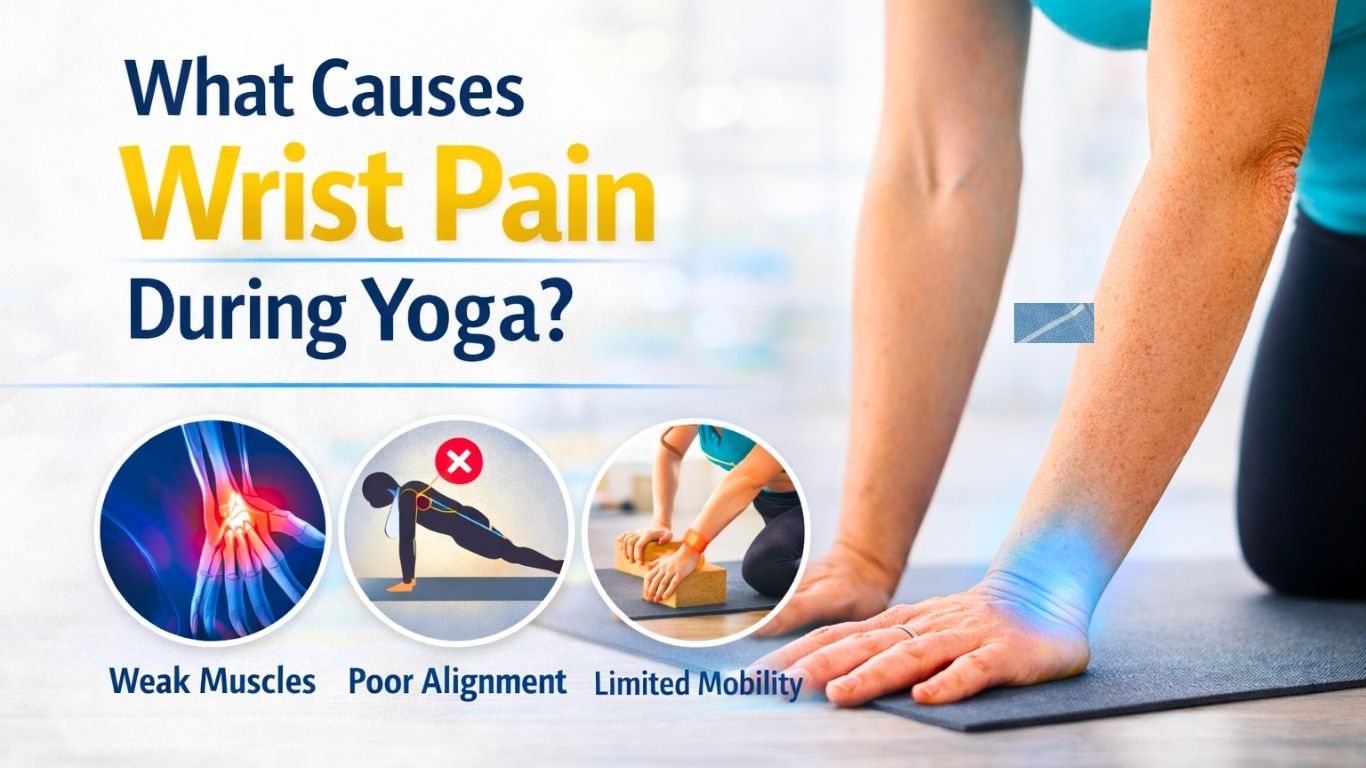
What Causes Wrist Pain During Yoga?
Wrist pain during yoga is usually due to mechanical overload. The wrist joint is small and highly complex. It contains multiple bones, ligaments, and tendons. Many yoga poses require sustained wrist extension. Downward dog demands nearly ninety degrees of extension. Plank and chaturanga add direct body weight. Repeated compression significantly stresses joint structures. Over time, tissues may become irritated.
Improper load distribution worsens this stress response. Weak shoulder stabilization increases wrist strain. Tight forearm muscles limit the comfortable extension range. Limited mobility forces compensation through joint compression. Repetition without gradual adaptation amplifies irritation. Mild inflammation may develop with continued overload. Most early discomfort reflects biomechanical imbalance rather than injury.
Are You Putting Too Much Weight Into Your Palms?
Dumping body weight into the heel of the palm increases compression. The base of the wrist absorbs excessive force. When fingers remain passive, pressure concentrates centrally. Shoulders collapsing forward magnify this load. Locked elbows prevent muscular shock absorption. Over time, repetitive compression irritates soft tissues.
Quick Self-Check:
- Are your fingers actively pressing into the mat?
- Are shoulders stacked directly above wrists?
- Are elbows softly bent rather than locked?
- Is the weight evenly distributed across the hand?
- Do you feel pressure mostly in your palm base?
Small technique adjustments often redistribute pressure effectively. Balanced engagement protects delicate wrist structures during weight-bearing poses.
How to Distribute Weight Through Your Fingers Properly
Healthy load sharing protects wrist cartilage and ligaments. The hand should function as a tripod structure. Pressure must spread across fingertips and knuckles. Engaging intrinsic hand muscles improves shock absorption. Active fingers decrease compression at the wrist crease. This reduces cumulative mechanical stress.
Begin by spreading fingers evenly across the mat. Press firmly through fingertips and finger pads. Gently lift the center of the palm. Maintain slight elbow softness for stability. Engage shoulder muscles to support upper body weight. Proper distribution significantly reduces wrist strain in yoga.
Improving overall posture and positioning through a beginner yoga pose alignment guide can also reduce unnecessary pressure during weight-bearing poses.
Common Alignment Mistakes Beginners Make
Many cases of wrist pain during yoga relate to alignment errors. Beginners often focus only on completing the pose. They ignore joint stacking and muscular engagement. Poor wrist alignment in yoga poses increases joint compression. Even minor alignment errors can increase cumulative stress on the wrist joint. Over time, repeated misalignment may contribute to wrist strain in yoga practice. Many of these issues are part of the wider yoga mistakes beginners must avoid for safer movement and better joint stability during yoga practice.
- Collapsing shoulders into the upper back
- Locking elbows during weight-bearing poses
- Placing hands too far forward
- Narrow hand spacing reduces stability
- Ignoring finger engagement on the mat
Correct alignment redistributes load across stronger muscle groups. This reduces unnecessary compression at the wrist joint.
Locked Elbows and Collapsing Shoulders Explained
Locked elbows remove muscular support from the arm chain. When elbows hyperextend, joint surfaces absorb greater force. Collapsing shoulders abruptly shift body weight downward. This increases pressure on the wrists during yoga. Proper shoulder engagement distributes force through larger muscle groups. Maintaining slight elbow softness significantly improves shock absorption.
H2: Yoga Poses That Often Trigger Wrist Pain
Certain poses commonly provoke wrist pain during yoga. Downward dog requires sustained wrist extension. Plank loads the wrists directly beneath the shoulders. Chaturanga demands controlled eccentric strength. Crow pose concentrates body weight through small contact areas. These positions increase the mechanical load on the wrist joint.
| Pose | Why It Triggers Pain | Key Adjustment |
|---|---|---|
| Downward Dog | Excess extension angle | Shift hips backward |
| Plank | Direct vertical load | Engage shoulders fully |
| Chaturanga | Weak eccentric control | Lower knees initially |
| Crow Pose | Concentrated body weight | Use supportive blocks |
Understanding mechanical stress explains why do my wrists hurt during yoga in these poses. Long-term comfort depends on managing load intelligently and progressing gradually.
Why Downward Dog and Plank Feel Uncomfortable
Downward dog places the wrist in an extended position. Body weight moves through the heel of the palm. Limited mobility increases joint compression. Plank creates direct vertical loading through the wrists. Weak shoulder stabilization worsens wrist strain in yoga. Many beginners ask why do my wrists hurt during yoga during these poses. The answer usually involves excessive mechanical pressure.
Maintaining active finger engagement distributes the load more evenly. Strong scapular support reduces pressure on the wrists during yoga. Slight elbow softness improves force absorption. Controlled progression allows tissues to adapt gradually. Reducing wrist pain in yoga practice depends on proper load management.
Could Weak Wrist Strength Be the Real Problem?
Weak wrist muscles often contribute to ongoing discomfort during yoga practice. The wrist relies heavily on surrounding muscles for dynamic stability. When those muscles fatigue quickly, passive joint structures absorb more force. Over time, this imbalance increases stress on ligaments and connective tissues. Many cases of wrist pain during yoga are more likely due to limited muscular endurance than to structural damage.
Strength improves gradually with controlled loading. Sudden overload typically worsens irritation. Building tolerance requires patience, progressive resistance, and consistent practice.
Beginner Wrist Strength Drills
- Wall plank hold – Maintain gentle pressure through hands while engaging shoulders.
- Light wrist push-ups – Perform on knees to reduce load initially.
- Fist plank modification – Keeps wrists neutral while building upper-body strength.
Progress slowly and monitor symptoms carefully. Discomfort should not intensify after exercise.
The Role of Tight Forearms and Limited Mobility
Tight forearm muscles restrict natural wrist extension. Many weight-bearing yoga poses require close to ninety degrees of extension. When mobility is limited, the body compensates by compressing joints rather than relying on muscular control. This increases pressure on the wrists during yoga. Repeated strain without mobility work may lead to irritation.
Quick Mobility Check:
Can you comfortably extend your wrist to about 90 degrees without strain?
If not, gradual mobility work may help improve tolerance and reduce wrist strain in yoga practice.
Easy Fixes You Can Try Today to Reduce Wrist Pain
Small technical adjustments often create meaningful relief. Minor changes in alignment and load management reduce unnecessary joint compression. Reducing wrist pain in yoga practice depends on thoughtful progression rather than intensity.
Adjust Hand Placement
- Spread fingers evenly across the mat.
- Press firmly through fingertips and knuckles.
- Maintain slight softness in the elbows for shock absorption.
Reduce Hold Time
- Shorten plank duration at first.
- Increase load gradually in small increments.
- Avoid prolonged static holds during early recovery.
Use Supportive Props
- Elevate hands on stable yoga blocks.
- Use wedge pads to reduce the extension angle.
- Practice the first modification temporarily if needed.
Add Rest Days Strategically
- Alternate weight-bearing and non-weight sessions.
- Allow irritated tissues adequate recovery time.
- Monitor swelling or persistent discomfort carefully.
Gradual change protects joint structures more effectively than pushing through pain. Consistency matters far more than intensity.
Small Hand Placement Changes That Make a Difference
Minor adjustments in hand placement can significantly reduce joint stress. Spread fingers evenly to increase surface contact area. Press through fingertips instead of collapsing into the palm heel. Maintain a slight elbow bend to improve shock absorption. Engage shoulder stabilizers before loading body weight. These changes improve force distribution across the upper limb. Over time, consistent correction reduces repetitive mechanical strain.
Wrist Warm-Up Routine Before Weight-Bearing Poses
A short warm-up prepares wrist tissues for loading. Cold joints tolerate pressure less efficiently. Gentle motion increases circulation and synovial lubrication. Gradual activation improves joint control before plank positions. Proper preparation significantly reduces sudden mechanical strain.
- Rotate wrists slowly in both directions
- Perform gentle palm lifts with fingers grounded
- Stretch forearms gradually without forcing the end
- Practice modified tabletop before full plank
- Activate shoulders before transferring full weight
Consistent preparation improves tissue tolerance under load. Warm joints respond better to pressure changes. Skipping warm-up often increases irritation risk. Controlled movement protects joint surfaces effectively.
When to Modify or Avoid Certain Poses
Persistent pain should never be ignored during practice. Mild fatigue differs from sharp structural discomfort. Continuing through severe symptoms may worsen irritation. Temporary modification protects healing tissues effectively.
- Sharp pain during weight-bearing poses
- Visible swelling around the wrist joint
- Tingling sensations radiating into the fingers
- Persistent discomfort lasting beyond several days
- Weakness affecting normal daily hand function
Modification allows tissues to recover safely. Avoid progressing during active inflammation. Seek evaluation if symptoms worsen.
How Long Does It Take for Wrist Discomfort to Improve?
Recovery time depends on the severity of irritation and load management. Mild overload often resolves within 1 to 2 weeks. Moderate mechanical stress may require several additional weeks. Healing speed varies by individual and by the consistency of activity modification. Proper alignment and gradual progression significantly influence outcomes.
| Condition | Typical Improvement Time | Key Influencing Factors |
|---|---|---|
| Mild strain | 1–2 weeks | Load reduction, alignment correction, rest |
| Moderate overload | 2–4 weeks | Gradual strengthening, mobility work |
| Persistent symptoms | 4+ weeks | Ongoing stress, possible clinical evaluation |
Improvement varies by individual and adherence to adjustments. Persistent or worsening symptoms warrant professional assessment. Avoid rushing progression during recovery phases.
What I Noticed After Fixing My Alignment
After correcting hand placement and shoulder engagement, discomfort often decreases gradually. Improvement usually feels progressive rather than immediate. Shifting weight toward the fingertips reduces central palm compression. Stability tends to improve during plank transitions and holds. Many practitioners report reduced fatigue during longer sessions. Consistent alignment awareness commonly makes practice feel safer over time.
Are Yoga Props Helpful for Wrist Support?
Supportive props can reduce mechanical stress during recovery phases. Elevating the hands significantly reduces wrist extension demands. Proper positioning helps redistribute the load across stronger muscle groups. However, props should support technique rather than replace muscular engagement.
- Yoga blocks elevate hands and reduce the extension angle
- Wedge pads decrease excessive wrist extension stress
- First modification maintains a neutral wrist position
- Slant boards shift the load toward the forearm muscles
- Cushioned surfaces soften pressure under palms
Props can provide temporary relief during irritation phases. Long-term comfort still depends on strength and alignment awareness. Gradual progression remains essential for lasting joint resilience.
Signs Your Wrist Pain May Need Professional Attention
Most mild irritation improves with load modification and rest. Persistent or worsening symptoms deserve closer clinical evaluation. Sharp structural pain differs clearly from muscular fatigue. Ignoring warning signs may unnecessarily prolong recovery.
- Persistent swelling around the wrist joint
- Night pain is disturbing regular sleep patterns
- Progressive weakness affecting normal grip strength
- Numbness spreading into multiple fingers
- Pain lasting beyond several consecutive weeks
Early assessment helps prevent complications. Avoid continuing weight-bearing through severe discomfort. Timely evaluation supports safer recovery progression.
How to Prevent Wrist Pain in Future Yoga Sessions
Prevention begins with consistent alignment, awareness, and control. Distribute weight evenly across fingers and palm structures. Engage shoulder stabilisers before transferring full body weight. Gradual progression protects tissues from sudden overload stress. Many practitioners observe improved tolerance with structured advancement.
Warm up thoroughly before demanding weight-bearing poses. Avoid rapid increases in hold duration. Monitor early discomfort signals during each session. Reducing wrist pain in yoga practice requires mindful loading patterns. Long-term joint health depends on steady refinement of technique. Developing safer movement habits through yoga safety tips for beginners to prevent injury can improve long-term comfort and reduce strain during practice.
Building Wrist Strength Safely Over Time
Strength development requires gradual and well-controlled progression. Sudden overload increases the risk of irritation and inflammation. Tolerance improves when resistance increases in small increments. Many cases involve endurance limitations rather than structural injury.
- Begin with wall-supported plank holds for stability.
- Progress to modified knee planks gradually.
- Introduce controlled wrist push-ups carefully.
- Advance to full plank once tolerance improves.
Incremental progression builds resilience safely over time. Consistency supports long-term wrist stability and confidence.
Final Thoughts on Practising Yoga Without Wrist Strain
Wrist discomfort often reflects mechanical overload rather than structural damage. Intelligent alignment reduces unnecessary joint compression during weight-bearing poses. Gradual strengthening improves tolerance across the upper limb chain. Most improvement depends on consistent technique rather than intensity. Careful progression protects connective tissues from repetitive strain. Many practitioners experience better stability with mindful load distribution.
Long-term comfort requires patience and structured advancement. Sudden increases in duration often trigger irritation recurrence. Regular mobility work supports healthy extension capacity. Balanced shoulder engagement significantly reduces wrist dependency. Reducing wrist pain in yoga practice depends on sustainable mechanics. Consistency, awareness, and gradual adaptation build lasting joint resilience.
FAQs
Is wrist pain normal for beginners in yoga?
Answer: Mild wrist discomfort is common in beginners during weight-bearing poses. The wrist joint adapts gradually to sustained extension and load. Persistent swelling, sharp pain, or weakness, however, should not be ignored and may require evaluation.
Can poor alignment cause wrist strain in yoga?
Answer: Yes, poor alignment significantly increases joint compression. Collapsing shoulders, locked elbows, or passive fingers shift force directly into the wrist. Correct stacking and active muscle engagement reduce mechanical stress during practice.
How can I reduce wrist pressure in the plank pose?
Answer: Distribute weight through fingertips instead of the palm base. Keep elbows slightly soft and shoulders engaged. Shorten the hold duration initially and gradually progress to improve tolerance safely.
Do yoga blocks really help wrist pain?
Answer: Yoga blocks can temporarily reduce the demands on wrist extension. Elevating the hands changes the loading angle and decreases compression. However, long-term relief depends on strength development and proper alignment.
How long should wrist discomfort last after yoga?
Answer: Mild irritation often improves within one to two weeks. Moderate overload may take several additional weeks. Recovery varies by individual and depends on consistent load modification.
Should I stop yoga if my wrists hurt?
Answer: Stopping completely is not always necessary. Temporarily modify weight-bearing poses and reduce intensity. If pain remains sharp or persistent, pausing practice and seeking medical advice is appropriate.
Can strengthening exercises prevent wrist pain in yoga?
Answer: Yes, gradual strengthening improves muscular support around the joint. Better endurance reduces reliance on passive structures. Progressive loading, combined with alignment correction, lowers long-term strain risk.
Conclusion
Wrist discomfort during yoga is usually due to mechanical overload rather than injury. Many practitioners ask, Why do my wrists hurt during yoga? The answer often involves alignment errors, weak stabilisers, or excessive loading. The wrist requires gradual adaptation to sustained extension. Proper weight distribution significantly reduces unnecessary joint compression.
Consistent strengthening improves endurance and joint stability over time. Controlled progression protects connective tissues from repetitive strain. Supportive props may assist during recovery phases. Persistent or worsening symptoms deserve professional evaluation. Long-term comfort depends on mindful alignment and structured progression.
📌 Referenced & Trusted Sources
- Yoga and Wrist Pain – Causes & Prevention (The Injury Clinic)
- 11 Wrist and Hand Stretches for Strength and Mobility (Medical News Today)
- 6 Yoga Warm-Ups for Wrist Pain (Yoga Journal)
- Wrist Pain Explanation & Causes (Wikipedia)
Disclaimer: This content is for educational purposes only and does not replace professional medical advice. Consult a qualified healthcare provider for persistent or severe symptoms.
Reviewed & Compiled by: YOGA FLEX ZONE Editorial & Research Team