
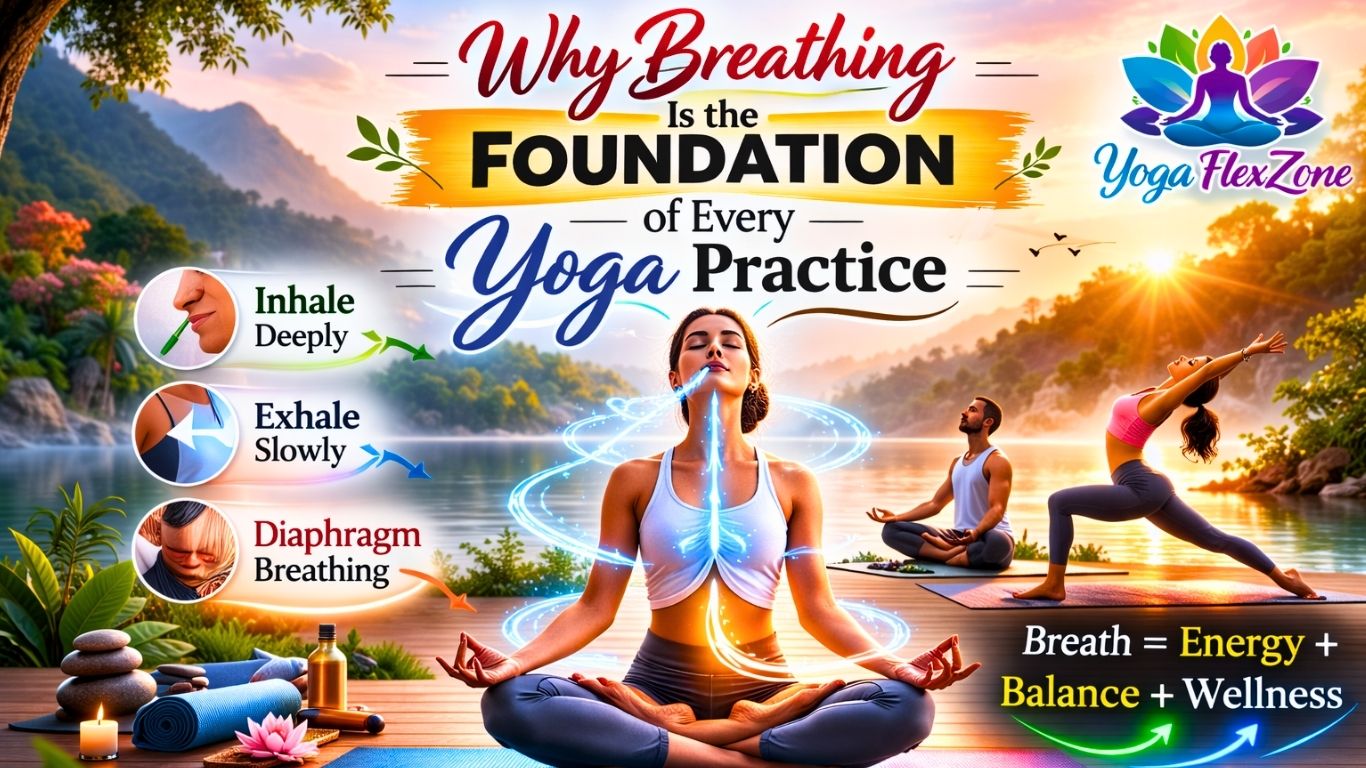
Why Breathing Is the Foundation of Every Yoga Practice
Breathing shapes every movement you make on the mat. It delivers oxygen to your muscles and removes carbon dioxide efficiently. When breathing stays slow and steady, the heart works more smoothly. Blood pressure remains stable during challenging transitions. The diaphragm supports the spine during bending and lifting. That support protects joints from unnecessary strain. Without controlled breathing, muscles tire faster than expected.
Irregular breathing quickly triggers a stress response. Heart rate rises, and tension builds across the shoulders and neck. Shallow chest breathing limits the extent to which the lungs expand. Less oxygen delivery can reduce stamina during longer sequences. Steady nasal breathing keeps the nervous system balanced. When breath leads movement, the entire practice feels stronger and safer.
The Nervous System Connection (Stress vs. Relaxation Response)
Breathing directly regulates the balance of the autonomic nervous system. This system controls heart rate, digestion, and vascular tone. Rapid breathing activates the sympathetic stress response pathway. Heart rate rises, and muscle tension increases quickly. Slow nasal breathing stimulates parasympathetic relaxation mechanisms. Blood pressure stabilizes, and mental focus improves.
Here are the small comparison table:
| Sympathetic Activation | Parasympathetic Activation |
|---|---|
| Increased heart rate | Decreased heart rate |
| Elevated blood pressure | Stabilized blood pressure |
| Higher cortisol output | Reduced cortisol levels |
| Shallow breathing | Diaphragmatic breathing |
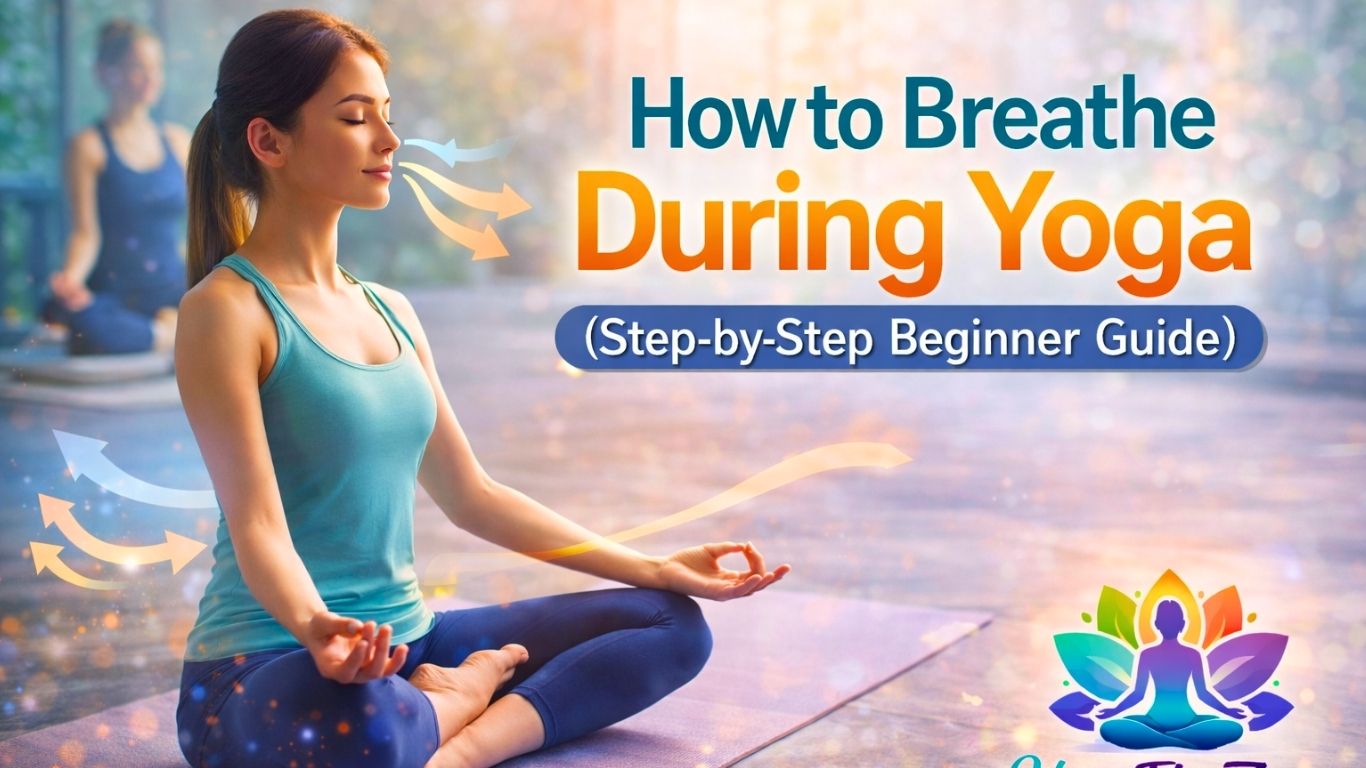
How to Breathe During Yoga (Step-by-Step Beginner Guide)
Breathing in yoga should feel steady and controlled. It should never feel forced or dramatic. Your breath sets the rhythm for every movement. When breathing becomes unstable, balance and strength decline quickly. Many beginners notice dizziness during fast transitions. In one common scenario, a 34-year-old office worker felt lightheaded during basic flows. Her poses were correct, but she was breathing rapidly through her mouth. After practicing slow, nasal, diaphragmatic breathing for two weeks, the dizziness gradually improved.
Step 1: Inhale Slowly Through Your Nose
Begin with gentle nasal inhalation. The nose filters particles and slightly warms incoming air. It also regulates airflow better than mouth breathing. Keep your shoulders relaxed while inhaling. The breath should begin in the lower ribcage.
Step 2: Allow the Diaphragm to Expand
As you inhale, let your abdomen expand naturally. This indicates diaphragmatic engagement. The diaphragm stabilizes the spine during standing and balancing poses. Shallow chest breathing reduces oxygen efficiency. If only your upper chest moves, slow your pace.
Step 3: Exhale Smoothly and Completely
Release air through the nose in a calm manner. Avoid forceful or sudden exhalation. A steady exhale helps maintain a healthy carbon dioxide balance. That balance prevents lightheadedness during sustained effort. The exhale should feel controlled and even.
Step 4: Match Breath With Movement
Inhale during lifting or opening movements. Exhale during folding or effort phases. For example, inhale while raising your arms overhead. Exhale as you lower into a controlled squat. This coordination reduces unnecessary joint strain.
Proper posture also plays a major role in breathing control. Read this beginner yoga pose alignment guide to improve alignment and movement stability during yoga practice.
Step 5: Maintain Breath During Challenging Poses
Never hold your breath during the plank or downward dog. Breath-holding increases blood pressure temporarily. If you feel strain, pause and reset your rhythm. Consistent breathing signals safe muscular engagement.
Developing this habit early prevents many common beginner problems.
H3: The Simple Inhale–Exhale Rule for Most Poses
Breath timing should match movement in every posture. Inhale supports spinal extension and upward transitions safely. Exhale assists forward folding and muscular engagement phases. This rhythm improves oxygen exchange and joint protection. Learning how to breathe during yoga reduces strain and improves endurance.
Here are the simple inhale–exhale rules for most poses:
- Inhale while lifting arms upward
- Exhale during forward bending movements
- Inhale to lengthen the spine
- Exhale through muscular effort
- Maintain a steady nasal breathing rhythm
Consistent timing strengthens stability and movement control. Following the how to breathe during yoga principles improves safety.
When to Slow Down Your Breath
Breathing should remain steady throughout challenging sequences. Rapid breathing lowers carbon dioxide levels excessively. Low carbon dioxide levels may trigger dizziness or tingling. This explains the symptoms behind why do I get dizzy during yoga breathing. Gradually slowing nasal breathing restores blood gas balance.
You should slow down when your heart rate rises rapidly. Shoulder elevation often signals unstable respiratory control. Jaw tension also indicates excessive breathing effort. A steady rhythm helps maintain neurological balance during practice. Controlled breathing helps prevent fatigue and preserve muscular coordination.
Yoga Breathing for Beginners: What You Should Focus on First
Beginners should focus on steady nasal breathing before moving on to advanced techniques. The diaphragm must move freely during each inhalation. This movement stabilizes the spine during standing and balancing poses. Shallow chest breathing significantly reduces oxygen efficiency. A consistent rhythm prevents unnecessary strain on the nervous system. These fundamentals shape safe Yoga Breathing for Beginners practice.
Breathing should remain quiet and even throughout simple sequences. Shoulders must stay relaxed during inhalation and exhalation. The abdomen should expand naturally with each breath cycle. Rapid breathing can disturb the balance of carbon dioxide. Stable rhythm improves endurance and muscular coordination. Mastering basics prevents most early breathing mistakes.
Should You Breathe Through Your Nose in Yoga?
Yes, nasal breathing is recommended during most yoga sessions. It supports controlled airflow and balanced oxygen exchange. Instructors commonly teach this method for safety.
The nasal passages efficiently filter dust and airborne particles. They also warm and humidify the air before it enters the lungs. Nitric oxide released in the nasal cavity enhances oxygen delivery. These physiological effects improve respiratory stability during movement.
The following table highlights the key differences:
| Nose Breathing | Mouth Breathing |
|---|---|
| Filters air | No filtration |
| Warms air | Dry airflow |
| Maintains rhythm | Causes shallow breathing |
Nasal breathing promotes calm focus and steady pacing. Mouth breathing often disrupts controlled movement patterns.
Why Nasal Breathing Is Recommended in Most Classes
Nasal breathing enhances respiratory control during physical activity. The nose regulates airflow resistance naturally. This resistance improves diaphragmatic engagement and lung expansion. Nitric oxide produced inside the nasal passages supports vascular dilation. Better circulation improves oxygen delivery to working muscles.
- Filters airborne particles before lung entry
- Warms and humidifies inhaled air
- Supports nitric oxide production
- Encourages diaphragmatic breathing patterns
- Stabilizes breathing rhythm effectively
Consistent nasal breathing reduces hyperventilation risk. These principles are emphasized in how to breathe during yoga instruction.
Common Breathing Mistakes Beginners Make in Yoga
Many beginners unknowingly disturb their breathing rhythm. Breath-holding frequently occurs during strength-based poses. Rapid breathing lowers carbon dioxide levels excessively. Shallow chest breathing limits diaphragm efficiency. Mouth breathing reduces airflow regulation during effort. These patterns explain questions like why do I get dizzy during yoga breathing.
Here are some of the most common breathing errors beginners make:
- Holding breath during challenging poses
- Rapid breathing during fast transitions
- Shallow chest breathing instead of diaphragm
- Mouth breathing instead of nasal control
- Forcing deep breaths aggressively
Correcting these habits improves stability and stamina. Controlled breathing protects joints and supports muscular endurance. These issues are part of the wider yoga mistakes beginners must avoid to improve stability, posture, and overall movement control safely.
Holding Your Breath in Plank, Downward Dog, or Chaturanga
Many beginners unconsciously hold their breath during strength-based poses. Plank and Chaturanga demand strong core stability and steady muscular control. As effort increases, the body tightens automatically. That tension often interrupts the natural breathing rhythm. Breath-holding briefly elevates blood pressure and increases internal strain. Over time, this habit can reduce endurance and stability. This pattern remains one of the Common Breathing Mistakes Beginners Make in Yoga.
Why does it happen:
- Muscle strain
- Core engagement
- Fear of losing balance
If you notice this pattern, pause and reset your breath. Slow nasal breathing restores rhythm and reduces excess tension. Steady breathing protects joints and safely improves overall pose control.
Shallow Chest Breathing Instead of Diaphragmatic Breathing
Shallow chest breathing limits diaphragm movement and reduces lung efficiency. The upper chest rises while the lower ribs stay restricted. This pattern increases tension in the neck and shoulders. It also reduces oxygen exchange during longer sequences. Over time, fatigue appears earlier than expected. Learning how to breathe during yoga correctly restores proper diaphragmatic activation and core stability.
| Chest Breathing | Diaphragmatic Breathing |
|---|---|
| Upper chest rises | Belly expands gently |
| Shoulders lift | Shoulders stay relaxed |
| Faster shallow rhythm | Slow steady rhythm |
| Less spinal support | Better core stability |
If your shoulders move more than your abdomen, pause and reset. Place one hand on your belly while inhaling slowly. The abdomen should expand before the chest lifts. Correct breathing improves endurance and reduces unnecessary muscular tension.
Why Do I Get Dizzy During Yoga Breathing?
Dizziness during yoga usually happens because breathing becomes too fast or unstable. Rapid breathing lowers carbon dioxide levels in the blood. When carbon dioxide drops suddenly, blood vessels in the brain constrict briefly. That temporary change can create lightheadedness or a spinning sensation. Some beginners also breathe too forcefully without realizing it. Sudden changes in posture between standing and bending can worsen the feeling.
Low blood sugar and mild dehydration may also contribute to dizziness. Practicing on an empty stomach can reduce energy availability. Moving quickly between poses can amplify symptoms. If dizziness appears, pause immediately and sit down. Focus on slow, steady nasal breathing until your balance feels stable again.
How to Fix Poor Breathing Habits in Yoga
Correcting breathing habits starts with slowing everything down. Most mistakes happen when transitions become rushed or poses feel intense. When effort increases, breathing often becomes irregular without notice. Building strong basics in yoga breathing helps protect stamina and focus. Small, consistent changes can restore rhythm and improve overall control. Building safer breathing habits is an important part of yoga safety tips for beginners to prevent injury during regular practice.
Practical correction steps:
- Slow down your transitions between poses.
- Focus on a long, steady, complete exhalation.
- Practice belly breathing for a few minutes daily.
- Avoid forceful or exaggerated inhalations.
With regular practice, breathing becomes smooth and automatic. A steady rhythm supports balance, endurance, and safer movement.
How Breathing Should Change in Different Types of Yoga
Breathing patterns must match the physical intensity of each yoga style. Fast sequences demand steady, rhythmic nasal breathing control. Slower sessions require deeper diaphragmatic expansion and longer exhalations. Restorative practices emphasise relaxed, effortless airflow without strain. Correctly adjusting breath prevents fatigue and improves movement stability.
| Yoga Style | Breathing Pattern |
|---|---|
| Vinyasa | Continuous rhythmic nasal breathing |
| Power Yoga | Strong controlled inhale and exhale |
| Hatha | Slow diaphragmatic breathing |
| Restorative | Gentle natural relaxed breathing |
Breath should never remain identical across every yoga format. Adapting rhythm supports joint protection and cardiovascular stability.
How to Know If You’re Breathing Correctly in Yoga
Correct breathing feels steady and controlled throughout movement. The diaphragm should expand before the chest rises. Shoulders remain relaxed during both inhalation and exhalation. Heart rate increases gradually without sudden spikes. Stable rhythm reduces symptoms linked to why do I get dizzy during yoga breathing.
- Shoulders remain relaxed during inhalation
- Abdomen expands before chest movement
- Breath stays steady during effort
- No dizziness during transitions
- Jaw and neck stay relaxed
When breathing feels quiet and controlled, endurance improves naturally. These principles reflect guidance found in How to Breathe During Yoga.
A 5-Minute Daily Breathing Drill to Improve Your Yoga Practice
Daily breathing practice strengthens awareness and respiratory control. This short routine reinforces patterns taught in Yoga Breathing for Beginners.
Minute 1: Slow nasal breathing with relaxed shoulders.
Minute 2: Focus on gentle belly expansion.
Minute 3: Inhale four counts, exhale six counts.
Minute 4: Relax jaw, neck, and shoulder tension.
Minute 5: Maintain a steady, unforced breathing rhythm.
Consistent repetition builds stable breathing habits. Strong respiratory control improves balance, stamina, and focus.
FAQs
Is lightheadedness normal during yoga breathing?
Answer: Mild lightheadedness can happen if you breathe too fast or deeply. Rapid breathing lowers carbon dioxide temporarily. If you often wonder why do I get dizzy during yoga breathing, slowing nasal breathing usually restores stability.
Should beginners try Ujjayi breathing?
Answer: Beginners should first master steady, diaphragmatic nasal breathing. Ujjayi requires coordination and consistent control. Build a smooth inhale–exhale rhythm before adding advanced breathing styles or heat-building techniques.
Can improper breathing increase injury risk?
Answer: Yes, irregular breathing increases muscle tension and reduces balance control. Poor rhythm disrupts coordination and stability. This may increase joint strain, especially during strength-focused poses like plank or chaturanga.
How long does it take to improve yoga breathing?
Answer: Most beginners notice improvement within one to three weeks. Daily slow nasal breathing steadily builds awareness. Consistency matters more than intensity when strengthening breathing control.
Is mouth breathing ever okay in yoga?
Answer: Mouth breathing may occur during intense flows. However, nasal breathing is generally recommended for airflow control, oxygen efficiency, and nervous system stability during most sessions.
How do I know my breathing is correct?
Answer: Correct breathing feels steady and controlled. Shoulders remain relaxed, and the abdomen expands first. These cues reflect the fundamentals taught in How to Breathe During Yoga guidance.
Can anxiety affect yoga breathing patterns?
Answer: Yes, anxiety often causes rapid, shallow chest breathing. This activates the stress response and increases heart rate. Slow nasal breathing helps calm the nervous system and restore control.
Conclusion
Breathing determines how safely and efficiently your body performs each pose. When breath becomes unstable, coordination and endurance decline quickly. Many Common breathing mistakes beginners make in yoga start with poor rhythm. Rapid or shallow breathing can disturb the balance of oxygen and carbon dioxide. That imbalance may trigger dizziness, fatigue, or muscle tension. Correcting breath mechanics improves spinal stability and joint protection.
Focus on slow nasal inhalation and controlled exhalation. Allow the diaphragm to expand naturally during each breath. Keep shoulders relaxed and avoid forced breathing. Steady rhythm supports nervous system balance and mental clarity. With consistent practice, breathing becomes automatic and efficient. Strong breathing habits create a safer and more sustainable yoga practice.
📌 Referenced & Trusted Sources
- Cleveland Clinic – Diaphragmatic Breathing
- MedlinePlus – Hyperventilation
- Harvard Health – Breathing Techniques
- NIH – Nitric Oxide and Respiratory Function
Disclaimer: This content is for educational purposes only and does not replace professional medical advice. Consult a qualified healthcare provider for persistent or severe symptoms.
Reviewed & Compiled by: YOGA FLEX ZONE Editorial & Research Team.