
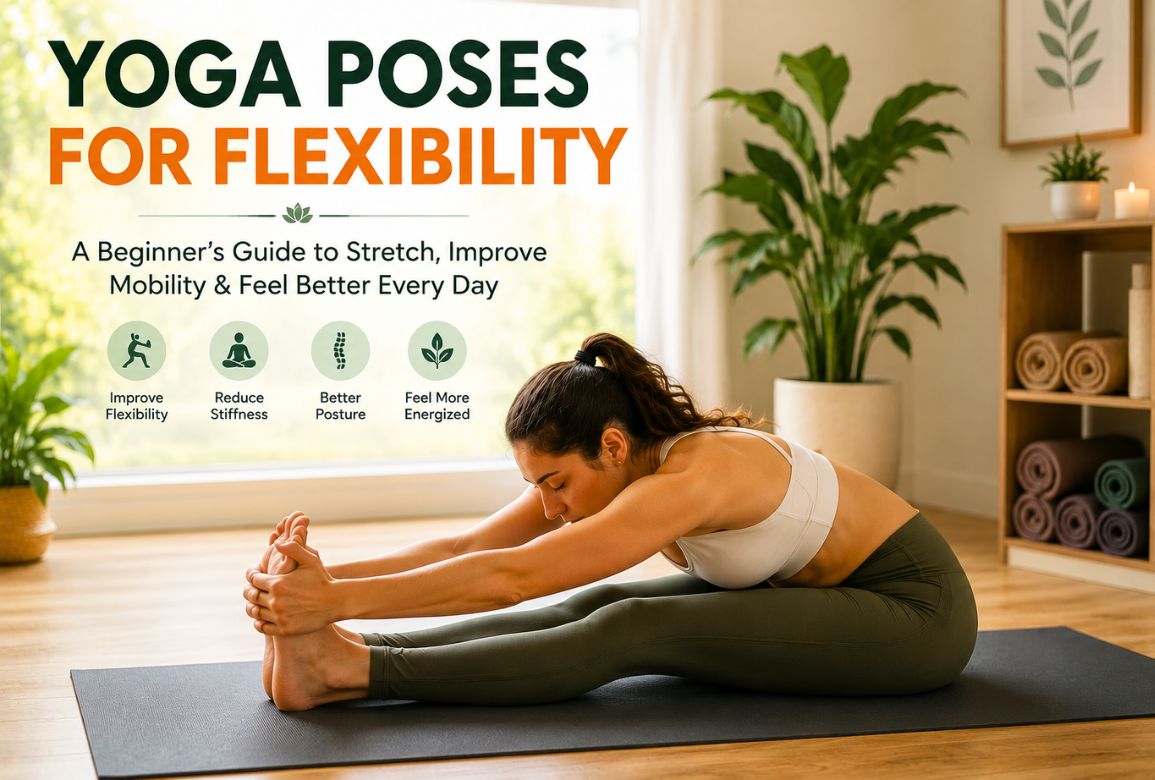
Long hours of sitting can make the body feel surprisingly tight. Many beginners notice stiff hips, tight hamstrings, or back discomfort after desk work and daily screen time. Even simple stretches may feel harder than expected at first. That is why yoga poses for flexibility work best with slow and controlled movement, not aggressive stretching. In early practice, many people improve faster when they focus on consistency instead of depth. This guide explains beginner-friendly poses, safer stretching habits, and practical ways to improve flexibility without adding extra strain to the body.
Why Flexibility Matters for Overall Body Movement
Getting out of bed, bending down, or reaching overhead can feel harder when muscles are tight. Long sitting hours often make the hips, hamstrings, and lower back feel stiff. Some people even notice discomfort after short walks or simple stretches. This usually happens when the body stays inactive for too long without enough movement.
Improved flexibility can make everyday movements feel less restricted and more comfortable. Simple yoga stretches often help reduce tension around stiff areas like the hips and back. In early practice, many people notice that slower movements feel easier to control. Small, consistent sessions usually feel more manageable than long stretching routines at the beginning.
Common Reasons Your Body Feels Tight and Stiff
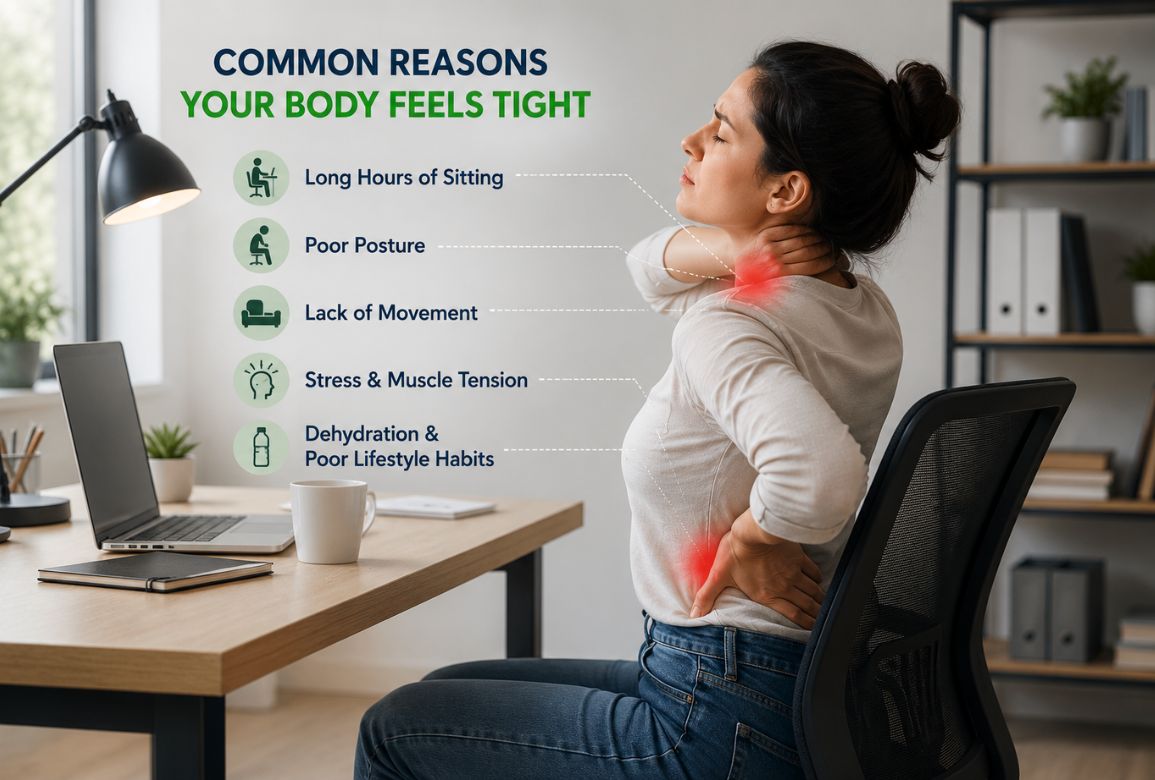
Body stiffness usually comes from daily habits instead of intense activity. Long sitting hours and low movement levels can gradually affect how the body responds to stretching. Tight hips, hamstrings, shoulders, and the lower back are common problem areas. Some people first notice it while bending down or getting out of a chair. In many cases, the body simply stays in restricted positions too long throughout the day.
Sitting Habits and Lack of Movement
Long desk work and constant screen time can leave the body feeling stiff by evening. The hips and hamstrings usually tighten first after hours of daily sitting. Even short walks or basic stretches may feel uncomfortable at the beginning. Some beginners notice this immediately during their first yoga sessions.
People practicing yoga stretches for tight muscles sometimes feel restricted during simple poses. Sitting for too long also reduces natural joint movement and awareness of posture. A few short movement breaks during the day can make stretching feel less frustrating later.
Common habits linked to stiffness:
- Sitting for hours without standing up
- Looking down at phones too frequently
- Skipping stretching after work
- Staying inactive during free time
Muscle Tension and Poor Posture
Poor posture places extra stress on muscles that are already tight throughout the day. Rounded shoulders and forward head posture commonly increase tension around the neck and upper back. Stress may also build up around the hips or lower back without clear warning signs. That heavy, stiff feeling is more common than many people realize.
Simple yoga flexibility exercises for beginners may help the body feel less restricted during stretching sessions. Slow movement also makes it easier to notice posture problems during different poses. Small posture adjustments can completely change how certain stretches feel. Some beginners even notice less tension while sitting or walking after practicing consistently for a few days.
How Yoga Improves Flexibility Safely Over Time
Yoga improves flexibility through steady movement and regular stretching instead of sudden force. Tight muscles usually respond better when movement stays controlled and consistent. Many beginners try stretching too deeply during early sessions, which may leave the body feeling sore or strained afterward. A slower approach gives muscles and joints more time to adjust safely. Over time, simple yoga flexibility exercises for beginners can help movements feel less restricted during daily activities and stretching routines.
Why Controlled Stretching Matters
Controlled stretching keeps flexibility training safer for beginners. Fast or aggressive stretching may place extra pressure on muscles and joints, especially in early yoga routines. Some beginners force deep poses too quickly because they expect faster progress. This often creates tension instead of improving mobility.
Breathing also affects how stretching feels during pose practice. Rushed breathing can make movements feel tighter and less stable. Slower breathing makes posture easier to manage during different stretches. In many beginner routines, balance improves when movement stays steady instead of being rushed.
Common stretching mistakes include:
- Bouncing during stretches
- Holding painful positions too long
- Forcing a deeper range of motion
These habits may increase muscle strain and make stretching feel frustrating. Smaller and steadier movements often feel easier to manage, especially during early flexibility practice.
Importance of Consistency in Yoga Practice
Flexibility usually improves through regular practice instead of long stretching sessions once in a while. Many beginners feel frustrated when progress seems slow during the first few weeks. The body normally needs time to adjust to new movement patterns and stretching routines. Missing sessions occasionally is completely normal, especially in the beginning.
Short routines often feel easier to maintain than long workouts every day. Even ten to fifteen minutes of stretching can help the body stay more active and less stiff. A daily yoga routine for flexibility may also improve posture awareness and movement confidence during simple activities.
Some beginners notice progress in small ways first. Reaching down feels easier. Walking may feel less stiff. Certain poses also become less uncomfortable after repeated practice. These small changes usually build gradually with consistent movement and recovery time.
Easy Yoga Poses for Full Body Flexibility Beginners Can Try
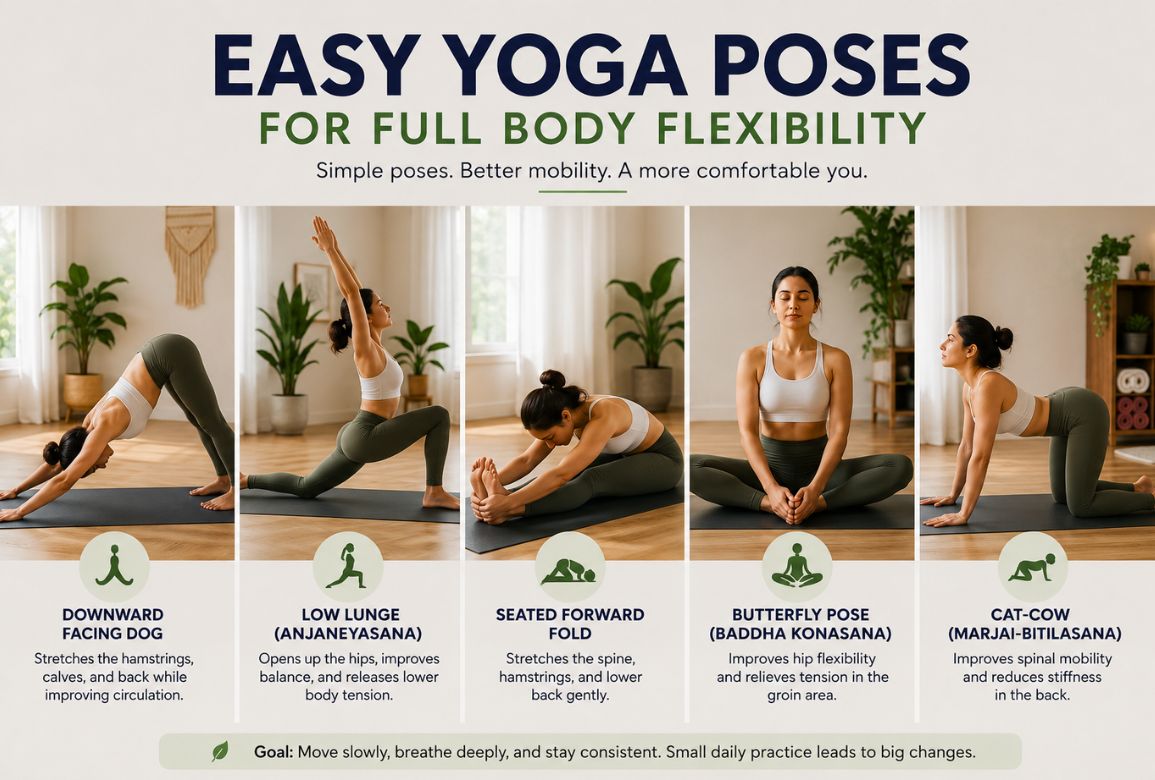
Simple poses often feel easier for beginners than deep stretching routines. Many people notice tight hips, hamstrings, or back stiffness during their first yoga sessions. That is completely normal. Beginner yoga stretches for flexibility usually work better when movements stay slow and controlled. Short daily practice also feels easier to maintain than long sessions at first.
Some simple poses that support better mobility include:
- Cat-Cow Stretch for spinal movement
- Downward Dog for tight hamstrings and shoulders
- Butterfly Pose for hip mobility
- Child’s Pose for lower back release
- Standing Forward Fold for leg flexibility
These stretches target several tight areas without placing too much pressure on the muscles and joints. Many beginners feel more comfortable starting with basic movements before trying advanced stretching routines.
Want a simple daily routine using these stretches? Read easy morning yoga stretches for full body flexibility for step-by-step guidance and beginner tips.
Best Yoga Poses for Tight Hamstrings and Leg Mobility
Tight hamstrings are common among people with long sitting routines or low daily activity levels. Some beginners notice leg stiffness while bending forward or trying simple stretches at home. Tight back-leg muscles may also create pulling tension around the hips or lower back. Stretching too aggressively can leave the legs feeling sore afterwards. Slow, steady movement usually feels safer during early flexibility practice.
Modified Standing Forward Fold
This pose stretches the hamstrings without adding too much pressure to the lower back. Tight legs may feel shaky during the first few attempts. Keeping a slight bend in the knees often makes the movement feel safer.
- Targets: Hamstrings and calves
- Beginner tip: Keep the spine long
- Avoid: Locking the knees.
Pyramid Pose (Parsvottanasana)
The Pyramid Pose stretches the back of the legs while improving posture and balance. Some people notice tight calves or balance issues during this pose. Slower movement usually makes the stretch easier to manage.
- Targets: Hamstrings and hips
- Beginner tip: Move into the pose slowly
- Avoid: Forcing deeper stretches.
Head-to-Knee Pose (Janu Sirsasana)
This seated stretch targets the hamstrings and lower back gently. Beginners sometimes round the back too much while reaching forward. A softer knee bend can reduce extra pressure around the legs.
- Targets: Hamstrings and lower back
- Beginner tip: Reach forward slowly
- Avoid: Pulling the body downward.
Reclined Hand-to-Big-Toe Pose
This stretch gives more support because the body stays on the floor. Some beginners find it easier than standing stretches for that reason. Tight legs may still shake slightly while holding the pose.
- Targets: Hamstrings and calves
- Beginner tip: Use a strap if needed
- Avoid: Lifting the leg too forcefully.
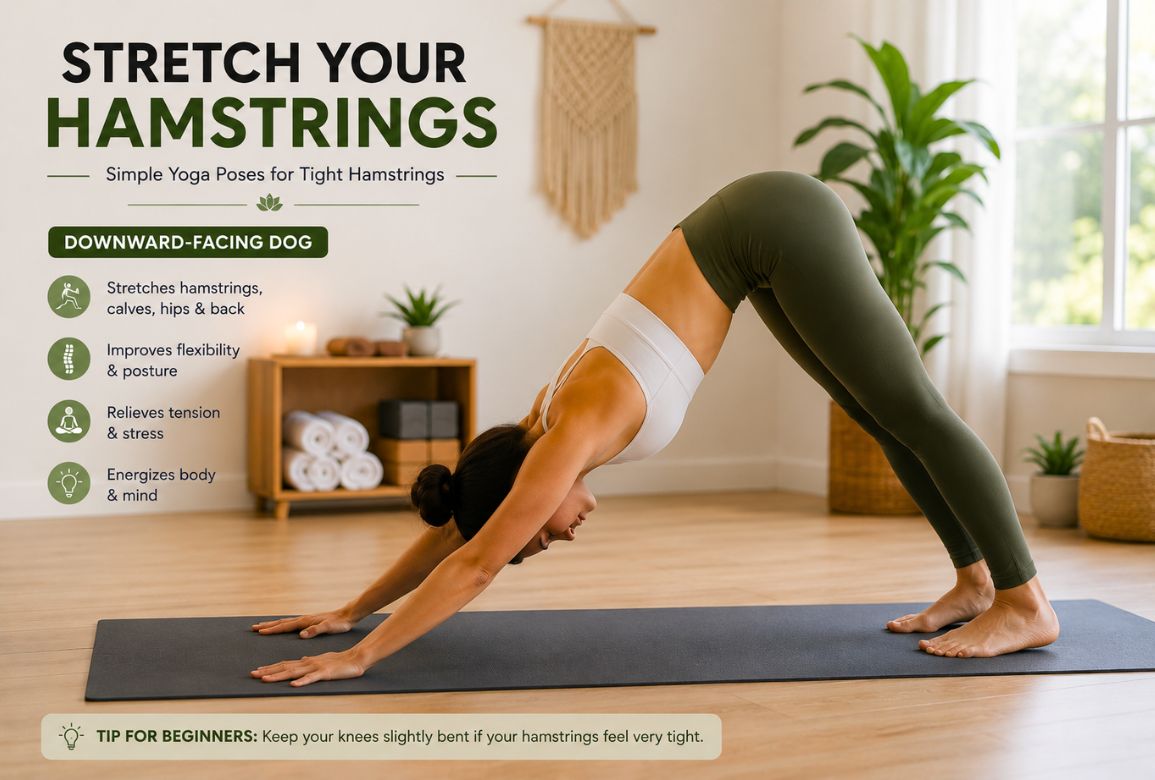
Downward-Facing Dog (Adho Mukha Svanasana)
Downward Dog stretches the hamstrings, calves, and shoulders together. Tight hamstrings may cause the heels to lift from the floor. That is very common in early practice and usually improves with repetition.
- Targets: Hamstrings, calves, and shoulders
- Beginner tip: Keep the knees soft
- Avoid: Pressing the heels down forcefully.
Sharp pain should never feel normal during stretching. Slight knee bending is completely okay during hamstring-focused poses. Smaller and controlled movements usually feel more comfortable than aggressive stretching.
If these stretches still feel difficult, you can explore the best yoga poses for stiff hamstrings for beginners for more detailed pose guidance and flexibility tips.
Simple Yoga Routine for Hip Flexibility and Better Movement
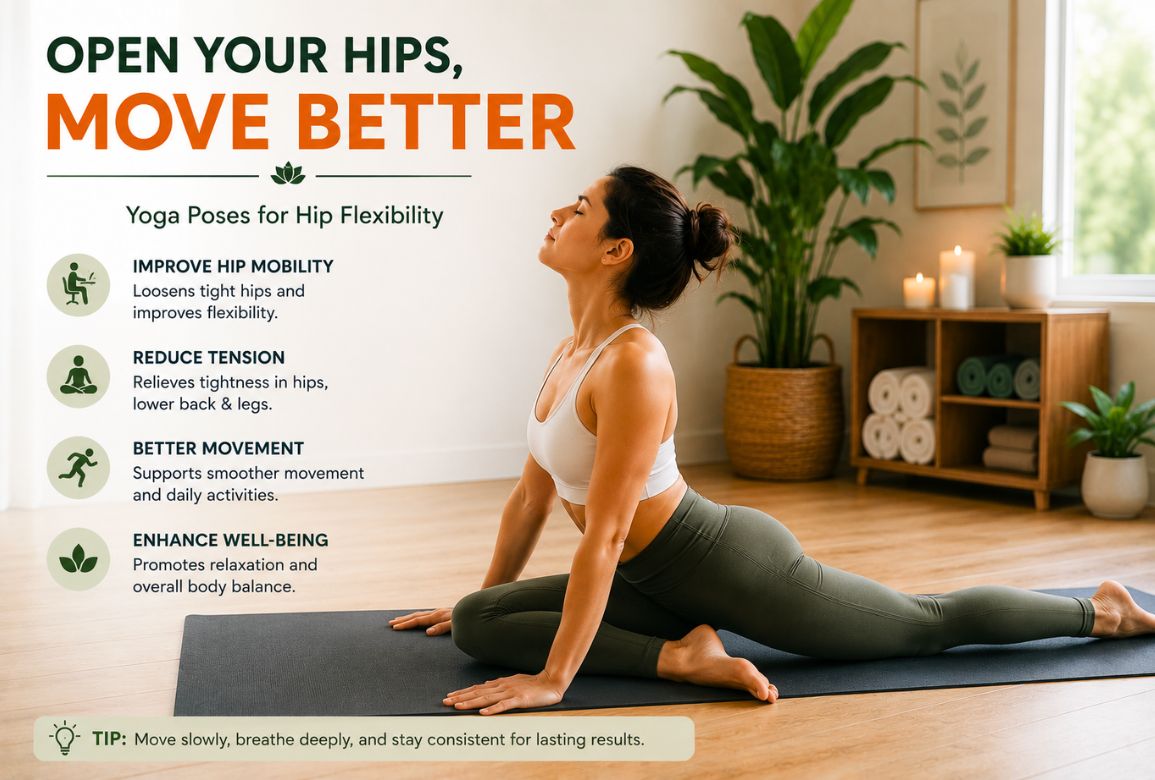
Tight hips are common after long hours of sitting and inactive routines. Some beginners notice discomfort while sitting cross-legged or trying lower-body stretches in beginner routines. Hip stiffness may also limit movement during simple poses. Short routines are usually easier to manage in the beginning. A few gentle stretches each day can make hip mobility less frustrating over time.
A simple daily yoga routine for flexibility may start with gentle hip-opening stretches before gradually moving into deeper movements.
- Begin with Butterfly Pose to loosen tight inner hips and improve seated comfort. Some beginners notice stiffness around the groin area during this stretch.
- Move into a Low Lunge to gently stretch the hip flexors. Keeping the front knee stable often improves balance in this position.
- Continue with Pigeon Pose for deeper hip opening. Tight hips may create pulling tension during the first few attempts, so there is no need to push the stretch too far.
- Try Seated Forward Fold to release tension around the hips and legs. Slight knee bending may reduce extra strain around tight muscles.
- Finish with Child’s Pose to relax the hips and lower back before ending the routine.
Severe pain is a sign to ease out of the stretch slowly. Mild tightness is common in early flexibility practice, especially around stiff hips. Smaller and steadier movements are usually easier to manage than aggressive stretching.
If you want the full walkthrough for these stretches, explore the 10-minute yoga routine for hip flexibility for a more detailed beginner-friendly sequence.
Yoga Poses That Help Improve Back Flexibility Naturally
Back stiffness is common after prolonged desk work, inactivity, or poor sitting posture. Some beginners notice discomfort while bending forward or getting up after sitting too long. Rounded shoulders and limited spinal movement may also make stretching feel uncomfortable. In many cases, the back simply stays in one position for too many hours during the day.
Cat-Cow is often a comfortable starting movement for stiff backs. Slow spinal movement in this pose may reduce tension around the lower back and shoulders. Some beginners notice restricted movement during the first few rounds, especially in the morning.
Sphinx Pose or Cobra Pose gently opens the chest and front body while improving spinal extension. People with rounded desk posture sometimes notice tightness around the upper back during this movement. Keeping the shoulders relaxed usually makes the stretch feel more natural.
Bridge Pose adds light support and movement through the spine without forcing deep flexibility. Tight hips and lower back stiffness may make lifting the body more difficult at first. Small controlled lifts are completely fine here.
Child’s Pose gives the lower back a chance to relax between deeper stretches. Many beginners prefer staying in this pose slightly longer because it feels calmer on the spine and hips.
Supine Twist introduces gentle spinal rotation while keeping the body supported on the floor. Moving too quickly into the twist may create extra tension around the back. Slower movement and relaxed breathing usually make the stretch easier to manage.
Back flexibility often improves more comfortably when spinal movement is controlled rather than rushed. Deep backbends are unnecessary for beginners, especially during early practice. Small movements with steady breathing usually create better mobility over time.
If you want a more structured beginner back routine, explore yoga poses to improve back flexibility for beginners for detailed stretches and step-by-step guidance.
How to Increase Flexibility with Yoga Step by Step
Flexibility improvement takes time, especially for beginners with stiff muscles and inactive routines. Some days the body moves more comfortably, while other days stretching may feel harder than expected. Many beginners expect fast progress during the first few weeks and become frustrated too quickly. In most cases, steady practice matters more than forcing deeper stretches every day.
Building a Realistic Flexibility Routine
Short yoga sessions are often easier to maintain in the beginning than long routines. Even ten to fifteen minutes of stretching can improve mobility when practiced consistently. Some people prefer practicing at the same time daily because it helps build a stable habit. Rest days are also normal, especially when muscles feel sore after stretching.
A simple routine often feels easier to maintain when stretching stays manageable:
- Practice short sessions regularly
- Stretch slowly instead of rushing
- Take breaks when muscles feel overly sore
- Increase flexibility little by little
Trying to stretch too deeply every session may create extra tension instead of improving mobility. Smaller and steadier movements are often easier to maintain long term.
Tracking Gradual Flexibility Improvement
Progress is not always obvious from day to day. Some weeks may feel slower than others, especially during early flexibility training. Small improvements often appear first in simple movements and posture habits. Bending down may feel easier. Sitting posture may improve slightly. Morning stiffness may also feel less noticeable after regular stretching.
Some beginners also notice that poses become less uncomfortable after repeated practice. Balance and posture awareness may improve before deep flexibility changes happen. Paying attention to small progress signs often feels more encouraging than expecting dramatic results too quickly.
Recovery also matters during flexibility training. Muscles and joints need time to adjust after regular stretching routines. Consistency and steadier movement often support better long-term mobility than aggressive stretching habits.
If you want a more structured flexibility progression plan, explore how to increase flexibility with yoga in 30 days for a beginner-friendly roadmap and daily guidance.
Safe Stretching Tips Beginners Should Always Follow
Safe stretching habits can make flexibility practice more comfortable and less frustrating for beginners. Many people try stretching too deeply during early sessions because they expect faster progress. This often creates extra tension instead of improving mobility. Small and steadier movements are easier to maintain, especially when the body feels stiff from inactive routines.
Helpful stretching tips for beginners include:
- Warm up lightly before deeper stretches
- Keep breathing steady during movements
- Avoid bouncing while stretching
- Stop if movements feel unstable
- Use yoga blocks or towels for support
- Move slowly into tighter positions
- Ease out of stretches if strong discomfort appears
Some stretches may feel uncomfortable in the beginning, especially around stiff leg muscles or restricted hips. That does not mean flexibility is impossible to improve. Consistent and realistic stretching habits often work better than forcing difficult positions too quickly.
Common Flexibility Mistakes Beginners Should Avoid
Flexibility mistakes are very common during early yoga practice. Many beginners expect quick progress and become discouraged when stretches still feel difficult after a few sessions. Flexibility also changes from day to day. Some mornings the body feels looser, while other days movement may feel more restricted.
One common mistake is stretching too deeply before the muscles warm up properly. Some beginners also compare their flexibility to advanced yoga practitioners online, which often creates frustration. Holding painful positions too long is another issue, especially when trying to force faster results.
Other common flexibility mistakes include:
- Skipping warm-up movements
- Rushing through stretches
- Practicing inconsistently
- Ignoring posture during stretches
- Pushing through strong discomfort
Progress becomes easier to notice when stretching stays regular and sustainable. Small improvements in posture and movement often matter more than reaching difficult poses quickly.
Daily Habits That Support Better Flexibility and Mobility
Flexibility does not improve only during yoga sessions. Daily movement habits also affect how stiff or mobile the body feels throughout the week. Long sitting hours, low activity, and poor posture may slowly increase tightness around the shoulders, lower back, and legs. Some people notice more stiffness after long desk work or extended phone use.
Small daily habits can support better mobility over time:
- Take short movement breaks during the day
- Walk more instead of sitting continuously
- Stretch lightly after long sitting periods
- Stay aware of rounded shoulder posture
- Drink enough water throughout the day
- Sleep and recover properly after stretching
Morning stiffness is common, especially after inactive routines or long workdays. A few minutes of light movement can make stretching easier later in the day. Consistency with small habits often feels more realistic than trying to change everything at once.
FAQ
How often should beginners practice yoga for flexibility?
Most beginners improve more comfortably with short and consistent sessions instead of long workouts occasionally. Simple stretching routines practiced a few times weekly often feel easier to maintain and less overwhelming in the beginning.
Why do my muscles feel tighter after stretching sometimes?
Muscles may feel tighter after stretching when movements become too aggressive or the body feels overworked. This is common during early flexibility practice, especially when stretching happens without enough recovery or warm-up movement beforehand.
Are beginner yoga stretches for flexibility safe for stiff muscles?
Yes, beginner yoga stretches for flexibility are generally safe when movements stay slow and controlled. Many people with stiff hips, hamstrings, or shoulders feel more comfortable starting with gentle stretches instead of deep poses immediately.
How long does flexibility improvement usually take?
Flexibility progress depends on consistency, movement habits, and overall body stiffness. Some beginners notice smaller changes within a few weeks, while deeper mobility improvements may take longer with regular stretching and steady practice.
Is slight discomfort normal during yoga stretching?
Mild stretching discomfort is common, especially around stiff muscles or restricted joints. Strong or sharp pain should not be ignored. Slower movement and steady breathing often make stretches easier to control during yoga practice.
Can yoga flexibility exercises for beginners improve posture?
Yes, yoga flexibility exercises for beginners may improve posture awareness over time. Stretching tight muscles around the shoulders, hips, and lower back can make sitting and standing positions feel less restricted during daily movement.
What should beginners avoid during flexibility training?
Beginners should avoid rushing progress, forcing deep stretches, or comparing flexibility to advanced yoga practitioners online. A daily yoga routine for flexibility with realistic expectations often feels more sustainable than intense stretching sessions.
Conclusion
Improving flexibility with yoga takes patience, consistency, and realistic expectations. Many beginners start with stiff muscles, limited mobility, or discomfort from long hours of sitting and inactive routines. Small and steady stretching habits often work better than forcing deep poses too quickly. Over time, regular movement can improve posture, reduce stiffness, and make daily activities feel more comfortable.
Yoga poses for flexibility do not need to feel intense to become effective. Gentle stretching, better posture awareness, and sustainable practice habits often lead to stronger, long-term progress. Some days may feel easier than others, and that is completely normal during flexibility training. Staying consistent with simple routines often matters more than chasing fast results.
📌 Referenced & Trusted Sources
- Harvard Health – Introduction to Yoga
- Cleveland Clinic – Yoga for Beginners
- Yoga Journal – Beginner Yoga Routines
- YogaDownload – Flexibility and Yoga Benefits
Note: This article is shared for general educational and wellness purposes only. Individual flexibility levels and movement comfort may vary from person to person.
Reviewed & Compiled by: YOGA FLEX ZONE Editorial Team