
Does your neck ache after a long day at your desk? Do you often catch yourself looking down at your phone or leaning toward your laptop? These everyday habits can gradually lead to forward head posture, causing neck pain, stiffness, and muscle tension. The good news is that chin tucks for forward head posture are one of the simplest and most effective exercises to improve neck alignment, reduce strain, and support better posture.
In this guide, you’ll learn what forward head posture is, why chin tucks are so effective, and how to perform them with the correct technique. You’ll also discover common mistakes to avoid, safety tips, and easy ways to make this exercise part of your daily routine for lasting results.
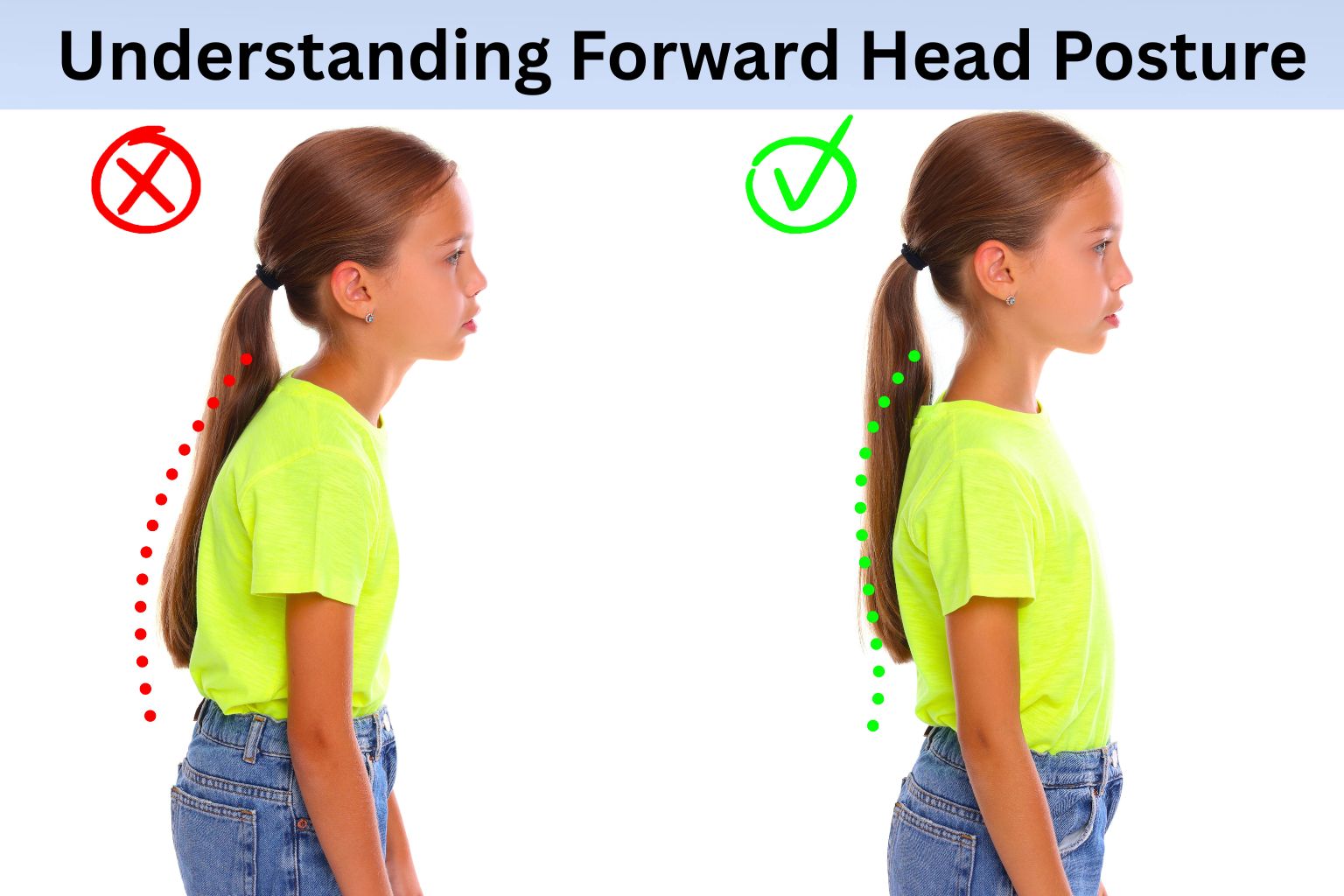
Understanding Forward Head Posture
Forward head posture is the condition where the head is placed in front of the shoulders, rather than naturally aligned with the spine. It is often caused by sitting for extended periods with neck down looking at a cell phone, computer or by an inadequate sitting position, or weak neck and upper back muscles. The early symptoms include neck stiffness, rounded shoulders, headache, muscle fatigue and/or discomfort between the neck and shoulders.
Forward head posture can slowly cause additional strain on the cervical spine and surrounding muscles, leading to increased cervical spine issues and decreased mobility. It can also, over time, cause balance problems, difficulties moving the shoulder and posture changes. Identifying the issue early and making adjustments to your daily routine will help avoid chronic pain and make life easier.
What Are Chin Tucks?
Chin tucks are one of the most effective deep neck flexor exercises, designed to gently pull your head back into its natural position over your shoulders. They strengthen the muscles that support your neck while stretching tight muscles at the back, helping improve neck posture and restore natural head alignment. When practiced regularly with proper technique, chin tucks can reduce neck strain, strengthen postural muscles, and make everyday movements feel more comfortable.
Benefits of Chin Tucks
Chin tucks may look simple, but they can make a noticeable difference when practiced consistently. This gentle exercise strengthens important support muscles, reduces strain caused by poor posture, and helps you maintain healthier neck positioning over time. As your muscles become stronger, everyday movements often feel easier and more comfortable.
Benefits of chin tucks include:
- Improves head alignment
- Strengthens deep neck muscles
- Reduces neck pain
- Relieves muscle tension
- Supports healthy spinal alignment
- Improves posture during daily activities
For the best results, perform chin tucks as part of a complete posture routine rather than relying on a single exercise. Combining them with stretching, strengthening, and healthy daily habits provides better long-term support for your neck and upper back.
Want a complete routine to relieve neck pain and improve mobility? Explore our guide below: Yoga for Neck Pain Relief
How to Do Chin Tucks Correctly
Learning the correct technique is just as important as doing the exercise itself. A properly performed chin tuck targets the right muscles without placing unnecessary stress on your neck or shoulders. Move slowly, breathe normally, and focus on controlled movements instead of force. As one of the most effective forward head posture exercises, chin tucks work best when practiced consistently with proper form and good posture habits.
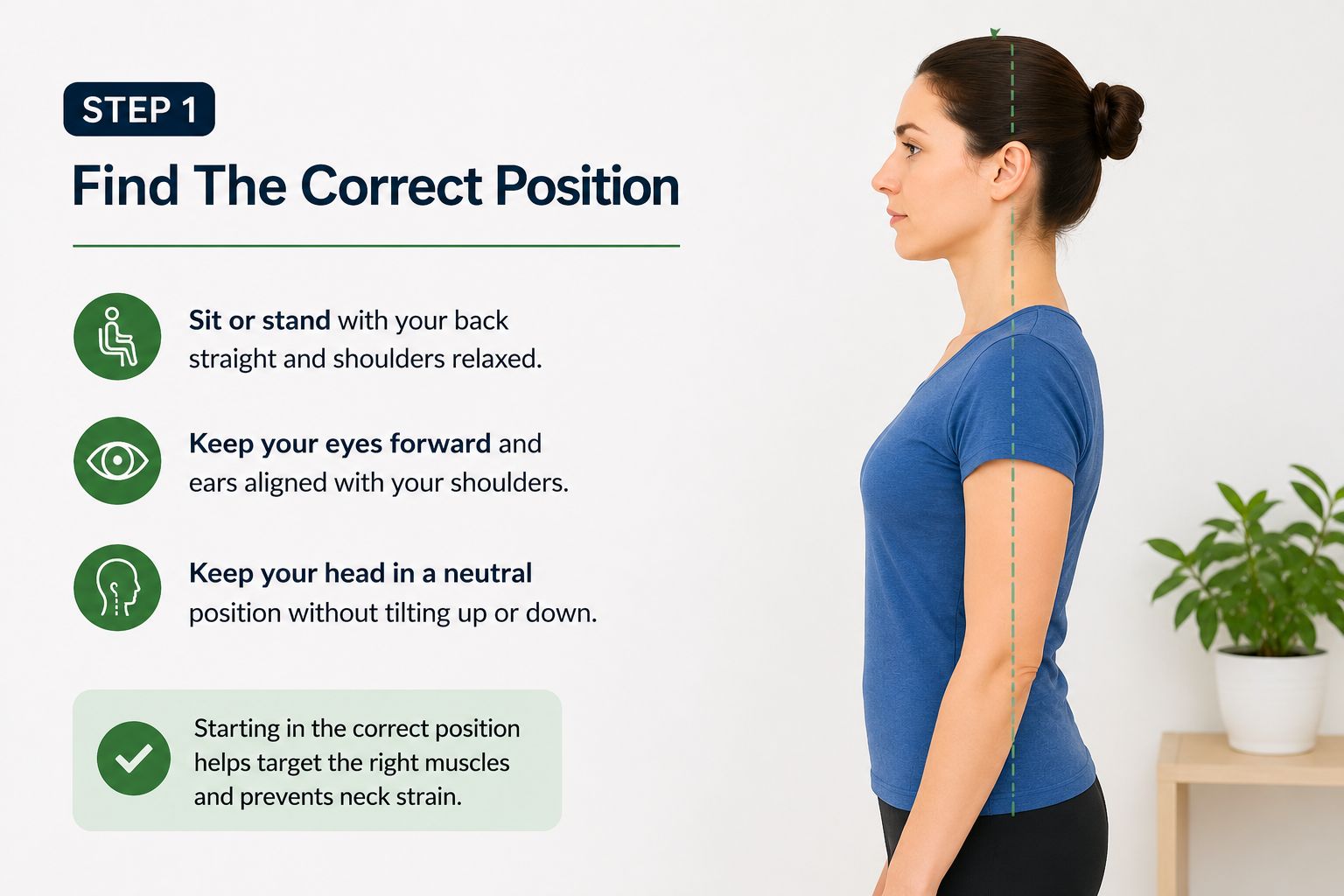
Step 1: Find the Correct Position
Sit or stand with your back straight, shoulders relaxed, and feet firmly on the floor. Keep your eyes looking forward and your ears aligned with your shoulders. Your head should remain in a neutral position without tilting up or down. Starting from the correct position helps the exercise target the right muscles and prevents unnecessary strain on your neck.
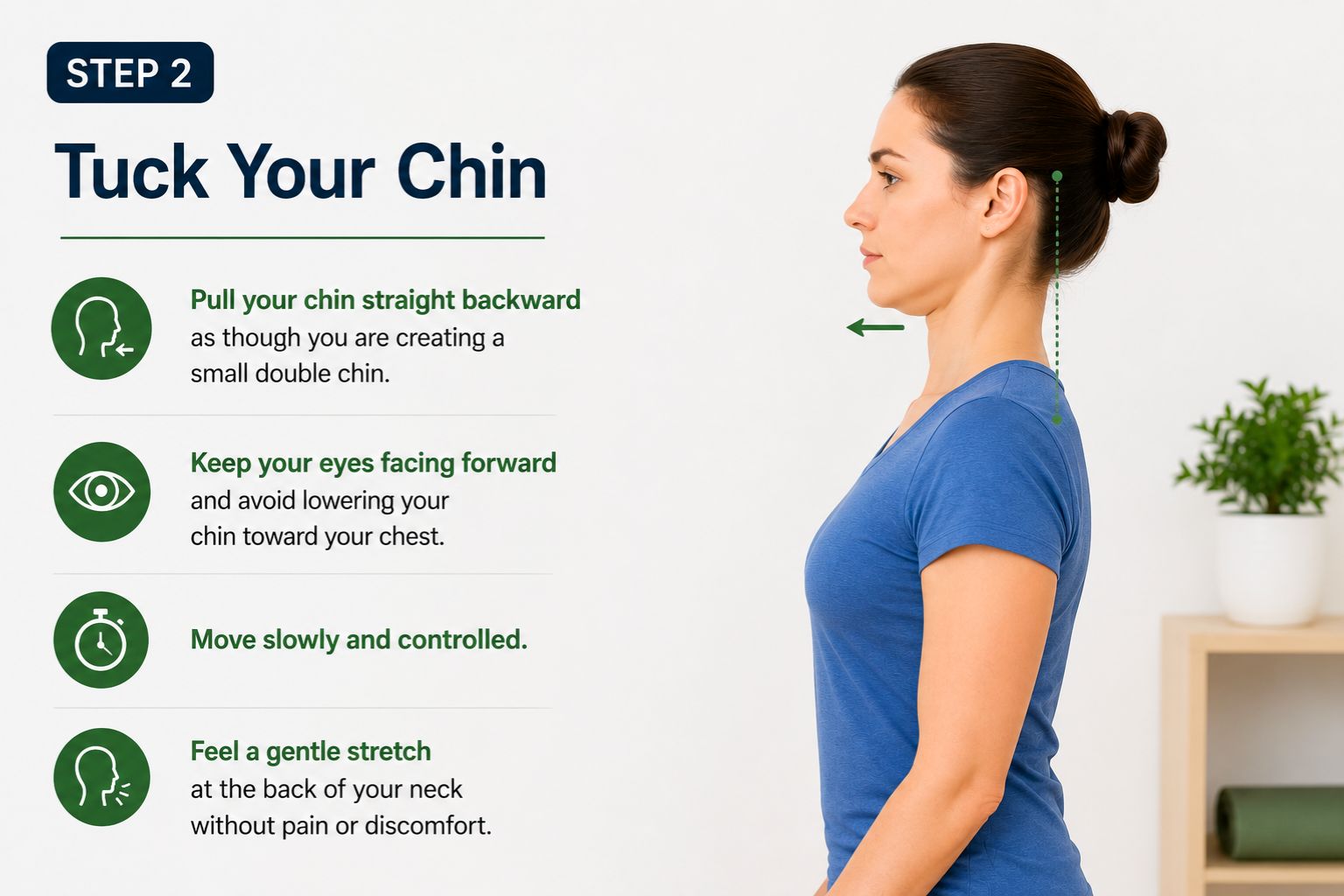
Step 2: Tuck Your Chin
Gently pull your chin straight backward, as though you are creating a small double chin. Keep your eyes facing forward and avoid lowering your chin toward your chest. The movement should be slow and controlled. You should feel a gentle stretch at the back of your neck without pain or discomfort.
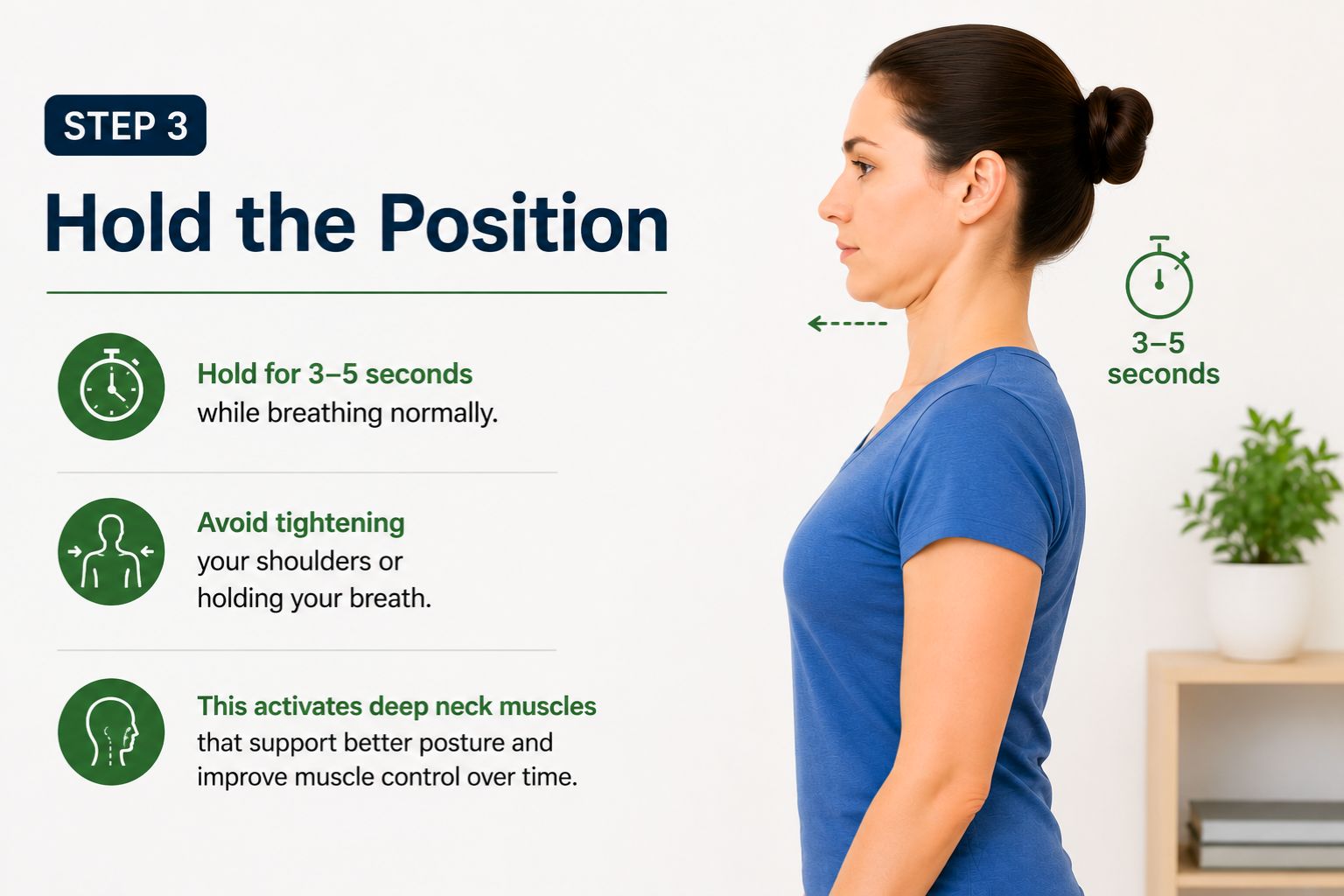
Step 3: Hold the Position
Hold the tucked position for about three to five seconds while breathing normally. Avoid tightening your shoulders or holding your breath during the exercise. This brief hold activates the deep neck muscles that support better posture and helps improve muscle control over time.
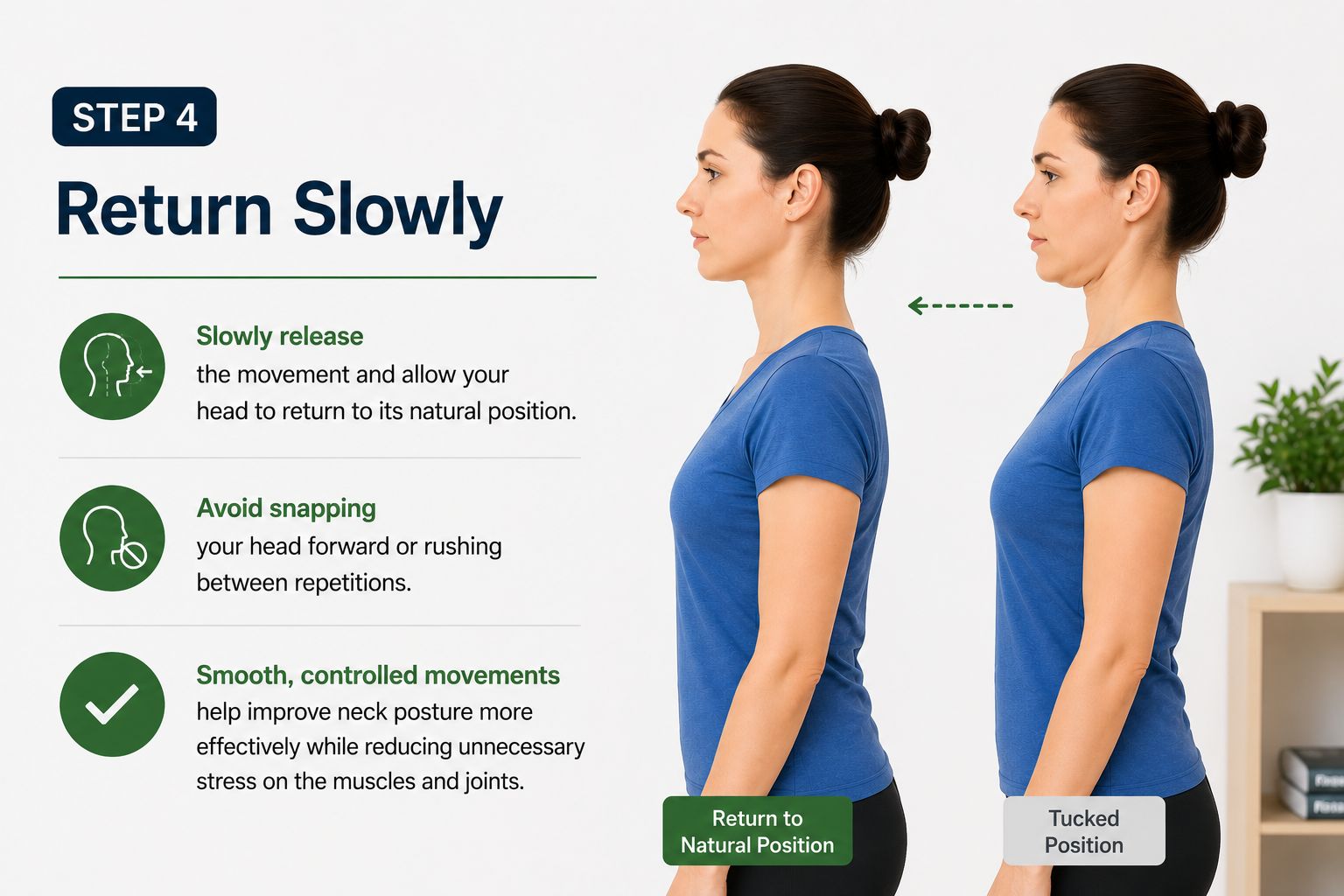
Step 4: Return Slowly
Slowly release the movement and allow your head to return to its natural position. Avoid snapping your head forward or rushing between repetitions. Smooth, controlled movements help improve neck posture more effectively while reducing unnecessary stress on the muscles and joints.
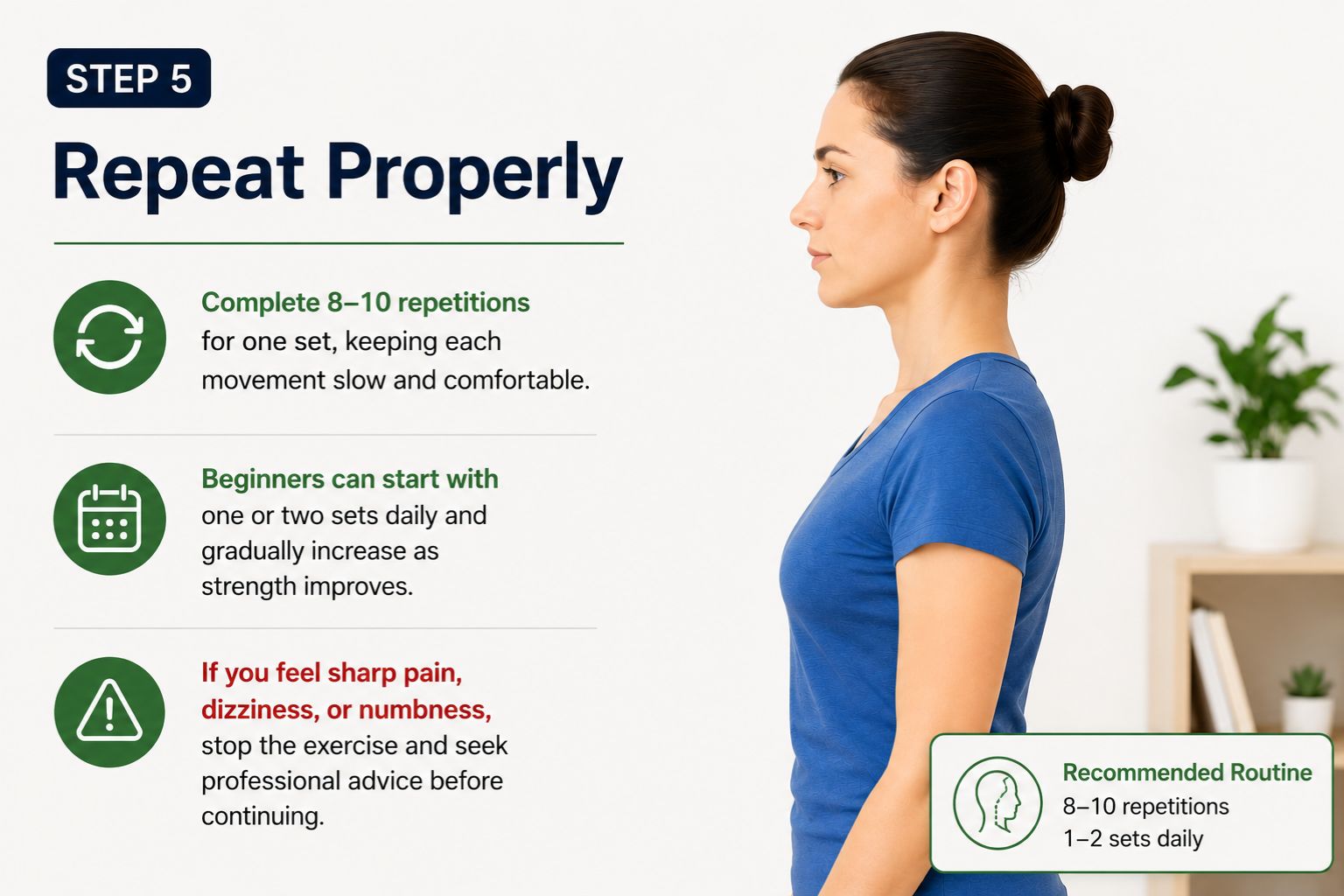
Step 5: Repeat Properly
Complete 8–10 repetitions for one set, keeping each movement slow and comfortable. Beginners can start with one or two sets daily and gradually increase as strength improves. If you feel sharp pain, dizziness, or numbness, stop the exercise and seek professional advice before continuing.
For a better understanding, you can watch the video below: Chin Tucks Sitting
Common Mistakes to Avoid
Even a simple exercise like chin tucks can lose its benefits if your technique is incorrect. Paying attention to small details helps reduce unnecessary strain and allows you to get the most from this forward head posture exercise.
Here are some major common mistake:
- Tilting the head down: Pull your chin straight back instead of lowering it toward your chest.
- Looking upward: Keep your eyes facing forward and maintain a neutral head position throughout the movement.
- Holding your breath: Breathe normally during each repetition to keep your muscles relaxed and avoid unnecessary tension.
- Using excessive force: Perform the movement gently without pushing your neck beyond a comfortable range.
- Raising the shoulders: Keep your shoulders relaxed instead of shrugging as you perform the exercise.
- Moving too quickly: Slow, controlled movements activate the correct muscles and improve the quality of each repetition.
Taking a few extra seconds to perform each repetition correctly is far more beneficial than rushing through the exercise. Good technique helps reinforce proper movement patterns, supports better posture over time, and reduces the risk of unnecessary neck discomfort.
How Often Should You Do Chin Tucks?
For most people, practicing chin tucks once or twice a day is enough to improve neck strength and posture over time. Beginners can start with 8–10 repetitions for one or two sets, using slow and controlled movements. As one of the most effective forward head posture exercises, regular practice is more beneficial than doing many repetitions in a single session.
The best time to practice depends on your daily routine. Many people find morning sessions helpful for preparing the muscles for daily activities, while evening practice can ease tension after long hours of sitting or using digital devices. Stay consistent, listen to your body, and gradually increase the number of repetitions or sets as the exercise becomes easier and helps improve neck posture.
Who Can Benefit from Chin Tucks?
Chin tucks are suitable for many people who spend long hours in positions that place extra stress on the neck. As one of the simplest deep neck flexor exercises, they activate the muscles that support healthy head and neck alignment. While the exercise is gentle, it should always be performed with proper technique and within a comfortable range of motion.
Office Workers
Office workers often spend hours sitting at a desk, which can lead to poor posture and neck discomfort. Chin tucks strengthen the muscles that support proper head positioning, making them a useful addition to a daily routine for reducing stiffness and supporting better neck positioning.
Students
Students frequently look down while reading, writing, or using laptops for long periods. This habit can gradually encourage forward head posture. Regular chin tucks can improve neck stability, reduce muscle fatigue, and promote healthier posture during study sessions.
Mobile Phone Users
Using a smartphone for long periods places extra stress on the neck because the head remains tilted forward. Chin tucks can restore natural alignment, ease muscle tension, and reduce the strain caused by frequent screen use throughout the day.
Drivers
Drivers often maintain the same sitting position for long periods, which may cause neck and shoulder tightness. Practicing chin tucks during breaks can improve neck mobility, reduce stiffness, and allow the neck muscles to relax after extended driving.
Seniors
Many older adults experience mild posture changes as muscle strength naturally declines with age. Gentle chin tucks can improve neck support and posture when performed correctly. Anyone with severe pain or medical conditions should seek professional advice before starting.
People with Mild Neck Pain
People with mild neck pain caused by poor posture or muscle tension may benefit from regular chin tucks. When performed gently and consistently, this exercise strengthens supporting muscles, supports healthier neck movement, and reduces everyday discomfort without placing excessive stress on the neck.
Safety Tips Before You Start
Before starting chin tucks, make sure your neck and shoulders feel relaxed and ready for gentle movement. Paying attention to proper technique from the beginning helps reduce unnecessary strain, keeps the exercise comfortable, and lowers the chance of making existing neck discomfort worse.
- Warm up your neck and shoulders first.
- Move slowly with controlled movements.
- Never push through sharp neck pain.
- Keep your shoulders relaxed throughout.
- Breathe naturally during every repetition.
- Stop the exercise and seek medical advice if symptoms worsen.
Safe practice leads to better long-term results. Focus on quality instead of speed, stay within a comfortable range, and consult a healthcare professional if your pain persists or your symptoms worsen.
Chin Tucks vs Neck Retractions
Chin tucks and neck retractions are often confused because both focus on improving head and neck alignment, but they are not exactly the same. A chin tuck focuses on gently drawing the chin backward while keeping the movement small and controlled, helping activate the deep neck flexor muscles. This can support better control and improve neck posture over time.
Neither exercise is better in every situation. Chin tucks are usually suitable for beginners and people with mild forward head posture, while neck retractions may be added as posture awareness and muscle control improve. Using both exercises correctly can support better movement patterns and overall neck function.
Looking to improve your posture even further? Continue with this helpful guide: Upper Spine Mobility Exercises for Better Posture
Can Chin Tucks Fix Forward Head Posture?
Chin tucks can help improve forward head posture by strengthening the muscles that support proper neck positioning and encouraging better movement habits. Research suggests that targeted neck exercises may improve posture, reduce muscle imbalance, and increase neck function when combined with regular practice and healthy daily habits. However, chin tucks are not an instant fix and work best as part of a complete posture routine.
Realistic results depend on factors such as your current posture, daily activities, consistency, and the cause of your forward head posture. Some people may notice reduced stiffness and better control within a few weeks, while others may need several months of regular practice to see noticeable changes.
For long-term improvement, combine chin tucks with better sitting habits, screen awareness, and mobility exercises. If you spend long hours using a phone, this guide can help: How to Fix Text Neck from Phone Use
Daily Routine for Better Posture
Building healthier posture habits does not require a complicated routine. Small, consistent actions throughout the day can make a noticeable difference. From the moment you wake up until bedtime, simple movements and mindful positioning can reduce neck strain and support proper alignment. A balanced approach works better than occasional intense exercises because your posture is shaped by everyday habits.
Morning Routine
Start your day with gentle movements that prepare your neck and upper body. Perform chin tucks, shoulder rolls, and light stretches after waking up. These simple movements help reduce morning stiffness after sleep and improve body awareness before beginning your daily activities.
Office Routine
During work hours, focus on keeping your screen at eye level, shoulders relaxed, and back supported. Take short movement breaks every 30–60 minutes to stretch your neck and shoulders. Practicing a few chin tucks during breaks can help prevent tension caused by long periods of sitting.
Evening Routine
After a long day, use gentle exercises to release built-up tension. Include neck stretches, upper spine mobility movements, and relaxation techniques before bedtime. These gentle movements can help release tension built up from daily activities and prepare your body for better rest.
FAQ
Are chin tucks effective?
Yes. The chin tuck exercise can be effective for improving neck muscle strength, supporting better alignment, and reducing strain caused by poor posture when practiced consistently with proper technique.
How many chin tucks should I do daily?
Most beginners can start with 8–10 repetitions once or twice a day. Increase gradually as the exercise becomes more comfortable and your neck strength improves.
Can chin tucks reduce neck pain?
Chin tucks may help reduce mild neck discomfort related to poor posture by strengthening supporting muscles and reducing unnecessary strain. They may not be suitable for all types of neck pain.
Can beginners do chin tucks?
Yes. Chin tucks are beginner-friendly because they involve gentle movements. Start slowly, avoid forcing the motion, and stop if you experience pain or unusual symptoms.
How long does it take to improve posture?
Results vary depending on your habits, consistency, and posture condition. Many people notice improved comfort and movement within a few weeks, while visible posture changes may take longer.
Are chin tucks safe every day?
Yes, chin tucks are generally safe for daily practice when performed correctly. Use gentle movements and avoid excessive repetitions that cause discomfort.
Can chin tucks help text neck?
Yes. Chin tucks can help counter the forward head position caused by prolonged phone use by strengthening neck muscles and encouraging healthier head alignment.
When should I stop doing chin tucks?
Stop the exercise if you experience sharp pain, numbness, tingling, dizziness, or worsening symptoms. Consult a healthcare professional if discomfort continues.
Conclusion
Chin tucks are a simple but effective exercise that can support better neck health when practiced consistently. They help strengthen important neck muscles, encourage healthier head positioning, and reduce strain caused by poor posture. The key is to focus on proper technique, stay patient, and make small improvements part of your daily habits.
Remember that chin tucks for forward head posture work best when combined with good sitting habits, regular movement breaks, and other posture-focused exercises. Practice regularly, listen to your body, and avoid forcing the movement. With consistency and proper care, you can build stronger posture habits and support a more comfortable neck over time.
📚 References & Additional Resources
The following trusted resources provide additional information about yoga, posture, neck health, and exercise safety.
- Yoga Journal – Yoga Poses & Practice Guides
- Yoga International – Yoga Tutorials & Wellness Articles
- National Center for Complementary and Integrative Health (NCCIH)
- Spine-health – Neck Pain & Posture Education
- Harvard Health Publishing – Health & Exercise Resources
Note: This guide is for general wellness education only and is not a substitute for professional medical advice.
Reviewed & Compiled by: YOGA FLEX ZONE Editorial Team