
Limited ankle mobility can make everyday movements such as walking, squatting, climbing stairs, and exercising feel less natural. When the ankle does not move through a comfortable range, the surrounding muscles and joints may have to work differently to complete each movement. In this guide, you’ll learn simple ankle mobility exercises for joint flexibility that can be practiced at home. These movements focus on controlled range of motion, ankle flexibility, and smoother movement without requiring complicated equipment.
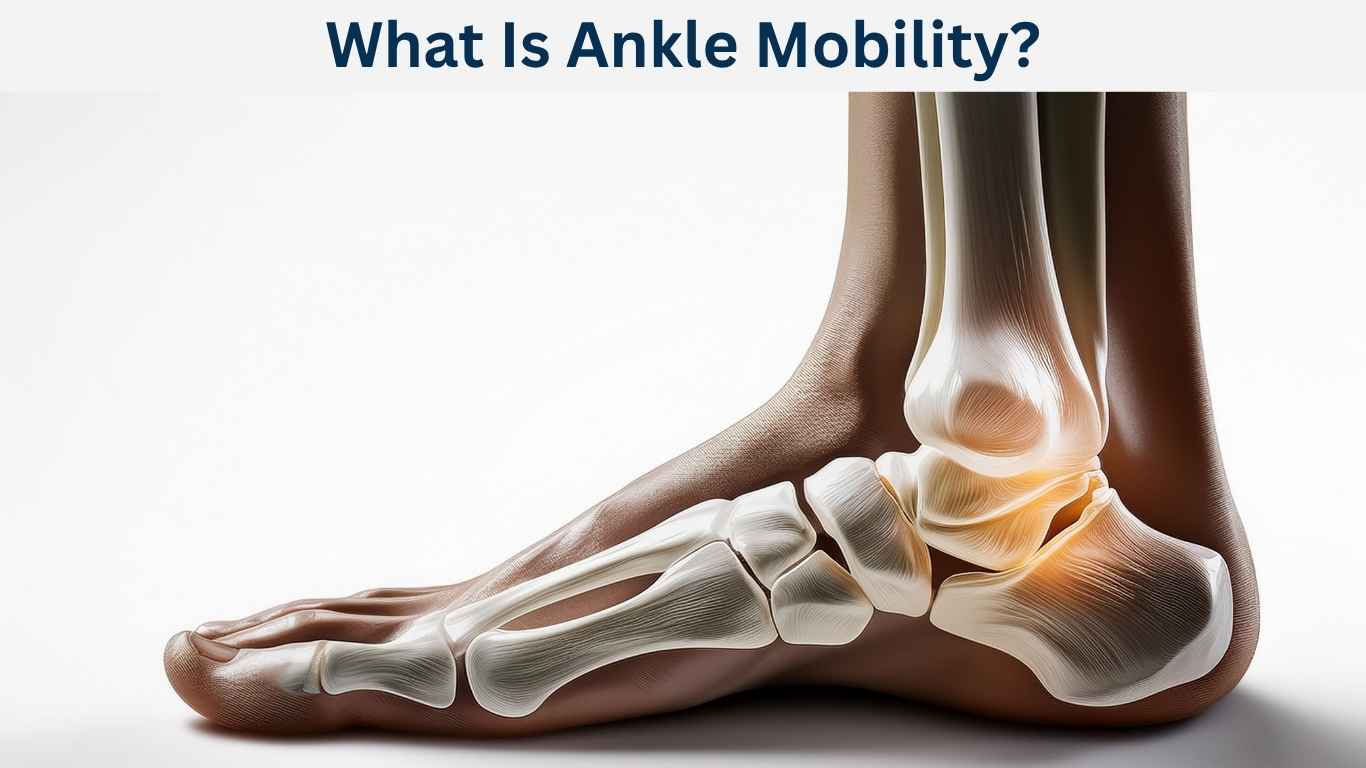
What Is Ankle Mobility?
Ankle mobility refers to how freely your ankle joint can move through its available range of motion. It involves movements such as pointing the foot, lifting the toes toward the shin, and moving the ankle inward or outward. Good mobility allows the ankle to adjust smoothly during activities like walking, squatting, climbing stairs, and exercising.
When ankle movement is limited, certain everyday activities may feel less comfortable or controlled. Regular, gentle movement can help you maintain the range your ankles already have and keep the joint moving naturally. If you want to support comfortable movement throughout more areas of the body, our Yoga for joint pain relief guide offers broader movement strategies.
Ankle Mobility vs. Flexibility
Ankle mobility describes how well the joint moves, while flexibility mainly refers to how easily muscles and surrounding tissues lengthen during movement.
| Ankle Mobility | Ankle Flexibility |
|---|---|
| Focuses on joint movement | Focuses on tissue length |
| Includes controlled range of motion | Involves muscle and tissue extensibility |
| Requires joint control | Depends partly on muscle flexibility |
| Helps with functional movements | Supports comfortable stretching |
| Influences squatting and walking | Can make stretching easier |
Understanding this difference can help you choose suitable ankle mobility exercises while working on flexibility when needed.
What Causes Poor Ankle Mobility?
Several everyday habits can gradually reduce comfortable ankle movement. Recognizing these factors can help explain why ankle flexibility exercises may be useful for maintaining natural movement.
- Sitting for long periods with little movement
- Spending much of the day physically inactive
- Tight calf muscles limiting comfortable ankle movement
- Repetitive activities using similar movement patterns
- Footwear or activity demands restricting natural movement
Regular movement can help maintain comfortable ankle function during daily activities. A consistent routine may support better range and control without requiring complicated equipment.
What Are the Signs of Poor Ankle Mobility?
Limited ankle movement can show up during simple daily activities or exercise. You may notice restricted motion, stiffness, or changes in how your feet and legs move. Paying attention to these signs can help you recognize when your ankle range needs attention.
- Difficulty moving the ankle freely
- Limited ability to bring toes toward the shin
- Heels lifting during squatting movements
- Difficulty performing certain lower-body movements
- Stiffness around the ankle or foot
- Feeling restricted during walking or exercise
These signs do not always mean you have a specific problem. If restricted movement persists or interferes with normal activities, consider discussing it with a qualified professional.
How to Prepare for Ankle Mobility Exercises
A short preparation period can make your movements feel smoother and more controlled. Before starting, choose a stable surface and allow your ankles to move freely. A gentle ankle mobility warm up can gradually prepare the joints for the exercises ahead.
- Sit or stand in a comfortable position
- Keep your feet relaxed and supported
- Begin with small ankle movements
- Move slowly without forcing your range
- Breathe normally throughout the preparation
Once your ankles feel ready, begin the exercises with a comfortable range of motion. You do not need to push deeply or move quickly. Gradually increase the movement as your ankles become more comfortable.
8 Ankle Mobility Exercises for Better Flexibility
These eight movements focus on different aspects of ankle movement, including rotation, dorsiflexion, balance, and controlled range of motion. They can be practiced at home and adjusted to your current flexibility level. Move slowly, avoid forcing the ankle, and stay within a range that feels comfortable. Begin with simple movements before progressing to exercises that require greater control or lower-body coordination.
For broader joint movement guidance, explore our joint mobility exercises for healthy movement guide.
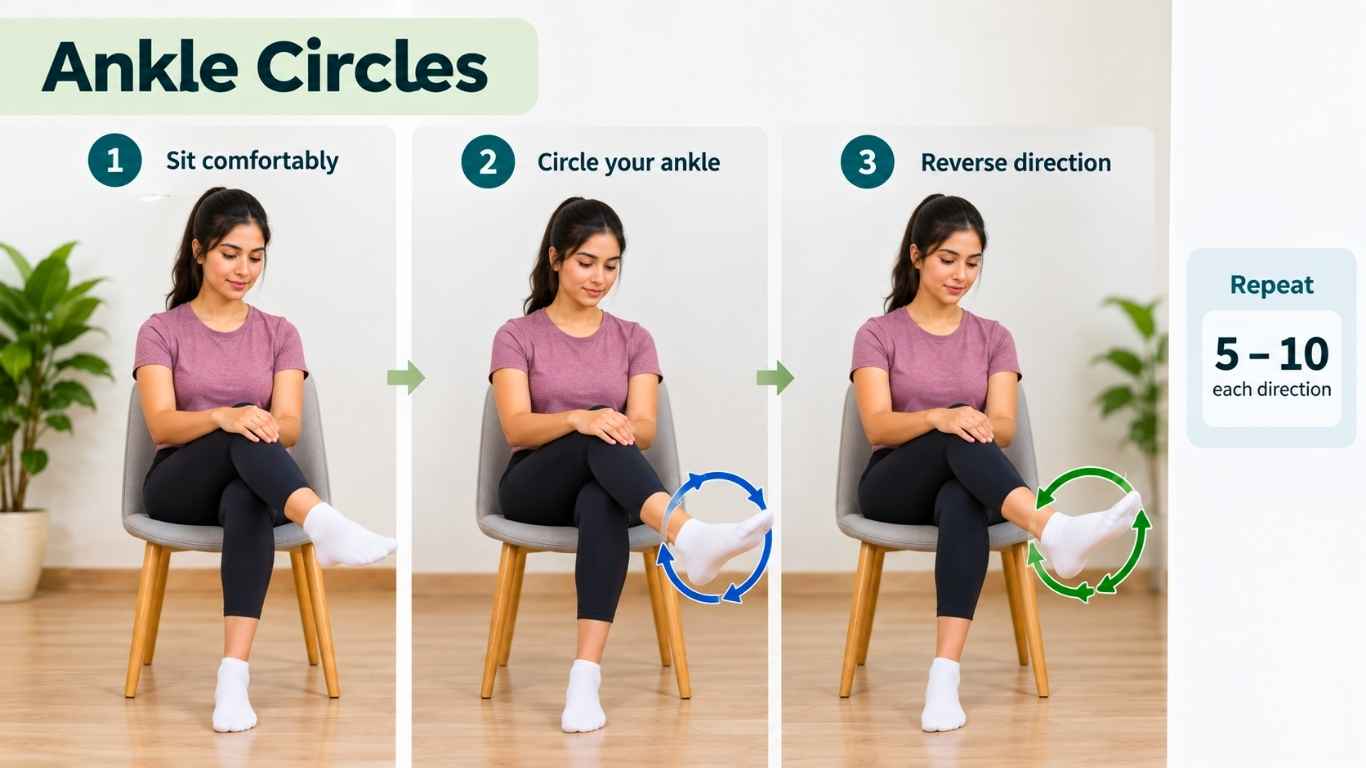
Ankle Circles
Keep the movement slow if your ankle feels stiff or restricted. Sit comfortably with one leg supported and the foot lifted slightly. Slowly draw a circle with your ankle, moving through a comfortable range without moving your knee. Complete 5–10 circles in one direction, then reverse the movement. These ankle mobility exercises encourage controlled rotation and can help maintain comfortable ankle range of motion.
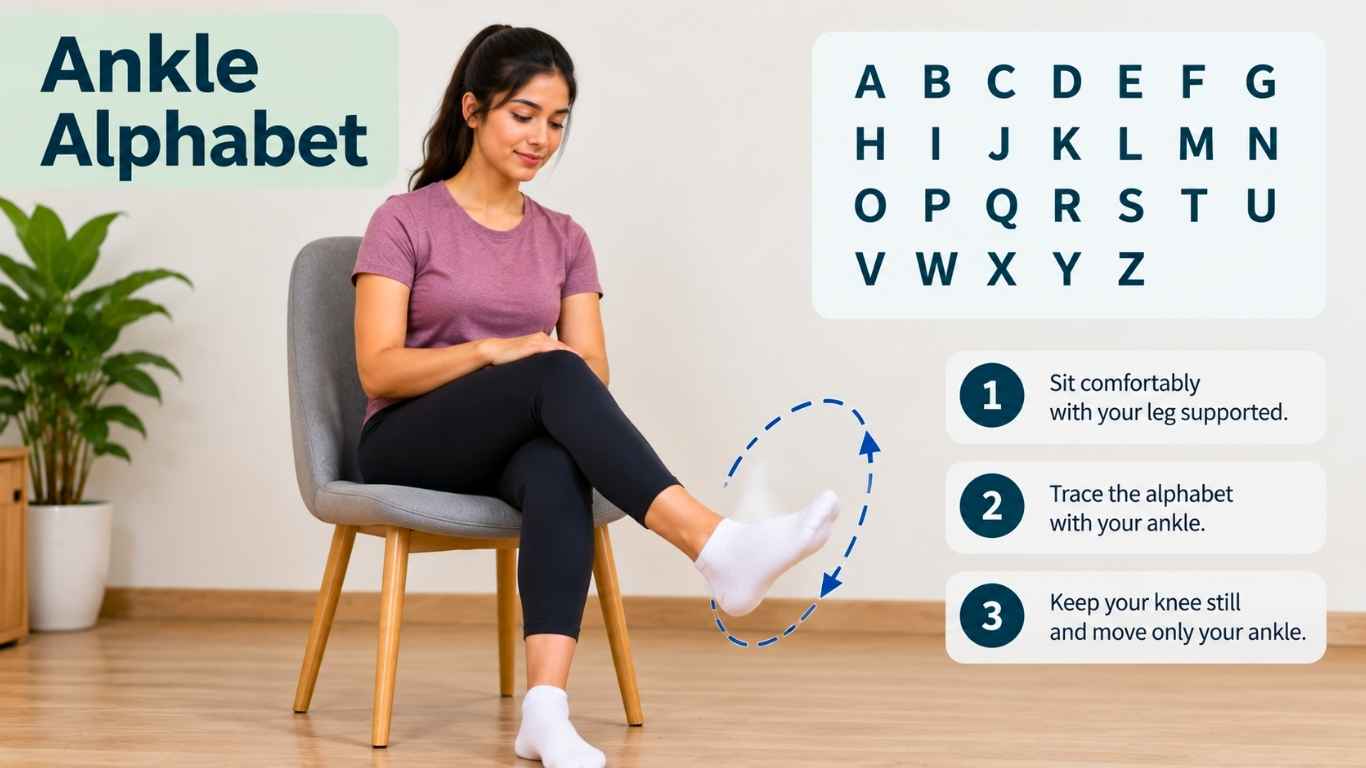
Ankle Alphabet
Sit with your leg supported and the foot slightly raised from the floor. Imagine your big toe is a pencil and slowly trace the alphabet in the air by moving your ankle. Keep your knee and leg as still as possible while the ankle creates each letter. Start with smaller letters and gradually use a larger range if comfortable. This movement explores several directions and encourages controlled ankle motion without equipment.
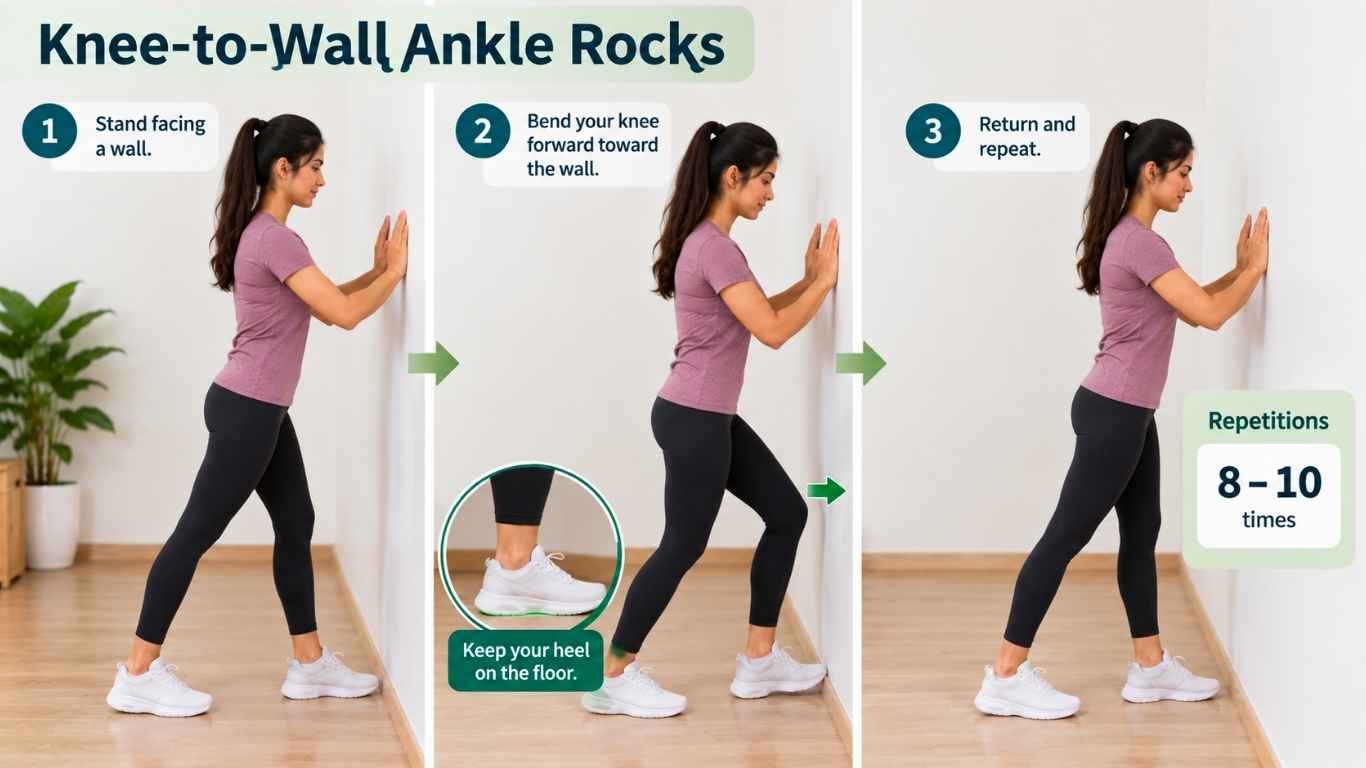
Knee-to-Wall Ankle Rocks
Stand facing a wall with one foot placed a comfortable distance behind or in front, depending on your setup. Keep the working heel firmly on the floor and gently bend the knee forward toward the wall. Move only as far as you can without the heel lifting, then return smoothly. Repeat 8–10 times, gradually adjusting your foot position as your range improves. This movement targets ankle dorsiflexion exercises by encouraging the shin to move forward over the foot while maintaining heel contact.
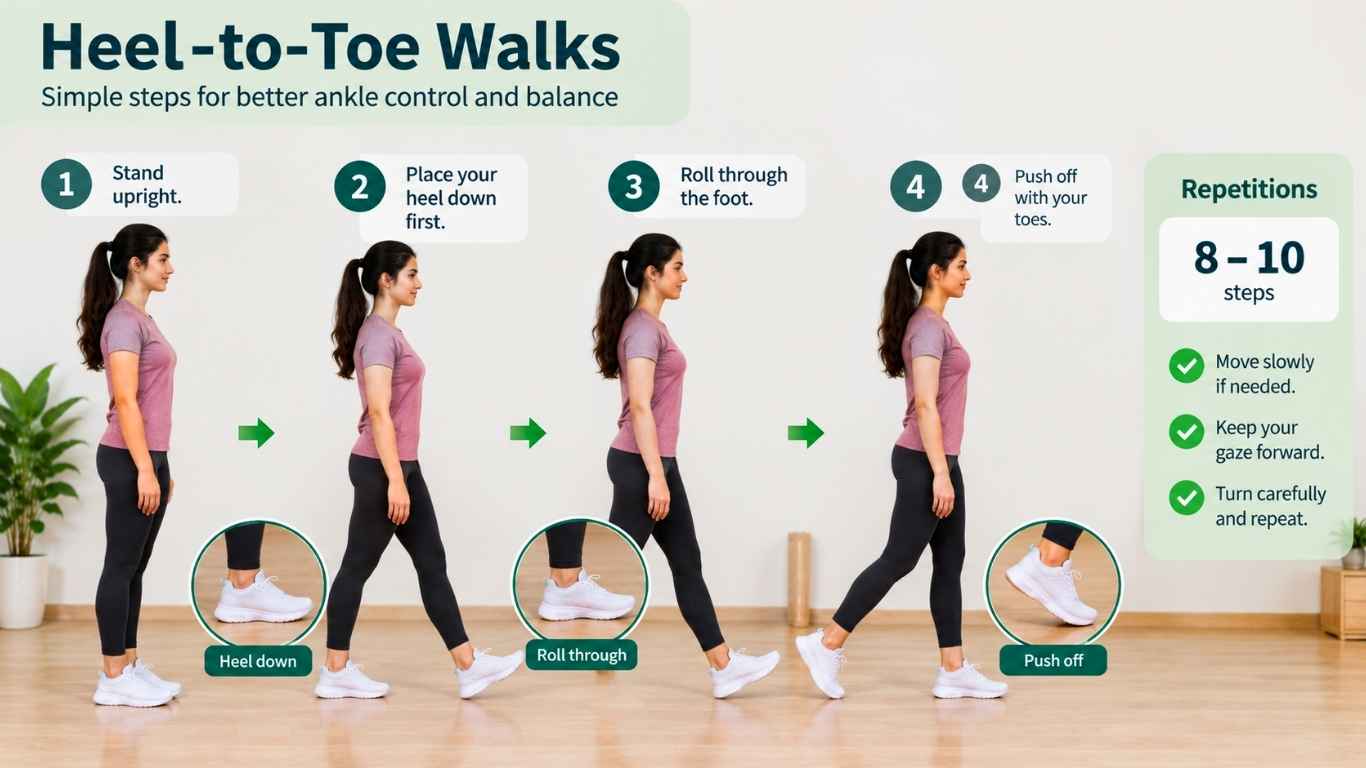
Heel-to-Toe Walks
Use a clear, stable surface and move slowly if your balance feels uncertain. Stand upright, then step forward by placing your heel down first and gradually rolling through the foot until the toes push off. Continue with controlled steps, keeping your gaze forward rather than looking constantly at your feet. Take 8–10 steps, turn carefully, and repeat if comfortable. This movement encourages ankle control while challenging balance during normal walking patterns.
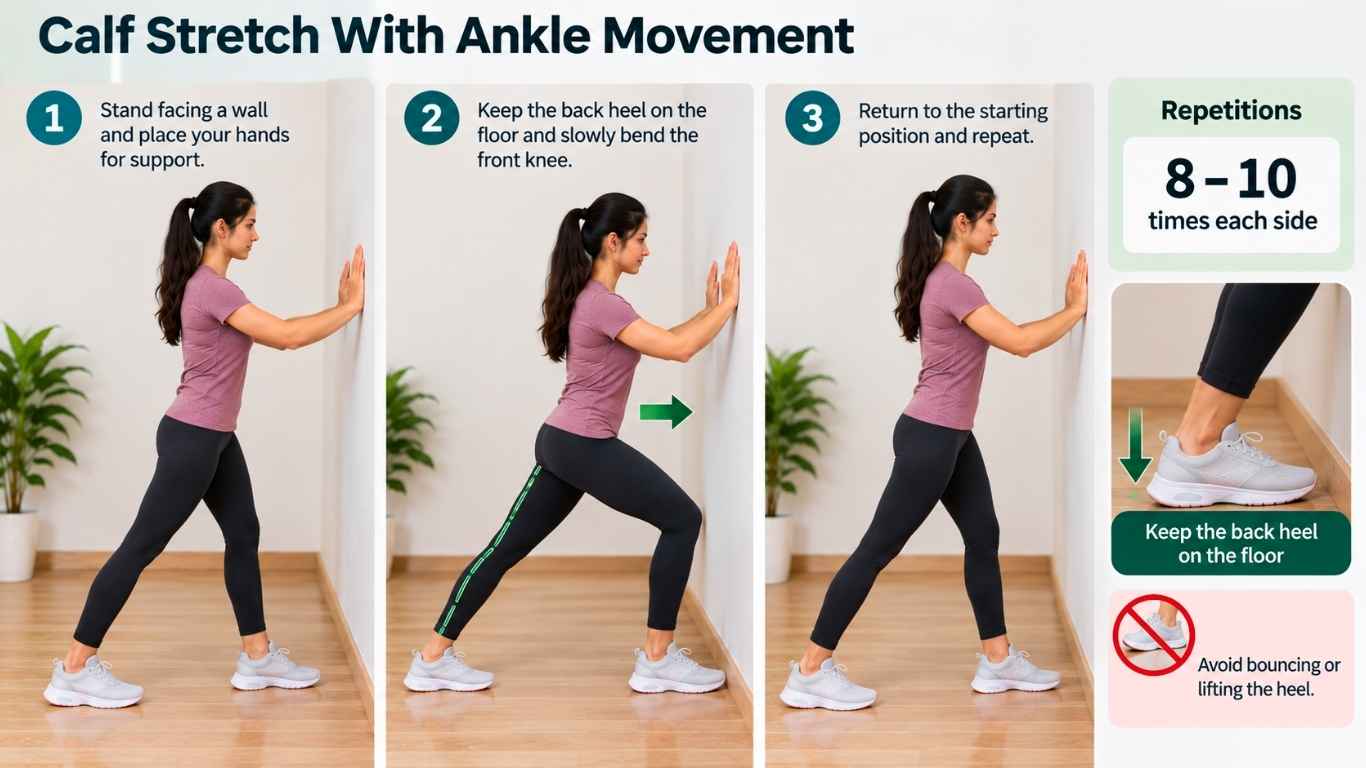
Calf Stretch With Ankle Movement
Keep your movements gentle if your calves or ankles feel tight. Stand facing a wall and place both hands against it for support. Step one foot back, keeping its heel on the floor and the leg comfortably straight. Slowly bend the front knee while allowing the back ankle to move naturally. Return to the starting position and repeat 8–10 times before switching sides. This combination encourages calf flexibility while allowing controlled ankle movement through a comfortable range. Avoid bouncing or forcing the heel upward.
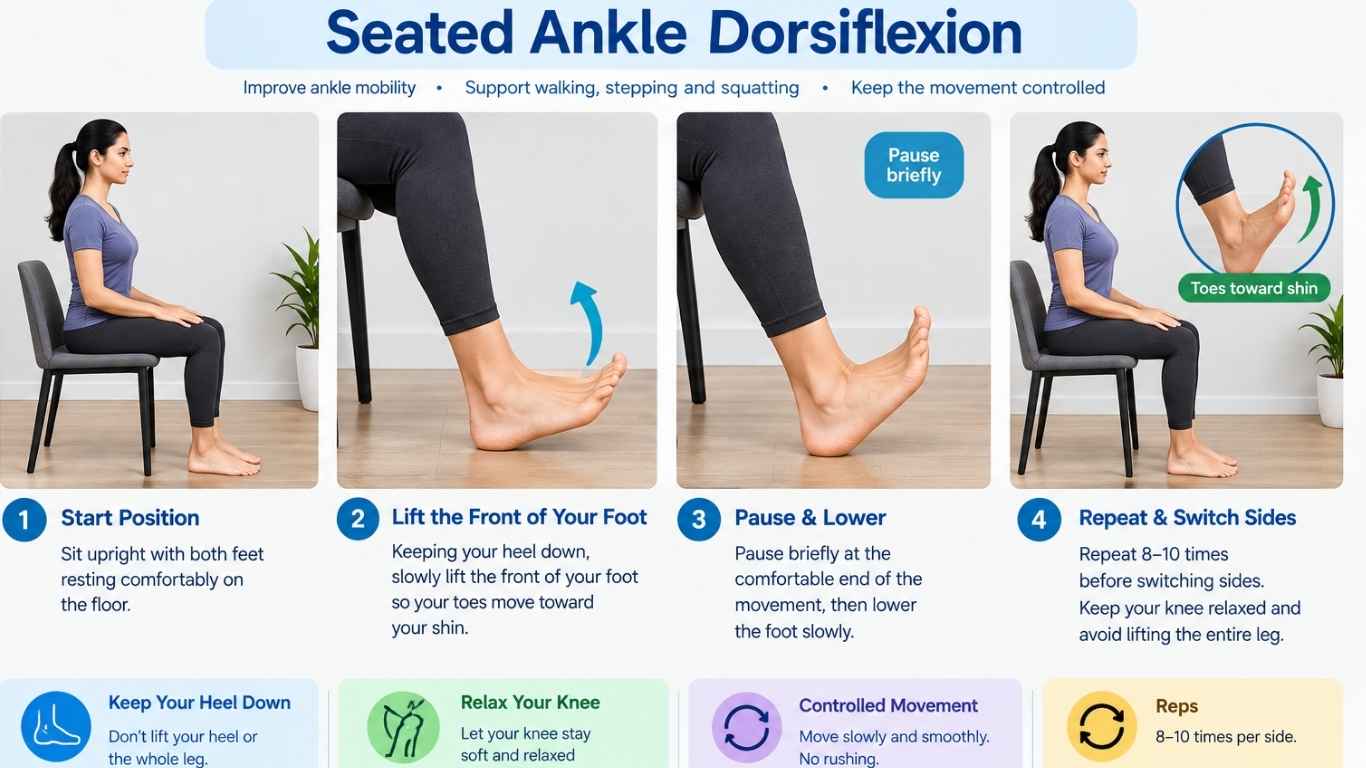
Seated Ankle Dorsiflexion
Sit upright with both feet resting comfortably on the floor. Keeping your heel down, slowly lift the front of one foot so your toes move toward your shin. Pause briefly at the comfortable end of the movement, then lower the foot slowly. Repeat 8–10 times before switching sides. Keep your knee relaxed and avoid lifting the entire leg. This controlled movement directly practices ankle dorsiflexion exercises, helping you work on the ankle’s ability to move the foot upward during activities such as walking, stepping, and squatting.
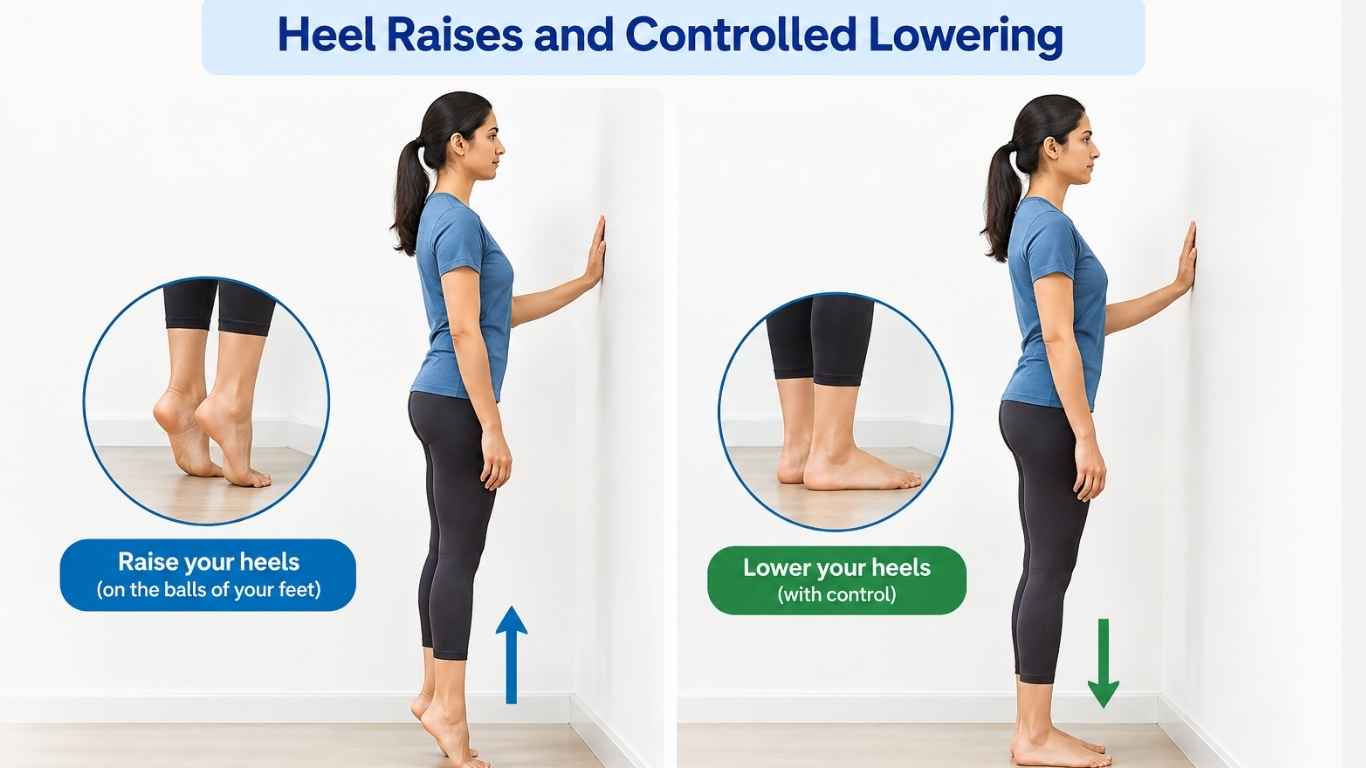
Heel Raises and Controlled Lowering
Keep the movement controlled rather than trying to lift as high as possible. Stand near a wall or sturdy surface for support, with your feet about hip-width apart. Slowly raise your heels while keeping your weight balanced over the balls of your feet. Pause briefly, then lower your heels back to the floor with control. Repeat 8–10 times, keeping the movement smooth throughout. This exercise encourages controlled ankle movement and helps you become more comfortable shifting your weight through the feet during standing and walking.
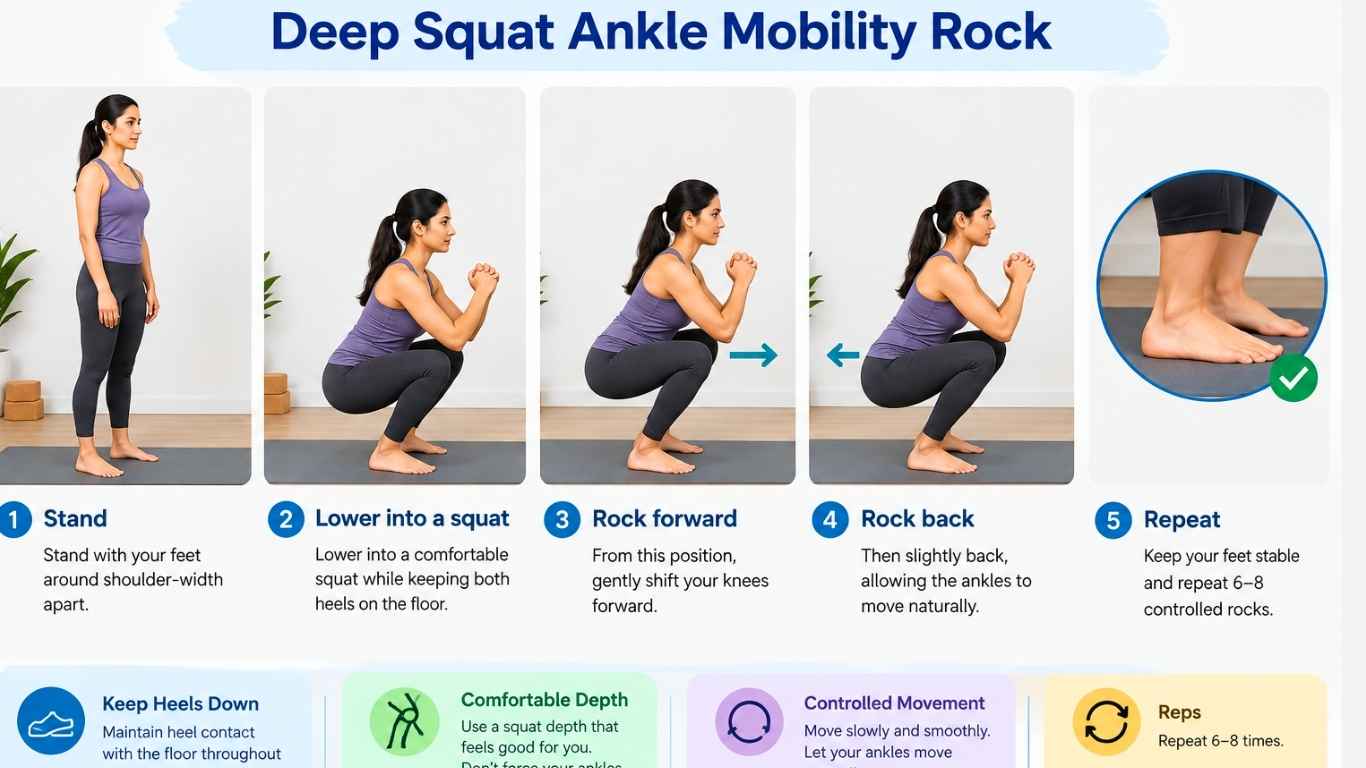
Deep Squat Ankle Mobility Rock
Use a comfortable squat depth and avoid forcing your heels or ankles into a deeper position. Stand with your feet around shoulder-width apart, then lower into a comfortable squat while keeping both heels on the floor. From this position, gently shift your knees forward and slightly back, allowing the ankles to move naturally. Keep your feet stable and repeat 6–8 controlled rocks. These ankle mobility exercises for squats can help you practice forward ankle movement while maintaining heel contact and controlled lower-body positioning.
What Research and Practical Experience Suggest
Research on ankle mobility commonly supports gradual, controlled movement rather than forcing the joint through a large range. After practicing these eight exercises consistently, I found that the movements felt easier when performed slowly, especially during ankle circles and knee-to-wall rocks. The routine also made everyday movements feel more controlled. This personal experience is only an observation, not clinical evidence. Research and rehabilitation guidance similarly emphasize comfortable range, controlled motion, and gradual progression rather than pushing into discomfort.
Ankle Mobility Exercises at Home
You can work on ankle movement at home without a gym or specialized equipment. A stable chair can provide support during standing movements, while a wall can help you maintain balance and posture. Choose a clear area where your feet can move freely.
The floor is useful for seated ankle movements because it allows you to relax your legs while focusing on controlled motion. A towel can also provide gentle assistance when you need support during certain movements. These ankle mobility exercises at home can easily fit into short daily sessions.
Many effective movements can be performed without equipment, which makes them convenient for beginners and busy schedules. Practicing ankle mobility exercises no equipment requires only a comfortable space and enough time to move slowly without rushing or forcing your range.
How to Improve Ankle Joint Mobility
Improving ankle mobility usually takes consistent practice rather than a single long session. Gentle movements performed regularly can help you gradually explore a comfortable range while building better control. Focus on quality and consistency instead of forcing quick changes.
- Practice mobility exercises consistently throughout the week
- Keep every movement controlled and comfortable
- Gradually increase your range as movement becomes easier
- Move the ankle in different directions regularly
- Include both forward and backward ankle movements
- Take regular movement breaks during long periods of sitting
Progress can vary between individuals and depends on your starting mobility and routine. Avoid rushing the process or forcing restricted movement. With regular practice, controlled movement, and gradual progression, ankle mobility may improve over time.
If your ankles often feel stiff after sitting for long periods, our guide on How to reduce joint stiffness after sitting shares simple ways to add more movement throughout the day.
Ankle Mobility for Squats
Good ankle movement can make it easier to keep your heels down and maintain a comfortable squat position. If your ankles feel restricted, begin with gentle forward movement before attempting a deeper squat. Ankle mobility exercises can be included in a warm-up to encourage comfortable ankle movement during squatting. Avoid forcing your knees forward or lowering farther than you can control.
Ankle Mobility for Runners and Athletes
Runners and athletes rely on their ankles for walking, running, landing, pushing off, and changing direction. Maintaining comfortable ankle movement can support better control during these activities. Gentle mobility work can be included before training or during recovery sessions. However, mobility exercises should complement proper training, strengthening, footwear, and recovery rather than replace them.
How Often Should You Do Ankle Mobility Exercises?
Consistency is generally more useful than occasional long sessions. Start with around 5–10 controlled repetitions per movement and practice regularly throughout the week. As the movements become easier, gradually increase repetitions or divide your routine into shorter sessions. Ankle flexibility exercises can also fit naturally into warm-ups or movement breaks. Stay within a comfortable range and reduce the amount if your symptoms worsen.
Ankle flexibility exercises can also fit naturally into warm-ups or movement breaks. For a broader morning routine, see our Morning Stretches for Stiff Joints guide.
What Are the Benefits of Better Ankle Mobility?
Better ankle mobility can make everyday and exercise-related movements feel more natural. Maintaining comfortable movement may help your ankles adapt to different positions while supporting smoother coordination between your feet, ankles, and lower body.
- Supports a better range of ankle motion
- Makes walking movements feel more comfortable
- Helps maintain smoother squatting mechanics
- Supports better control during lower-body movements
- Makes ankle flexibility easier to maintain
The benefits can vary depending on your current movement and activity level. Consistent, comfortable mobility work can support everyday ankle function.
Can Ankle Mobility Improve Flexibility?
Yes, working on ankle mobility can contribute to better flexibility, but mobility and flexibility are not exactly the same. Mobility involves how well a joint moves with control, while flexibility refers more to how easily muscles and surrounding tissues lengthen.
Regular mobility work can help you gradually use a greater comfortable range of motion. Combining controlled joint movements with appropriate stretching may support overall ankle flexibility without forcing the joint beyond its natural range.
When Should You Modify or Stop an Exercise?
Ankle mobility exercises should feel controlled and manageable rather than painful. Modify or stop a movement if you experience sharp pain, increasing discomfort, noticeable swelling, or a feeling of instability. You can reduce the range of motion, slow the movement, or decrease repetitions when necessary.
If symptoms continue to worsen or interfere with normal activities, stop the routine and consider getting guidance from a qualified healthcare professional.
FAQs
How do I increase my ankle mobility?
Start with gentle movements such as ankle circles, dorsiflexion, and controlled ankle rocks. Practice consistently and gradually explore a larger range as your movement becomes easier. Avoid forcing the joint or pushing through pain.
What are the signs of poor ankle mobility?
Common signs include stiffness, limited ankle movement, difficulty bringing the toes toward the shin, and heels lifting during squats. You may also notice certain walking or exercise movements feel less comfortable or controlled.
How do I loosen up stiff ankles?
Gentle movement is a good place to start. Try ankle circles, slow forward ankle movements, and controlled rocks. A few minutes of easy movement can help your ankles feel more comfortable, particularly after sitting or staying inactive.
How long does it take to improve ankle mobility?
There is no exact timeline because progress depends on your starting range, consistency, and daily activity. Some people may notice easier movement relatively quickly, while larger changes can take longer. Regular practice is more important than rushing the process.
What are some good exercises for ankle mobility?
Ankle circles, ankle alphabet, knee-to-wall rocks, heel-to-toe walks, and seated dorsiflexion are useful options. Choose movements that feel comfortable and focus on smooth, controlled motion rather than trying to reach the maximum possible range.
Can weak ankles be strengthened?
Yes, strengthening can help support the muscles around the ankle. Controlled heel raises and balance exercises can improve strength and movement control. If you experience significant weakness or ongoing instability, professional guidance can help determine suitable exercises.
Conclusion
Keeping your ankles moving regularly can make everyday activities feel smoother and more comfortable. Ankle mobility exercises for joint flexibility can help you practice controlled movement, maintain range of motion, and support better ankle control. Start with gentle exercises such as ankle circles, ankle alphabet, and knee-to-wall rocks, then gradually progress as your movement becomes easier. You do not need special equipment or a long workout. A few minutes of consistent practice can fit easily into your daily routine. Avoid forcing the joint or continuing through sharp pain, and adjust the movements whenever necessary.
References
The following trusted medical and research sources were reviewed to support the ankle mobility exercises, flexibility guidance, and movement recommendations discussed in this article.
- Ankle Exercises — Leeds Teaching Hospitals NHS Trust
- Flexibility-Enhancing Interventions for Ankle Range of Motion — PubMed
- Mobilization With Movement and Ankle Range of Motion — PubMed
- Effects of Ankle and Foot Exercises on Flexibility, Balance, and Mobility — PubMed
This site’s team reviewed these medical and research sources to help ensure the exercise information is practical, evidence-informed, and responsibly presented.