
Do your shoulders feel rounded after sitting for long periods? Does your upper back feel tight when you try to stand tall or twist your body? These are common signs that your thoracic spine may not be moving as freely as it should. Improving mobility in this area can help you move more comfortably while supporting healthier posture. Upper spine mobility exercises for better posture are simple movements that improve flexibility in the upper back, reduce stiffness, and help your spine, shoulders, and neck work together more efficiently.
In this guide, you’ll learn why upper spine mobility matters, discover beginner-friendly exercises, follow an easy daily routine, and find practical tips to improve posture and move with greater comfort.

Why Upper Spine Mobility Matters
The thoracic spine is the middle section of your back that connects the neck and lower back. It allows your upper body to rotate, reach, and bend with greater ease while supporting an upright posture. Healthy thoracic spine mobility helps your shoulders, ribs, and upper back move together more naturally during everyday activities.
When movement through the upper spine becomes restricted, your neck and shoulders often take on extra work. Over time, this may contribute to stiffness, reduced shoulder movement, and a rounded posture that makes daily tasks feel less comfortable. Restoring flexibility in this area helps your body move more efficiently and with less unnecessary strain.
Signs Your Upper Spine May Be Stiff
A stiff upper spine rarely causes noticeable problems all at once. Instead, small changes in the way your body feels and moves often appear first. Recognizing these early warning signs can help you take action before stiffness begins to affect your comfort or posture.
Some of the most common signs include:
- Rounded shoulders during sitting or standing.
- Frequent neck tightness after desk work.
- Limited shoulder movement overhead.
- Mid-back stiffness after prolonged sitting.
- Poor sitting posture for extended periods.
- Difficulty standing upright comfortably.
These changes do not always indicate a serious problem, but they can suggest that your upper spine is not moving as freely as it should. Paying attention to them early makes it easier to restore comfortable movement and support better posture over time.
What Causes Poor Upper Spine Mobility?
Many daily habits can gradually reduce movement in the upper spine without you noticing. Spending long periods in the same position, moving less throughout the day, and repetitive activities can all contribute to stiffness over time. Understanding these common causes makes it easier to identify habits that may be affecting your posture.
Some of the most common causes include:
- Sitting for long hours with minimal movement.
- Desk work that encourages prolonged slouching.
- Frequent phone use with the head tilted forward.
- Lack of regular physical activity.
- Natural age-related changes in joint flexibility.
These factors often develop gradually rather than appearing suddenly. Making small adjustments to your daily habits can help maintain comfortable upper spine movement and support healthier posture over time.
The 6 Best Upper Spine Mobility Exercises
Keeping your upper spine flexible does not require advanced workouts or special equipment. A few controlled movements performed consistently can ease stiffness, increase comfort, and make everyday activities feel easier. The following thoracic mobility exercises are suitable for beginners and can be added to almost any daily routine.
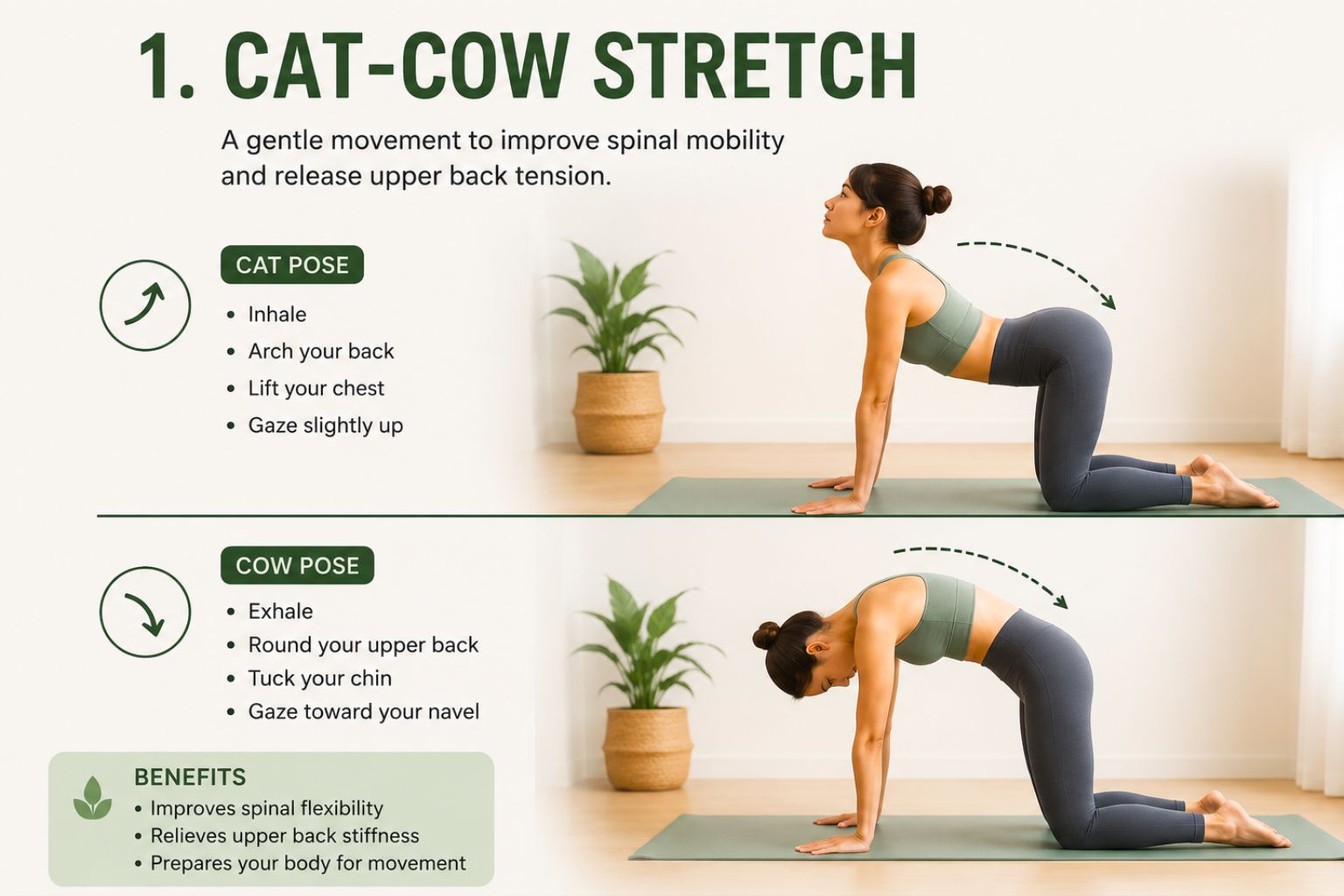
1. Cat-Cow Stretch
Begin on your hands and knees with your wrists directly below your shoulders and your knees beneath your hips. As you inhale, gently arch your back and lift your chest slightly. As you exhale, round your upper back and tuck your chin comfortably. Continue moving with your breath for 8–10 repetitions. This exercise encourages smoother spinal motion, eases stiffness, and prepares your upper back for the movements that follow.
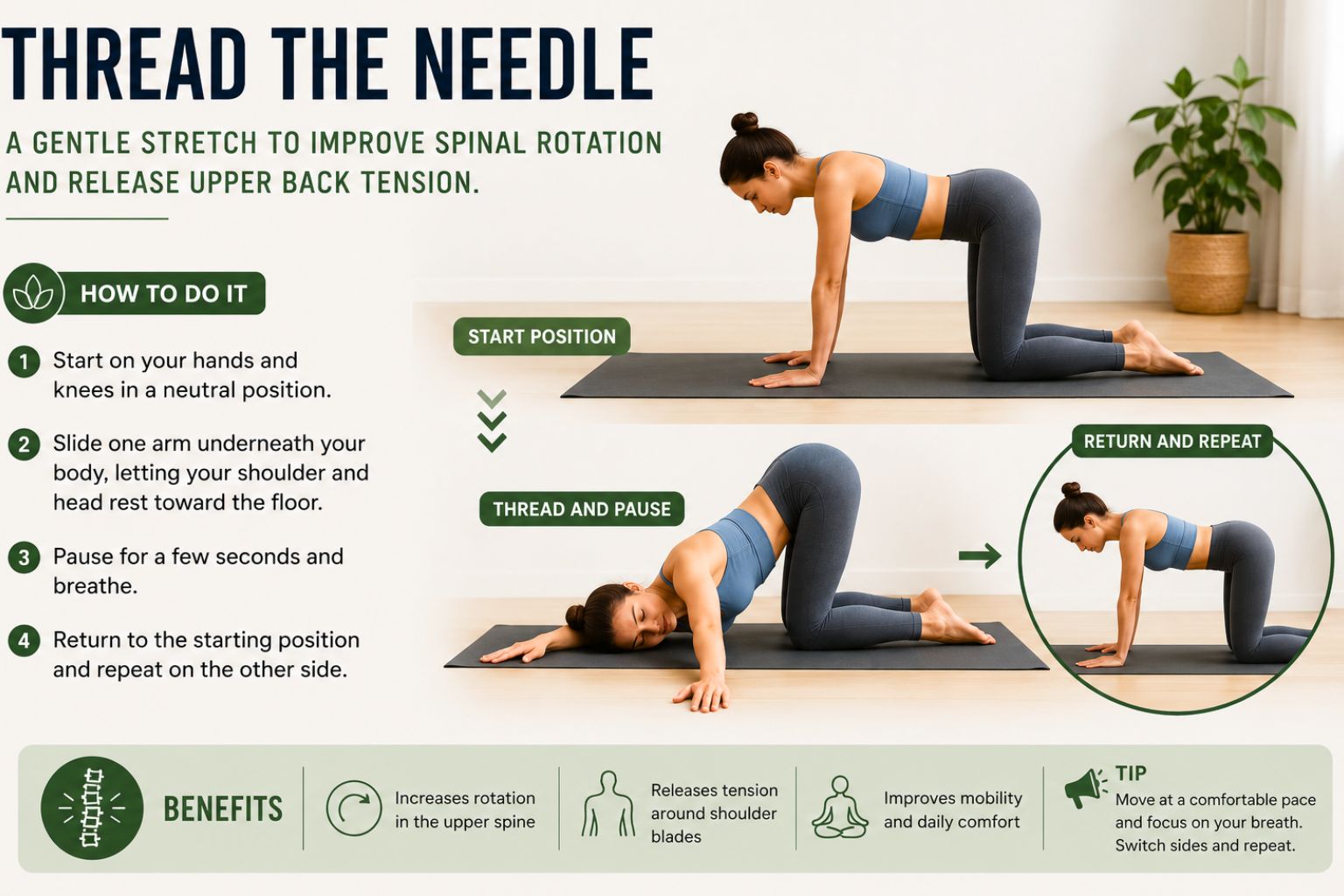
2. Thread the Needle
Start in an all-fours position with your back in a neutral position. Slide one arm underneath your body, allowing your shoulder and the side of your head to move toward the floor. Pause for a few seconds, then return to the starting position before switching sides. This movement increases rotation through the upper spine, releases tension around the shoulder blades, and helps improve overall comfort during daily activities.
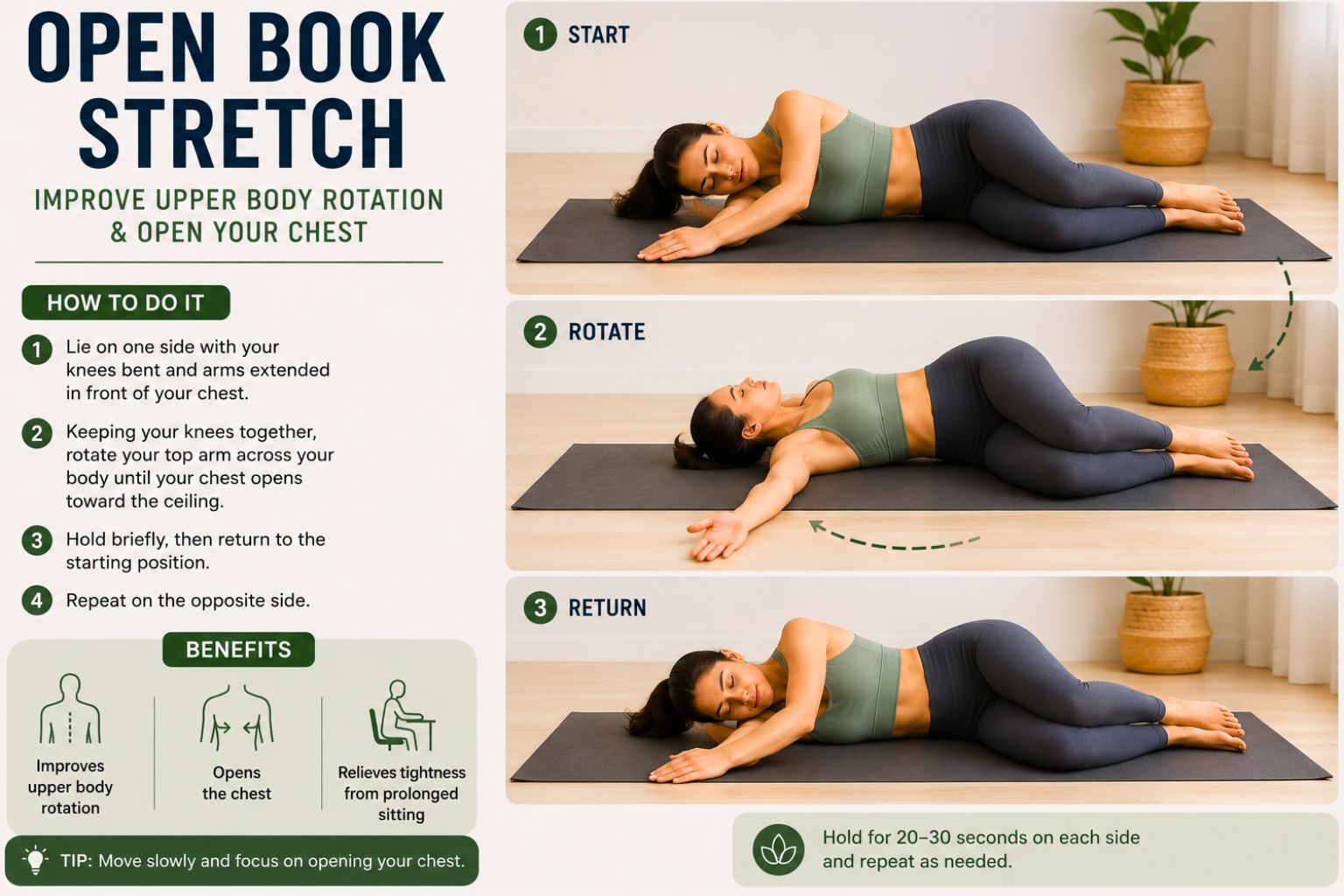
3. Open Book Stretch
Lie on one side with your knees bent at a comfortable angle and your arms extended in front of your chest. Keeping your knees together, rotate your top arm across your body until your chest opens toward the ceiling. Hold briefly before returning to the starting position and repeating on the opposite side. This stretch improves upper body rotation, opens the chest, and helps relieve tightness caused by prolonged sitting.
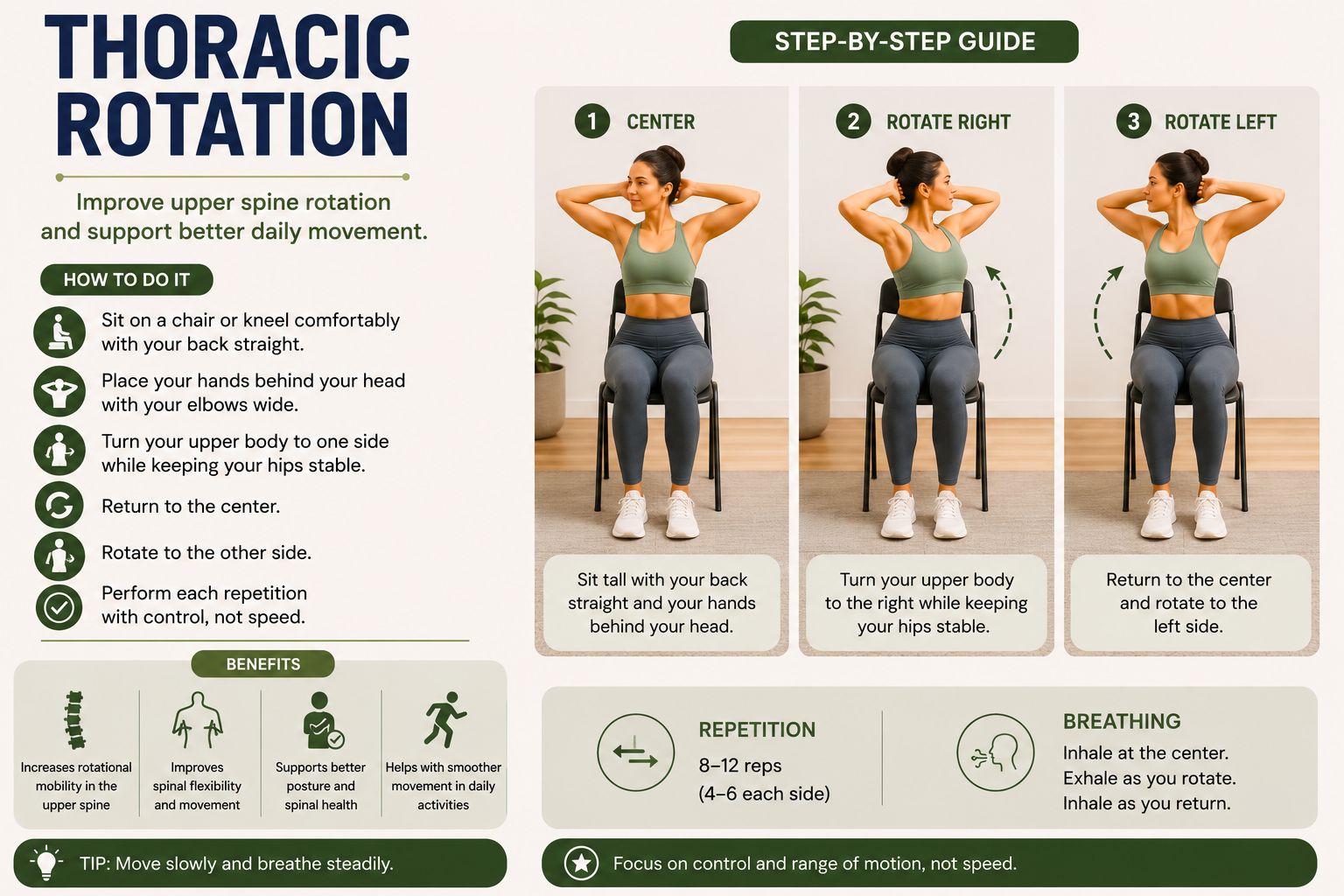
4. Thoracic Rotation
Sit on a chair or kneel comfortably with your back straight and your hands placed behind your head. Turn your upper body toward one side while keeping your hips stable, then return to the center before rotating to the other side. Perform each repetition with control instead of speed. This exercise increases rotational mobility in the upper spine and supports smoother movement during everyday tasks.
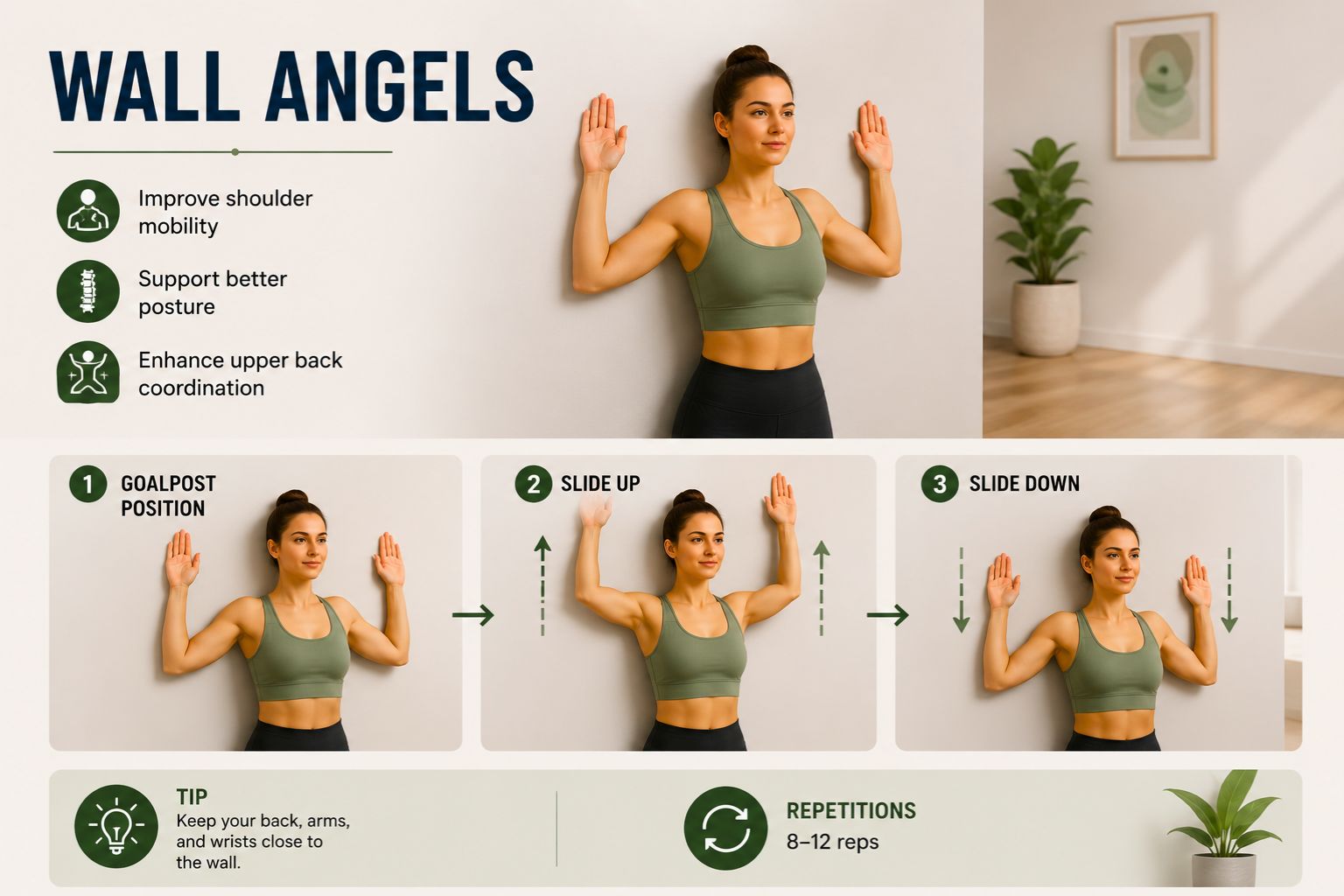
5. Wall Angels
Stand with your back against a wall, keeping your head, shoulders, and hips in gentle contact with the surface. Bend your elbows to form a goalpost position, then slide your arms upward before lowering them back down. Try to keep your arms close to the wall throughout the movement without forcing them. This exercise supports healthier shoulder mechanics, encourages better posture awareness, and improves coordination between the shoulders and upper back.
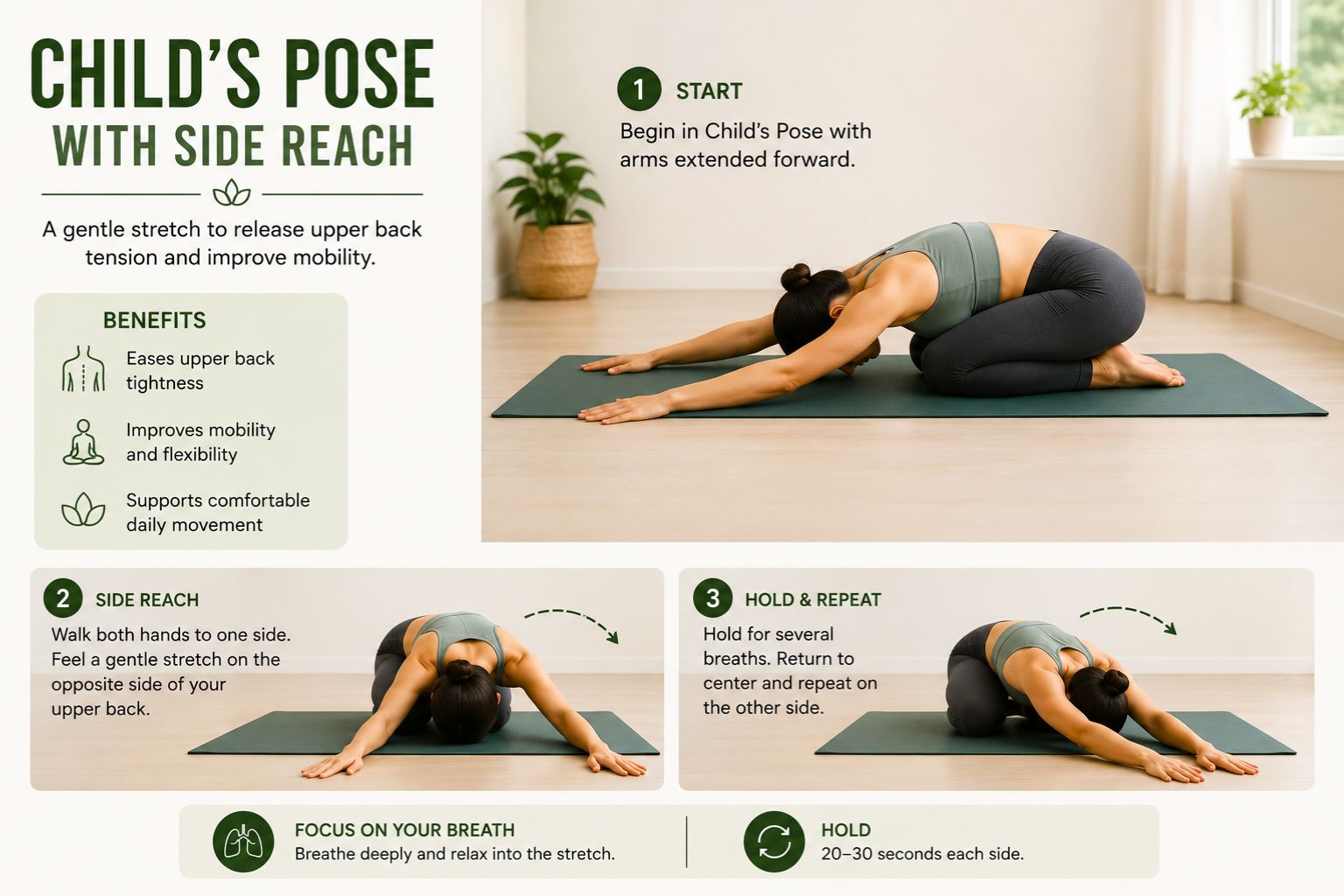
6. Child’s Pose with Side Reach
Begin in Child’s Pose with your hips resting comfortably toward your heels and your arms stretched forward. Walk both hands to one side until you feel a comfortable stretch along the opposite side of your upper back. Hold the position for several breaths before repeating on the other side. This movement helps ease tightness around the upper back and complements other upper back mobility exercises for maintaining comfortable daily movement.
Looking for additional ways to reduce neck tension? Continue with our Yoga for Neck Pain Relief guide to build a more complete posture routine.
Beginner Upper Spine Mobility Routine
Keeping your upper spine flexible does not require a lengthy workout. This beginner-friendly routine takes about 10–12 minutes and combines simple posture exercises with controlled practice to ease stiffness and support better mobility. Focus on steady technique rather than speed to get the most from each exercise.
Warm-up (2 Minutes)
Start with shoulder rolls, light neck stretches, and arm circles to prepare your muscles and joints. Warming up increases circulation, loosens tight areas, and helps your body get ready for the routine ahead.
Mobility Flow (5–8 Minutes)
Practice Cat-Cow Stretch, Thread the Needle, Open Book Stretch, Thoracic Rotation, Wall Angels, and Child’s Pose with Side Reach. Perform 8–10 repetitions or hold each stretch for 20–30 seconds. These thoracic mobility exercises work together to increase flexibility, improve spinal rotation, and reduce upper back stiffness.
Cool-down (2 Minutes)
Finish with relaxed breathing and easy stretches for your chest, shoulders, and neck. Take a few moments to let your muscles relax before returning to your normal activities. A brief cool-down helps release lingering tension and leaves your upper back feeling refreshed.
Benefits You Can Expect
Consistent practice can make a noticeable difference in how your upper body feels and functions. While results vary from person to person, many people experience gradual improvements in flexibility, posture, and overall comfort when these exercises become part of their weekly routine.
Benefits may include:
- Better posture throughout daily activities.
- Improved upper back mobility.
- Less neck stiffness and tension.
- Better shoulder movement and control.
- Improved spinal flexibility.
- Easier, more comfortable breathing.
- Reduced muscle tension across the upper back.
These improvements are usually achieved through regular practice rather than quick results. Combining mobility work with strengthening exercises and healthy daily habits can provide better long-term support for your posture and upper back health.
Looking to improve your neck alignment as well? Continue with our Chin Tucks for Forward Head Posture guide to complement your upper spine mobility routine.
Common Mistakes During Upper Spine Mobility Exercises
Wrong body movement during mobility exercises can diminish the outcomes and cause discomfort. Common errors prevent you from executing exercises safely and effectively. Avoiding them helps you function well in your upper back.
- Excessive speed may decrease control and effectiveness of the exercise.
- Utilizing the lower back can cause unwanted stress when performing motion.
- Breathing can help create tension and decrease relaxation.
- Stretching past the point could lead to pain or strain.
- Not doing a warm up can cause muscles to become tight and ready.
- Results of thoracic spine mobility training are impacted by poor alignment.
Avoiding the following common mistakes will help you to execute mobility exercises safely and effectively. If done with the correct technique, controlled movements and consistent practice, flexibility, posture and healthy movement patterns can be improved over time.
How Often Should You Practice?
How often you should be exercising each week will depend on your training goal, fitness level, and schedule. For beginners, it is best to begin with mild sessions several times a week, then slowly build up the amount of sessions. A few sets done right with good form is more important than many reps.
These movements can be done in the morning to help with mobility and to get the body tuned up, or at night to help loosen up. Increase for duration, reps or difficulty slowly to prevent injuries. Upper back mobility exercises are effective to improve the quality of movement and maintain flexibility over the long-term. Pay attention to your body, don’t over-do it and be consistent to get the best results.
Can Upper Spine Mobility Improve Posture?
Better upper spine mobility can be important when it comes to developing better posture and avoiding stiffness throughout the day. Finally, there are indications that frequent mobility exercises can help make the spine more mobile, more flexible and better aligned when coupled with correct exercise habits. However, if one sees some changes this is because of consistency, lifestyle factors, and the proper execution of the moves.
While many people notice that their comfort and mobility improve in just a few weeks with consistent practice, bigger postural shifts will take longer and patience. In addition to thoracic mobility exercises, good sitting, core and back strengthening exercises, and breaking up long hours in front of screens can help achieve better outcomes. You can also refer you our guide on How to Fix Text Neck from Phone Use for more posture improvement tips.
Tired of Slouching? Improve Your Posture by Unlocking Better Upper Spine Movement. Start Your Posture Improvement Journey Today: How to Fix Text Neck from Phone Use
Simple Habits to Keep Your Upper Spine Mobile
Maintaining healthy movement habits throughout the day can help reduce stiffness and support better posture. Simple lifestyle changes combined with regular practice can improve flexibility and comfort. Including thoracic mobility exercises in your routine may help keep your upper spine active and moving efficiently.
Here are some simple habit for keep your upper spine mobile:
- Improve your desk setup with proper screen and chair height.
- Change positions often to avoid staying still for long periods.
- Stretch every hour to release tension and maintain flexibility.
- Strengthen the upper back muscles for better support.
- Limit screen time to reduce neck and spine strain.
- Practice deep breathing to encourage relaxed upper body movement.
- Maintain awareness of your posture during daily activities.
Consistent daily habits can make a significant difference in keeping your upper spine mobile. Small changes help prevent stiffness, improve movement quality, and support long-term posture health.
FAQ
What are exercises for the upper spine mobility?
Upper Spine Mobility Exercises are the gentle moving exercises which will help maintain flexibility, decrease stiffness, and help with posture. The exercises are designed to develop movement quality and promote healthy spinal function with controlled movements.
Are these exercises the cure for rounded shoulders?
Here are some exercises to help you fix rounded shoulders by making your upper back a little bit more flexible and strengthening the associated muscles. But if you practice upper back mobility while being aware of your posture and performing strength training, you’ll find that you get more long-term benefits.
What is the recommended time for a mobility session?
A mobility session can take between 10–15 minutes, depending on your fitness level and goals. Shorter sessions more frequently done is more beneficial than longer sessions done less often.
Can beginners do these exercises?
Yes, upper spine mobility exercises are safe for beginners, as most are easy to modify and gentle. Easing the pace and using good form reduces risk of discomfort and boosts confidence.
What equipment is needed?
Well, the majority of the mobility exercises don’t need any special apparatus. You can do them with your own body weight, a yoga mat and some space to move around at home.
Do mobility exercises help relieve neck pain?
Mobility exercises can be helpful to decrease discomfort in the neck, enhance posture, relax the muscles and promote better movement patterns. They are particularly advantageous if the stiffness is due to bad sitting posture.
How often should I go and practice?
Try to do the mobility exercises regularly, 3-5 times per week for best results. Over time consistency will improve flexibility, movement control, and posture support.
When do I stop exercising?
If you have pain, dizziness or discomfort that doesn’t feel normal, stop exercising. Stretching is acceptable but there should be no increase in pain or worsening of symptoms.
Conclusion
Correct posture and mobility for the upper body takes ongoing motion and healthy habits. Upper spine mobility exercises for better posture can help improve flexibility, movement quality and a healthy spine. In addition to regular exercises, proper sitting habits, breaks, and strengthening of supporting muscles, can lead to better long-term results. Keep in mind slow and controlled movements; no rushing through exercises. People from all levels of experience and fitness can benefit from a regular exercise program to become more mobile and improve posture for daily activities.
Helpful References & Reliable Sources
- Mayo Clinic – Stretching and Flexibility Basics
- Harvard Health – Yoga Benefits Beyond the Mat
- Johns Hopkins Medicine – Benefits of Yoga
- ACE Fitness – Mobility Training Basics
Disclaimer: This content is for educational purposes only and does not replace medical advice. Always consult a qualified healthcare professional before starting any new exercise routine.
Reviewed & Compiled by: YOGA FLEX ZONE Editorial Team