
Joint pain make simple movements feel more difficult, but that doesn’t mean seniors need to avoid physical activity altogether. The right approach is to choose movements that feel steady, controlled, and comfortable rather than forcing flexibility or balance. Low impact yoga for seniors offers an adaptable way to stay gently active, with options such as seated poses, chair support, and smaller ranges of motion. This guide covers simple poses, helpful modifications, and practical ways to make yoga more comfortable when joint pain affects everyday movement.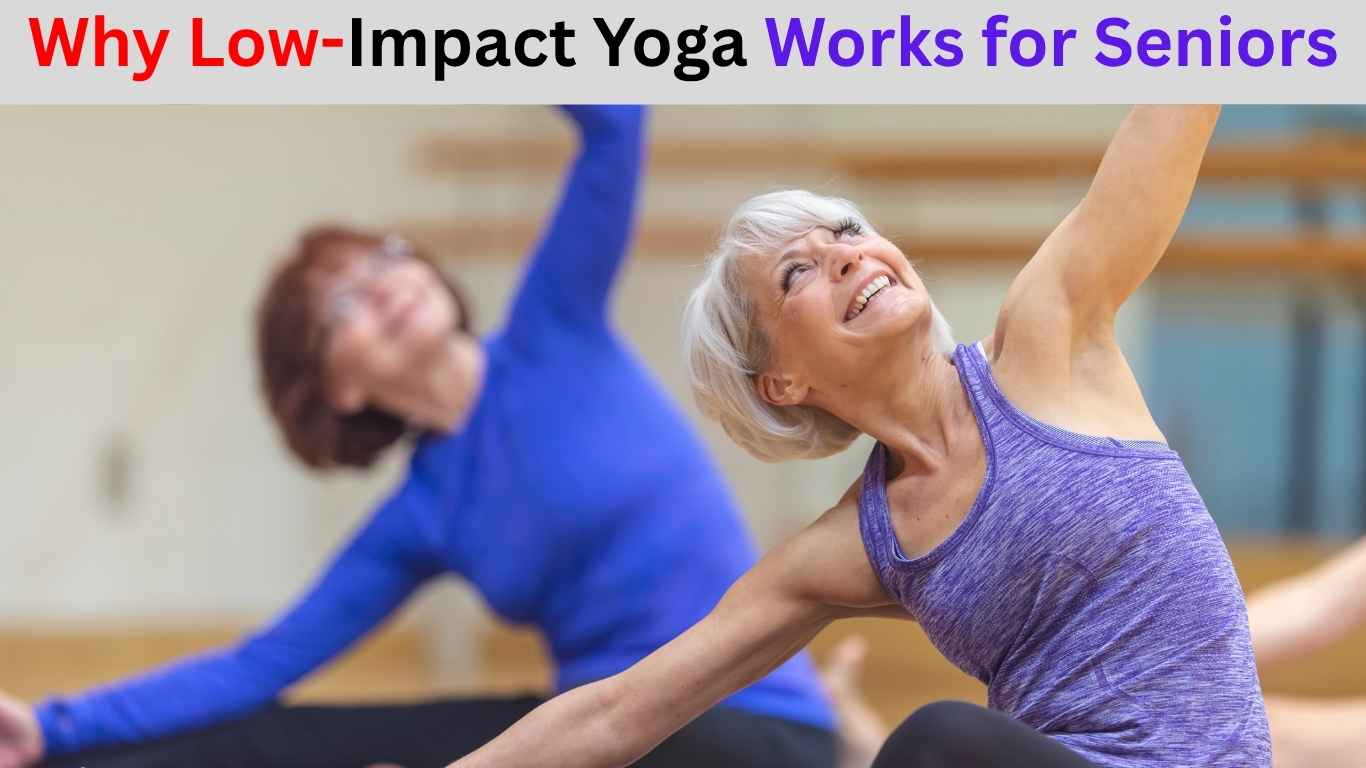
Why Low-Impact Yoga Works for Seniors
Getting older naturally change how easily the body bends, balances, and handles physical activity. Joint discomfort and reduced daily movement may make some exercises feel too demanding, but staying active does not have to mean pushing through difficult movements. Low impact yoga for seniors provides a gentler option by using controlled poses, steady transitions, and modifications that can be adjusted to different abilities.
These movements can support flexibility, balance, and the muscles involved in everyday activities such as standing, walking, and reaching. For seniors, comfort is often more important than intensity. Working within a manageable range allows you to stay consistent while reducing unnecessary strain and making each session feel more approachable.
For more helpful tips, explore our related guide below: Yoga for Joint Pain Relief | A Complete Guide
How to Start Safely
A safe setup can make yoga more comfortable and manageable, especially when balance or mobility feels limited. Prepare your space first, then keep movements controlled and within a comfortable range that feels natural.
- Keep a stable chair or wall nearby.
- Practice on a firm, non-slip surface.
- Wear loose, comfortable clothing for movement.
- Start each pose with small movements.
- Never force movement that causes pain.
Starting gently helps make senior-friendly yoga easier to practice consistently. For more focused mobility work, explore our Joint Mobility Exercises for Healthy Movement guide for simple movements that complement your routine.
6 Gentle Yoga Poses for Seniors
These poses are selected for older adults who want comfortable movement without demanding deep stretches or difficult transitions. Using a chair when needed make the routine feel more manageable, particularly when balance or mobility is a concern. Move slowly, stay within your comfortable range, and adjust each pose to your needs.
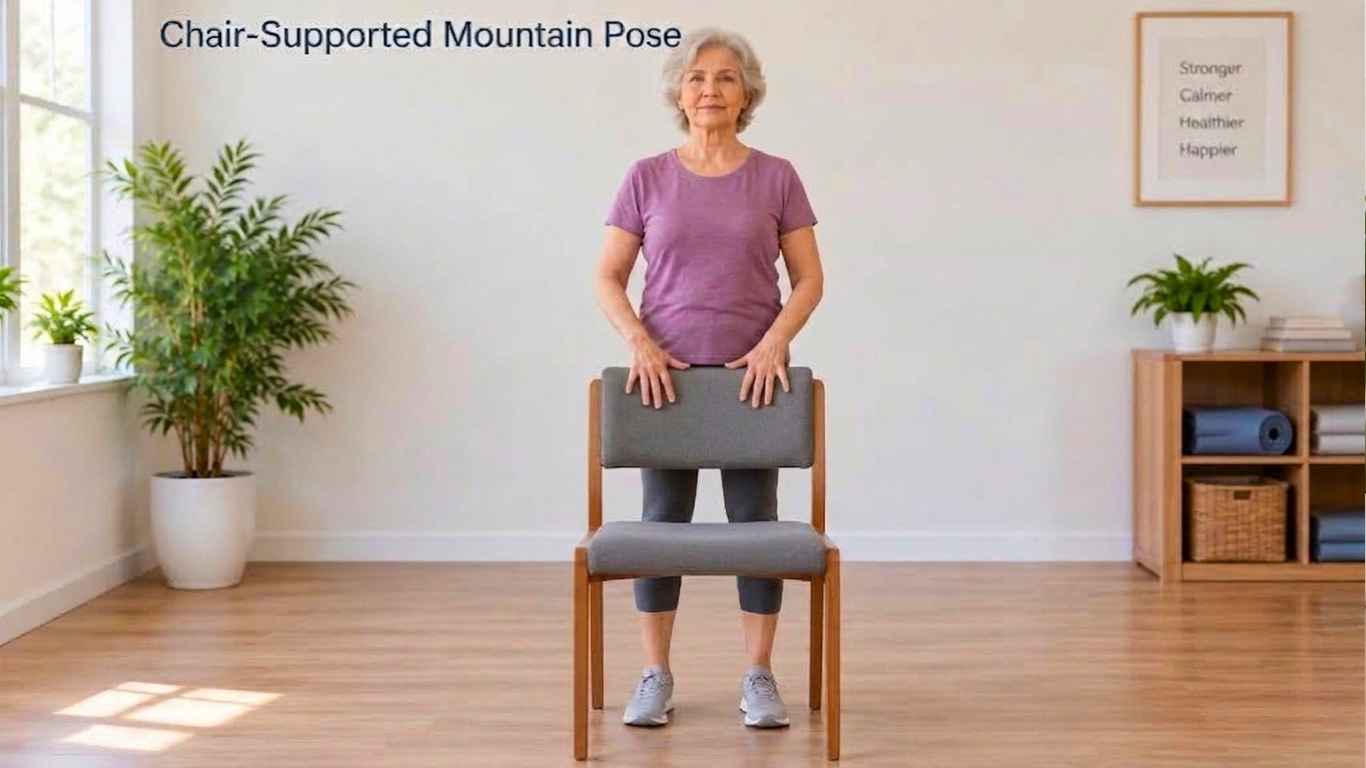
Chair-Supported Mountain Pose
Stand behind a sturdy chair with your feet about hip-width apart and lightly rest your hands on the backrest. Keep your chest comfortably lifted, shoulders relaxed, and knees soft rather than locked. Hold for 30–60 seconds while breathing naturally. This simple position encourages upright posture, leg engagement, and awareness of how your weight is distributed through your feet. From experience, having the chair within reach can make standing practice feel less intimidating when balance is not as steady as it once was. Keep the chair stable and avoid leaning heavily on it. This is a practical option for senior-friendly yoga when standing without support feels uncertain.
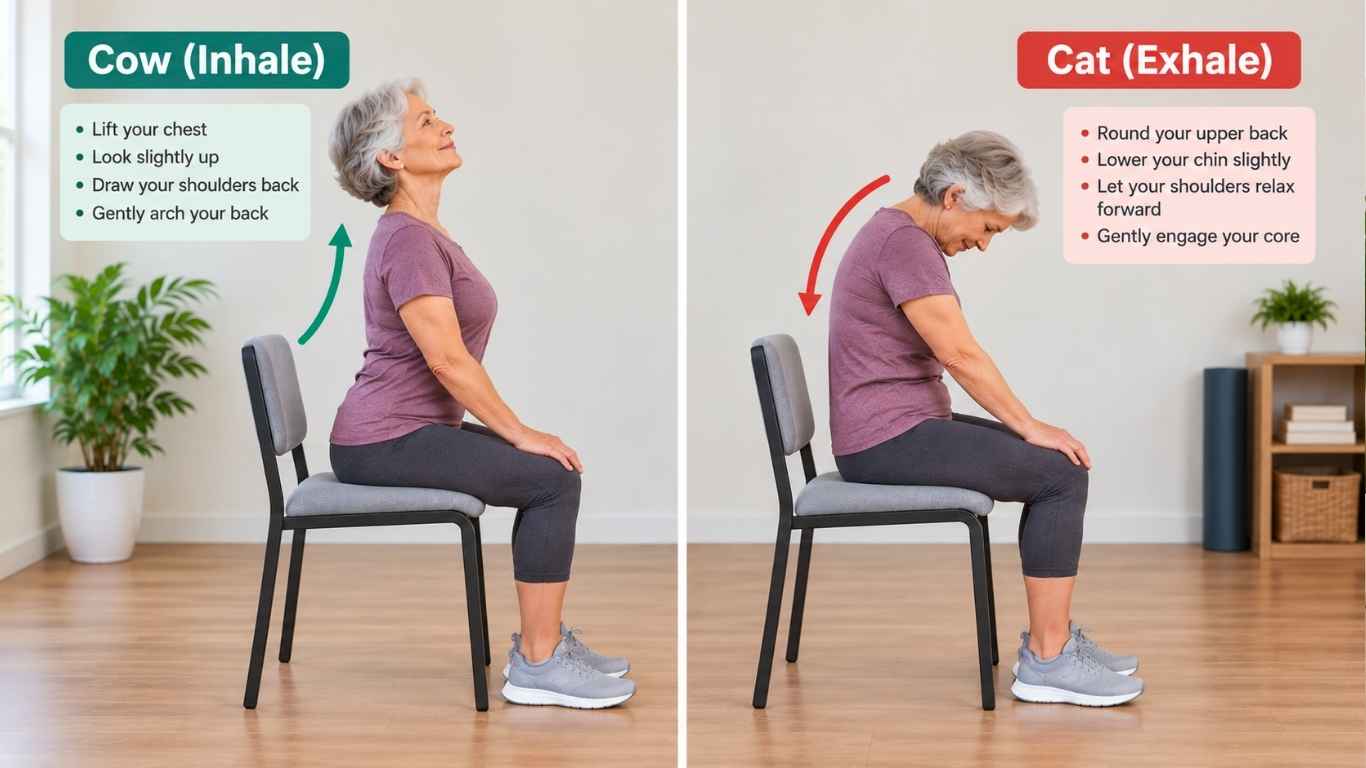
Seated Cat-Cow
Sit near the front of a sturdy chair with both feet flat and your hands resting on your thighs. As you inhale, gently lift your chest and draw your shoulders back; as you exhale, round your upper back and lower your chin slightly. Continue for 6–8 slow repetitions, coordinating each movement with your breathing. This seated variation gently moves the spine while keeping your feet supported, making it useful when getting down to the floor is uncomfortable. Many people find gentle yoga for seniors easier to approach when movements can be performed from a chair. Keep the motion smooth and small, and avoid forcing your neck or spine into either position.
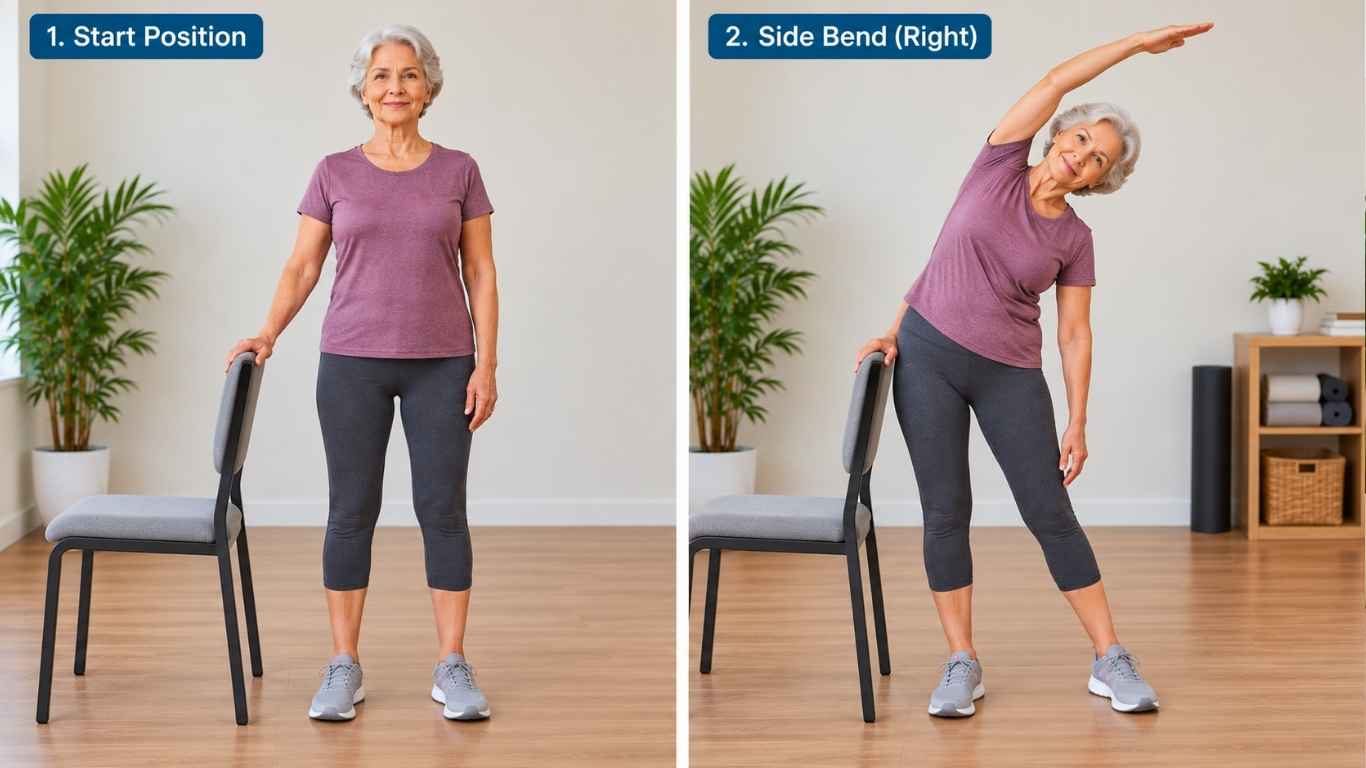
Chair-Supported Side Bend
Stand beside a sturdy chair and place one hand securely on the backrest. Set your feet comfortably apart with your knees relaxed and your torso upright. Lift your free arm overhead, then slowly lean away from the chair until you notice a gentle stretch along your side. Return to center and switch sides, completing 4–6 repetitions each. This variation opens the side body while giving you a reliable point of support. Keeping the chair close can make the pose feel more confident when balance is limited. Avoid rotating your torso or leaning farther than feels natural.
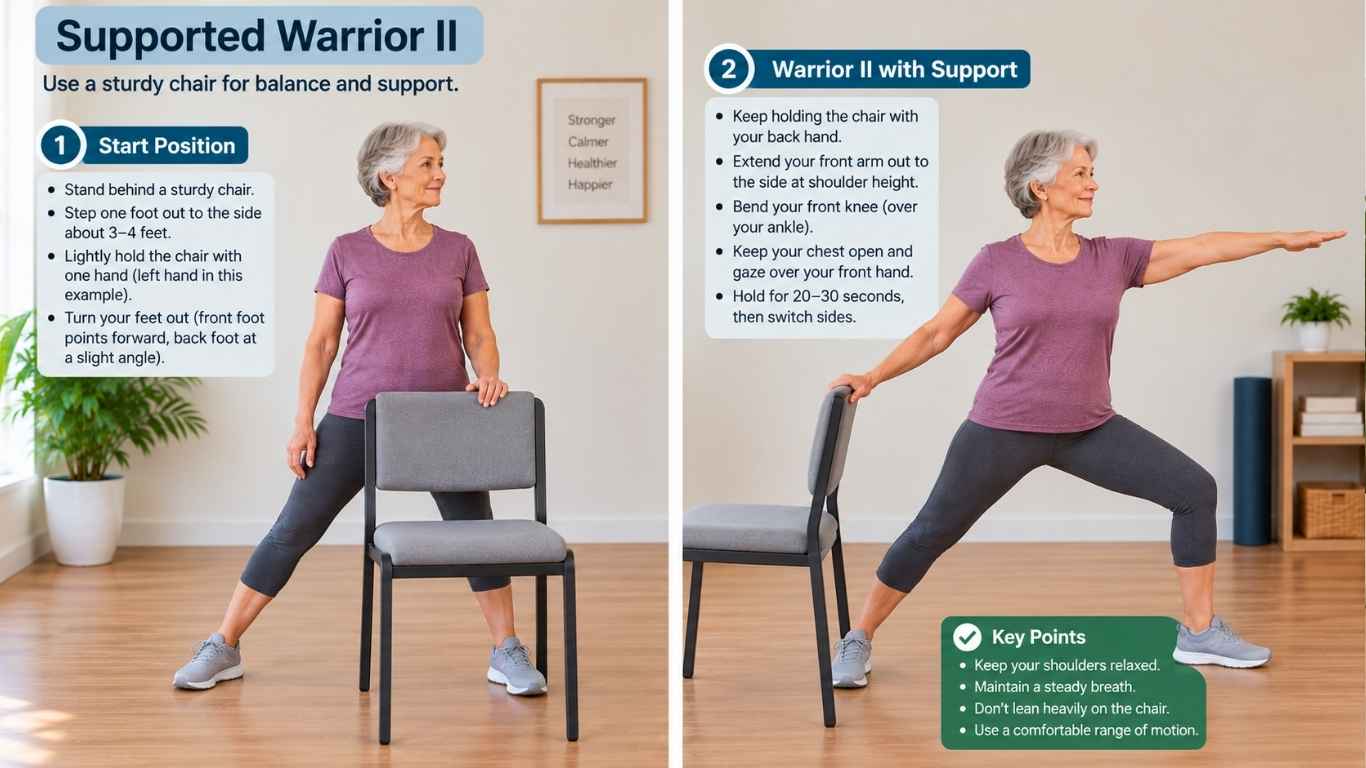
Supported Warrior II
Stand next to a sturdy chair and hold the backrest with your nearest hand. Step your feet comfortably wide, turn the front foot outward, and angle the back foot slightly inward. Bend the front knee gradually, keeping it aligned with the direction of your toes. Extend your opposite arm forward and hold for 15–20 seconds, then slowly straighten the front leg. This pose engages the thighs and hips while challenging balance in a controlled way. A shorter stance or shallower knee bend can make it easier. Chair yoga for seniors is especially useful when standing poses require extra stability.
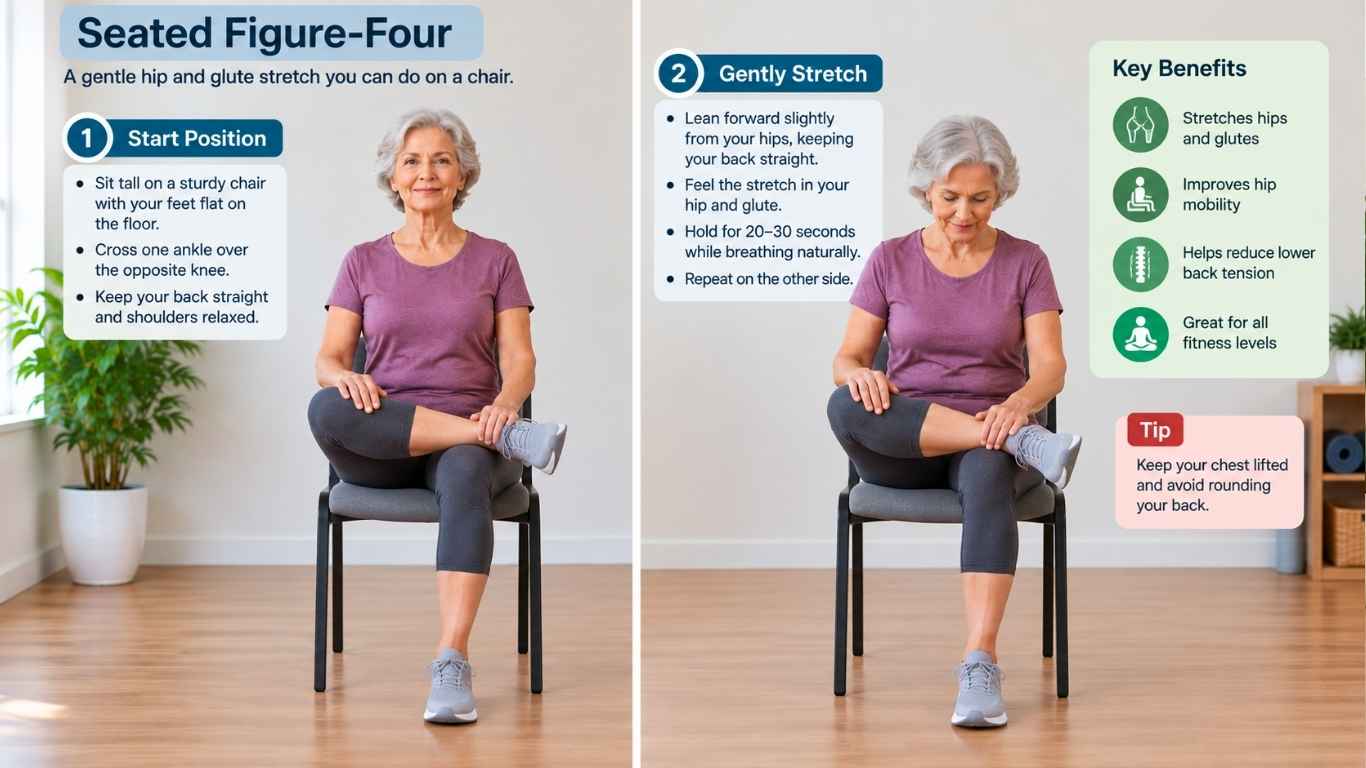
Seated Figure-Four
Sit toward the front of a sturdy chair with both feet planted firmly on the floor. Lift one leg and place its ankle over the opposite thigh, allowing the raised knee to relax outward. If the position feels easy, lean forward slightly from the hips while keeping your spine naturally extended. Stay for 20–30 seconds before returning upright and changing sides. You should notice a mild stretch around the outer hip and buttock, not pressure inside the knee. From experience, using a higher chair can make this position easier to enter and exit. Never push the raised knee downward; lower the foot if discomfort develops.
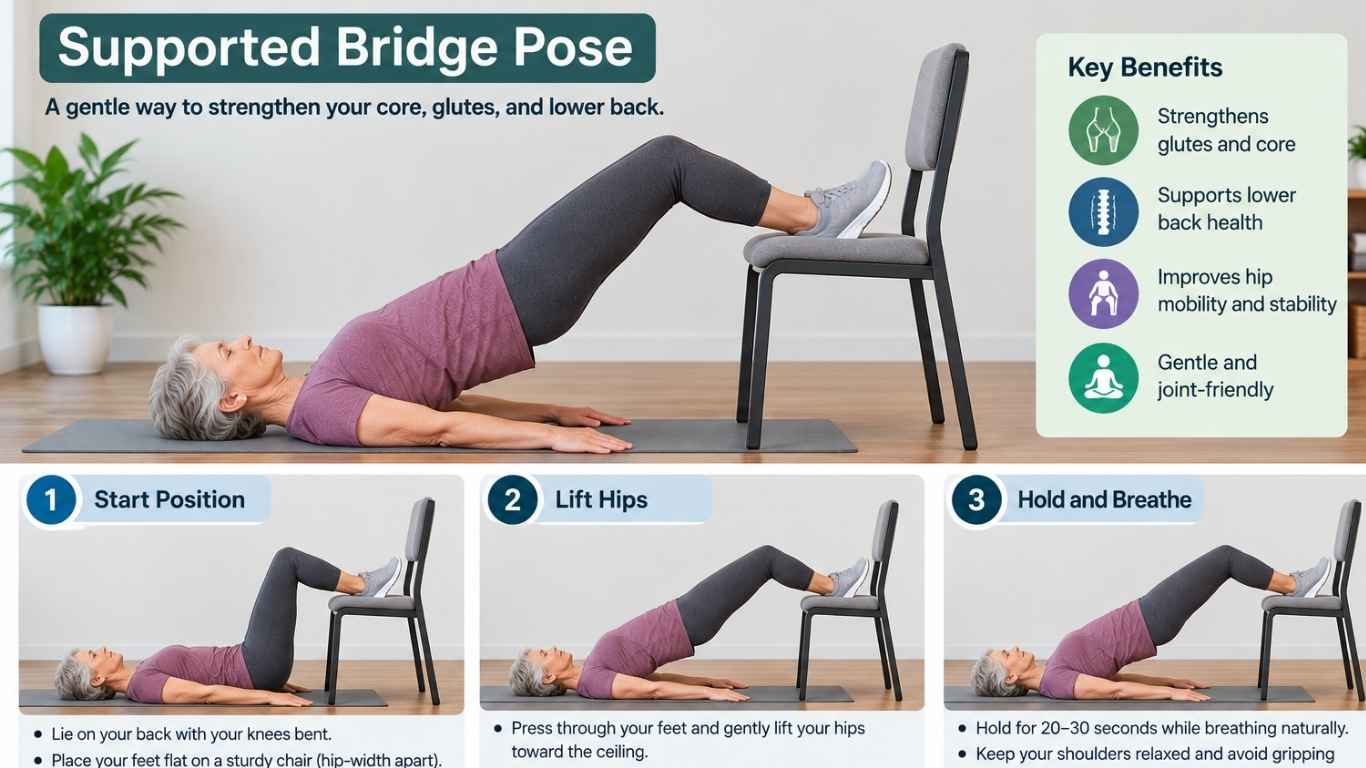
Supported Bridge Pose
Lie on your back with your knees bent and feet flat on the floor, keeping them about hip-width apart. Place your arms beside your body and gently press through both feet as you lift your hips a few inches. Pause for 10–15 seconds, then lower yourself slowly and rest before repeating 2–3 times. The movement engages the hips, thighs, and lower body while avoiding prolonged standing. If getting onto the floor is difficult, skip this pose rather than forcing the transition. Keep your knees tracking forward and avoid lifting your hips higher than feels comfortable.
What Seniors Experienced With These Gentle Yoga Poses
A senior practicing these poses described the routine as easier to manage than traditional yoga, particularly because the chair provided extra confidence during standing movements. The seated exercises felt comfortable and less demanding on stiff areas, while the slower pace made it easier to stay relaxed. After regular practice, everyday movements felt more manageable, although the routine was always kept within a comfortable range.
Make Yoga Easier With Simple Modifications
Yoga does not have to look exactly the same for everyone. Small adjustments can make each pose easier to manage, especially when balance, flexibility, or getting down to the floor is challenging. The goal is to adapt each movement to your current ability rather than forcing your body into a position that feels uncomfortable.
- When balance feels uncertain, keep a sturdy chair or wall nearby.
- If getting onto the floor is difficult, choose a seated version.
- When knee bending feels uncomfortable, keep the bend shallow.
- If your hips feel tight, reduce or skip the forward lean.
- When a pose feels uncomfortable, switch to an easier variation.
These adjustments can make chair yoga for seniors more practical by providing extra support during standing and seated movements. Choose the version that allows you to move steadily without putting unnecessary pressure on your joints.
A Simple 10-Minute Routine
You can combine the poses above into a short routine that keeps the focus on gentle movement rather than intensity. Move slowly between exercises, take brief pauses when needed, and use support whenever necessary.
| Movement | Time |
|---|---|
| Chair-Supported Mountain | 1 min |
| Seated Cat-Cow | 2 min |
| Side Bend | 1 min |
| Supported Warrior II | 2 min |
| Figure-Four Stretch | 2 min |
| Supported Bridge | 2 min |
Start with shorter holds if you are new to yoga and gradually increase the duration as your body becomes more familiar with the routine. If stiffness also becomes noticeable after spending long periods sitting, explore our guide on How to Reduce Joint Stiffness After Sitting for simple movement strategies.
How Often Should You Practice?
Starting with 2–3 sessions a week can make the routine easier to maintain without placing too much demand on your body. Short sessions are practical because energy and mobility can vary from one day to another. When you feel stronger, gradually add a few minutes or repetitions. On difficult days, reduce the duration or choose easier movements. With gentle yoga for seniors, consistency is more valuable than intensity, so allow your body time to adapt.
Listen to Your Body
A mild stretching sensation can be normal, but sharp or increasing pain should never be ignored. Pay attention to unusual fatigue, swelling, dizziness, weakness, or loss of balance during practice. If any of these occur, pause and reassess the movement before continuing. Reduce the range of motion or stop completely when needed. If you want to improve comfortable movement alongside yoga, explore our Ankle Mobility Exercises for Joint Flexibility guide for additional lower-body mobility work.
When to Stop and Get Medical Advice
Stop your yoga session if you experience severe or increasing pain, significant swelling, or discomfort that becomes noticeably worse during a movement. Recent injuries also require extra caution, particularly if you have difficulty bearing weight or moving the affected area normally. Do not try to push through these symptoms simply to complete your routine.
Dizziness, fainting, or unusual difficulty breathing are also reasons to stop immediately and seek appropriate medical advice. If your symptoms continue, become more frequent, or worsen after exercise, speak with a healthcare professional before returning to your routine. If your symptoms continue or worsen, speak with a healthcare professional before returning to your routine. You can also explore our Morning Stretches for Stiff Joints guide for gentle movement ideas.
FAQ
Is low-impact yoga safe for seniors with joint pain?
Yes, it can be a gentle way to stay active when movements are performed slowly and within a comfortable range. Chair support and simple modifications can reduce unnecessary strain. However, anyone with severe pain, a recent injury, or a medical condition should consult a healthcare professional before beginning a new exercise routine.
Can seniors do yoga with limited mobility?
Yes. Yoga can be adapted for different mobility levels using seated poses, shorter movements, and stable support. Senior-friendly yoga does not require you to complete every pose fully. The goal is to find comfortable movements that match your current ability rather than forcing your body into a specific position.
Is chair yoga good for older adults?
Yes, chair yoga can be especially useful when standing or floor-based exercises feel difficult. A sturdy chair provides support while allowing many movements to be performed safely from a seated position. It can also make regular practice more accessible for people who have balance or mobility limitations.
How often should seniors practice yoga?
Starting with 2–3 sessions per week is a practical option for most beginners. Keep sessions short and comfortable at first, then gradually increase the duration as your body becomes accustomed to the movements. Consistency is more important than practicing for long periods or pushing yourself too hard.
Do I need to be flexible to start yoga?
No. You can begin yoga regardless of your current flexibility. Start with small, controlled movements and avoid forcing deep stretches. With regular practice, you may gradually become more comfortable with everyday movements, but there is no need to match the flexibility of more experienced practitioners.
What should I do if a pose hurts?
Stop the pose if you feel sharp, increasing, or unusual pain. You can try a smaller range of motion or choose an easier variation if the discomfort disappears. If pain continues, becomes worse, or affects normal movement, stop exercising and speak with a healthcare professional.
Conclusion
Low impact yoga for seniors can be a simple way to keep your body moving without making exercise feel overwhelming. You do not need perfect balance, flexibility, or strength to get started. Choose comfortable poses, use a chair when needed, and give yourself time to adjust. Some days may feel easier than others, so listen to your body and avoid pushing through pain. With regular, gentle practice, yoga can become an enjoyable part of your routine and help you feel more comfortable with everyday movement. Start small, stay consistent, and let your progress happen naturally.
References
We reviewed trusted research and health resources to support the information presented in this article. These sources provide evidence related to yoga, older adults, mobility, and safety.
- Chair-Based Yoga Research
- Chair Yoga and Physical Function Study
- Yoga Effectiveness and Safety
- Yoga for Health
This article was reviewed by the YogaFlexZone team.