
Joint mobility plays an important role in how easily you move during everyday activities. Walking, reaching, bending, and getting up from a chair all require your joints to move through a comfortable range of motion. Regular mobility work help you maintain movement quality without needing an intense workout. In this guide, you’ll learn joint mobility exercises for healthy movement that focus on controlled motion, proper form, and functional range of motion. Each exercise is simple to follow and can be adjusted to your current ability, making it easier to include mobility practice in your regular routine.

What Is Joint Mobility?
Joint mobility refers to how freely and comfortably a joint can move through its available range of motion. Good mobility is not simply about being flexible; it also involves having enough control to move smoothly and safely. Different joints contribute to different everyday actions, from turning your head and reaching overhead to bending your knees and moving your ankles while walking.
Joint mobility exercises use slow, controlled movements to explore these ranges without forcing the joint beyond what feels natural. Maintaining regular mobility can help you move with better control and make everyday physical activities feel more comfortable.
Read: Yoga for Joint Pain Relief | A Complete Guide
How Joint Mobility Supports Better Movement
Your joints work together every time you walk, reach, squat, turn, or change position. When a joint has adequate mobility, surrounding muscles can work through a more natural movement pattern instead of compensating for restricted motion. Regular mobility practice can also improve your awareness of how different parts of your body move and help you develop smoother coordination.
For example, comfortable hip movement can contribute to easier walking and bending, while shoulder mobility can make reaching movements feel less restricted. The goal is not to achieve extreme flexibility, but to maintain useful movement that supports normal daily activities.
Getting Ready for Joint Mobility Exercises
Before you begin, prepare a clear space and wear comfortable clothing that allows your body to move freely. Start slowly and avoid forcing any movement beyond your natural range.
- Choose a clear, stable area for your exercises.
- Wear comfortable clothing that does not restrict movement.
- Keep a sturdy chair or wall nearby for support.
- Begin with a relaxed posture and natural breathing.
- Start with small movements before exploring a wider range.
- Focus on smooth, controlled motion rather than speed.
Once you are ready, move gradually and stay within a comfortable range throughout the routine. Consistent control is more important than making large movements or reaching your maximum range of motion.
8 Joint Mobility Exercises for Better Movement
The following exercises target major joints, including the neck, shoulders, spine, hips, knees, ankles, and wrists. Move slowly and maintain good posture throughout each exercise. Start with a comfortable range and gradually increase it as your control improves. Keep breathing naturally, avoid rushing, and focus on smooth, controlled movements rather than forcing flexibility.
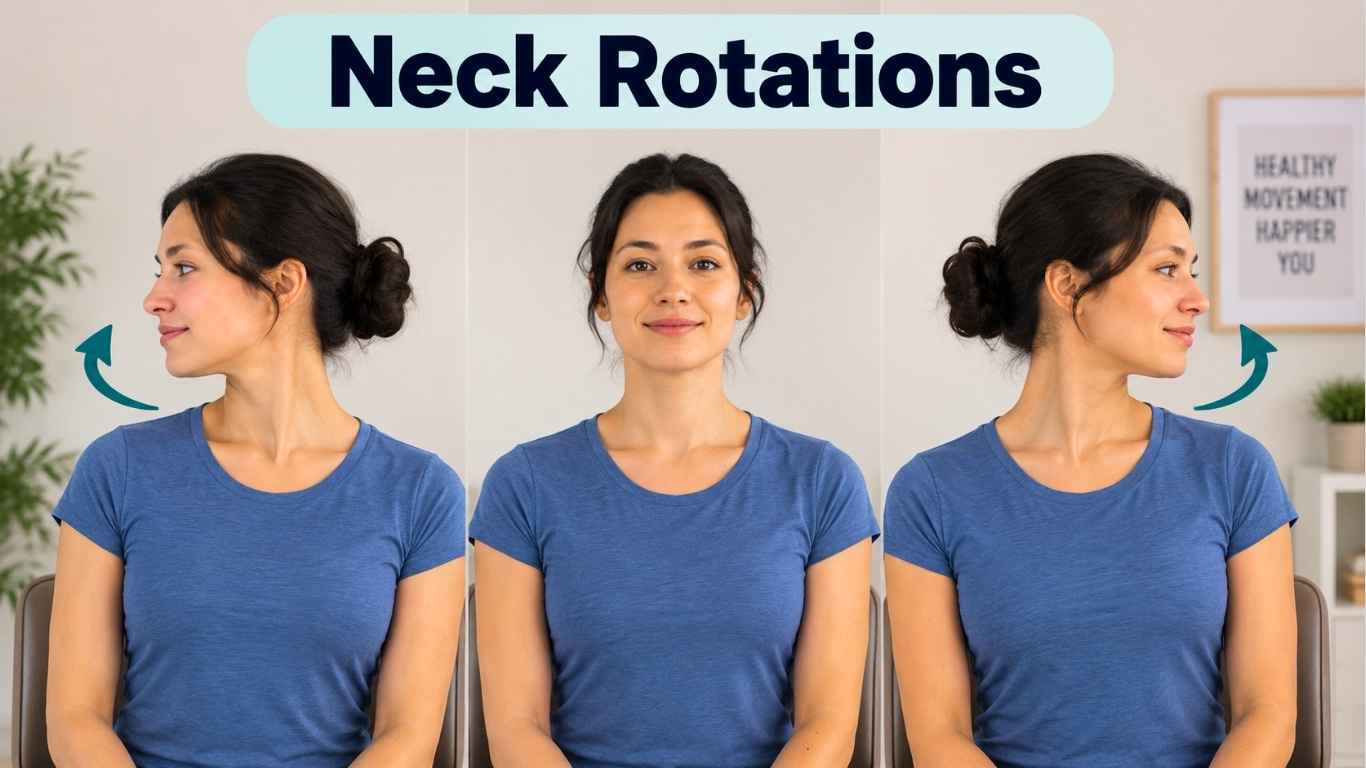
Neck Rotations
Neck rotations gently move the head from side to side while keeping your shoulders relaxed. Stay within a comfortable range and avoid forcing the turn. Small, controlled movements are enough to practice mobility without creating unnecessary tension around the neck.
How to Do It
- Sit upright with your shoulders relaxed and gaze forward.
- Slowly turn your head toward the right comfortably.
- Return to center with a controlled movement.
- Turn your head slowly toward the left side.
- Repeat 4–6 times on each side.
Benefits – Better Control
Neck rotations encourage smoother head movement and improve awareness of your available movement. They can also make everyday actions such as looking sideways or checking your surroundings feel more natural.
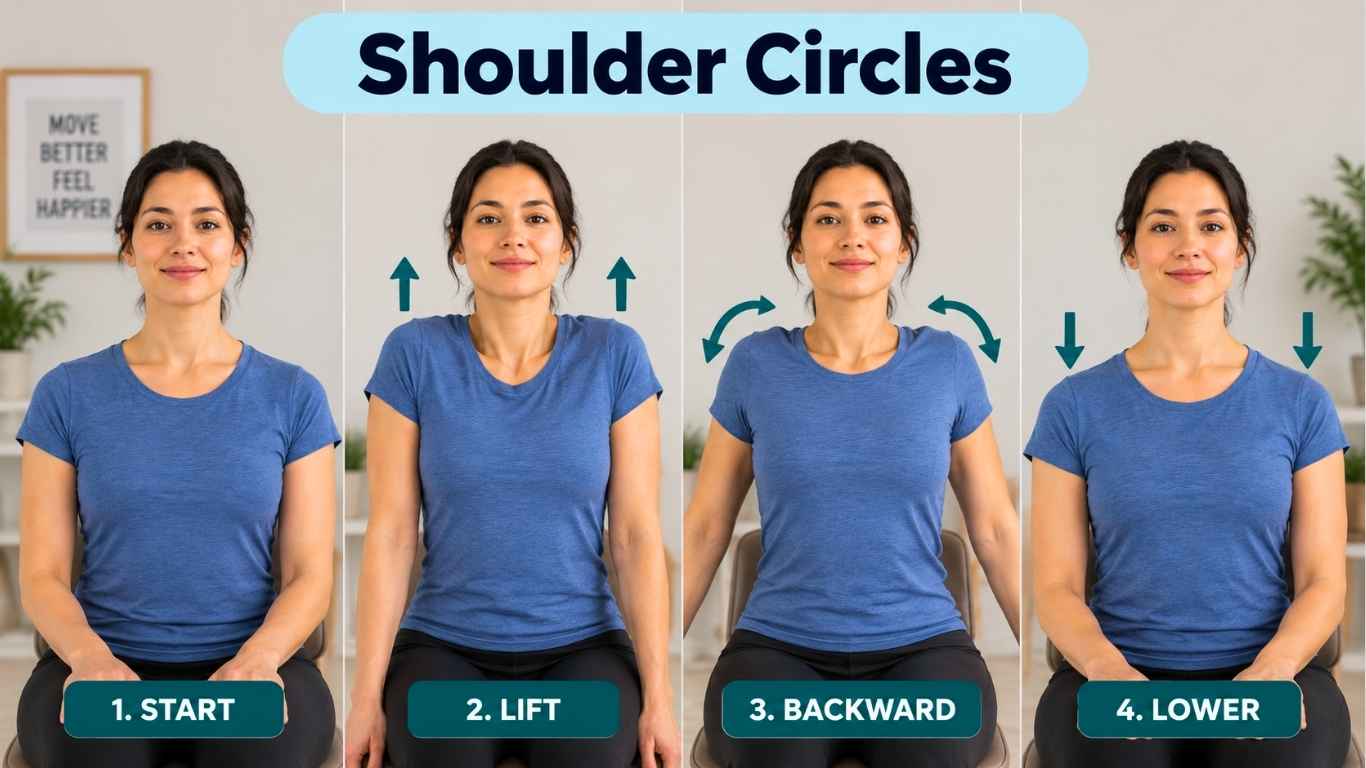
Shoulder Circles
Shoulder circles take the shoulders through a gentle circular pattern without requiring deep stretching. Keep your arms relaxed and let the shoulders move naturally. Start with small circles, then gradually make them slightly larger if the movement remains comfortable.
How to Perform
- Sit or stand tall with your arms relaxed.
- Lift both shoulders gently toward your ears.
- Move your shoulders backward in a smooth circle.
- Lower them down to complete the movement.
- Reverse direction and repeat 5–8 times.
Benefits – Smoother Movement
This movement encourages the shoulders to travel through different directions with control. Regular practice can support comfortable reaching, lifting, and other everyday arm movements while improving awareness of shoulder positioning.
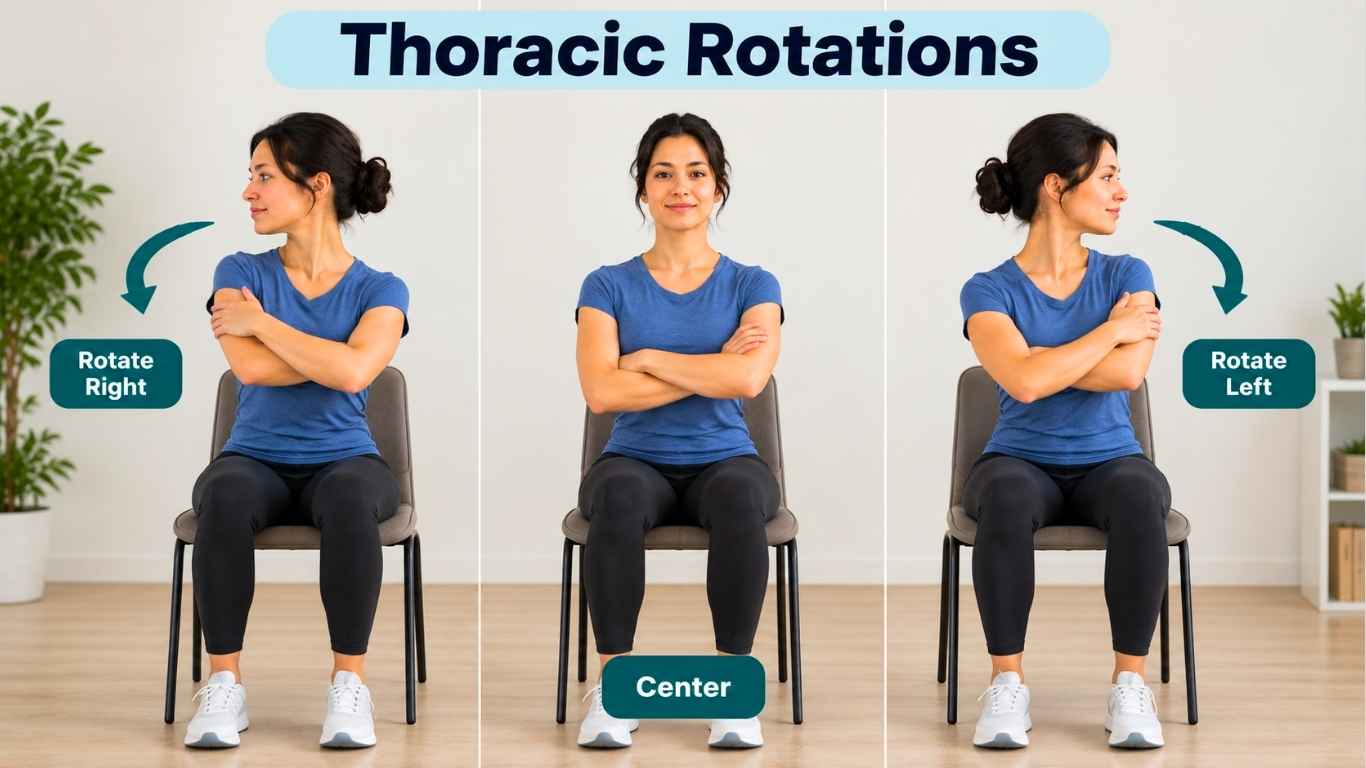
Thoracic Rotations
Thoracic rotations focus on movement through the middle and upper spine. Keeping your hips stable helps the rotation come from your upper body instead of relying on momentum. Move only as far as feels comfortable and maintain steady breathing throughout.
How to Perform
- Sit sideways on a sturdy chair with feet grounded.
- Keep your spine tall and arms crossed.
- Slowly rotate your upper body toward the chair.
- Return to center and rotate toward the opposite side.
- Keep your hips facing forward throughout the movement.
- Repeat 5–8 times on each side.
Benefits – Functional Rotation
Thoracic rotations support controlled movement through the upper and middle back. They may help you feel more comfortable during everyday turning movements, such as reaching behind you or looking toward something beside you.
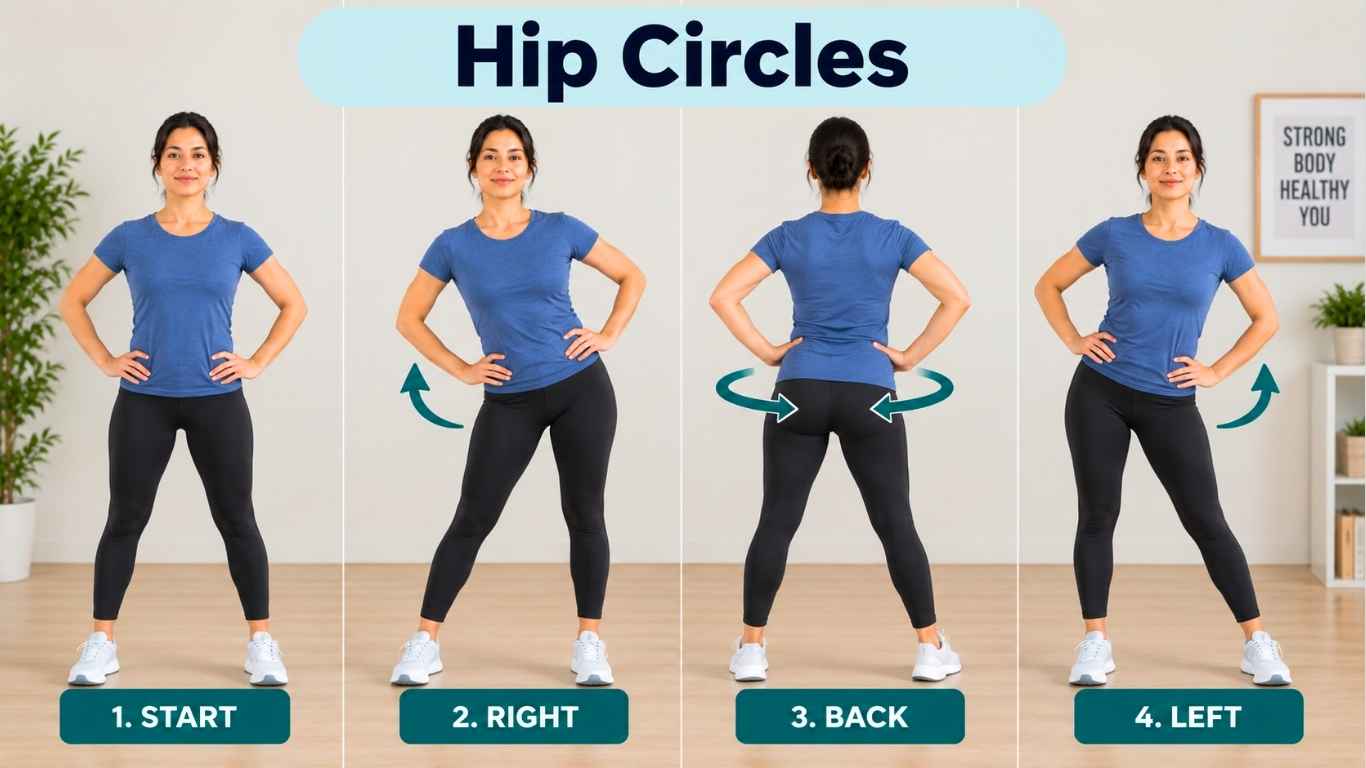
Hip Circles
Hip circles gently move the hips through a rounded pattern while encouraging controlled movement. Keep your upper body steady and begin with small circles. The movement should feel natural, without forcing your hips into a larger range than comfortable.
How to Do It
- Stand tall with feet comfortably wider than hip-width.
- Place your hands lightly on your hips.
- Slowly circle your hips toward the right side.
- Continue the circle through the back and left.
- Complete 5–8 circles, then reverse direction.
- Keep both feet planted throughout the movement.
Benefits – Hip Mobility
Hip circles encourage smoother movement around the hips and support comfortable mobility. They can also prepare the hips for everyday actions such as walking, bending, stepping, and changing direction.
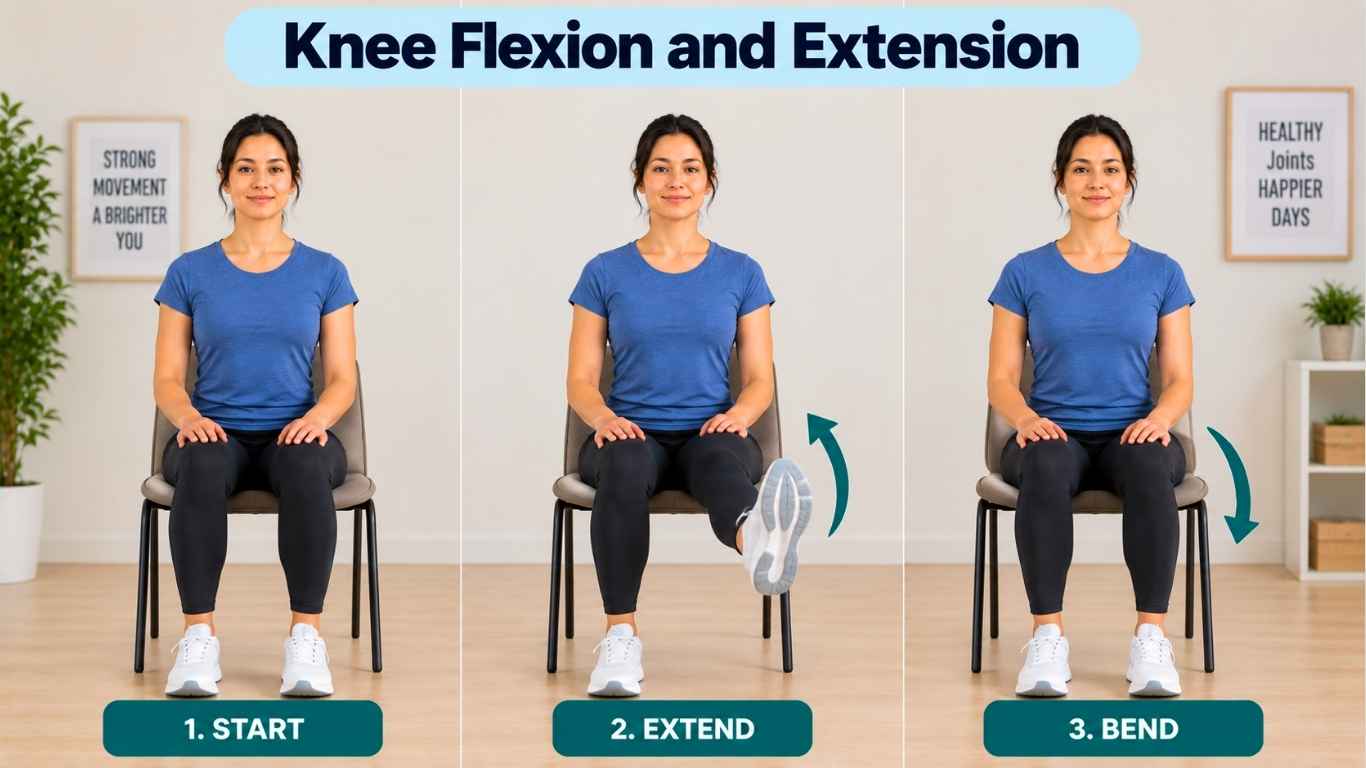
Knee Flexion and Extension
Knee flexion and extension gently bend and straighten the knees through a controlled range. You do not need to reach maximum bending or straightening. Perform the movement slowly and use support if standing feels less stable.
Movement Guide
- Sit upright with both feet flat on the floor.
- Slowly extend your right leg forward.
- Straighten the knee without locking it forcefully.
- Lower your foot gently toward the floor.
- Bend your knee naturally as your foot returns.
- Repeat 6–10 times before switching sides.
Benefits – Leg Mobility
This movement helps maintain comfortable bending and straightening through the knees. Practicing joint flexibility exercises can support smoother transitions between sitting, standing, walking, and other everyday movements.
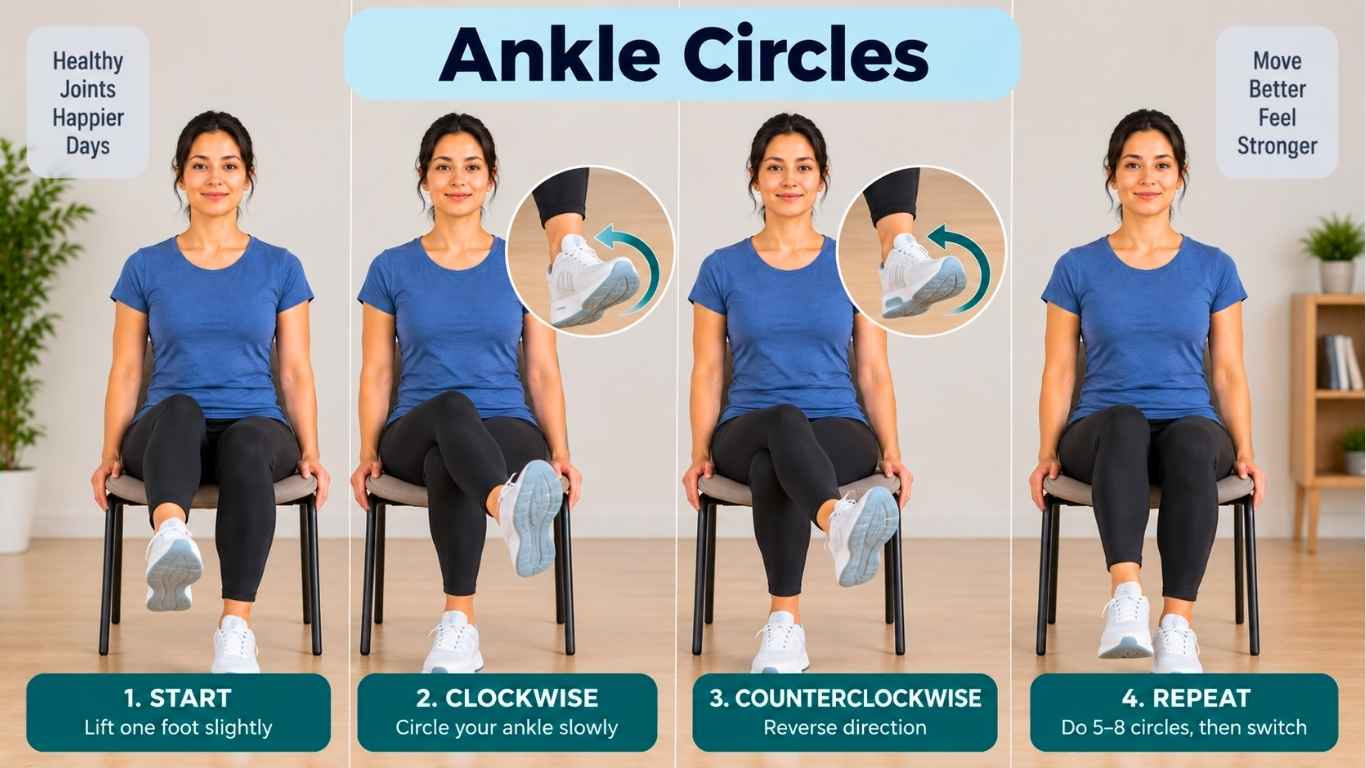
Ankle Circles
Ankle circles move the ankle gently through several directions while keeping the lower leg relaxed. Use small circles initially and gradually explore more movement as control improves. Perform this exercise seated if maintaining balance while standing feels difficult.
Try This Movement
- Sit comfortably with one foot slightly lifted.
- Slowly circle your ankle clockwise several times.
- Keep your lower leg as still as possible.
- Reverse direction and continue moving slowly.
- Complete 5–8 circles before changing feet.
- Reduce the circle size when needed.
Benefits – Foot Mobility
Ankle circles encourage controlled movement around the ankle and support smoother foot motion. They can be useful during activities that involve walking, stepping, and changing direction. Mobility exercises for joints can also complement regular movement throughout the day.
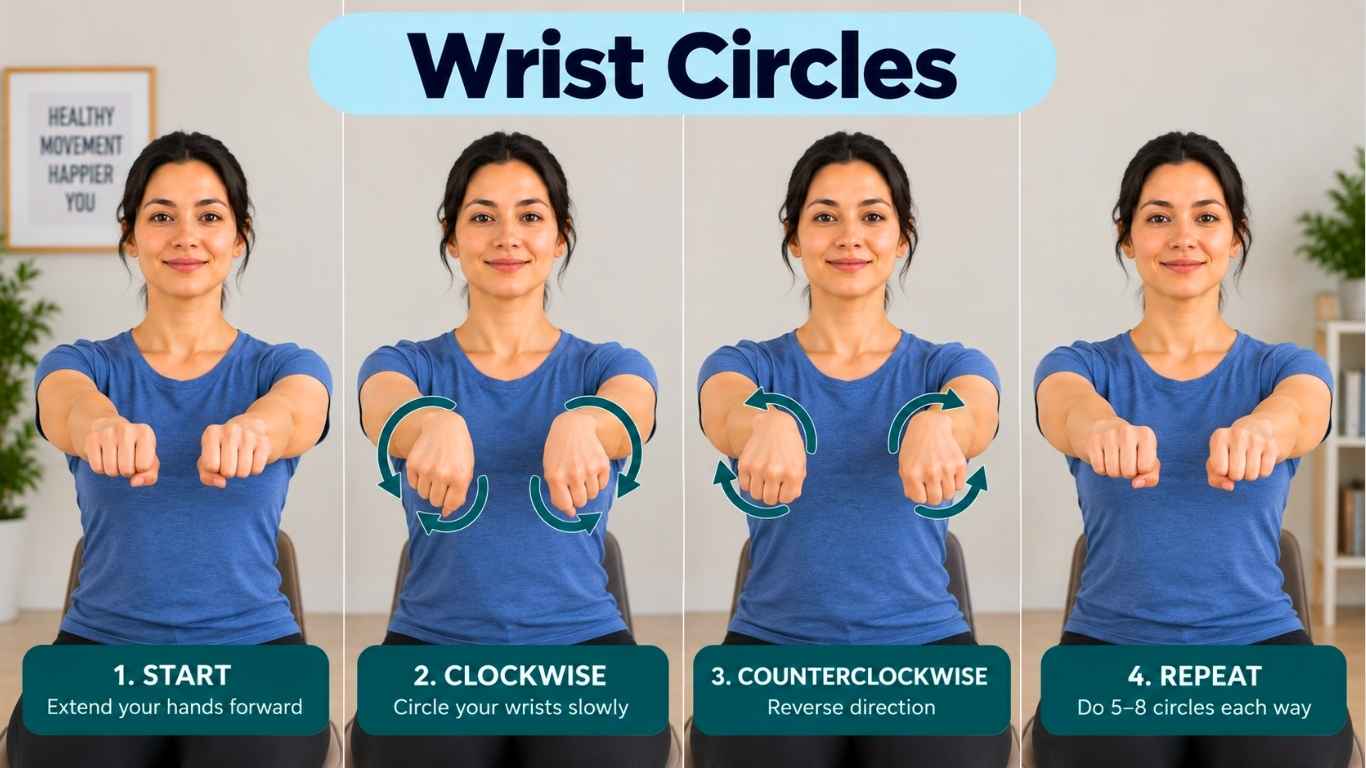
Wrist Circles
Wrist circles gently move the wrists through a controlled circular pattern, making them easy to practice during a mobility routine. Keep your forearms relaxed and avoid making the circles larger than comfortable. Move steadily rather than relying on quick or forceful motions.
Movement Guide
- Sit or stand comfortably with your arms relaxed.
- Extend both hands forward at a comfortable height.
- Slowly circle both wrists clockwise several times.
- Reverse direction and continue with controlled movements.
- Keep your forearms steady throughout each rotation.
- Repeat 5–8 circles in each direction.
Benefits – Hand Movement
Wrist circles help maintain comfortable wrist movement and encourage better control through different directions. They can support everyday actions such as typing, writing, carrying objects, and using your hands during routine activities.
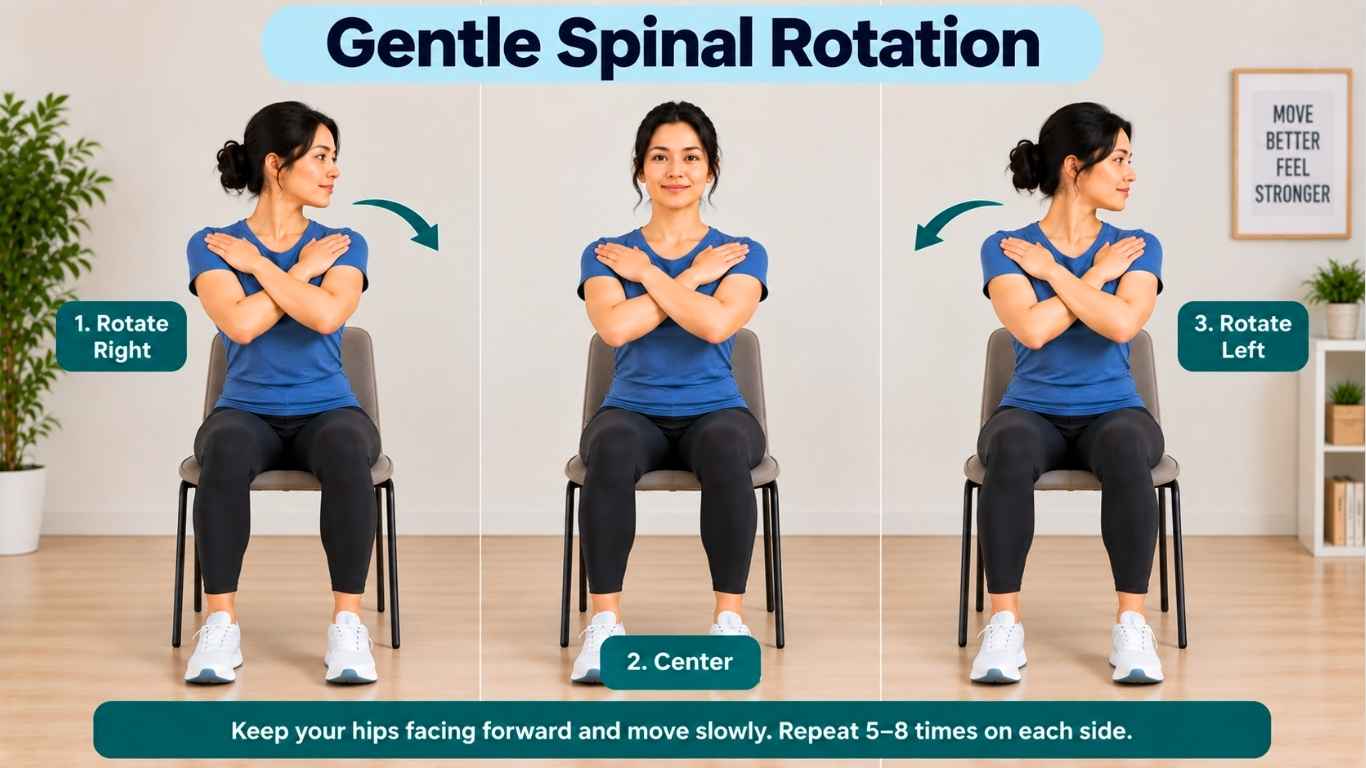
Gentle Spinal Rotation
Gentle spinal rotation encourages controlled movement through the trunk while keeping the motion comfortable and steady. Avoid twisting forcefully or using momentum to increase the range. Focus on smooth movement and let your body determine how far you rotate.
Try This Movement
- Sit upright with both feet firmly grounded.
- Place your hands comfortably across your chest.
- Slowly rotate your upper body toward the right.
- Return to center before rotating toward the left.
- Keep your hips facing forward during rotation.
- Repeat 5–8 times on each side.
Benefits – Trunk Mobility
This movement encourages controlled spinal motion and supports smoother rotation during everyday activities. It can be useful when turning to reach something, changing direction, or looking toward something positioned beside you. range of motion exercises can help maintain comfortable movement when practiced consistently.
What to Expect When You Start
From practical experience, mobility exercises often feel easier when you begin with smaller movements instead of trying to use your full range immediately. Some joints may move more freely than others, and that is completely normal. Paying attention to how each movement feels can help you understand your comfortable range and gradually improve control. With consistent practice, these simple movements can become a natural part of your daily routine without making mobility work feel like a demanding workout.
How to Build a Simple Mobility Routine
A useful mobility routine does not need to be long or complicated. Start with a few movements that cover different areas of your body, then perform each one slowly and with control. You can begin with 5–8 repetitions per movement and adjust the range according to how comfortable it feels. Try moving from the neck and shoulders toward the spine, hips, knees, and ankles so your routine covers several major joints. If you are new to mobility exercises for joints, keep the first few sessions short and focus on consistency rather than intensity.
A simple approach:
- Start with gentle upper-body movements.
- Move gradually toward your lower body.
- Use controlled repetitions instead of fast movements.
- Keep your breathing relaxed throughout.
- Increase your range gradually over time.
When building your routine, you can naturally mention Ankle Mobility Exercises for Joint Flexibility when discussing ankle-focused movements.
How to Fit Mobility Exercises Into Your Day
Mobility work fit into small parts of your daily schedule rather than requiring a separate long workout. You might practice a few movements after waking, during a break from work, or before another physical activity. Choosing a consistent time makes the routine easier to remember. On busier days, even a shorter session keep the habit going. If you spend long periods sitting, you can also combine mobility practice with regular movement breaks and simple changes in position throughout the day.
Choose a time that already fits naturally into your day, keep the routine simple, and focus on regular practice. Over time, these small sessions can become an easy part of your normal movement habits.
In the discussion about movement breaks after prolonged sitting, naturally link to How to Reduce Joint Stiffness After Sitting.
Common Mistakes During Mobility Exercises
Mobility exercises are most effective when movements remain slow, controlled, and comfortable. Rushing or forcing a joint can reduce movement quality and make it harder to maintain proper form. Paying attention to your posture, breathing, and natural movement range helps keep each exercise smooth and purposeful.
- Moving too quickly between repetitions.
- Forcing movement beyond your comfortable range.
- Using momentum instead of controlled movement.
- Holding your breath during difficult movements.
- Allowing your posture to change unnecessarily.
- Making circles larger than you can control.
Avoiding these mistakes can make range of motion exercises more controlled and consistent. If wrist movements feel difficult, our Wrist and Finger Exercises for Joint Stiffness guide offers more focused exercises for that area.
How to Progress Your Mobility Routine
Progressing your routine should be gradual rather than based on pushing harder. As your control improves, you can make small changes to your movement range, repetitions, or exercise variety. The goal is to develop better movement without forcing your joints or sacrificing proper technique.
- Begin with a comfortable movement range.
- Gradually increase the range as control improves.
- Add repetitions when movements become easier.
- Spend slightly longer on challenging movements.
- Introduce new movement directions gradually.
- Reduce support when your stability improves.
Over time, these adjustments can make joint flexibility exercises more challenging while keeping them manageable. You can also add our Morning Stretches for Stiff Joints guide to your weekly movement routine for another gentle way to stay active.
When to Modify or Stop a Movement
Not every movement will feel the same on every day, and you do not need to push through discomfort to make progress. If an exercise feels awkward, unstable, or too demanding, reduce the range, slow down, or use support. Stop the movement if you experience sharp, increasing, or unusual discomfort. Persistent symptoms or difficulty moving normally are reasons to seek professional guidance before continuing your routine.
FAQ
What are joint mobility exercises?
Joint mobility exercises are controlled movements that help joints move through their available range comfortably. They focus on movement quality, coordination, and control rather than forcing flexibility.
How often should I do joint mobility exercises?
You can practice mobility exercises regularly as part of your normal activity routine. Short sessions performed consistently are often easier to maintain than occasional, lengthy workouts.
Can I do mobility exercises every day?
Yes, gentle mobility movements can fit into a daily routine when performed within a comfortable range. Keep the intensity low and avoid repeatedly forcing the same movement.
Should mobility exercises hurt?
They should not cause sharp or increasing discomfort. A movement may feel like a gentle stretch or mild effort, but stop or modify it if something feels unusual.
How long should a mobility routine be?
A mobility routine can be relatively short, especially when you are starting. Focus on performing each movement with good control rather than trying to make the session longer.
Can mobility exercises improve flexibility?
Regular joint mobility exercises can help you become more comfortable moving through your available range. Combining them with appropriate stretching and regular physical activity can support overall flexibility and movement quality.
Conclusion
Keeping your joints moving comfortably can make everyday activities feel smoother and more natural. Joint mobility exercises for healthy movement do not need to be complicated or time-consuming. Start with gentle movements, stay within a comfortable range, and focus on controlled technique instead of forcing flexibility. As your movement becomes easier, gradually increase your range or repetitions while maintaining good form. Consistency matters more than intensity. By making mobility practice a regular part of your routine, you can support better movement control and maintain comfortable mobility as part of an active lifestyle.
References
We reviewed trusted health and research sources to support the information presented in this article. These resources provide evidence related to joint mobility, range of motion, flexibility, and healthy movement.
- Exercise and Physical Activity
- Range-of-Motion Exercises
- Exercise and Physical Activity
- Physical Activity Guidelines
This article was reviewed by the YogaFlexZone team.