
Wrist and finger stiffness make everyday tasks such as typing, writing, gripping, and using your phone feel less comfortable. Gentle movement can help keep these areas active without requiring an intense workout. In this guide, you’ll learn wrist and finger exercises that focus on controlled movement, flexibility, and comfortable mobility. These simple exercises can be practiced at home and easily added to short movement breaks throughout your day.
What Are Wrist and Finger Exercises?
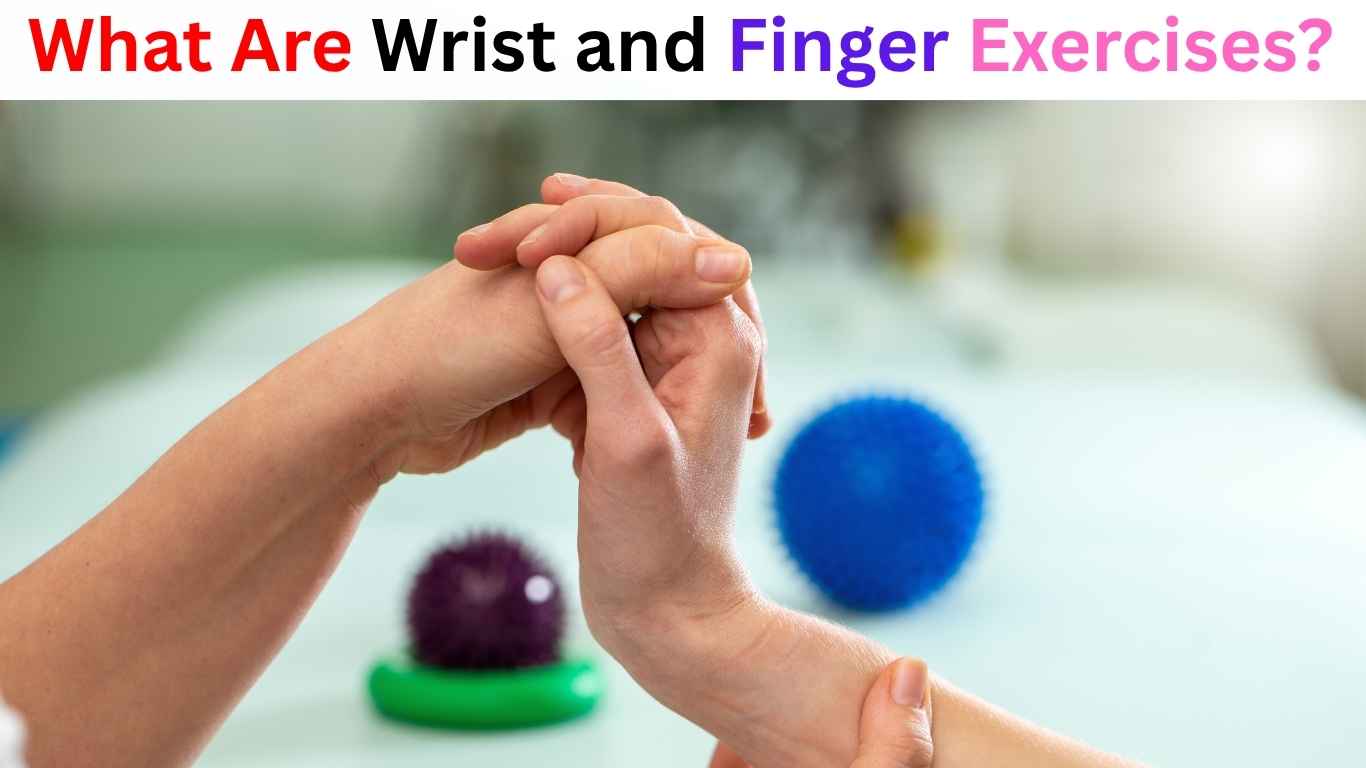
Wrist and finger exercises are gentle movements designed to keep the small joints of the hands and wrists moving comfortably. They include bending, straightening, rotating, spreading, and controlled finger movements. These exercises useful when activities such as typing, writing, gripping, or using a phone leave your hands feeling stiff or less flexible.
Unlike strengthening exercises, mobility-focused movements mainly emphasize comfortable movement and control rather than resistance. If stiffness affects other areas of the body, our Yoga for joint pain relief guide provides broader strategies for supporting comfortable movement. Regular practice help make everyday hand movements feel smoother and easier.
Why Do Your Wrists and Fingers Feel Stiff?
Wrist and finger stiffness develop from long periods of typing, writing, phone use, or repetitive hand movements. Staying in one position for too long may also reduce comfortable movement. Limited activity can make the joints feel less flexible, while repeated daily tasks may leave the hands feeling tight or restricted.
How to Prepare for Wrist and Finger Exercises
Before you begin, choose a comfortable position where your hands and forearms move freely. Relax your shoulders, settle your posture, and give yourself enough space to move without rushing.
Here’s how to prepare:
- Sit or stand in a comfortable, supported position.
- Let your forearms rest without unnecessary tension.
- Keep your shoulders relaxed throughout the routine.
- Remove anything that limits natural hand movement.
- Start with small, gentle movements first.
- Breathe normally and avoid holding your breath.
Once you are ready, begin with easy movements and gradually explore what feels natural. There is no need to rush or push farther than your body allows.
7 Wrist and Finger Exercises
These seven movements target the wrists and fingers with simple actions that fit easily into a daily routine. They include gentle bending, rotating, spreading, and lifting patterns to encourage comfortable movement. Work at a pace that feels natural, keep your hands relaxed, and adjust the range whenever a movement feels difficult or restricted.
For broader movement support, see our Joint mobility exercises for healthy movement guide.
Wrist Circles
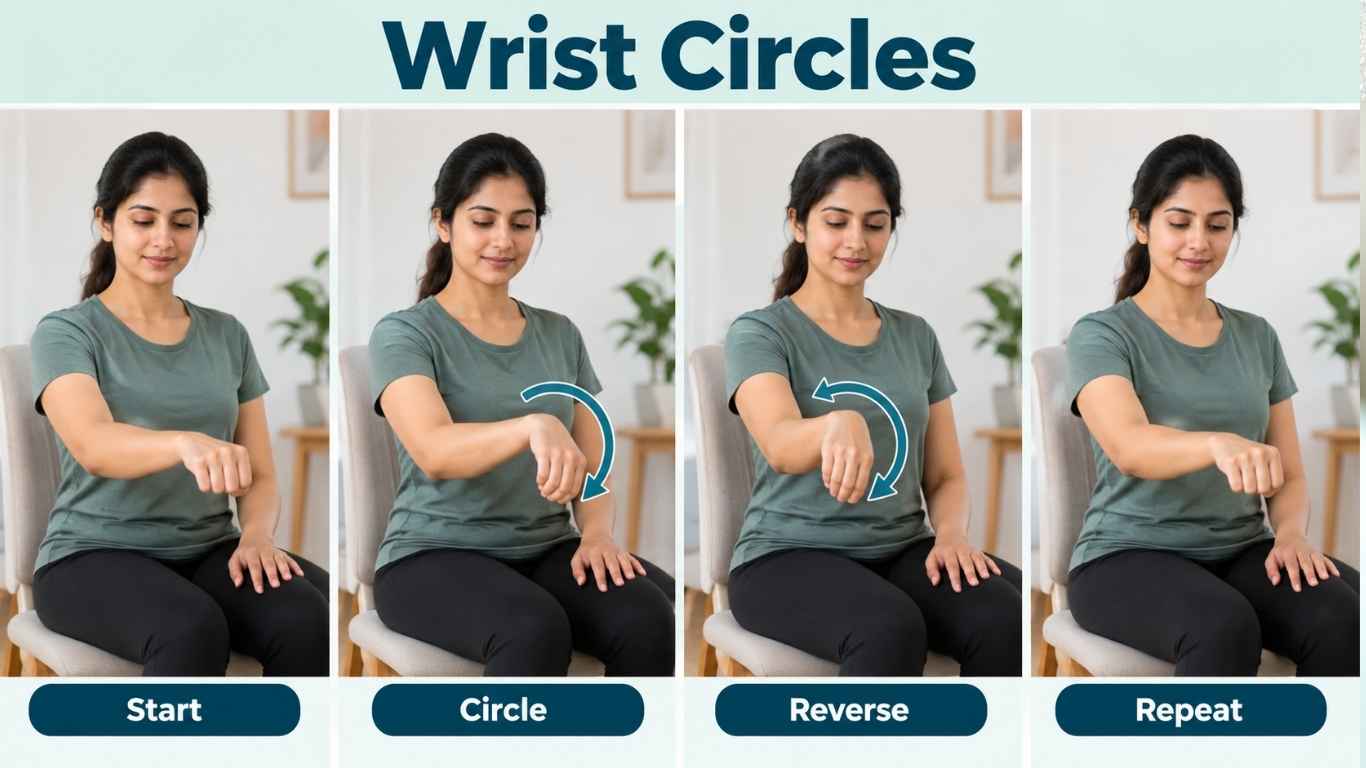
If your wrist feels sore, swollen, or unusually sensitive, keep the movement small and comfortable rather than trying to make a full circle. Sit with your forearm supported or relaxed, keeping your elbow still. Slowly move your hand in a circular path, then reverse the direction. Aim for about 5–10 controlled repetitions each way, without using your forearm to create momentum. This gentle movement can encourage wrist mobility and make everyday actions such as reaching, holding, or turning objects feel more natural. Clinical hand-therapy guidance also recommends performing wrist movements slowly and within a comfortable range.
Finger Bends and Straightening
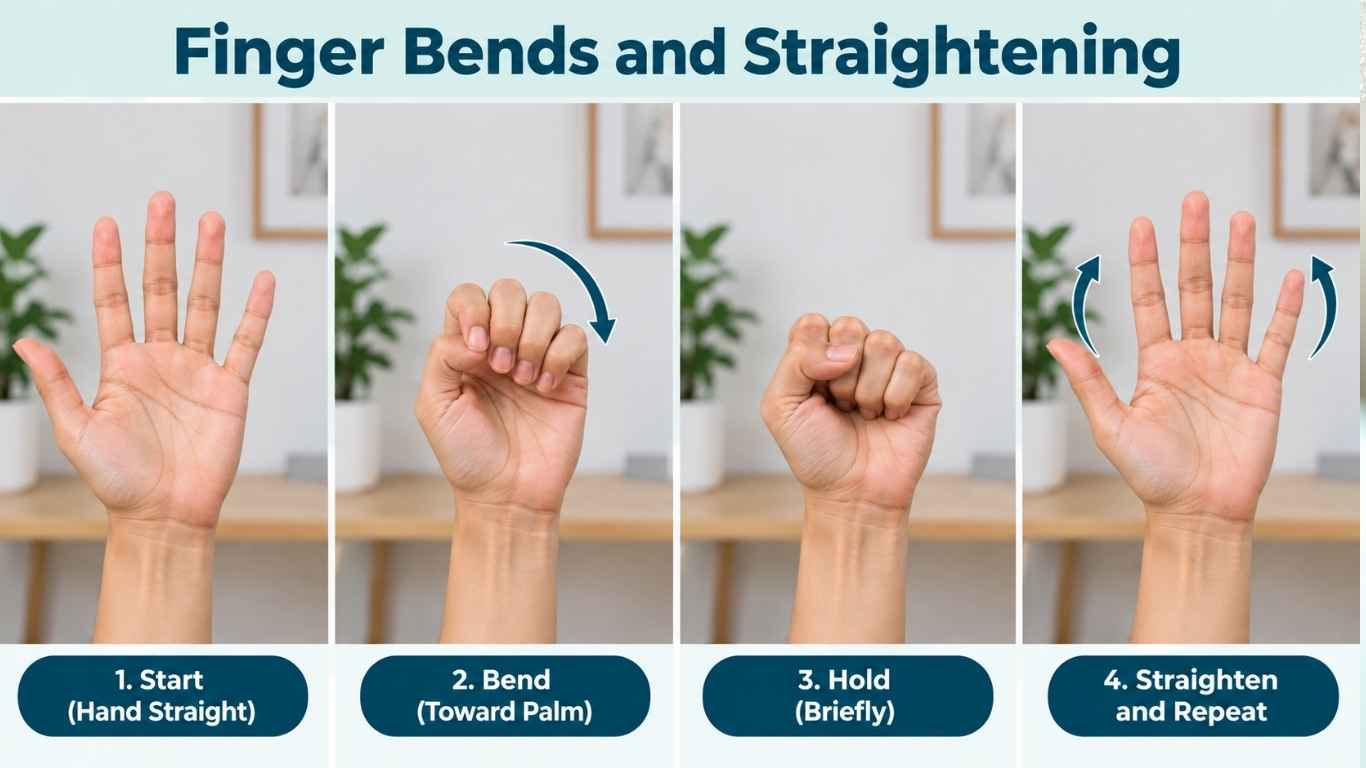
Keep the movement gentle if your fingers feel tight, especially after prolonged typing or repetitive hand use. Start with your fingers comfortably straight, then slowly bend them toward your palm without squeezing forcefully. Hold the bent position briefly if comfortable, then gradually open the hand and straighten the fingers again. Complete 5–10 repetitions at an easy pace. This movement takes each finger through bending and straightening, helping maintain comfortable motion for tasks such as gripping, writing, and handling everyday objects. Hand-therapy guidance supports slow, controlled finger movements and recommends reducing intensity if sharp pain occurs.
Finger Spreads
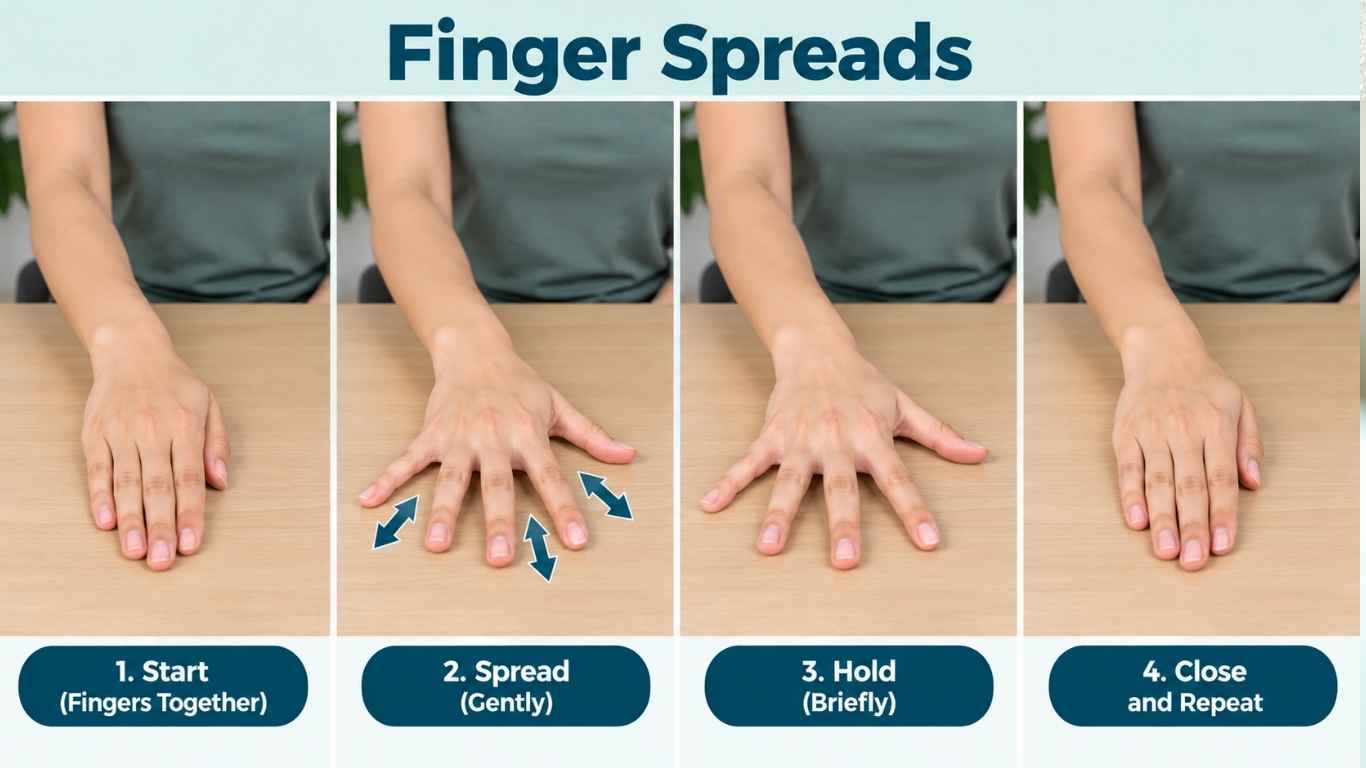
Avoid forcing your fingers apart or stretching them farther than feels natural. Place your hand flat on a table with the palm facing down and fingers comfortably together. Slowly spread the fingers apart while keeping them as straight as you comfortably can, pause briefly, then bring them back together. Repeat 5–10 times with steady, relaxed movements. This simple finger mobility exercise works the spaces between the fingers while encouraging controlled opening and closing of the hand. It can be useful for maintaining comfortable finger movement during activities that require hand positioning, gripping, or handling smaller objects.
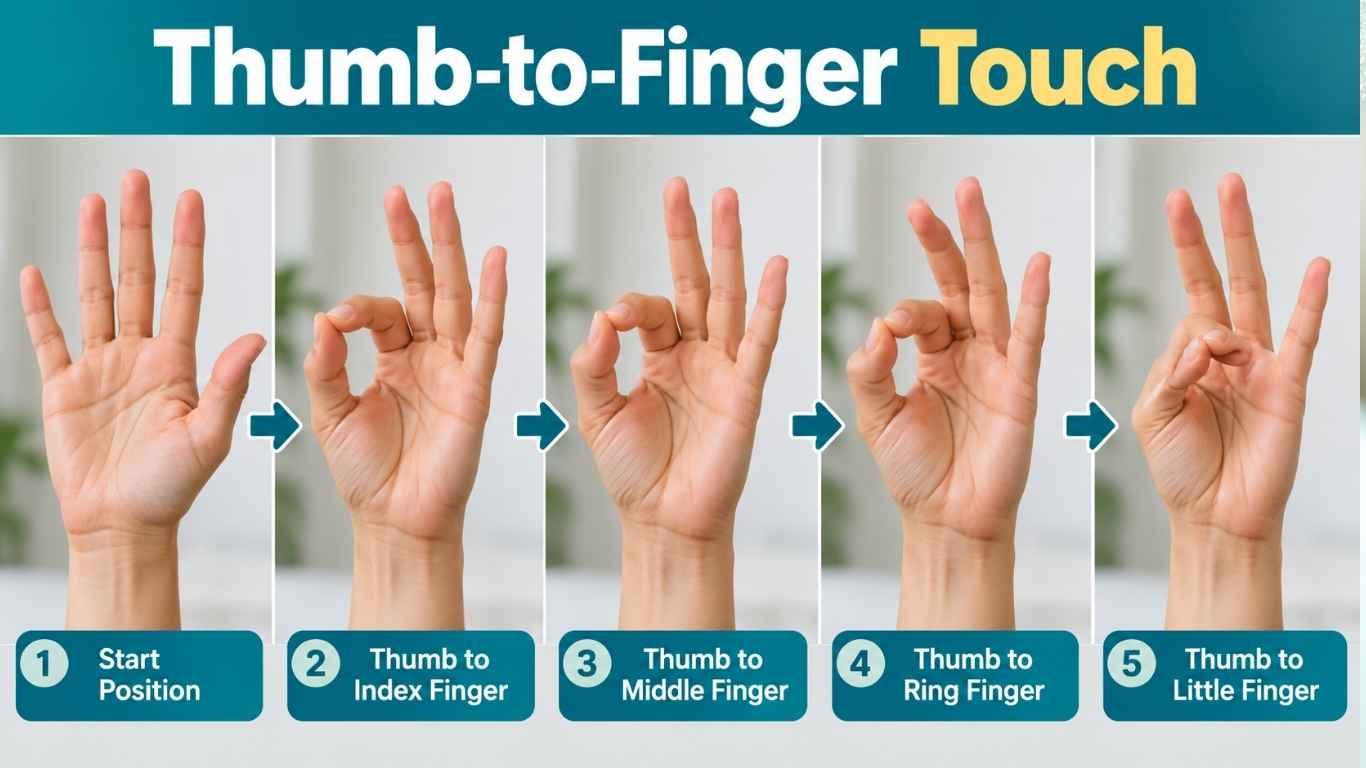
Thumb-to-Finger Touch
If the thumb or fingers feel particularly stiff, keep the movement gentle and avoid forcing the thumb toward the little finger. Rest your hand comfortably, then slowly bring the tip of your thumb to the tip of your index finger. Continue across the middle, ring, and little fingers, touching each one in turn. When you reach the little finger, you can gently slide the thumb toward its base if comfortable. Return to the starting position and repeat the sequence slowly. This movement encourages thumb opposition and coordination, which can support tasks such as gripping, pinching, and handling small objects. NHS hand-therapy guidance recommends this controlled fingertip-to-thumb movement.
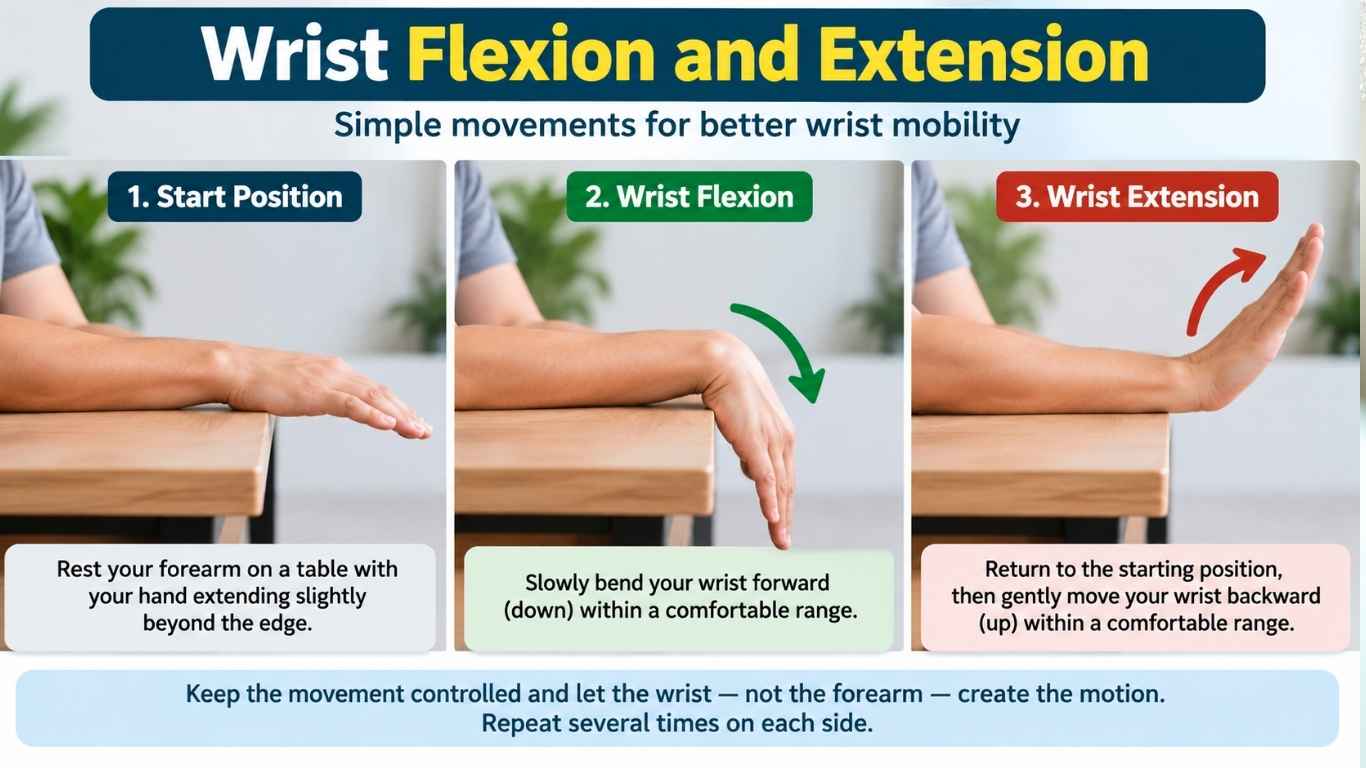
Wrist Flexion and Extension
Avoid pushing the wrist into its maximum position, particularly if you already have irritation or swelling. Rest your forearm on a table with your hand extending slightly beyond the edge, keeping the forearm relaxed. Slowly bend your wrist forward, then return to the starting position before gently moving it backward. Keep the movement controlled and let the wrist-not the forearm-create the motion. Repeat several times within a comfortable range. These wrist mobility exercises can help maintain movement in both directions and support everyday actions such as lifting, reaching, and positioning the hand.

Fist Open and Close
If your fingers feel tight, avoid squeezing into a hard fist or forcing the joints to bend fully. Start with your hand comfortably open, then slowly curl your fingers toward your palm to form a relaxed fist. Open the hand gradually and straighten the fingers before repeating the movement. Keep your wrist relaxed and avoid using excessive force. This simple motion takes the fingers through bending and straightening, which can help maintain comfortable hand movement for everyday tasks such as gripping, holding, and carrying objects.
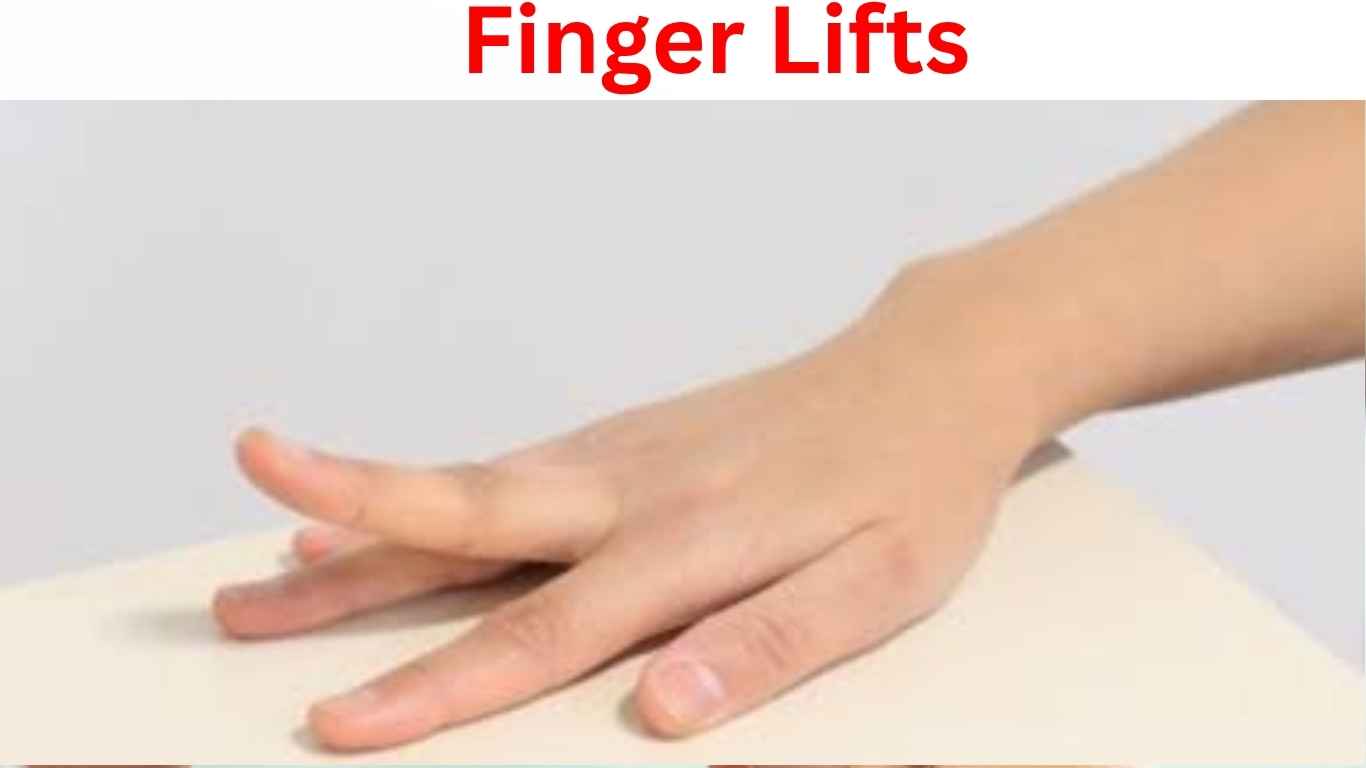
Finger Lifts
Stop or reduce the movement if lifting a finger causes sharp pain or unusual discomfort. Place your hand palm-down on a flat surface and keep your wrist relaxed. Slowly lift all your fingertips from the surface, then lower them with control. You can also lift each finger individually while keeping the others resting on the table. Avoid raising your whole hand or twisting your wrist to create extra movement. These hand and wrist exercises can encourage individual finger control and support comfortable movement during tasks that require precise hand positioning.
What Research Says About Hand and Finger Exercises
Research suggests that hand exercises may provide modest improvements in hand function and finger stiffness. A 2024 systematic review found short-term benefits for stiffness, function, pain, and grip strength in people with hand osteoarthritis, although the evidence varied in certainty. Earlier Cochrane evidence also found small improvements in hand function. These findings support regular, controlled movement, but results can differ depending on the underlying condition.
How to Strengthen Your Wrists and Fingers
Once comfortable mobility is established, gentle resistance help build strength in the muscles supporting your hands and wrists. You start with simple options such as squeezing a soft ball, pressing against your opposite hand without moving the wrist, or using light resistance. Keep each movement slow and controlled rather than forcing the joints. Hand-therapy guidance recommends strengthening within a comfortable range and reducing the effort if pain develops.
If you are recovering from a hand or wrist injury, surgery, or significant weakness, strengthening exercises may need to be introduced at the appropriate stage with guidance from a healthcare professional. If your hands often feel stiff after long periods of typing or desk work, adding short movement breaks can also help. Our guide on how to reduce joint stiffness after sitting explains simple ways to stay mobile during long periods of inactivity.
Wrist Physiotherapy Exercises: Are They the Same?
Wrist physiotherapy exercises and general wrist exercises can overlap, but they are not always the same. Physiotherapy exercises are usually selected according to a person’s injury, weakness, stiffness, or recovery needs. They may include gentle movement, stretching, strengthening, or isometric exercises that activate the muscles without moving the wrist. These wrist mobility exercises can be adjusted according to the individual’s condition and stage of recovery.
For mild stiffness, simple wrist movements may be suitable for maintaining comfortable motion at home. However, after an injury, surgery, or significant weakness, exercises should be guided by a physiotherapist or healthcare professional. The appropriate movement, resistance, repetitions, and progression can vary between individuals.