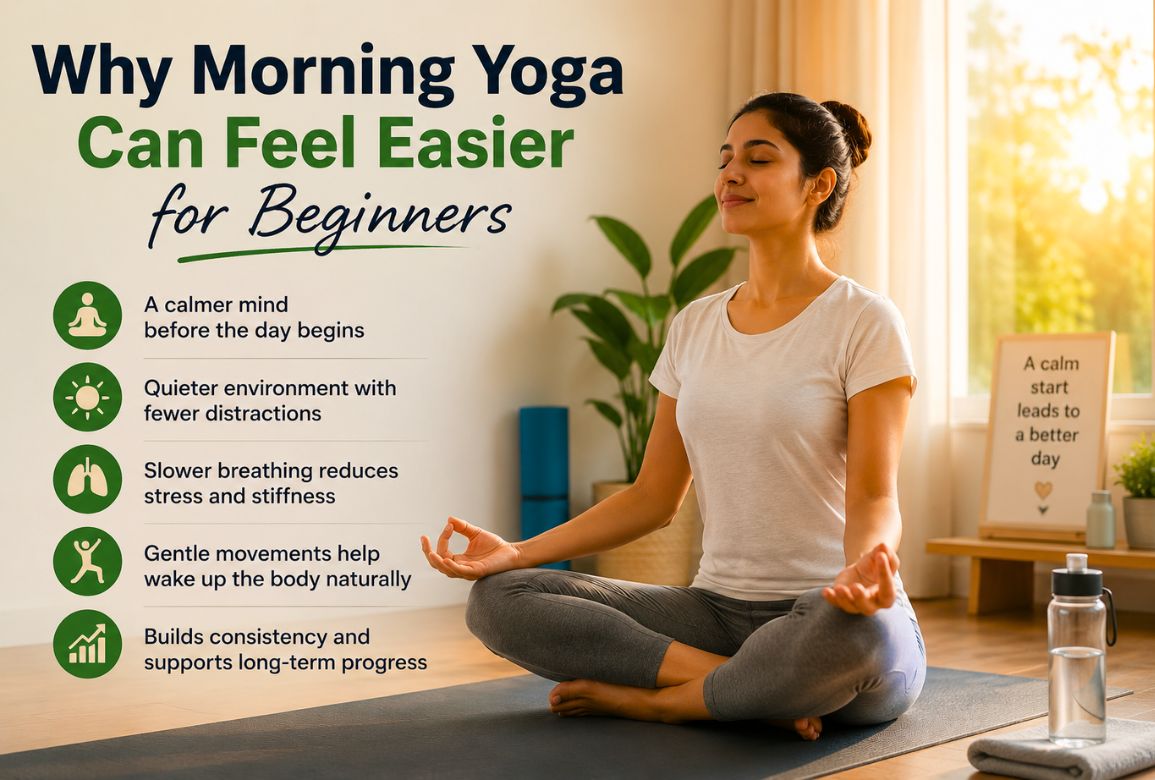
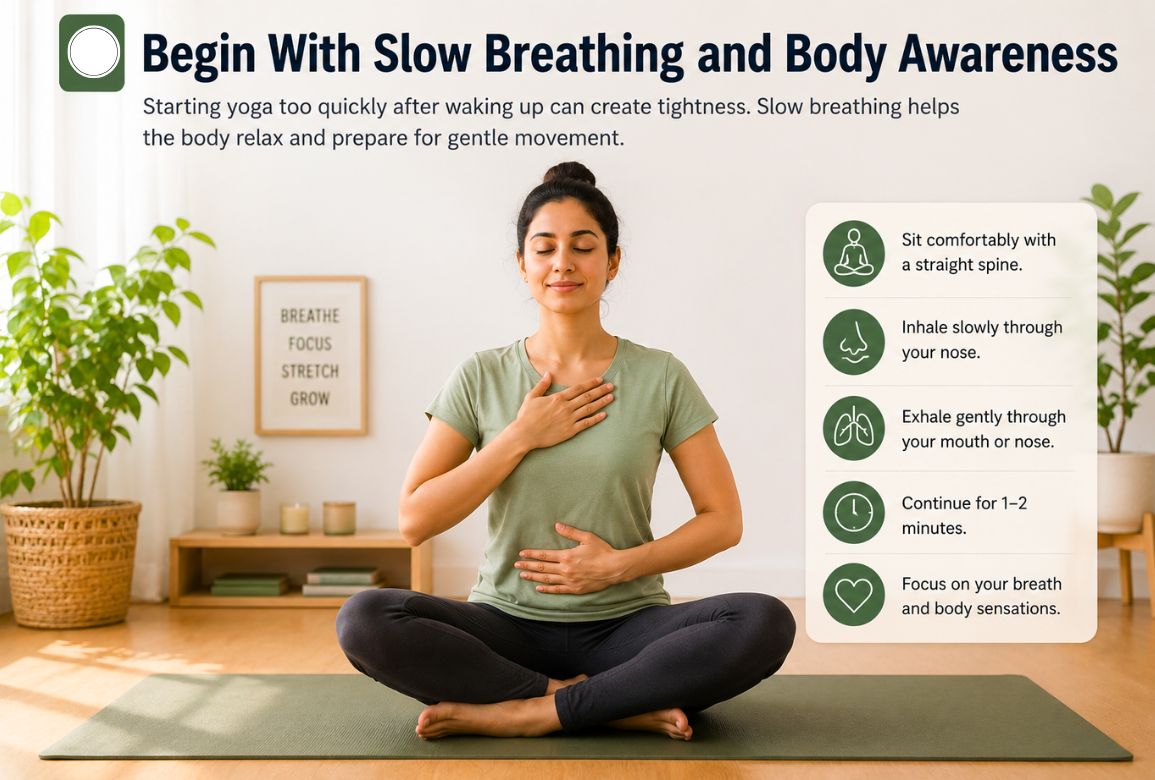
Neck stiffness and shoulder tension often become noticeable after waking up, especially following long sitting hours or screen-heavy routines. A few light mobility exercises can help these areas loosen up before moving into larger yoga poses.
You can start with the following movements:
- Roll the neck slowly in both directions for 20–30 seconds.
- Make small shoulder circles forward and backward.
- Lift and lower the shoulders several times.
- Swing the arms lightly to reduce stiffness.
- Move the upper back through a comfortable range of motion.
These small exercises help prepare the neck, shoulders, and back for deeper stretches later in the routine. People with desk-based schedules often notice reduced stiffness and improved posture awareness after adding a few minutes of mobility work before continuing.

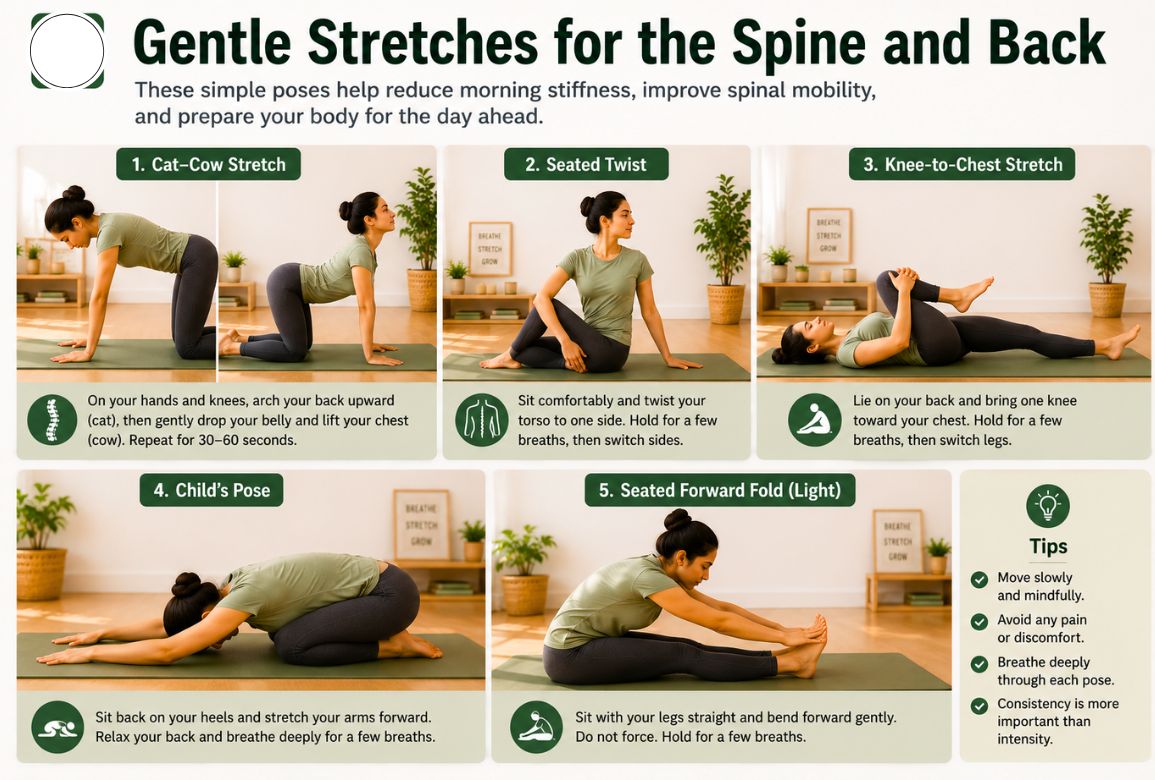
Gentle Stretches for the Spine and Back
Stiffness around the lower back is common during the first part of the morning, especially after long periods of inactivity. A few simple exercises loosen these areas and prepare the body for larger poses.
Follow these steps:
- Perform a cat-cow stretch for 30–60 seconds.
- Sit comfortably and do a light seated twist on both sides.
- Bring both knees toward the chest for a few breaths.
- Lean forward gently without forcing the lower back.
- Keep a slow pace throughout each exercise.
People who spend long hours sitting often notice less tightness after adding these exercises to their morning sessions. This stage helps prepare the body for hip and leg stretches that come next. A simple morning yoga routine often includes these techniques because they are easy to learn and suitable for different flexibility levels.
Improve Flexibility Around the Hips and Legs
Tight hips and legs can make bending, walking, and certain yoga poses more challenging in the morning. These areas often need extra attention before the active part of the sequence ends.
Focus on the following movements:
- Step one foot forward and hold a light lunge for a few breaths.
- Sit with both legs extended and lean forward gradually.
- Bend one knee while keeping the opposite leg straight.
- Switch sides and repeat on the other side.
- Keep the lower body relaxed and avoid bouncing throughout.
Long sitting hours often create stiffness around the hips and upper legs. This becomes easier to recognize after a few weeks of yoga. Regular practice improves range of motion and makes everyday activities such as walking, bending, and climbing stairs feel more natural over time.
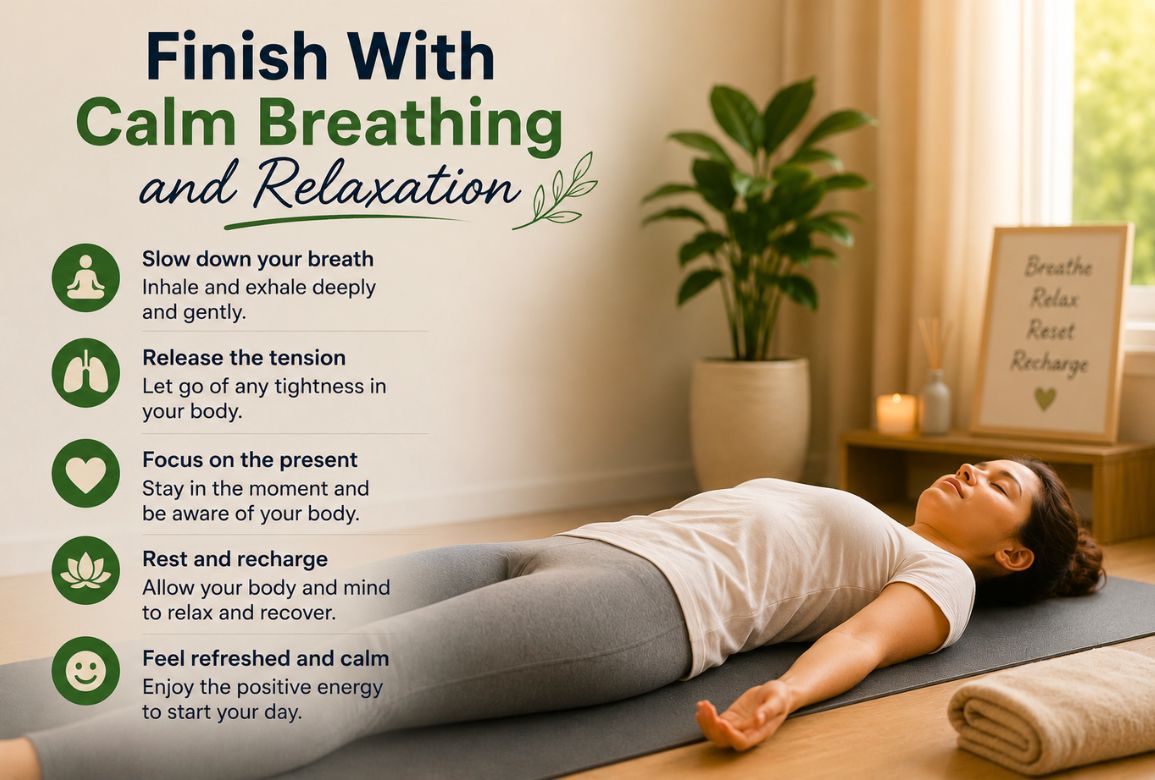
Finish With Calm Breathing and Relaxation
The last few minutes of a yoga session deserve the same attention as the active portion. After moving through different poses, the body benefits from a slower pace and a chance to unwind. Sit or lie down comfortably, close the eyes, and focus on a steady rhythm for one or two minutes. This helps release remaining tension and creates a smoother transition into the rest of the day.
Most of the beginners stand up immediately after completing their routine. In beginner yoga classes, participants often describe feeling more refreshed and focused when a short relaxation period is included before returning to daily activities. A few quiet moments also reinforce body awareness and make the entire morning yoga for beginners experience feel more balanced and enjoyable.
📹 Watch the Complete Beginner Morning Yoga Video Guide
How to Adjust the Routine Based on Daily Energy Levels
Not every day starts the same way. Poor sleep, mental stress, busy schedules, or physically demanding work can leave a person feeling slower after waking up. Because of this, following an identical yoga approach every day is not always necessary. Paying attention to how the body responds often creates a more sustainable habit.
When motivation is low, shorten the practice and focus on basic stretches. A slower pace, fewer poses, and a few minutes of quiet breathing are usually enough. Keeping things simple makes it easier to stay consistent instead of skipping yoga completely.
Days with more enthusiasm and physical readiness create a good opportunity for extra flexibility work. Additional poses, longer hold times, or a few extra minutes of mobility training often fit naturally into the schedule. Small adjustments like these help create balance instead of forcing the same level of effort every day.
Simple Morning Yoga Options for Busy Schedules
Busy schedules make it difficult to fit long workouts into the start of the day. Work commitments, school responsibilities, family routines, and early commutes often leave very little free time after waking up. Because of this, many individuals skip yoga when they assume it requires a large time commitment.
Fortunately, shorter yoga sessions still provide value. Five to ten minutes of stretching and focused breathwork can loosen stiff muscles and create a more active start. Building a consistent habit usually matters more than spending a long time on the mat. A few well-chosen poses often deliver more value than occasional lengthy workouts.
Those with limited free time may benefit from a shorter approach that focuses on the most important stretches and relaxation techniques. For a complete example, see our 10-minute morning yoga routine at home.
Easy Modifications for Stiff Muscles and Tight Joints
Stiff muscles and tight joints are common when starting yoga. Bending forward, reaching comfortably, or holding certain poses may feel challenging at first. This is especially common after long periods of inactivity, desk work, or limited physical activity. It does not mean something is wrong. In most cases, the body simply needs time to adjust to new movements.
There is no reason to force every pose to its full range. A shorter range of motion, a slower pace, and reduced hold times often make practice more manageable. Support from a chair, wall, cushion, or yoga block can also make certain positions easier to perform. These small adjustments are a normal part of a beginner morning stretching routine and help create a more comfortable learning experience.
Most improvement comes from consistency rather than intensity. As the body becomes more familiar with regular movement, flexibility gradually increases and positions become easier to perform. Those dealing with persistent muscle tightness may benefit from a routine designed specifically for flexibility and mobility. For additional guidance, see our Gentle Morning Yoga for a More Flexible Body.
Common Mistakes New Beginners Should Avoid
Most beginner mistakes occur when expectations become unrealistic. Some people try advanced poses too early, while others rush through stretches without paying attention to proper form. These habits often create unnecessary frustration and make yoga seem harder than it actually is.
Some of the most common mistakes include:
- Skipping warm-up exercises before starting.
- Holding poses longer than necessary.
- Moving too quickly between positions.
- Comparing results with more experienced practitioners.
- Ignoring discomfort and pushing beyond a comfortable range.
- Practicing inconsistently throughout the week.
Many people enjoy yoga more when they focus on consistency instead of perfection. A morning yoga practice for beginners works best when skills develop gradually, and each session matches current flexibility and fitness levels.
Signs Your Body Needs Slower Movement
Yoga should feel challenging at times, but it should not feel overwhelming. Moving too quickly often makes it harder to maintain proper form and can place unnecessary stress on muscles and joints. Paying attention to physical signals during a session helps prevent minor discomfort from turning into a larger problem.
A slower pace is usually a better choice when any of the following signs appear:
- Sharp discomfort during a pose.
- Difficulty maintaining steady breathing.
- Excessive shaking while holding a position.
- Loss of balance during simple activities.
- Tightness that becomes worse instead of easing.
- Feeling unusually fatigued early in the routine.
Many beginners discover that slowing down leads to better control and steadier posture. Greater awareness and cleaner technique often develop faster when positions are performed with patience rather than rushed from one pose to the next.
Building a Morning Stretching Habit You Can Maintain
Building a lasting yoga habit is often more important than finding the perfect routine. Many beginners start with strong motivation, then lose consistency after trying to do too much too soon. A shorter routine that fits naturally into daily life is usually easier to maintain over the long term.
Simple habits often produce the best results. Keeping a yoga mat ready, choosing a regular practice time, and setting realistic expectations can make a big difference. A simple morning yoga routine that feels manageable is more likely to become part of a daily schedule than a long routine that feels difficult to follow.
What to Do When the Routine Feels Difficult
Some days feel harder than others. Poor sleep, mental stress, busy schedules, or physical fatigue can make yoga seem less enjoyable than usual. These challenges are a normal part of building any new habit and should not be viewed as failure.
Instead of skipping practice completely, reduce the difficulty and continue with a few basic poses. A shorter routine often feels much more achievable on challenging days. Many people discover that maintaining consistency through difficult periods helps build a stronger habit than only practicing when conditions feel perfect.
Small Changes That Make Morning Yoga More Comfortable
A few small changes can make morning yoga feel smoother from the very beginning. These adjustments do not require extra experience or expensive equipment. They simply remove common distractions and make it easier to settle into a routine.
Simple changes worth trying:
- Practice near natural light when possible.
- Lay out the yoga mat the night before.
- Choose clothing that does not restrict movement.
- Keep a bottle of water nearby.
- Use a slightly warmer room during colder months.
- Turn off notifications before starting.
- Begin with a few quiet moments instead of rushing into poses.
- Play soft background music if it helps concentration.
Many beginners find that comfort comes from preparation rather than harder exercises. Small improvements to the environment often make yoga more enjoyable and help the routine fit more naturally into daily life.
FAQ
How long should a beginner do morning yoga?
A daily routine of 5 to 15 minutes is enough for most people starting yoga. Short sessions are easier to fit into busy schedules and still support flexibility, mobility, and body awareness.
Is morning yoga good for stiff muscles?
Yes. Gentle yoga helps loosen muscles that become tight after sleep or long periods of inactivity. Regular stretching also makes everyday activities such as walking, bending, and reaching feel smoother.
What mistakes should new yoga practitioners avoid?
Common mistakes include rushing through poses, forcing flexibility, skipping warm-up exercises, and comparing results with others. A steady approach often leads to a more enjoyable and sustainable experience.
Can a short yoga routine still be effective?
Absolutely. Five to ten minutes of yoga can provide meaningful benefits when done regularly. Even a brief routine helps improve mobility, reduce tightness, and support a healthier start to the day.
When do flexibility improvements usually become noticeable?
The timeline varies for each person. Some individuals notice changes within a few weeks, while others require more time. Regular participation and proper form generally produce better results than intense stretching.
Conclusion
The best morning yoga routine for complete beginners does not need to be complicated or time-consuming. Simple stretches, gentle mobility work, and steady breathing are often enough to set a positive tone for the day. For most beginners, building a routine that feels realistic is far more important than attempting advanced poses too early.
Progress in yoga rarely happens overnight. Flexibility, balance, and body awareness develop gradually through regular participation rather than perfect performances. Small improvements from week to week often lead to meaningful long-term results. The most important step is getting started and continuing to show up. A consistent beginner morning stretching routine can become a valuable part of daily life, helping create healthier movement habits and greater confidence over time.
Know to more about read: Complete Morning Yoga Routine for Beginners at Home
Research & Reference Sources
Editorial Note: This content is intended for general wellness and educational purposes. Individual flexibility, mobility, and physical comfort levels may vary based on experience and lifestyle.
Reviewed & Updated By: YOGA FLEX ZONE Editorial Team