
Many people want to start yoga but struggle to find enough time in the morning. The good news is that a long session is not always necessary. A 10-minute morning yoga routine at home can be enough to loosen stiff muscles, improve mobility, and help the body feel more awake at the start of the day. Whether you are new to yoga or looking for a simple routine that fits into a busy schedule, a few minutes of gentle movement can be an easy and realistic way to build a healthier morning habit. If stiff muscles, limited time, or uncertainty have made it difficult to start yoga, this guide will show you a simple and beginner-friendly way to get started.
Why a 10-Minute Morning Yoga Routine Is Enough
Common misconception is that yoga must last 30 minutes or longer to be effective. Reality it’s, a short morning stretching routine can still provide meaningful benefits when performed regularly. Just a few minutes of movement prepares the body for daily activities and helps reduce the sluggish feeling that often follows sleep.
One of the biggest advantages of a 10-minute routine is its practicality. Longer workouts are not always realistic before work, school, or family responsibilities. A shorter approach removes that challenge and makes consistency easier to maintain. Over time, ten minutes of daily yoga often produces better results than longer sessions that are only completed occasionally.
Who Should Try This 10-Minute Morning Yoga Routine
This routine is suitable for anyone who wants to start the day with light yoga but has limited time available. It works well for beginners, busy professionals, students, and those returning to exercise after a long break. The short duration makes it easier to fit yoga into a daily schedule without major adjustments.
It can also be a practical choice for individuals dealing with mild morning stiffness or long hours of sitting throughout the day. Because the exercises are simple and beginner-friendly, there is no need for advanced flexibility or previous yoga experience. An easy morning yoga exercises plan like this provides an accessible starting point for building healthier movement habits.
What You Need Before Starting
Getting ready for this routine is simple and takes very little effort. A few basic items can make these exercise more comfortable and help the session flow more smoothly from start to finish.
Before starting it helps to have:
- A yoga mat or soft surface
- Wear comfortable clothing
- Select quiet space with enough room to move
- A small amount of water nearby
- Take some uninterrupted times for practice
There is no need for expensive equipment or a professional studio for these 10 minute yoga exercise. This routine is designed for home practice and works well in almost any living space. Even those with no previous yoga experience can start right away and follow the exercises comfortably.
Step-by-Step 10-Minute Morning Yoga Routine
This routine is designed to be followed step by step from beginning to end. Move at a comfortable pace and stay within a range that feels natural. No previous yoga experience or advanced flexibility is required. Morning stiffness is common after sleep. For that reason, the routine follows a simple flow that begins with breathing and gradually moves through the upper body, spine, hips, and legs before ending with relaxation.
Following the steps in order helps each area loosen up gradually before the day begins.
Minute 1–2: Wake Up With Breathing
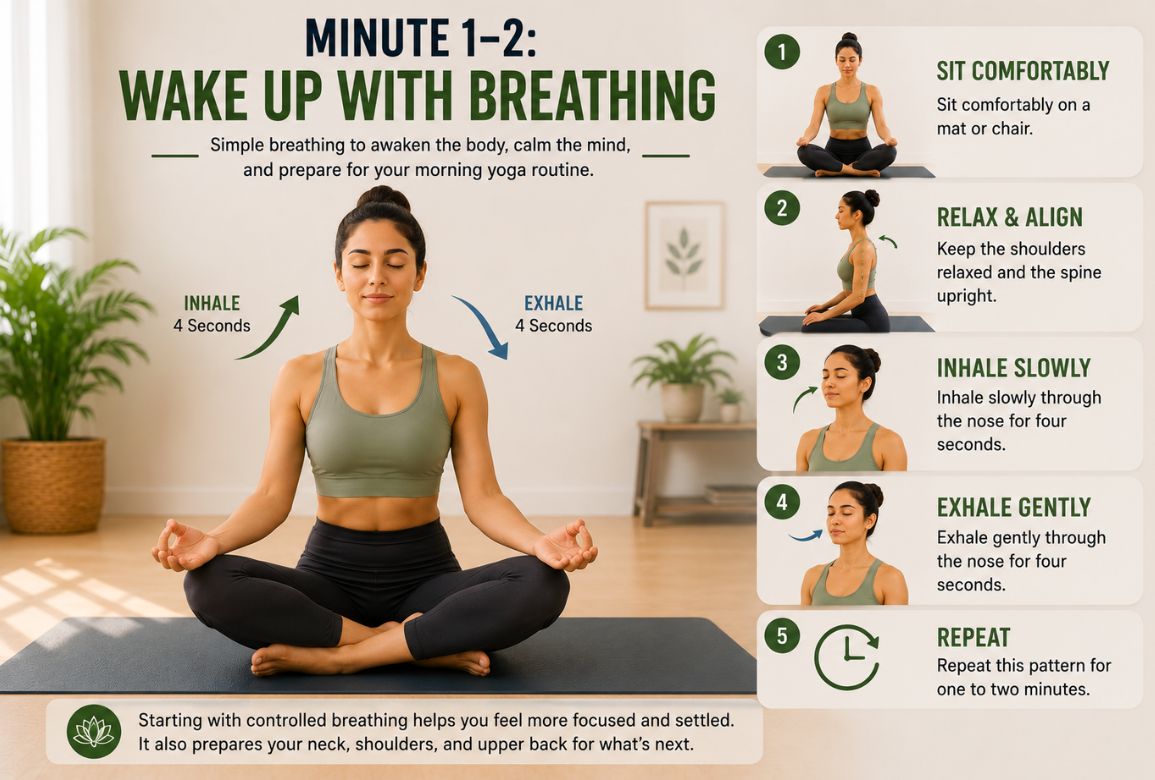
The first few minutes of the morning often feel slow, especially after a full night of sleep. Tight muscles and shallow breathing are common after waking up. A lack of movement can also leave muscles feeling less active than usual. Starting with controlled breathing helps create a smoother transition from rest to movement.
Follow these steps:
- Sit comfortably on a mat or chair.
- Keep the shoulders relaxed and the spine upright.
- Inhale slowly through the nose for four seconds.
- Exhale gently through the nose for four seconds.
- Repeat this pattern for one to two minutes.
In beginner yoga classes, participants often describe feeling more focused and settled after starting with breathing exercises. This also prepares the neck, shoulders, and upper back for the next stage of the routine.
Minute 2–4: Release Neck and Shoulder Tension
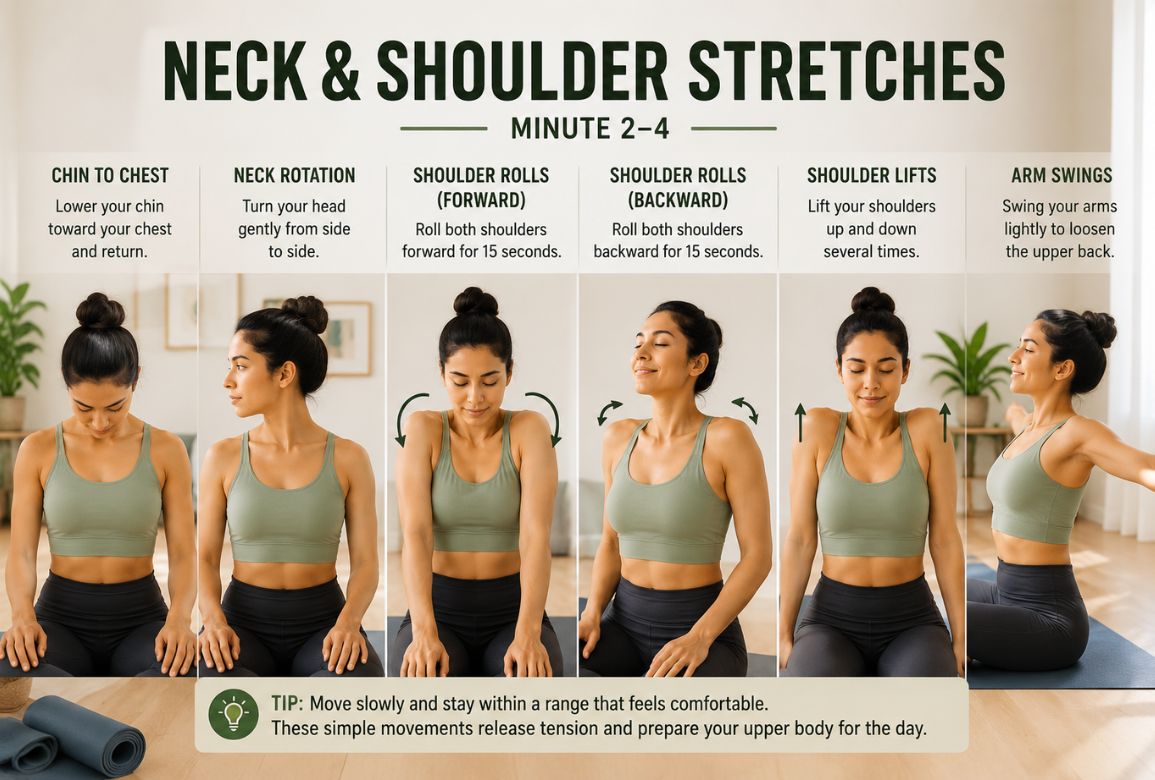
Neck and shoulder tension is common after sleep. It can feel even more noticeable for those who spend long hours at a desk or looking at screens. A few minutes of light mobility work can help these areas loosen up before moving to the next part of the routine.
Start with the following mobility exercises:
- Slowly lower the chin toward the chest, then return to a neutral position.
- Turn the head gently from side to side.
- Roll both shoulders forward for 15 seconds.
- Roll both shoulders backward for 15 seconds.
- Lift and lower the shoulders several times.
- Swing the arms lightly to loosen the upper back.
Morning mobility sessions often reveal how much tightness builds up around the neck and shoulders. These simple exercises help create smoother upper-body movement and prepare the spine and back for the next stage of the routine.
Minute 4–6: Improve Spine and Back Mobility
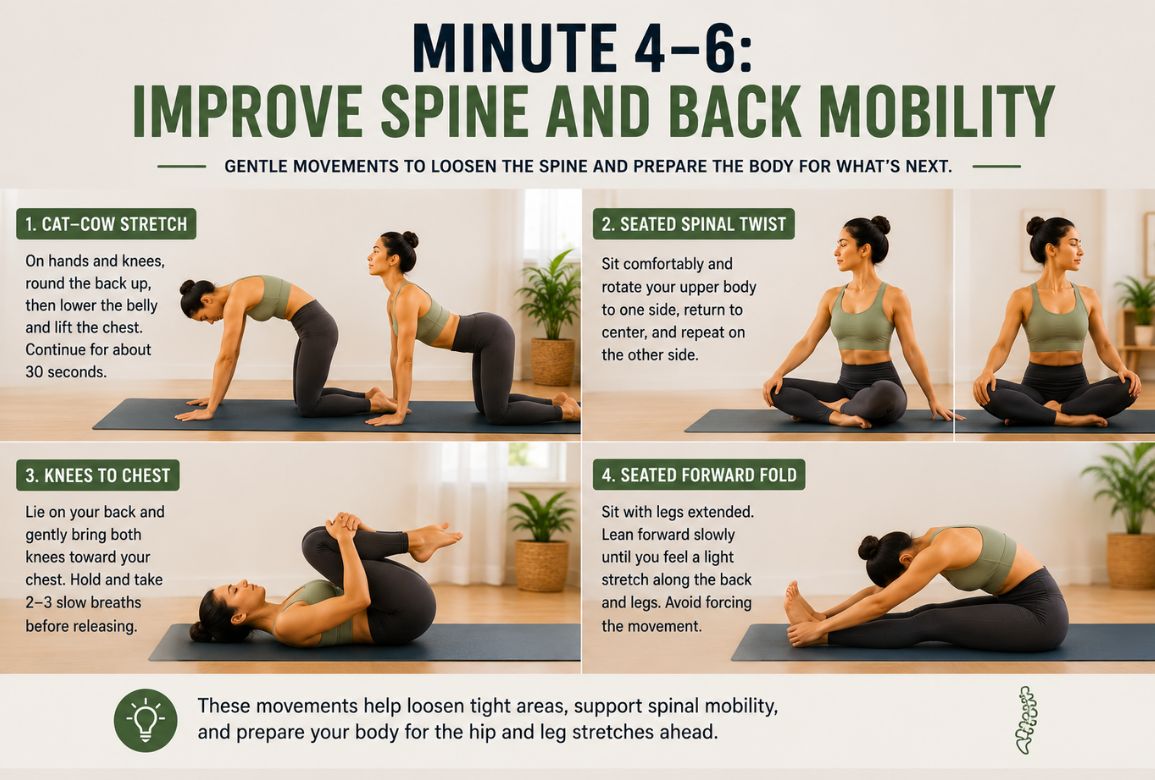
The spine supports almost every movement throughout the day. After several hours of sleep, movement may feel less comfortable than usual. Simple actions such as bending, reaching, or standing upright can feel slightly restricted. Spending a few minutes on mobility work helps these areas loosen up before the routine moves to the hips and legs.
Complete the following exercises:
- Start on your hands and knees. Slowly round the back upward, then lower the stomach while lifting the chest. Continue this movement for about 30 seconds.
- Sit comfortably with the legs crossed or extended. Gently rotate the upper body to one side, return to the center, and repeat on the opposite side.
- Lie on your back and slowly bring both knees toward the chest. Hold the position while taking two or three slow breaths before releasing.
- Sit with both legs extended in front of you. Lean forward gradually until a light stretch is felt along the back and legs. Avoid forcing the movement.
Morning mobility sessions often reveal tightness around the spine, especially after long periods of sitting. These exercises encourage smoother movement and help prepare the lower body for the next stage of the routine.
Minute 6–8: Stretch the Hips and Legs
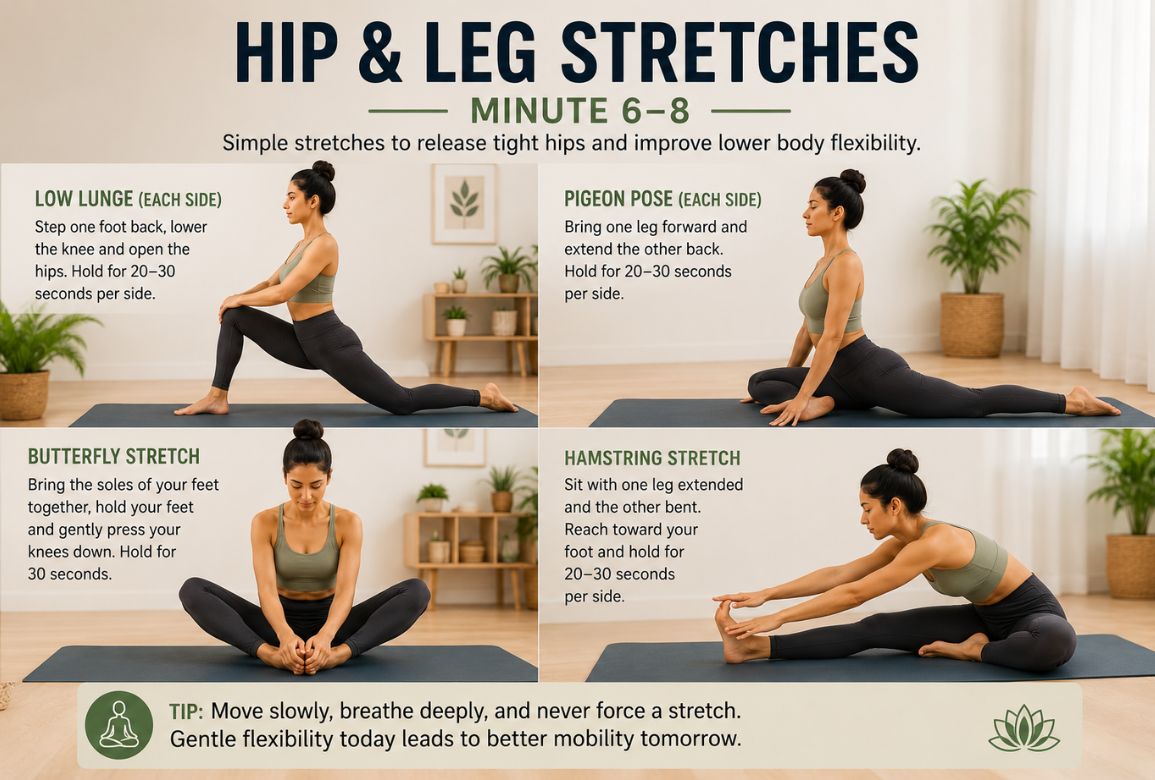
Tight hips and legs can make walking, bending, and certain yoga poses feel less comfortable in the morning. Long periods of sitting often contribute to stiffness in these areas, especially around the hips and upper legs. Spending a few minutes on lower-body stretches helps improve mobility before the routine comes to an end.
Hip tightness is one of the most common restrictions during a beginner quick morning yoga routine. It is often easier to notice after long periods of inactivity, especially when moving into lunges or forward bends for the first time.
Focus on the following stretches:
- Step one foot forward and lower into a light lunge position. Hold for a few breaths before switching sides.
- Sit with both legs extended and slowly lean forward until a gentle stretch is felt along the backs of the legs.
- Bend one knee while keeping the opposite leg straight. Hold briefly, then repeat on the other side.
- Bring one knee toward the chest while sitting or lying down. Hold for a few breaths before changing sides.
Regular stretching helps improve range of motion and makes everyday movements feel more natural. These exercises also prepare the body for the final stage of the session, where the focus shifts to relaxation and recovery.
Minute 8–10: Relax and Reset
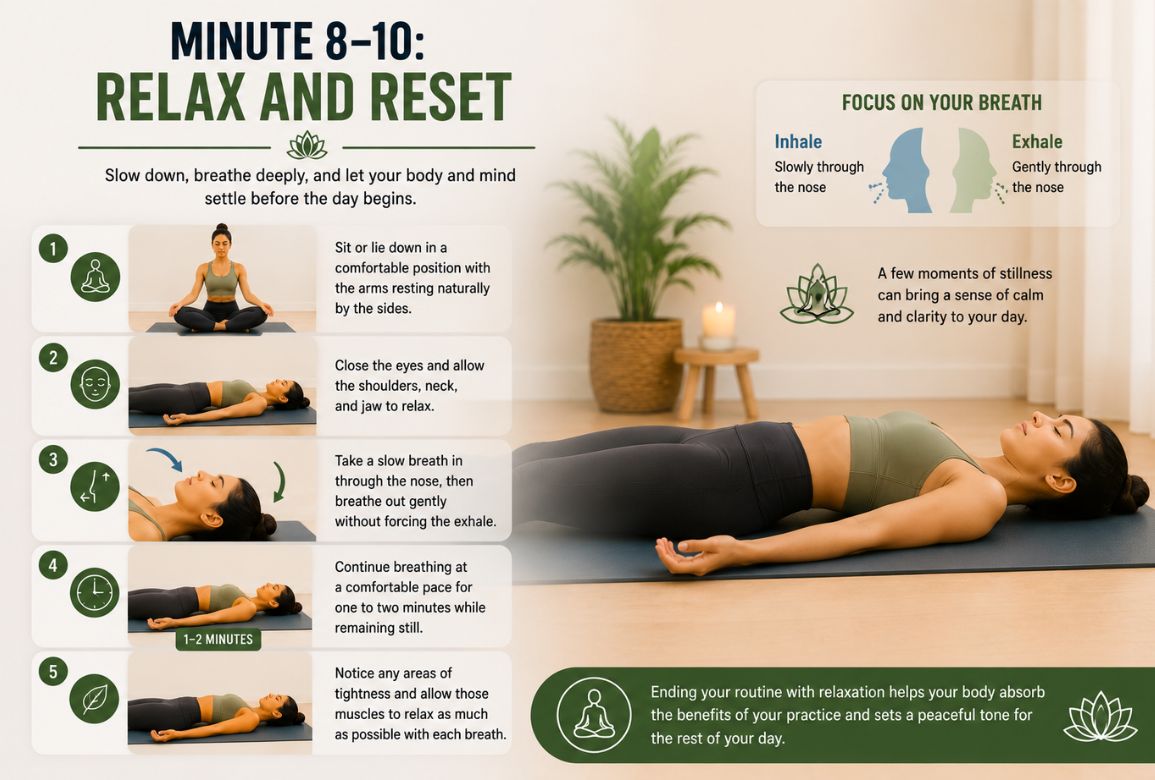
The final minutes of a yoga session are just as important as the stretches that come before them. After several minutes of movement, slowing down allows the body and mind to settle before the day begins. A short relaxation period is easy to overlook when time is limited. Yet yoga classes and guided sessions often end this way because it helps create a more complete and balanced experience before returning to daily activities.
Finish the routine with these steps:
- Sit or lie down in a comfortable position with the arms resting naturally by the sides.
- Close the eyes and allow the shoulders, neck, and jaw to relax.
- Take a slow breath in through the nose, then breathe out gently without forcing the exhale.
- Continue breathing at a comfortable pace for one to two minutes while remaining still.
- Notice any areas of tightness and allow those muscles to relax as much as possible with each breath.
A brief relaxation period helps reinforce body awareness and encourages a calmer state of mind. Finishing with these easy morning yoga exercises completes the routine and helps create a more comfortable start to the day.
If you would rather follow along with a teacher, this guided 10-minute morning yoga session can help make the routine easier to follow. Watch Here: 10 Minute Morning Yoga Full Body Stretch
Beginner Modifications for the Routine
Not every beginner feels comfortable performing the full version of each stretch right away. Limited flexibility is common when starting yoga. Tight muscles and restricted joint movement can also make certain exercises feel more challenging. Small adjustments can make the routine feel more approachable without reducing its overall value.
Most beginners discover that simple modifications make yoga feel far more comfortable during the first few sessions. A few small changes are often enough to improve confidence and make movement feel more natural.
The following adjustments make the routine more comfortable:
- Reduce the range of motion during stretches.
- Hold each position for less time.
- Use a chair or wall for extra support.
- Move more slowly between exercises.
- Stop before a stretch becomes uncomfortable.
There is no need to force flexibility or match advanced poses. Progress develops gradually as movement becomes more familiar. If stiffness is the biggest challenge, see our Gentle Morning Yoga for a More Flexible Body guide for additional beginner-friendly exercises.
Common Mistakes to Avoid During a Short Yoga Session
A short yoga session can be very effective, but a few common mistakes often reduce its value. When time is limited, there is usually a temptation to move too quickly or skip important parts of the routine. These habits can make yoga feel less enjoyable and less productive.
Common mistakes include:
- Rushing through exercises without proper control.
- Skipping breathing exercises at the beginning.
- Trying to force flexibility too quickly.
- Ignoring discomfort during stretches.
- Treating relaxation as optional.
- Comparing results with more experienced practitioners.
A 10-minute session works best when each movement is performed with attention and control. Focusing on quality rather than speed often creates a better overall experience.
Benefits of Practicing This Routine Regularly
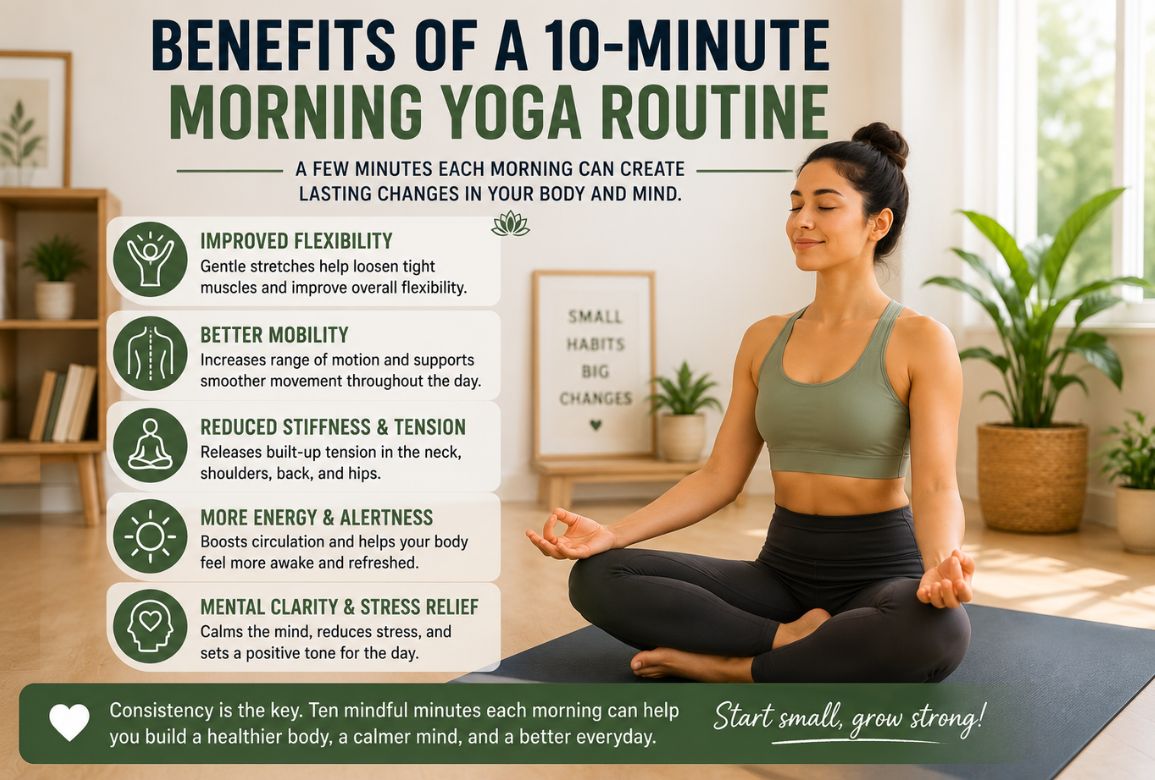
The benefits of yoga often come from repetition rather than intensity. Even a short daily session can create noticeable changes when performed consistently. Over time, regular movement helps the body adapt and become more comfortable with stretching and mobility work.
Some benefits of regular practice include:
- Better flexibility throughout the body.
- Improved mobility during daily activities.
- Reduced morning stiffness.
- Greater body awareness.
- Improved posture and movement patterns.
- A more active start to the day.
A short morning stretching routine does not need to be complicated to be effective. Small efforts repeated regularly often produce meaningful long-term results.
How This Routine Supports Flexibility and Mobility
Flexibility and mobility are often discussed together, but they are not exactly the same. Flexibility refers to how far a muscle can stretch, while mobility focuses on how well a joint moves through its natural range of motion. A balanced yoga routine supports both, making everyday movement feel smoother and more comfortable.
People who practice yoga consistently often discover that smoother movement becomes noticeable before major flexibility improvements appear. This is one reason short yoga routines can still feel rewarding, even before significant stretching gains develop.
This routine combines breathing, spinal mobility, hip stretches, and lower-body exercises in a short period of time. Together, these movements support flexibility and encourage healthier joint movement throughout the day. Activities such as bending, reaching, walking, and getting out of a chair may begin to feel more natural over time.
What If You Have Less Than 10 Minutes
Some mornings feel more rushed than others. Work commitments, school schedules, family responsibilities, or unexpected tasks can leave very little time for exercise. On those days, even a quick morning yoga routine is better than skipping movement completely. A few minutes of stretching and breathing can still create a positive start to the day.
People with busy schedules often find that even a few minutes of movement helps them stay consistent with their routine. When time is limited, focus on the most important parts of the session. A minute of breathing, a few upper-body mobility exercises, and one or two lower-body stretches are often enough. Returning to the full routine on less busy days becomes much easier when movement remains part of the daily schedule.
Morning Yoga Tips for Busy Schedules
Busy mornings can make exercise feel difficult to fit into the day. Early meetings, school commitments, and family responsibilities often leave very little free time after waking up. For that reason, a quick morning yoga routine is often easier to maintain than a longer workout that requires a bigger time commitment.
People with busy schedules often find that small preparations make yoga much easier to follow.
The following tips can help:
- Prepare the yoga mat the night before.
- Keep workout clothing ready and easy to access.
- Wake up 10 minutes earlier than usual.
- Follow a simple routine instead of adding extra exercises.
- Focus on consistency rather than session length.
- Avoid checking emails or social media before starting.
Small changes like these can remove common obstacles and make yoga easier to fit into a busy schedule. For additional tips designed for office workers, see our Morning yoga for desk workers guide.
Making Morning Yoga Part of Your Daily Schedule
Building a yoga habit is often easier when it becomes part of an existing morning routine. Attaching yoga to a daily activity, such as drinking water, making coffee, or getting ready for work, can make it feel more natural and easier to remember. Small habits are usually more sustainable than major lifestyle changes.
Many beginners discover that consistency becomes easier once they stop focusing on perfection. Missing a day occasionally is not a problem. The goal is simply to return to the routine and keep moving forward. For a more detailed beginner-friendly plan, see our Best morning yoga routine for complete beginners guide.
When to Increase Beyond a 10-Minute Routine
A 10-minute routine is enough for many people, especially during the early stages of yoga. However, there may come a point when the exercises start feeling more familiar and the routine feels easier to complete. This is often a sign that the body is ready for a little more variety or additional movement.
Practitioners often discover that movements feel smoother and less demanding after several weeks of regular practice. Progress does not require a sudden jump to longer sessions. A few extra minutes or slightly longer stretches are often enough. Some people also add a few additional mobility exercises over time. Gradual changes usually feel more manageable than making major adjustments all at once.
For a more detailed step-by-step plan, see our Complete morning yoga routine for beginners at home guide.
FAQ
Is a 10-minute morning yoga routine enough for beginners?
Yes. A 10-minute routine is enough for most beginners. Short sessions are easier to follow consistently and still provide benefits such as improved mobility, flexibility, and body awareness over time.
Can I do this routine every day?
Yes. This routine is designed for daily practice. The exercises are simple and beginner-friendly, making them suitable for most mornings without requiring long recovery periods between sessions.
Do I need a yoga mat for this routine?
No. A yoga mat can provide extra comfort and stability, but it is not essential. Any soft, non-slip surface with enough room to move can work for this routine.
What should I do if I feel stiff during yoga?
Move more slowly and stay within a comfortable range of motion. Reducing the depth of a stretch and using support from a chair or wall often makes the routine more comfortable.
How long does it take to notice flexibility improvements?
The timeline varies from person to person. Some individuals notice small changes within a few weeks, while others require more time. Regular participation and proper technique usually produce the best results.
Conclusion
A 10-minute morning yoga routine at home can be an effective way to start the day without requiring a large time commitment. Simple stretches, controlled breathing, and gentle mobility work are often enough to reduce stiffness, improve flexibility, and create a more active start to the morning.
The key is consistency rather than perfection. Missing a day occasionally is not a problem, but maintaining the habit over time usually leads to better results. Even a quick morning yoga routine can make everyday movement feel smoother and more comfortable when practiced regularly.
Start where you are and move at a comfortable pace. Many people find that steady progress becomes more noticeable when yoga becomes part of a daily routine. Small efforts repeated each morning often lead to meaningful long-term benefits.
Sources & Reference
- Harvard Health – The Ideal Stretching Routine
- Johns Hopkins Medicine – 9 Benefits of Yoga
- Cleveland Clinic – Benefits of Stretching
- Yoga Journal – Yoga Poses Library
Editorial Note: This content is intended for educational and general wellness purposes. Individual flexibility, mobility, and physical comfort levels may vary based on experience, lifestyle, and consistency of practice.
Reviewed & Updated By: YOGA FLEX ZONE Editorial Team