
After a few hours at your desk, you might catch yourself rubbing your neck, rolling your shoulders, or leaning back in your chair to ease the tension. Sitting in the same position for long periods can leave the muscles around your neck and upper back feeling stiff, especially when you’re focused on a computer screen.
The good news is that you don’t have to leave your desk to give your neck a break. A few simple desk stretches for office neck tension can help loosen tight muscles, encourage better posture, and make your workday more comfortable. In this guide, you’ll learn easy stretches you can do right at your desk, along with simple work habits that can help keep neck stiffness from returning.
Why Your Neck Feels Worse by the End of the Workday
A full day at your desk can leave your neck feeling stiff, even if you haven’t done any heavy physical work. Spending hours looking at a screen, typing, or staying in the same position places steady demand on the muscles around your neck and shoulders. As the day goes on, that constant strain can leave your neck feeling tight and less comfortable to move.
Small workplace habits often make the problem worse without you noticing. Leaning toward your monitor, using a laptop that’s too low, or skipping movement breaks can all increase muscle tension. Taking a few minutes for office neck stretches throughout the day can help release tight muscles, improve comfort, and make long hours at your desk feel less demanding. One thing many office workers notice is that neck tension often builds so gradually they don’t realize how stiff they’ve become until they stand up, turn their head, or finish work for the day.
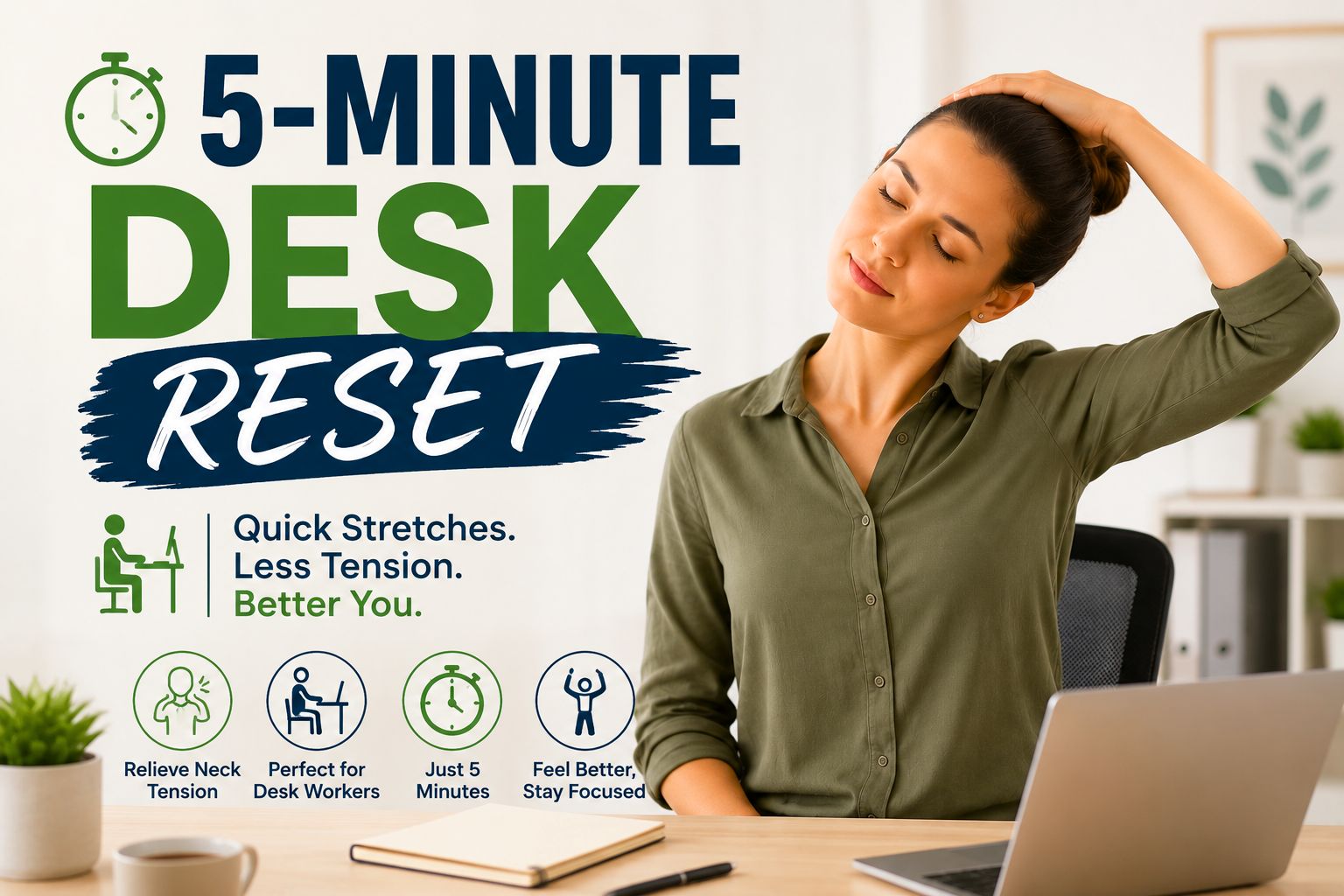
5 Minute Desk Reset To Soothe Tightness In The Neck.
If your neck begins to feel stiff, a few minutes of gentle neck exercise can help make a difference. This is a quick reset for your desk and takes just a few minutes and can be done in the middle of the work day. You don’t need to leave your workspace, just a comfortable chair that affords you space to work comfortably. This is a very easy exercise to do for office workers, remote workers, students or anyone who has been seated in a position for a long time.
As you start, relax and settle your shoulders so that you sit or stand comfortably. Go through each stretch slowly rather than quickly, and only do as much as is comfortable for your body.
8 Desk Stretches for Office Neck Tension
These simple desk neck stretches are designed to fit naturally into your workday. You can do them one by one when your neck is tight or do them all in the five-minute routine above. Go slowly, take deep breaths and don’t push into a position that is uncomfortable.
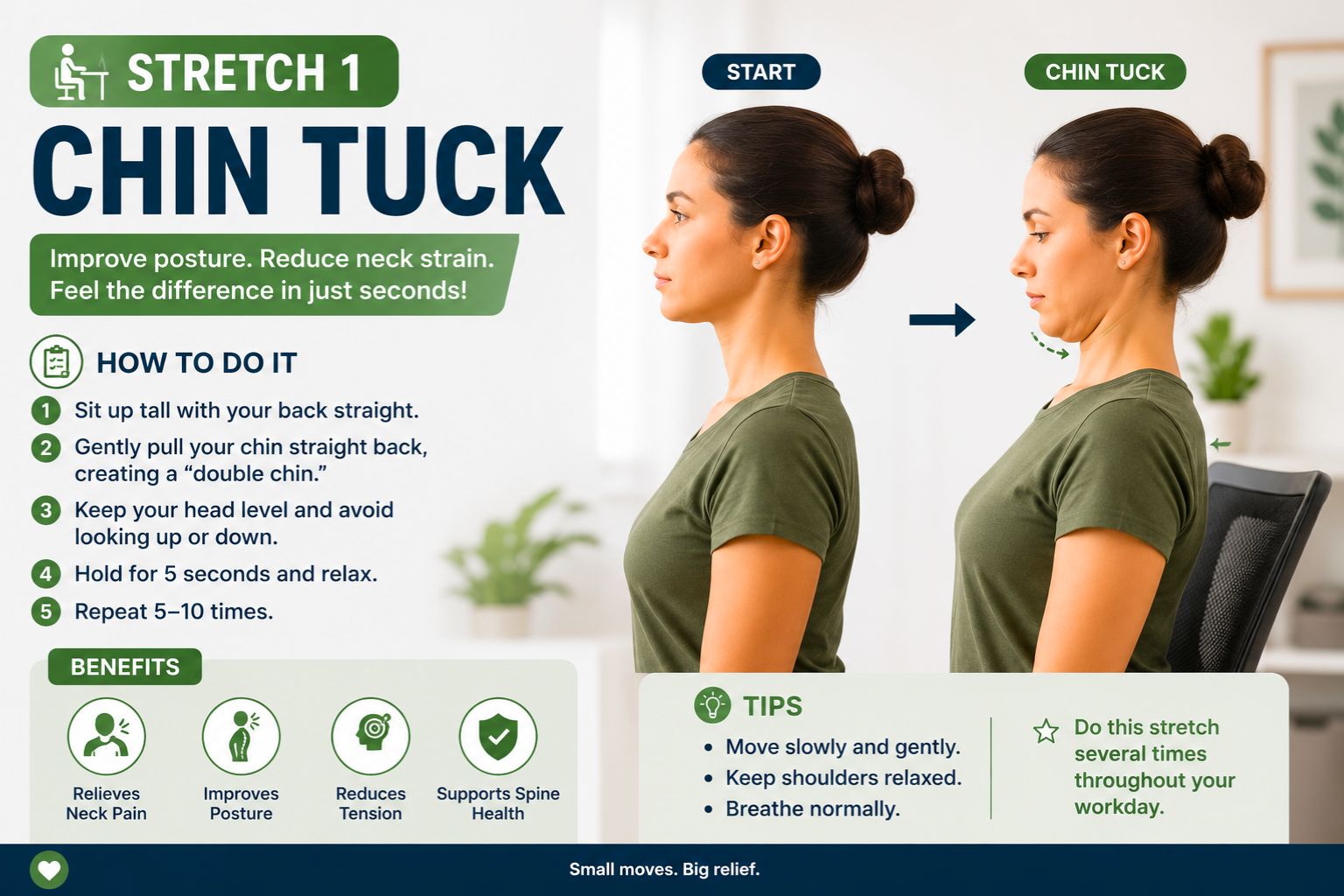
Stretch 1 – Chin Tuck
After a few hours at your desk, it’s easy to slip into a slouched posture without realizing it. As your shoulders round and your head moves farther in front of your body, the muscles in your neck have to work harder to support its weight. A chin tuck gently encourages your head back toward a more balanced position, helping ease some of the strain that builds up during the workday.
Sit upright with your feet flat on the floor and let your shoulders relax. Look straight ahead, then slowly draw your chin straight back as if you’re making a double chin. Keep your eyes level and avoid tipping your head up or down. Hold the position for 5–10 seconds before relaxing, then repeat 8–10 times while breathing normally. Many people find this movement feels subtle at first, but with regular practice it often becomes easier to maintain a more comfortable head position throughout the day.
Chin tucks are just one part of improving neck posture. If you’d like to learn how to perform them correctly, avoid common mistakes, and progress the exercise safely, explore our complete guide to Chin Tucks for Forward Head Posture.
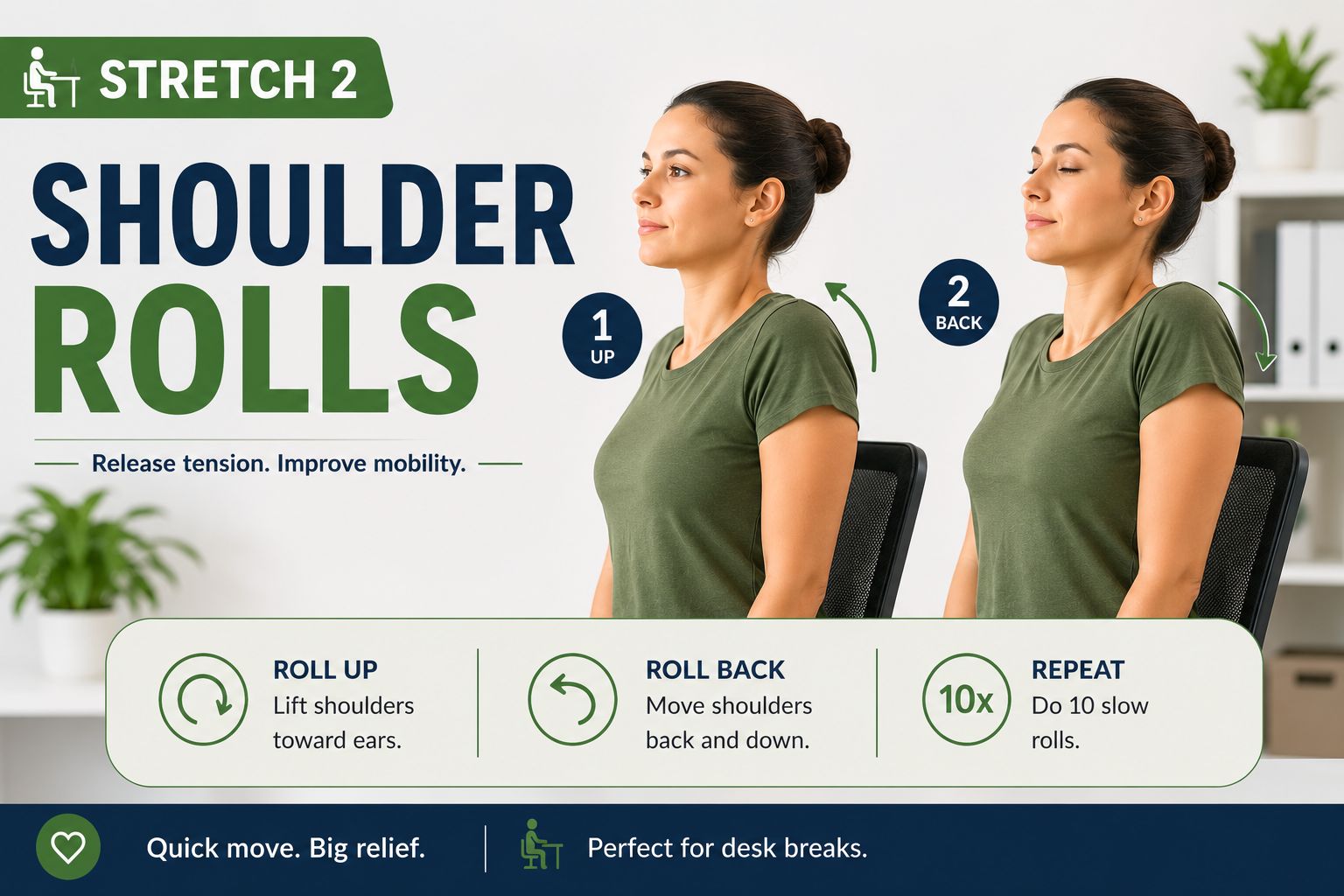
Stretch 2 – Shoulder Rolls
After a long meeting or a few hours of typing, you may notice your shoulders feeling heavy or tight. It’s also common to realize they’ve slowly crept closer to your ears while you’ve been concentrating. Slow shoulder rolls are one of the easiest office neck stretches to encourage gentle movement and ease the tension that builds up around your neck and shoulders.
This exercise is simple enough to do without leaving your chair. The goal isn’t to make large circles—it’s to move smoothly and let your shoulders gradually relax.
Try it this way:
- Sit or stand comfortably with your back supported if possible.
- Let your arms rest naturally by your sides.
- Lift both shoulders toward your ears.
- Roll them back and then down in one slow, smooth circle.
- Repeat 10 times, then reverse the direction.
Quick Tip: If your shoulders begin to feel tired, slow the movement down instead of making larger circles. Gentle, controlled shoulder rolls are usually more comfortable and often help release tension more effectively. You may even notice your shoulders have slowly crept toward your ears without realizing it. Simply becoming aware of that habit is often the first step toward relaxing them.
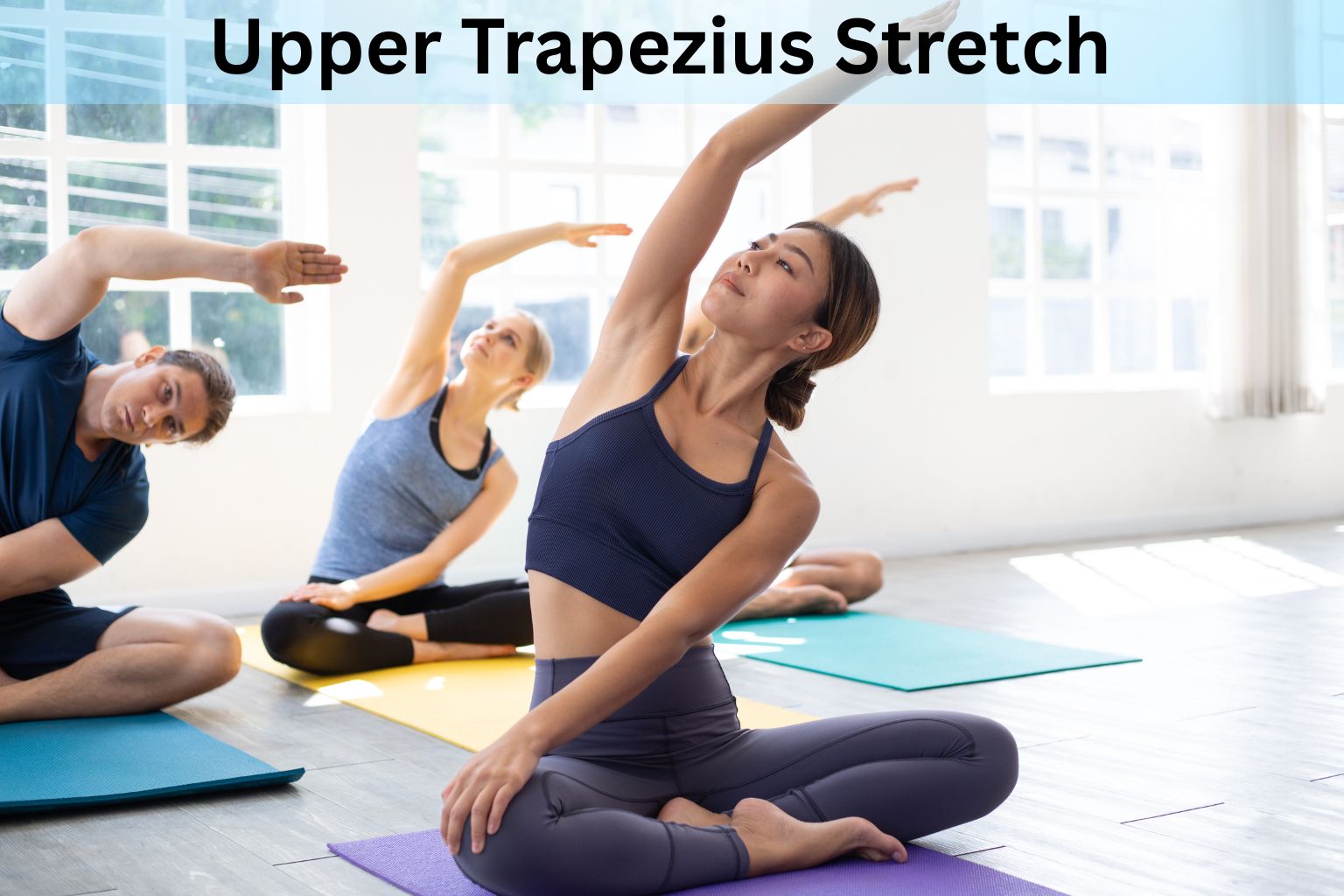
Stretch 3 – Upper Trapezius Stretch
After several hours at a computer, you might notice a tight, aching feeling across the top of your shoulders, especially near the base of your neck. This area often works harder than it should when you’re focused on a screen or sitting with your shoulders slightly raised. An upper trapezius stretch helps lengthen these muscles, making it easier to release some of that built-up tension and restore more comfortable movement.
Follow these steps:
- Sit upright in your chair with both feet flat on the floor.
- Relax your shoulders and let your arms rest naturally.
- Gently tilt your head toward your right shoulder without lifting the shoulder.
- Place your right hand lightly on the left side of your head for a gentle stretch. Avoid pulling.
- Hold for 20–30 seconds while breathing slowly.
- Return to the starting position and repeat on the opposite side.
Avoid This Mistake: Don’t raise the shoulder you’re stretching toward your ear or pull your head down with force. The stretch should feel gentle and comfortable, not painful. Keeping the opposite shoulder relaxed usually creates a more effective stretch than trying to increase the intensity.
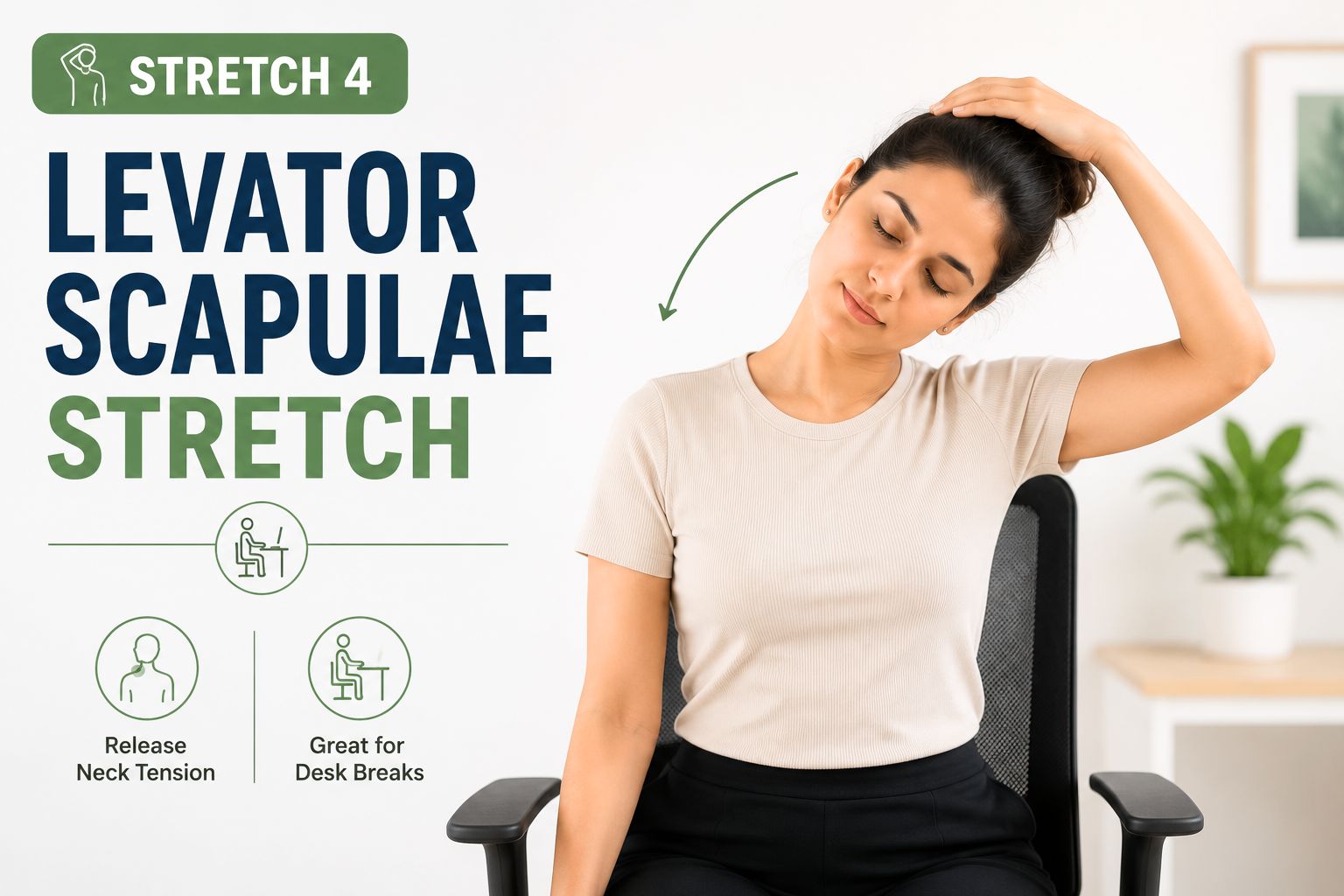
Stretch 4 – Levator Scapulae Stretch
Feeling stiff every time you turn your head? The levator scapulae stretch targets a muscle that often tightens after long hours of desk work. Releasing tension in this area can make everyday movements, like looking over your shoulder or turning to speak with a coworker, feel smoother and more comfortable.
Sit comfortably with your shoulders relaxed and turn your head about 45 degrees to one side. Slowly lower your chin toward your armpit until you feel a gentle stretch along the side and back of your neck. Rest your hand lightly on the back of your head without pulling, then hold the position for 20–30 seconds while breathing normally. Return to the center and repeat on the opposite side.
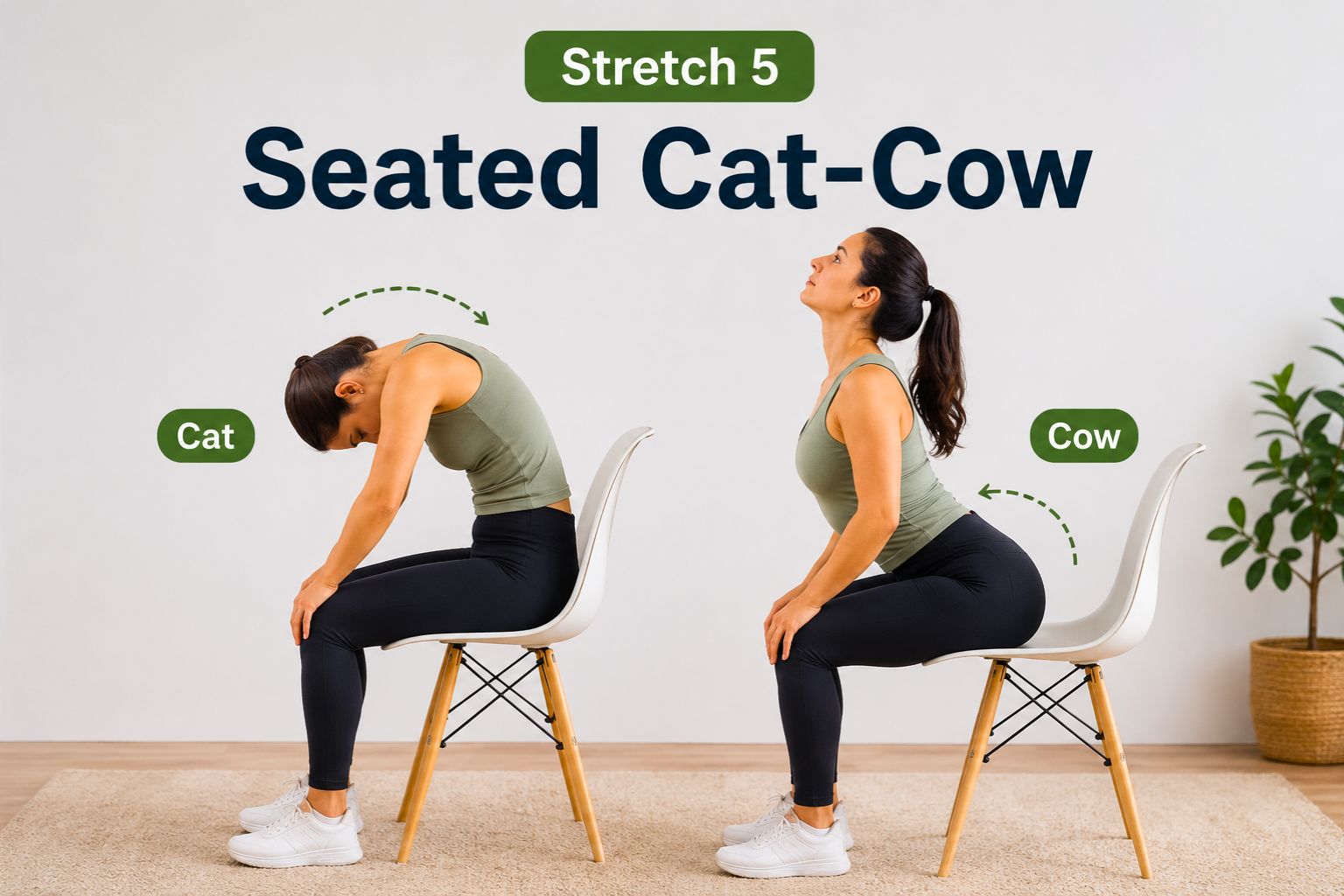
Stretch 5 – Seated Cat-Cow
If your neck and upper back feel stiff after sitting for a while, the Seated Cat-Cow is a gentle way to get both areas moving again. It combines slow spinal movements that are easy to perform right from your chair.
Sit near the front of your chair with both feet flat on the floor. Rest your hands on your knees or thighs. Slowly arch your back, lift your chest, and let your head follow the movement slightly. Then reverse the motion by rounding your back and gently tucking your chin toward your chest. Continue moving back and forth in a slow, controlled rhythm for 8–10 repetitions.
Benefits:
- Helps reduce stiffness in the neck and upper back.
- Encourages smoother movement through the spine after prolonged sitting.
- Makes it easier to reset your posture during the workday.
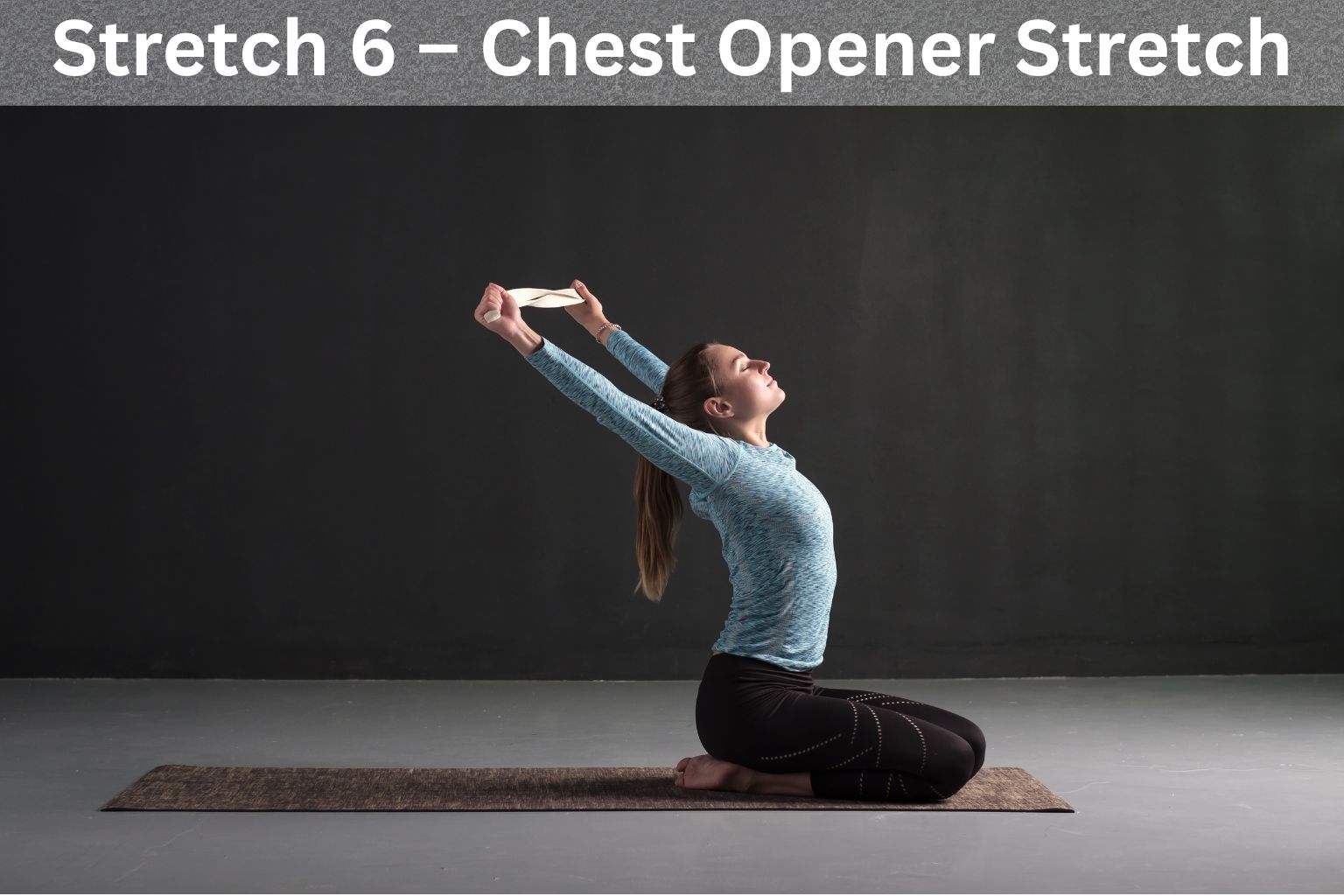
Stretch 6 – Chest Opener Stretch
A chest opener encourages your shoulders to move back into a more natural position, making it one of the simplest office stretches for neck pain to include in your workday.
- Sit or stand with your back comfortably upright.
- Clasp your hands behind your back, or simply hold the sides of your chair if reaching behind you isn’t comfortable.
- Gently draw your shoulders back while lifting your chest.
- Keep your neck relaxed without shrugging your shoulders.
- Hold the position for 20–30 seconds, then slowly return to the starting position.
Rather than stretching as far as you can, focus on a smooth, comfortable movement. Even a gentle stretch can help your shoulders feel less restricted and ease some of the neck and shoulder tension that naturally builds up during a busy workday
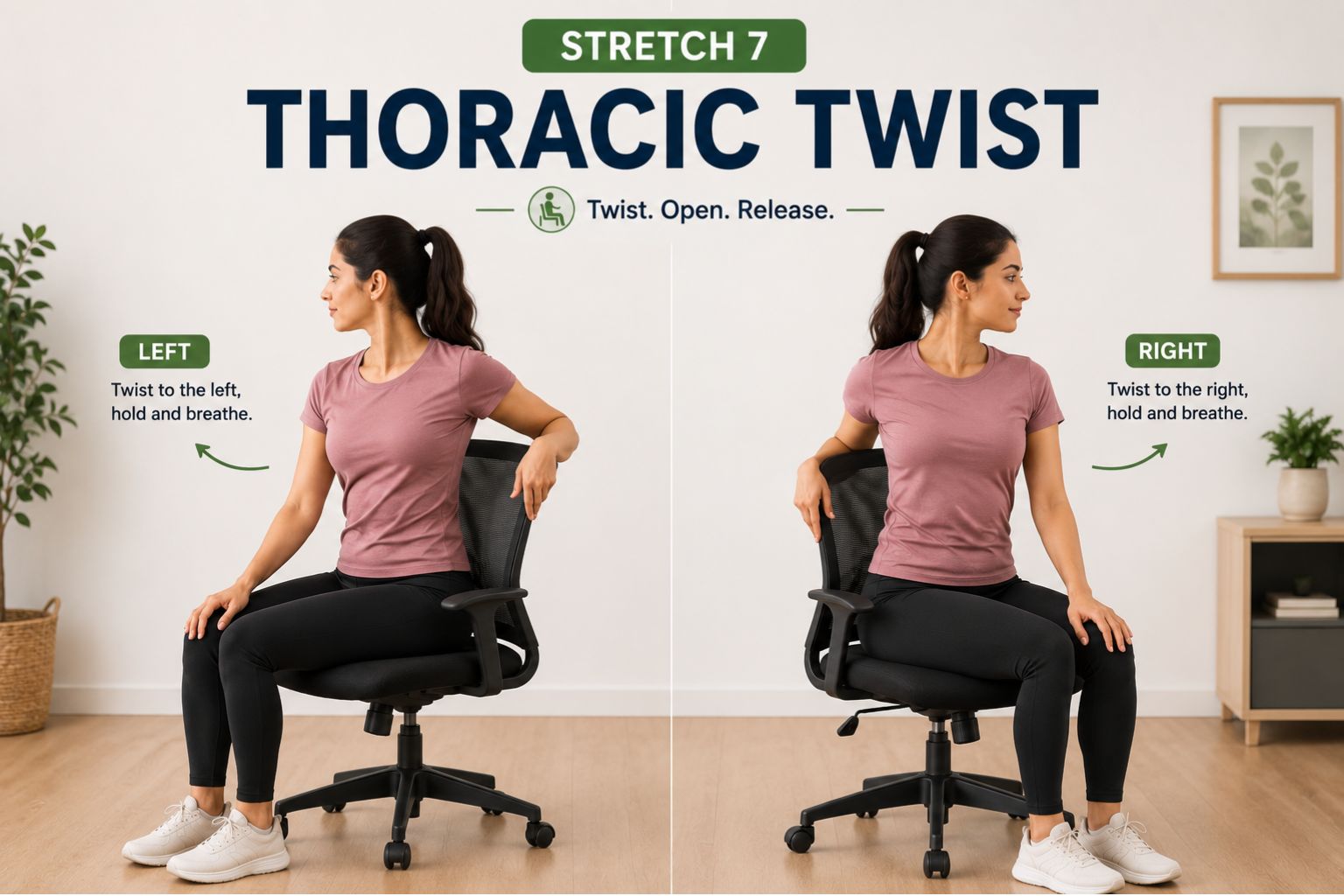
Stretch 7 – Thoracic Twist
Your neck isn’t always the reason your neck feels stiff. Sometimes the real restriction comes from your upper back. When that part of your spine doesn’t move well after hours of sitting, your neck often ends up doing extra work whenever you turn to the side. A gentle thoracic twist helps restore movement through the upper back, so everyday motions can feel smoother and more comfortable.
Sit near the front of your chair with both feet flat on the floor. Place your right hand on the outside of your left knee and your left hand behind your hip for support. Slowly rotate your upper body to the left while keeping your hips facing forward. Hold the position for 15–20 seconds, then return to the center and repeat on the opposite side.
If your upper back often feels as stiff as your neck, it’s worth spending a little more time improving its mobility. Our guide on Upper Spine Mobility Exercises for Better Posture explores simple exercises that can complement this stretch and support healthier movement throughout your workday.
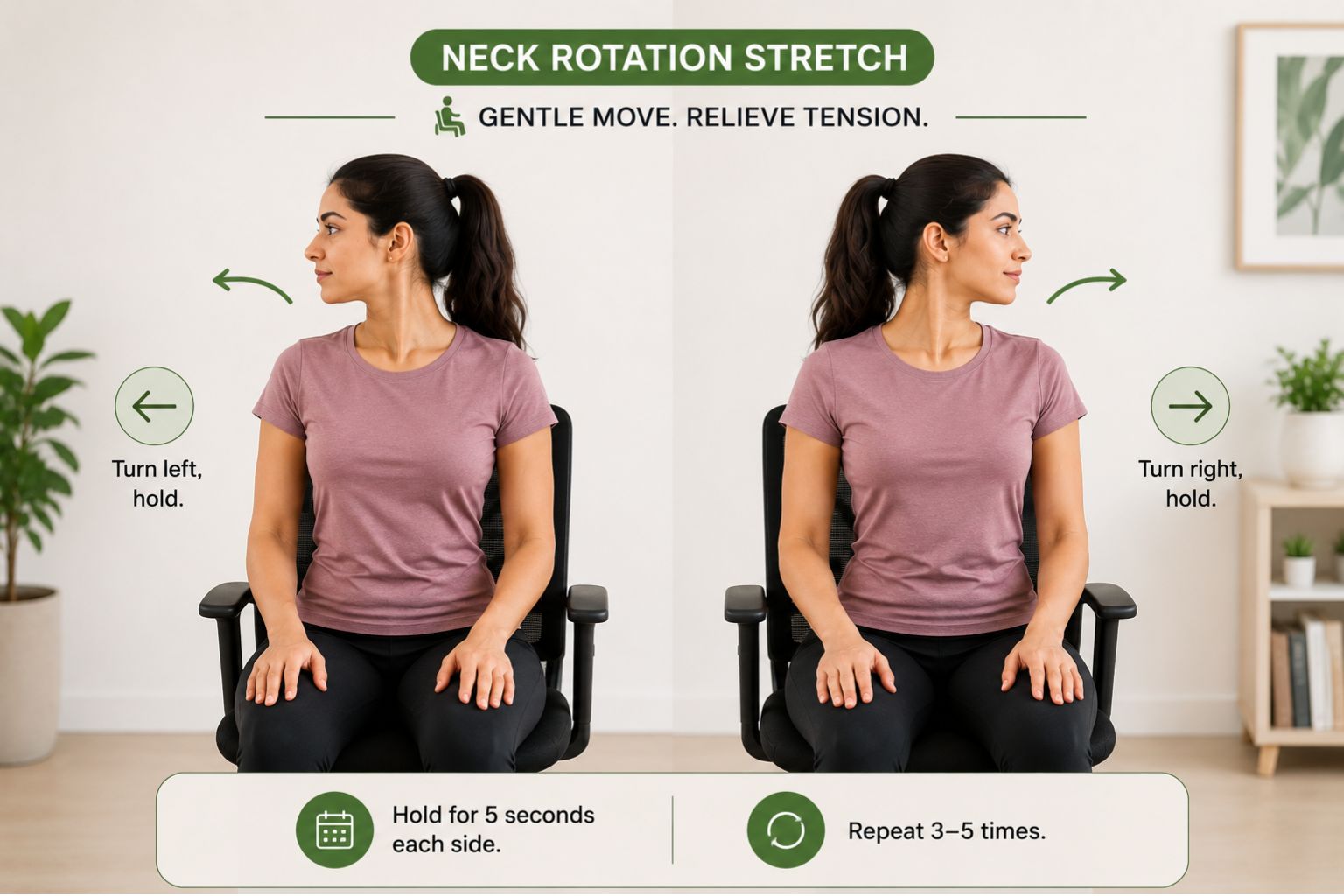
Stretch 8 – Neck Rotation Stretch
Before you get up from your desk, take a moment to notice how easily you can turn your head. If looking over your shoulder feels stiff or restricted, a gentle neck rotation can make that movement feel easier again. It’s one of the simplest neck stretches at work because it takes less than a minute and doesn’t require any equipment.
- Sit upright with your shoulders relaxed and your chin level.
- Slowly turn your head to the right until you feel a light stretch. Don’t force the movement.
- Hold for 10–15 seconds while breathing normally.
- Return to the center, then repeat on the left side.
- Complete 2–3 rounds on each side.
Stay within a range that feels comfortable and let your flexibility improve gradually. With regular practice, many people find that everyday movements like checking over a shoulder before crossing the road or turning to speak with a colleague start to feel noticeably easier.
Pair These Stretches With Better Desk Ergonomics
Even if you stretch throughout the day, it’s difficult to stay comfortable when your desk setup keeps pulling your body into poor posture. A properly adjusted workstation helps keep your head, shoulders, and spine in better alignment, so your muscles don’t have to work harder than necessary.
Small changes like raising your monitor, keeping your keyboard within easy reach, supporting your arms, and placing both feet flat on the floor—can make a noticeable difference over time. When combined with regular office neck stretches, these adjustments help reduce unnecessary muscle strain instead of only providing short-term relief. Together, they can help you stay more comfortable throughout the workday instead of constantly dealing with the same neck tension.
A properly adjusted workstation helps keep your head, shoulders, and spine in better alignment, so your muscles don’t have to work harder than necessary.²
Work Habits That Keep Neck Tension Coming Back
You don’t always need a new stretch to feel better. In many cases, changing a few everyday work habits has a bigger impact than stretching more often. The habits below are easy to overlook, but they can quietly increase muscle tension throughout the day and make neck discomfort return more quickly.
Here are some habit that keep neck tension coming back:
- Sitting for hours without getting up or changing position.
- Cradling your phone between your shoulder and ear during calls.
- Leaning your head toward the monitor instead of bringing the screen closer.
- Keeping your shoulders raised while concentrating or feeling stressed.
- Skipping micro-breaks during long periods of computer work.
- Waiting until your neck already feels sore before stretching.
- Reaching too far for your keyboard or mouse throughout the day.
The goal isn’t to change everything at once. Start by correcting one or two habits this week, then build from there. Small improvements repeated every day are often enough to keep neck tension from becoming part of your routine. Many office workers are surprised to discover that changing just one small habit—such as lowering their shoulders while typing or taking a one-minute movement break every hour—can feel more helpful than adding several new stretches all at once.
Simple Ways to Build Stretch Breaks Into Your Schedule
Trying to remember to stretch can feel like one more task on an already busy workday. Instead of setting aside extra time, it’s often easier to link a quick stretch to something you already do every day. Over time, these small moments can become a natural part of your routine, helping reduce stiffness before it has a chance to build up.
Here are a few easy times to fit in a short stretch break:
- Before work: Take a minute to loosen your neck and shoulders before you settle into your chair.
- Mid-morning: After finishing your first focused work session, stand up and move your neck through a few gentle stretches.
- Lunch break: Stretch before sitting back down to help your muscles feel more relaxed for the afternoon.
- Afternoon slump: If you notice your posture starting to collapse as your energy drops, take a quick movement break.
- End of the workday: Finish with a few gentle stretches to release the tension that has accumulated over the day.
You don’t need a perfect schedule to build this habit. Even a minute or two at consistent points during the day can make stretching feel like a natural part of your work routine instead of something you keep forgetting.
When Neck Tension Is More Than Just Desk Fatigue
A stiff neck after several hours at a desk is usually nothing to worry about and often improves with movement, stretching, or a few simple changes to your workstation. However, not every case of neck pain is caused by sitting for too long.
If the pain begins to spread into your shoulder or arm, or you notice numbness, tingling, muscle weakness, frequent headaches, or symptoms that started after a fall or other injury, it’s a good idea to seek medical advice. You should also speak with a healthcare professional if your discomfort continues for several weeks, keeps getting worse, or doesn’t improve even after trying office neck stretches and improving your desk setup.
Getting the right diagnosis early can help identify the underlying cause and ensure you receive the treatment or advice that’s most appropriate for your situation.
FAQ
What are the best desk stretches for office neck tension?
The best stretches are the ones that address the muscles most affected by long hours at a desk. Chin tucks, shoulder rolls, upper trapezius stretches, levator scapulae stretches, thoracic twists, chest opener stretches, and gentle neck rotations all work together to improve mobility. Mixing several movements into your day is usually more effective than relying on just one stretch.
How often should I do neck stretches at work?
A quick stretch break every one to two hours works well for most office workers. Even a minute or two of movement can keep tightness from gradually building up. Many people find it’s easier to stay comfortable when they stretch before discomfort appears rather than waiting until their neck feels sore.
Can I do these stretches while sitting?
Yes. Most of the stretches in this guide can be done from a stable chair without needing any special equipment. Sit with your feet flat on the floor, keep your back supported where possible, and move slowly without forcing your neck into an uncomfortable position.
How long should I hold each stretch?
For most static stretches, holding the position for 15 to 30 seconds is a good starting point. Repeat each movement two or three times on both sides while breathing steadily and staying relaxed throughout the stretch.
Can office neck stretches improve posture?
They can certainly help, especially when combined with a well-adjusted workstation and regular movement throughout the day. Stretching reduces muscle tightness, while good sitting habits make it easier to maintain better posture over time.
Is it okay to stretch more than once during the workday?
Yes. Short, frequent stretch breaks are often more useful than saving everything for one longer session. A few minutes of movement spread across the day can help your neck and shoulders feel more relaxed during long periods of desk work.
What if stretching doesn’t relieve my neck tension?
If your symptoms continue for several weeks, become more severe, or are accompanied by numbness, weakness, or pain that spreads into your shoulder or arm, it’s a good idea to speak with a healthcare professional. They can determine whether something beyond everyday muscle tension is contributing to your symptoms.
Are these stretches safe for beginners?
In most cases, yes. The exercises in this guide are simple enough for beginners as long as they’re performed slowly and within a comfortable range of motion. If any movement causes sharp pain or unusual discomfort, stop the exercise and seek medical advice if needed.
Conclusion
Neck tension doesn’t have to become an unavoidable part of office work. A few minutes of movement, regular desk stretches for office neck tension, and a well-adjusted workspace can go a long way toward reducing stiffness before it becomes a daily problem. The goal isn’t to find one perfect stretch, but to build small habits you can stick with over time.
Start with a few stretches that feel comfortable and fit naturally into your workday. As those short movement breaks become part of your routine, you may notice your neck and shoulders feeling less stiff and your posture becoming easier to maintain. If your symptoms continue, become more severe, or are accompanied by numbness, weakness, or pain spreading into your arm, seek advice from a qualified healthcare professional for a proper evaluation.
References
The information in this article is supported by guidance from trusted medical and occupational health organizations.
- Mayo Clinic.
Neck pain: Symptoms and causes.
Official Source
- National Institute for Occupational Safety and Health (NIOSH).
Computer Workstations eTool.
Official Source
- American Physical Therapy Association (ChoosePT).
Physical Therapy Guide to Neck Pain.
Official Source