
Do you often experience neck pain or stiffness after using your phone for long periods? Constantly looking down at a screen can place extra stress on your neck, shoulders, and upper back, gradually affecting your posture and daily comfort. If you’re wondering how to fix text neck from phone use, a few simple habits and targeted exercises can make a real difference. This guide shares practical tips, effective exercises, and easy posture adjustments to help reduce strain, improve mobility, and keep your neck feeling more comfortable.
What Is Text Neck?
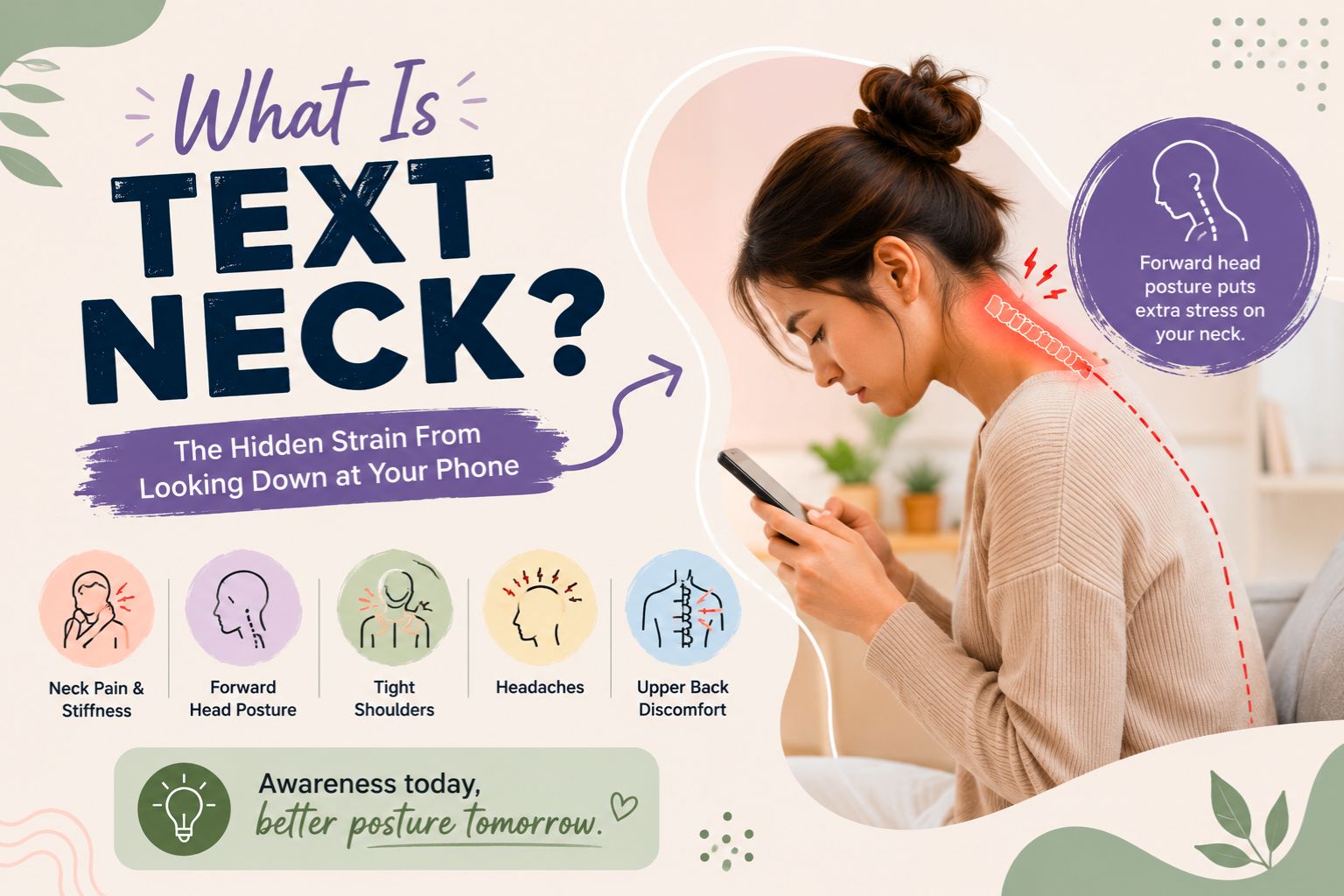
Text neck is a repetitive strain condition that can develop from frequently bending your head forward while using a smartphone or other handheld devices. Holding your neck in this posture for extended periods places extra stress on the muscles, joints, and upper back, which may contribute to stiffness, discomfort, and gradual changes in posture.
Students, office workers, remote employees, and anyone who spends several hours a day on a mobile device are more likely to experience text neck. Regular screen use without enough movement breaks or posture awareness can increase the strain placed on the neck and shoulders.
Signs You May Have Text Neck
The effects of text neck often appear so subtly that many people ignore them at first. Paying attention to these common symptoms can help you recognize the problem before it begins to interfere with your daily comfort and mobility.
Common signs include:
- Persistent neck pain or soreness
- Forward head posture
- Tight shoulders
- Upper back stiffness
- Frequent tension headaches
- Reduced neck mobility
These symptoms do not always indicate text neck, but they may suggest that frequent phone use is placing extra stress on your neck and upper body. Improving your daily posture habits and taking regular movement breaks can help reduce unnecessary strain.
What Causes Text Neck?
Text neck rarely develops because of a single habit. It usually happens when small daily behaviors are repeated for hours without enough movement or posture awareness. If you often notice your neck feeling tired after scrolling through social media or replying to messages, your everyday routine may be placing more stress on your neck than you realize.
The most common causes of phone neck pain include:
- Looking down at your phone for long periods
- Spending too much time on screens without breaks
- Sitting with poor posture
- Weak neck and upper back muscles
- Not moving or stretching regularly
- An improper desk or workstation setup
Most of these habits can be improved with simple adjustments rather than major lifestyle changes. Paying attention to how you use your phone, taking regular movement breaks, and strengthening your posture muscles can help reduce unnecessary strain before it becomes a bigger problem.
How to Fix Text Neck from Phone Use
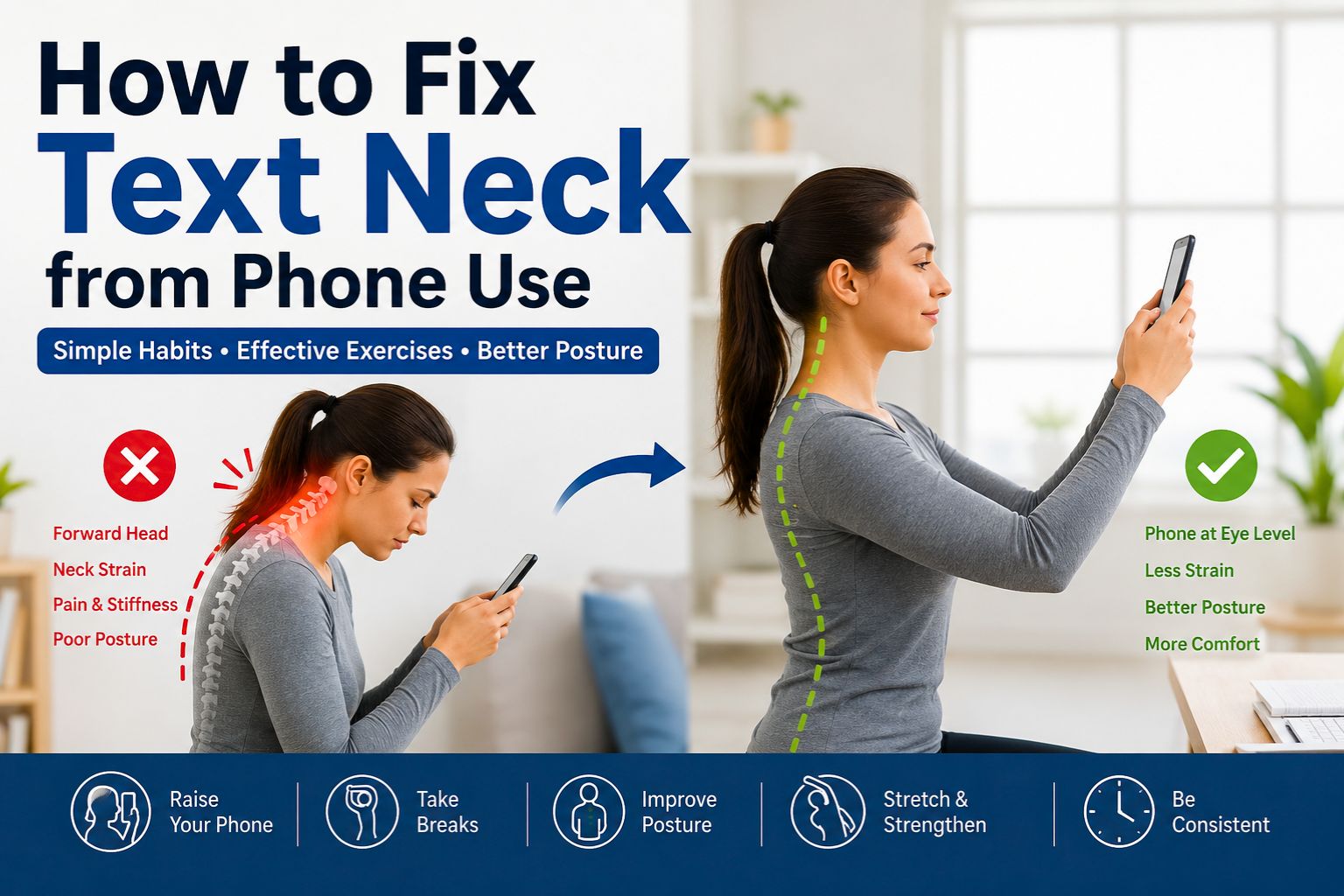
Small changes to your daily habits can make a noticeable difference in how your neck feels. You do not need expensive equipment or lengthy workouts to ease discomfort. Many people find that combining healthier phone habits with simple text neck exercises helps reduce strain and makes everyday activities feel less stiff and more relaxed.
Tip 1: Raise Your Phone to Eye Level
One of the easiest ways to reduce neck strain is to bring your phone closer to eye level instead of bending your head downward. This keeps your neck in a more natural position and reduces the pressure placed on the muscles and joints. If you watch videos or read for several minutes, try resting your elbows on a table or armrest for extra support.
Tip 2: Take Movement Breaks
Remaining in the same position for a long time can make your muscles feel stiff and tired. Set a reminder to stand up every 30–60 minutes, stretch your shoulders, or walk around for a minute. These short breaks boost circulation, reduce muscle fatigue, and give your neck a chance to recover before discomfort builds up.
Tip 3: Improve Your Sitting Posture
Whether you’re working or scrolling through social media, sit with your back supported and your shoulders relaxed. Keep both feet flat on the floor and avoid leaning toward your screen. A well-supported sitting position allows your neck and upper back to work together instead of placing unnecessary stress on one area.
Tip 4: Stretch Your Chest
Spending hours looking at a phone often causes the chest muscles to become tight, which can pull your shoulders forward. Gentle chest stretches help open the front of your body, support better shoulder alignment, and make it easier to maintain an upright posture. Practicing these stretches regularly can also reduce tightness after long periods of screen use.
Tip 5: Strengthen Your Neck Muscles
Strong neck muscles provide better support for your head during everyday activities. Gentle strengthening exercises, including text neck exercises, can build muscle endurance and help reduce the extra workload placed on your neck. Start with slow, controlled repetitions and increase gradually as you feel more confident with the movement.
Tip 6: Increase Upper Back Mobility
A stiff upper back often forces your neck to move more than it should, increasing muscle tension throughout the day. Mobility exercises help restore flexibility, encourage smoother spinal motion, and support healthier posture. Adding a few upper back stretches to your routine can make sitting, standing, and reaching feel easier and more natural.
Tip 7: Limit Continuous Phone Use
Using your phone for hours without a break gives your neck very little opportunity to recover. Whenever possible, put your phone down between tasks instead of scrolling continuously. You can also use voice messages, make phone calls instead of typing long texts, or alternate between devices. These simple habits reduce repetitive strain and help protect your neck over the course of the day.
You do not need to change every habit overnight. Start with one or two practical adjustments and build from there. As these habits become part of your routine, protecting your neck will feel more natural and much easier to maintain.
If your upper back feels stiff, adding mobility exercises can make these tips even more effective. Learn the complete routine in our guide below: Upper Spine Mobility Exercises for Better Posture
Best Text Neck Exercises
Many people first notice text neck after spending hours scrolling, reading, or watching videos on their phones. Even a few minutes of simple exercise can help your neck feel less tense when practiced consistently. The three exercises below are easy to learn and are often recommended for relieving phone neck pain caused by prolonged screen use.

Chin Tucks
If your head naturally drifts forward while using your phone, chin tucks are a great place to start. This exercise strengthens the deep neck muscles that help support your head in a healthier position. Pull your chin straight back without looking down, hold for a few seconds, then relax. Many people notice better posture awareness after making this exercise part of their daily routine.

Shoulder Blade Squeezes
Long hours of phone use often cause the shoulders to round forward without you realizing it. Shoulder blade squeezes activate the upper back muscles that help bring your shoulders into a more balanced position. Gently squeeze your shoulder blades together, hold for five seconds, and release slowly. With regular practice, many people find it easier to sit and stand with better posture.
Upper Trapezius Stretch
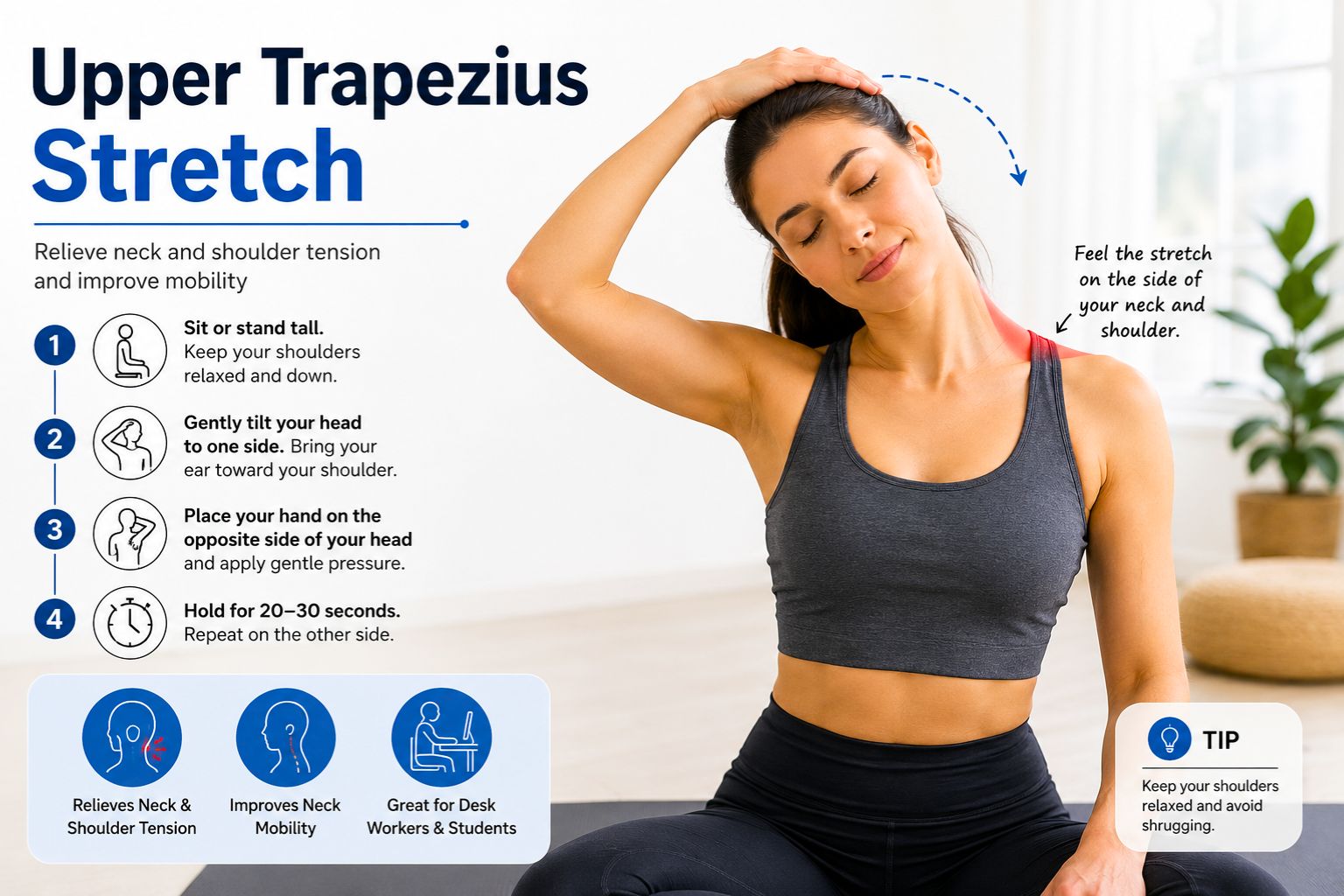
It is common to feel tightness along the side of the neck after looking down at a screen for an extended period. This stretch targets those muscles and helps them relax. Tilt your head gently toward one shoulder, hold for 20–30 seconds while breathing normally, then repeat on the opposite side. The movement should feel comfortable, never painful.
Want a complete exercise to correct forward head posture? Continue with our Chin Tucks for Forward Head Posture guide for detailed instructions and practical tips.
Daily Habits to Prevent Text Neck
Many people do not notice how often they lower their heads while replying to messages, watching videos, or scrolling through social media. These small habits may seem harmless, but repeating them every day can place unnecessary stress on your neck. The following tips are simple to follow and can easily fit into your routine.
- Raise your phone closer to eye level so your neck stays in a more natural position.
- Switch between sitting, standing, and walking after 30–60 minutes of continuous phone use.
- Reduce unnecessary screen time by putting your phone away when you do not need it.
- Take a minute every hour to stretch your neck, shoulders, and chest before tightness builds up.
- Keep your upper body strong with regular posture and strengthening exercises.
- Choose a pillow that keeps your head and neck comfortably aligned while you sleep.
Instead of trying to change every habit overnight, focus on one small change that fits naturally into your daily routine. As that habit becomes easier to maintain, add another. A gradual approach is often more realistic and can make healthy phone habits easier to stick with over the long term.
Common Mistakes That Make Text Neck Worse
It often starts with just five more minutes of checking messages, watching videos, or scrolling through social media. Before you realize it, your neck feels stiff and your shoulders begin to tighten. The habits below may seem minor, but repeating them day after day can make text neck more difficult to manage.
- Looking down at your phone for long, uninterrupted periods.
- Ignoring recurring neck pain or stiffness instead of giving your neck time to recover.
- Slouching while sitting or standing for extended periods.
- Skipping movement breaks during long sessions of phone use.
- Holding your phone with one hand for extended periods, which may encourage uneven posture.
- Sleeping with a pillow that does not provide proper neck support.
A quick glance at your posture whenever you reach for your phone can make a bigger difference than you might expect. Catching these habits early is often easier than dealing with the discomfort they can create later.
How Long Does It Take to Fix Text Neck?
If your neck has only recently started feeling stiff after long hours of scrolling or watching videos, you may wonder how long recovery will take. The answer depends on several factors, including how long the problem has been present and whether you’ve started changing the habits that caused it. People with recent symptoms often recover sooner than those who have experienced muscle tightness for a longer period.
Recovery is influenced by the severity of your symptoms, regular exercise, posture awareness, and healthy phone habits. Some people begin to feel less stiffness and move their neck more comfortably within a few weeks, while visible posture improvements may take longer.
Instead of focusing on a specific timeline, pay attention to the small signs of progress, such as easier movement, less tension, or greater comfort during everyday activities. These changes often show that your neck is moving in the right direction.
Can Text Neck Be Reversed?
If you’ve started paying more attention to your posture after noticing neck stiffness from frequent phone use, you may wonder whether the effects can be reversed. Research suggests that many posture-related changes can improve when the habits contributing to them are corrected. Combining better phone habits, regular movement, and appropriate neck pain from phone use exercises may help reduce muscle strain and support healthier neck function with consistent practice.
The outcome depends on factors such as how long your symptoms have been present, their severity, and how consistently you follow healthy posture habits. Mild cases often respond well to lifestyle changes and targeted exercises, while more persistent symptoms may require guidance from a physical therapist or another qualified healthcare professional.
If you experience severe pain, numbness, tingling, dizziness, weakness, or symptoms that continue despite self-care, seek medical advice promptly. Early evaluation can help identify other conditions and ensure you receive the most appropriate treatment for your situation.
FAQ
What is the fastest way to fix text neck?
The fastest approach is to combine healthier phone habits with regular text neck exercises. Raising your phone to eye level, taking movement breaks, and practicing simple stretches can help reduce strain more effectively than relying on a single solution.
Can text neck go away naturally?
Mild cases may improve if you reduce the habits contributing to the problem and give your neck time to recover. However, adding stretching, strengthening exercises, and healthier posture habits may support recovery and help reduce ongoing strain.
Do chin tucks fix text neck?
Chin tucks can help improve forward head posture and strengthen the deep neck muscles that support healthy alignment. They work best as part of a complete routine rather than as the only exercise.
How long should I stretch each day?
Most people benefit from stretching for 5–10 minutes each day. Short, regular sessions are generally more effective than doing long stretches only once in a while.
Can text neck cause headaches?
Yes. Muscle tension caused by prolonged phone use may contribute to tension headaches in some people. Reducing phone neck pain through improved posture and regular movement may also help ease related discomfort.
Is text neck permanent?
Not usually. Many people experience gradual improvement after changing their daily habits, performing appropriate exercises, and reducing unnecessary strain on their neck.
Can children develop text neck?
Yes. Children and teenagers who spend long hours using smartphones, tablets, or other digital devices can also develop text neck if they frequently maintain poor posture.
When should I see a doctor?
Seek medical advice if you experience severe pain, numbness, tingling, weakness, dizziness, or symptoms that continue despite home care. A healthcare professional can determine whether another condition is contributing to your discomfort.
Conclusion
The next time you catch yourself looking down at your phone, take it as a reminder to check your posture instead of ignoring it. Learning how to fix text neck from phone use is not about making dramatic changes overnight. It starts with small choices, such as holding your phone a little higher, moving more often, and giving your neck the support it needs throughout the day.
As these habits become part of your routine, you may find that your neck feels less tired after scrolling, reading, or watching videos for longer periods. Every time you choose better posture or take a short movement break, you are giving your neck another opportunity to stay healthy and move more comfortably.
📚 Additional Resources & Trusted References
For readers who want to explore this topic further, the following evidence-based resources provide reliable information on posture, neck pain, exercise, and musculoskeletal health.