
Waking up with stiff joints make even simple movements feel uncomfortable. A few gentle morning stretches can help you ease into the day without forcing tight areas too quickly. Morning stretches for stiff joints can support flexibility, comfortable movement, and a smoother transition from rest to daily activity. In this guide, you’ll find five simple poses that can be adjusted to your comfort level. Start slowly, breathe naturally, and focus on steady movement rather than trying to stretch as deeply as possible.
Want to learn more? Explore our related guide for simple, practical tips to support comfortable movement: Yoga for Joint Pain Relief | A Complete Guide

Understanding Morning Joint Stiffness
Morning joint stiffness is a common feeling of tightness or reduced ease of movement after several hours of rest. Joints may feel less flexible when you first get out of bed, making simple movements seem slower or more difficult than usual. Staying in one position overnight can contribute to temporary stiffness, particularly when your body has had little movement for several hours. Gentle activity can gradually help you transition from rest to normal daily movement. The amount and duration can vary from person to person, so paying attention to changes in your usual pattern is important. If you want to work more specifically on range of motion, explore our Joint Mobility Exercises for Healthy Movement guide.
Why Gentle Movement Helps After Waking
After several hours of rest, gentle movement help your body ease back into normal activity. It encourages circulation, supports a comfortable range of motion, and gradually improves flexibility without placing unnecessary demands on stiff areas. Gentle morning stretches also prepare your muscles and joints for everyday movements, helping you start the day more comfortably. The key is to begin with controlled movements and increase activity gradually rather than immediately attempting deep or demanding stretches.
How to Start Your Morning Stretching Safely
Before stretching, give your body a little time to wake up. Begin with easy movements and pay attention to how your joints feel. A slow, controlled approach make the routine more comfortable and manageable.
- Start slowly and allow your body to adjust.
- Don’t force a stretch beyond a comfortable range.
- Breathe normally throughout each movement.
- Use a chair, wall, or other support when needed.
- Stop immediately if you experience sharp or increasing pain.
Keep each movement gentle and controlled, especially when you first wake up. Consistency matters more than stretching deeply or trying to progress too quickly.
5 Gentle Morning Stretches for Stiff Joints
These five gentle stretches are designed to help your body ease into movement after waking. Each one focuses on controlled motion, comfortable flexibility, and simple positioning without requiring an intense workout. Move slowly, breathe naturally, and adjust any stretch that feels uncomfortable.

Seated Cat-Cow
Sit comfortably on a sturdy chair with your feet flat and hands resting on your thighs. As you inhale, gently lift your chest and draw your shoulders back; as you exhale, round your upper back and lower your chin slightly. Continue slowly for 6–8 repetitions, matching each movement with your breathing. This can gently mobilize the spine and help you transition from rest into activity. Keep the movement small and controlled, especially when experiencing stiff joints after waking. Avoid forcing your neck or spine into a deeper position if anything feels painful or strained.
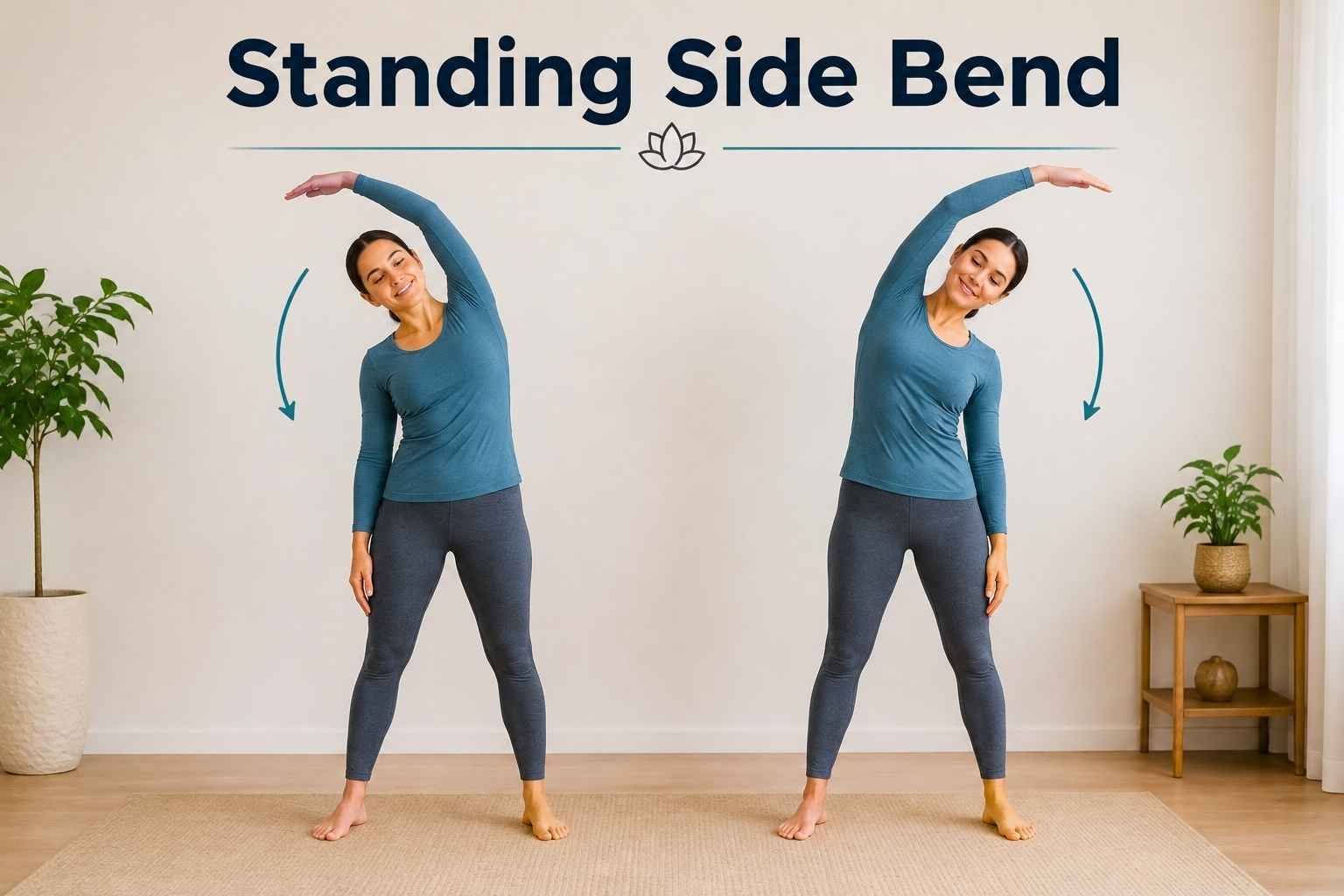
Standing Side Bend
Stand with your feet comfortably apart and keep your knees relaxed. Raise one arm overhead while keeping the other hand by your side, then slowly lean your upper body toward the opposite side. Return to the center and repeat on the other side, moving gently with each breath. Complete 5–6 repetitions per side, stopping at a comfortable stretch along your waist and side body. This movement can encourage flexibility and help prepare your body for everyday activity. Keep your hips facing forward, avoid bouncing, and never force the bend if you feel sharp or increasing discomfort.

Supported Calf Stretch
Stand facing a wall or sturdy chair and place your hands on it for balance. Step one foot backward while keeping that heel firmly grounded and the back leg comfortably straight or slightly relaxed. Bend the front knee gently and shift your weight forward until you feel a mild stretch through the back of the lower leg. Hold for 20–30 seconds, then return slowly and switch sides. This stretch can improve lower-leg flexibility and prepare your body for walking after rest. Keep the movement controlled, avoid bouncing, and do not push into pain or excessive tension.
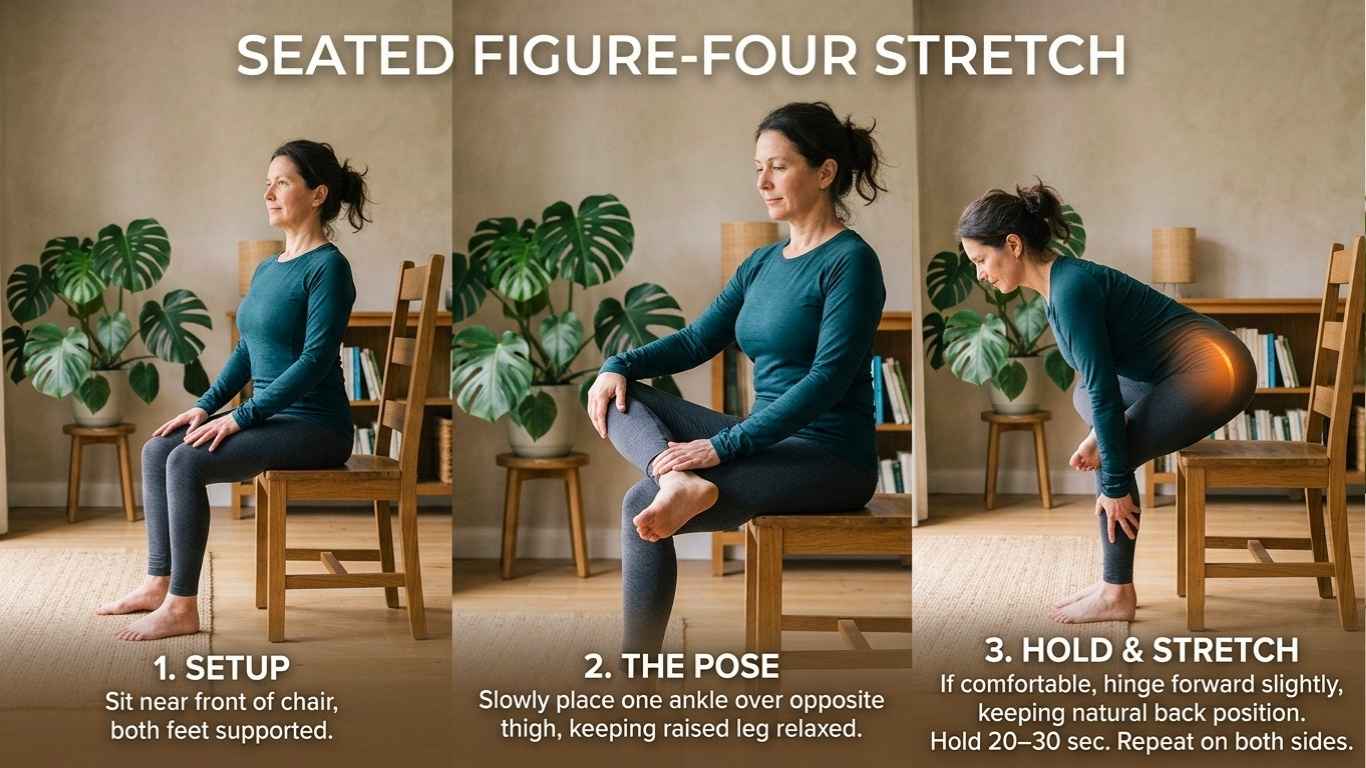
Seated Figure-Four Stretch
Sit near the front of a sturdy chair with both feet supported on the floor. Slowly place one ankle over the opposite thigh, keeping the raised leg relaxed. If comfortable, hinge forward slightly from your hips while maintaining a natural back position until you feel a gentle stretch around the hip and outer thigh. Hold for 20–30 seconds, then return upright and switch sides. This movement can support hip flexibility and make everyday movements feel easier. If the position feels uncomfortable, reduce the forward lean or lower your foot back to the floor rather than forcing the stretch.
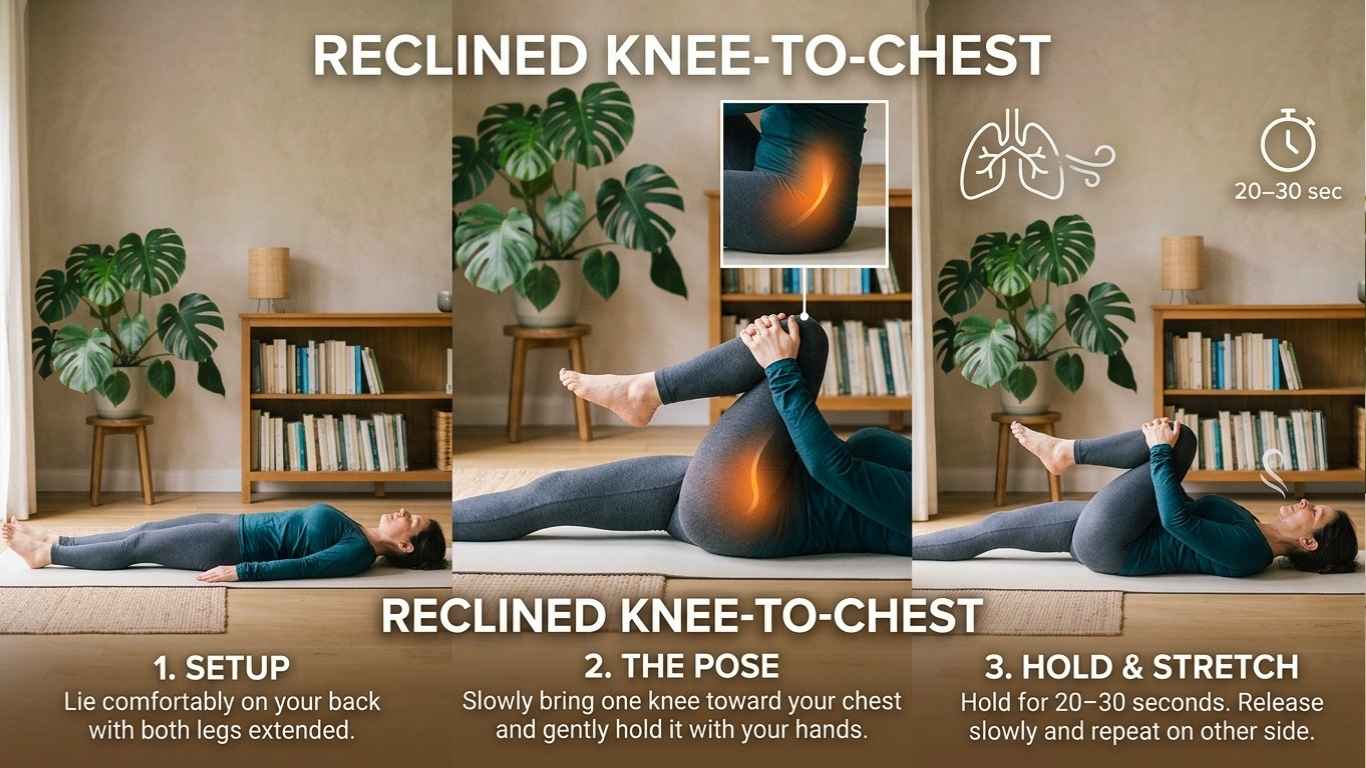
Reclined Knee-to-Chest
Lie comfortably on your back with both legs extended or slightly bent. Slowly bring one knee toward your chest and gently hold it with your hands, keeping your shoulders relaxed and your breathing natural. Hold for 20–30 seconds, then release the leg slowly and repeat on the other side. This gentle movement can encourage comfortable hip and lower-body mobility and help ease your body into activity after rest. If your stiff joints after waking feel particularly uncomfortable, keep the movement shallow and controlled. Avoid pulling forcefully on the knee or continuing if the position causes pain.
What Research Says About Morning Stretching
Research suggests that stretching can improve flexibility and range of motion, although the evidence does not specifically establish that stretching must be performed in the morning to produce these benefits. A 2024 systematic review and meta-analysis of 189 studies involving 6,654 adults found moderate improvements in flexibility after acute static stretching and larger improvements with regular stretching over time. Another review of 77 studies also found that stretch training can meaningfully increase joint range of motion. For a morning routine, this supports using gentle, controlled stretches rather than forcing tight areas or stretching into pain.
Build a 10-Minute Morning Mobility Routine
A short morning routine help you gradually transition from rest to daily movement. The following sequence combines gentle mobility, flexibility, and relaxation without making the session feel too demanding.
| Movement | Time | Focus |
|---|---|---|
| Seated Cat-Cow | 2 min | Spine mobility |
| Standing Side Bend | 1 min | Flexibility |
| Supported Calf Stretch | 2 min | Lower-leg flexibility |
| Seated Figure-Four | 2 min | Hip mobility |
| Reclined Knee-to-Chest | 2 min | Gentle movement |
| Easy Breathing | 1 min | Relaxation |
Move through the routine at a comfortable pace, spending enough time to settle into each movement without forcing your range. If stiffness is also noticeable after sitting for long periods, our How to Reduce Joint Stiffness After Sitting guide offers additional strategies for staying mobile throughout the day.
Healthy Habits That Can Reduce Morning Stiffness
Your morning routine works best when supported by simple habits throughout the rest of the day. Staying active, avoiding extended inactivity, and maintaining comfortable sleeping habits help you feel more prepared to move after waking. Hydration and a consistent routine also make daily movement easier.
- Stay active with comfortable movement throughout the day.
- Avoid remaining in one position for long periods.
- Maintain a comfortable sleeping position.
- Stay adequately hydrated.
- Keep a consistent movement routine.
Small habits can make your overall routine easier to maintain. Focus on regular, comfortable movement rather than trying to change everything at once.
Common Morning Stretching Mistakes
Morning stretching should feel gentle and controlled, especially when your body is still adjusting after rest. Avoid these common mistakes to keep your routine comfortable and manageable.
- Stretching too aggressively
- Bouncing into a stretch
- Holding your breath
- Skipping gradual warm-up
- Ignoring sharp pain
Listen to your body, keep movements slow, and never force a stretch simply to reach a deeper position or finish your routine.
When Morning Stiffness May Need Medical Advice
Occasional morning stiffness happen after several hours of rest, but unusual or worsening symptoms deserve attention. Consider seeking medical advice if you experience severe pain, significant swelling, redness or warmth around a joint, or stiffness that lasts unusually long. You should also get guidance if symptoms are progressively worsening, follow a recent injury, or make normal movement difficult. These signs do not necessarily indicate a specific condition, but they are worth discussing with a qualified healthcare professional.
FAQ
Why are my joints stiff in the morning?
Joints feel stiff after several hours of limited movement during sleep. Staying in one position for a long time may temporarily reduce comfortable movement, and gentle activity can gradually help the body loosen up.
What are the best morning stretches for stiff joints?
Simple movements such as Seated Cat-Cow, Standing Side Bend, Supported Calf Stretch, Seated Figure-Four, and Reclined Knee-to-Chest good options. Choose movements that feel comfortable and avoid forcing a tight area.
Should I stretch immediately after waking?
You can stretch after waking, but there is no need to rush into a full routine immediately. Take a few moments to sit up, breathe, and make some gentle movements before progressing to deeper stretches.
How long should morning stretches take?
A short routine of around 5–10 minutes enough to get your body moving. You can spend more or less time depending on your comfort, schedule, and how your body feels that morning.
Can morning stretching improve flexibility?
Regular stretching can support flexibility and range of motion over time. Gentle, consistent practice is generally more useful than trying to achieve a deep stretch in a single session, particularly when your muscles and joints feel tight after waking.
Should I stretch every morning?
A consistent routine can be helpful, but you do not need to force yourself through discomfort every day. Adjust the intensity or duration when needed, and prioritize comfortable movement that fits naturally into your daily schedule.
Conclusion
Starting the day with a few gentle movements make getting out of bed and moving around feel much easier. Morning stretches for stiff joints a simple way to gradually wake up your body, improve flexibility, and prepare for everyday activity. From experience, a short and consistent routine often feels more manageable than trying to do too much at once. The five stretches above can easily fit into a 10-minute routine, but always keep the movements comfortable and adjust them based on how your body feels each morning.
References
The information in this article is supported by research on stretching,
flexibility, and joint range of motion:
- PubMed – Chronic Effects of Stretching on Range of Motion
- PubMed – Static Stretch Training and Range of Motion
- PMC – Acute Effects of Various Stretching Techniques
- PubMed – Strength Training vs. Stretching for Range of Motion
Medical Disclaimer: This content is for educational purposes only and is not a substitute for professional medical advice.