
Long periods of sitting make the body feel less mobile, especially when you remain in the same position for hours without enough movement. Getting up may bring a temporary sense of tightness around the knees, hips, ankles, or other joints. Understanding why this happens is the first step toward improving daily movement. This guide explains how to reduce joint stiffness after sitting through gentle exercises, simple movement breaks, and practical habits that can fit naturally into your daily routine without adding a demanding workout.
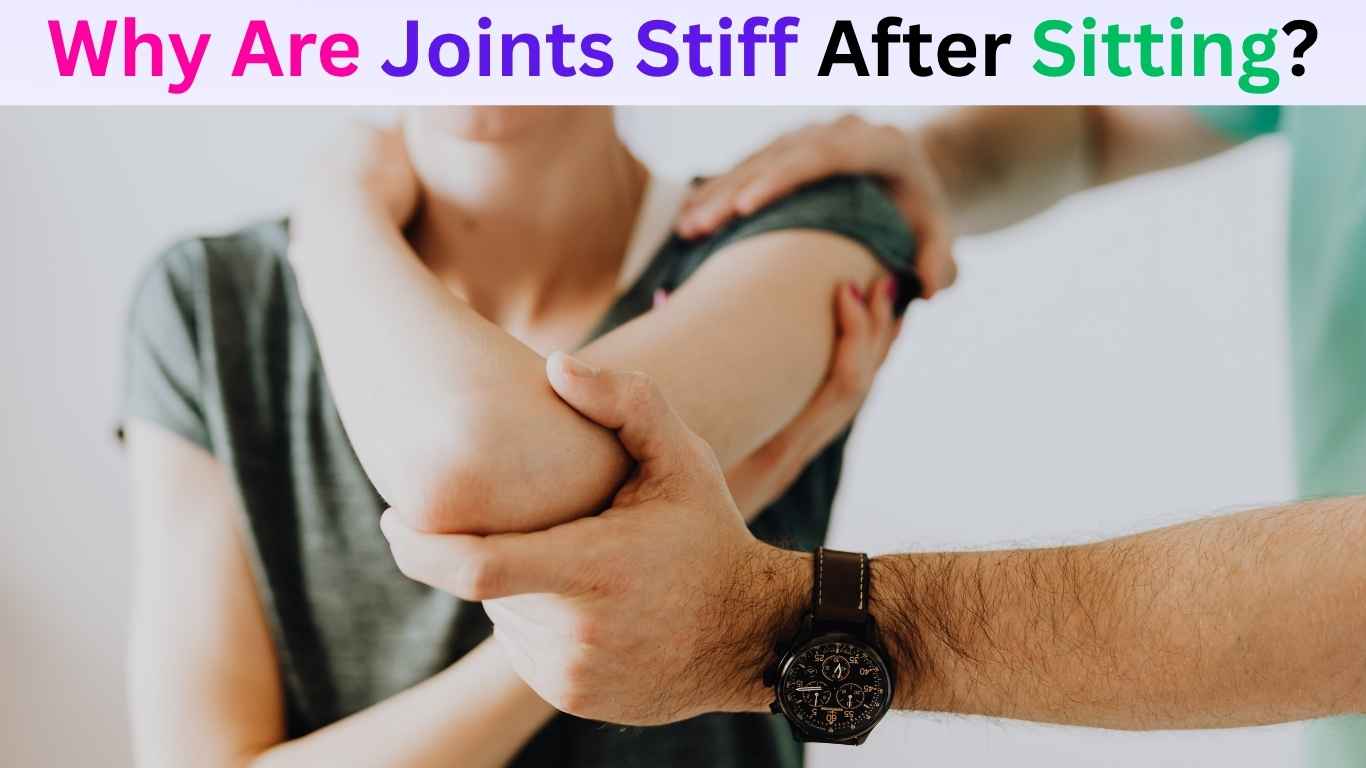
Why Are Joints Stiff After Sitting?
One reason is that joints are not being moved through their usual range while you remain seated. Reduced movement can leave the surrounding muscles and tissues relatively inactive, so the first few movements after standing may feel restricted or uncomfortable.
The sensation is often most noticeable when you suddenly transition from sitting to walking or standing. Gentle movement can gradually bring the joints back into a more comfortable range. If joint stiffness is part of a broader discomfort pattern, our guide to Yoga for joint pain relief explains gentle ways to support comfortable movement.
How to Reduce Joint Stiffness After Sitting
Gentle movement is often a practical first step when stiffness appears after sitting. Simple changes throughout the day help your joints return to comfortable movement without requiring strenuous exercise.
- Stand up and walk gently for a few minutes.
- Move stiff joints through a comfortable range.
- Change your sitting position regularly throughout the day.
- Use gentle stretches without forcing the movement.
- Avoid staying completely still for extended periods.
- Build short movement breaks into your daily routine.
Consistent movement can make stiffness easier to manage over time. For joint stiffness after sitting, focus on comfortable motion rather than pushing through discomfort.
7 Gentle Exercises to Reduce Stiffness After Sitting
These seven gentle exercises can help restore comfortable movement after sitting and make everyday activity feel easier. The routine includes simple movements for the knees, hips, ankles, shoulders, neck, and lower legs. Perform each exercise slowly, use a comfortable range, and adjust the movement whenever needed to avoid unnecessary strain.
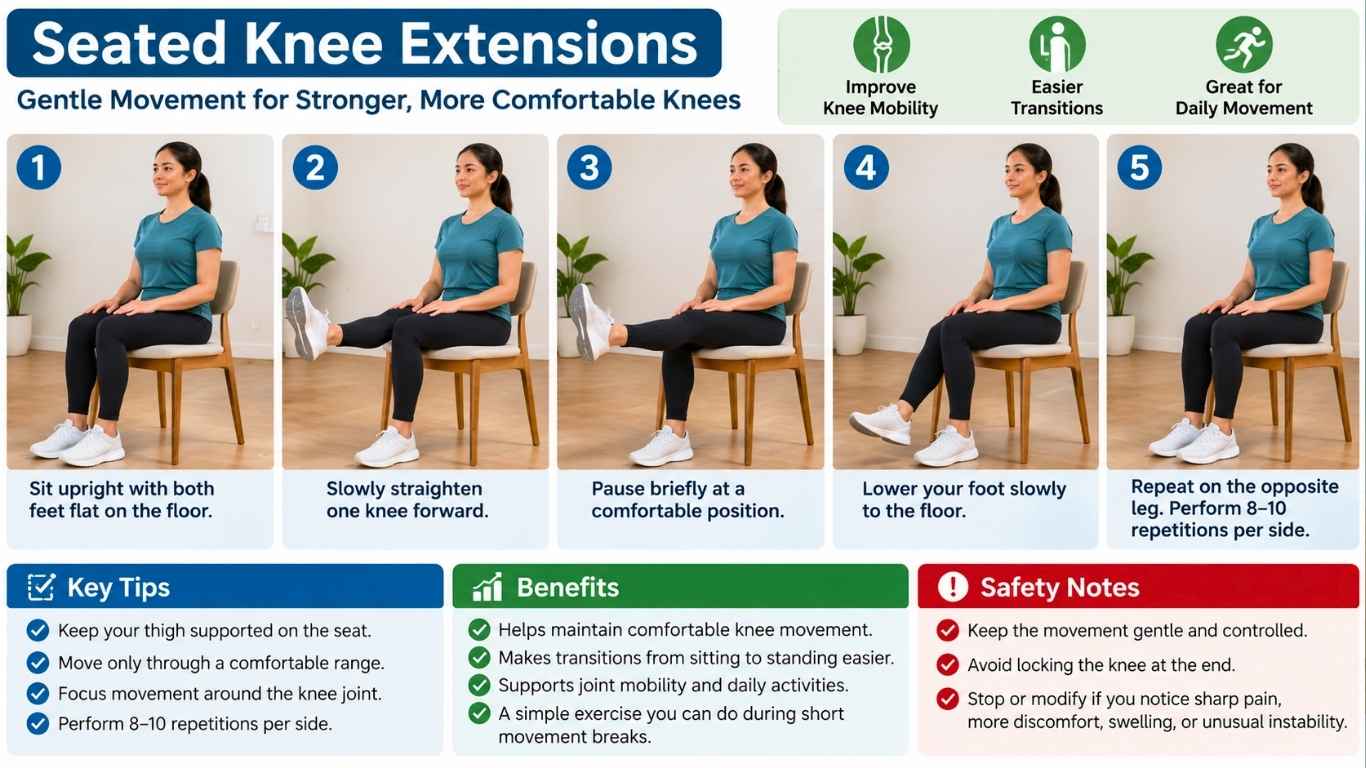
1. Seated Knee Extensions
Keep the movement gentle and controlled, especially if your knees feel stiff after sitting. Avoid straightening the knee forcefully or locking it at the end. Stop or modify the exercise if you notice sharp pain, increasing discomfort, swelling, or unusual instability during the movement.
Here are some movement guide:
- Sit upright with both feet flat.
- Slowly straighten one knee forward.
- Keep your thigh supported on the seat.
- Pause briefly at a comfortable position.
- Lower your foot slowly to the floor.
- Repeat on the opposite leg.
- Perform 8–10 repetitions per side.
- Move only through a comfortable range.
- Focus movement around the knee joint.
- Stop or reduce range if discomfort increases.
Benefits
Seated knee extensions gently move the knee through its available range while keeping the body supported. Regular practice can help maintain comfortable knee movement and make transitions from sitting to standing feel smoother. These joint mobility exercises can also fit easily into short movement breaks.
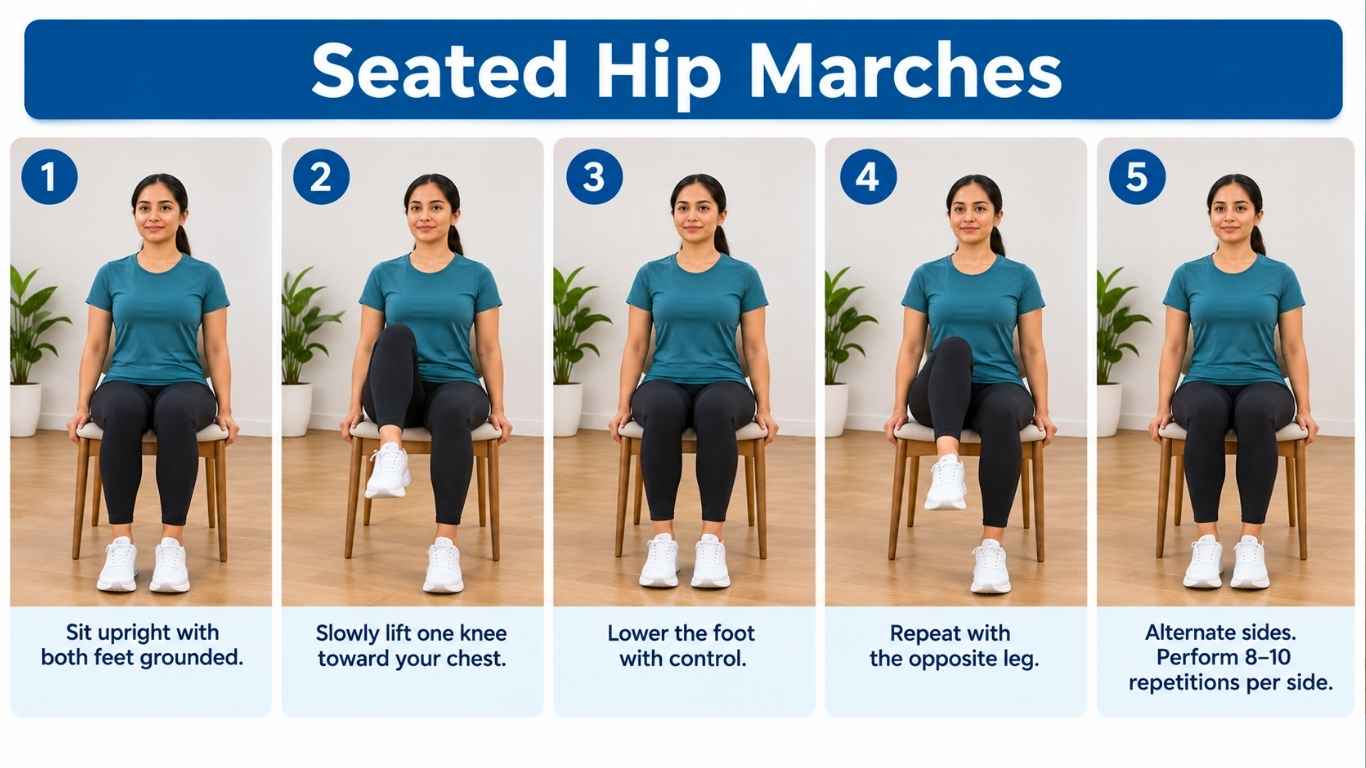
2. Seated Hip Marches
Keep your upper body relaxed and avoid leaning backward or sideways while lifting each leg. Use a comfortable lifting height rather than forcing the hip upward. Stop or modify the movement if sharp pain, pinching, or increasing discomfort develops.
Try this movement:
- Sit upright with both feet grounded.
- Keep your spine comfortably tall.
- Slowly lift one knee toward your chest.
- Lower the foot with control.
- Repeat with the opposite leg.
- Alternate sides at an even pace.
- Perform 8–10 repetitions per side.
- Lift only within a comfortable range.
- Focus movement around the hip joint.
- Stop or reduce height if discomfort increases.
Benefits
Seated hip marches encourage gentle hip movement after prolonged sitting while keeping your body supported. They can help maintain comfortable hip range, encourage coordination, and prepare the legs for standing, walking, and other everyday movements.
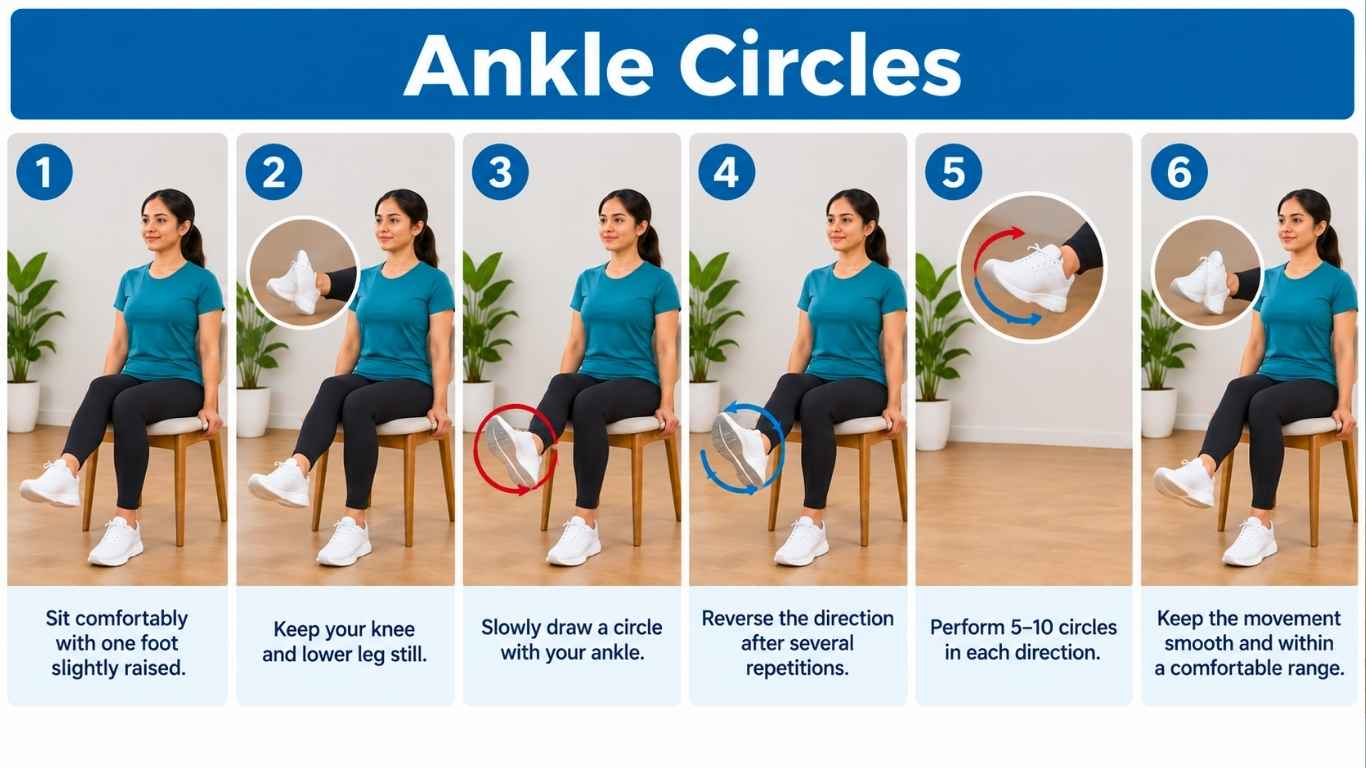
3. Ankle Circles
Keep the movement slow and relaxed, especially if your ankle feels stiff after sitting. Avoid making large circles or forcing the foot into an extreme position. Stay within a comfortable range, and stop if you experience sharp or increasing discomfort.
Movement guide:
- Sit comfortably with one foot slightly raised.
- Keep your knee and lower leg still.
- Slowly draw a circle with your ankle.
- Keep the movement smooth and controlled.
- Reverse the direction after several repetitions.
- Perform 5–10 circles in each direction.
Comfortable range, use a circle size that feels natural. Body area, Focus on movement through the ankle joint. Stop or modify, Reduce the range if discomfort increases.
Benefits
Ankle circles gently move the joint in several directions while keeping the leg supported. They can be especially useful for joint stiffness after sitting, helping restore comfortable movement before walking or standing activities.
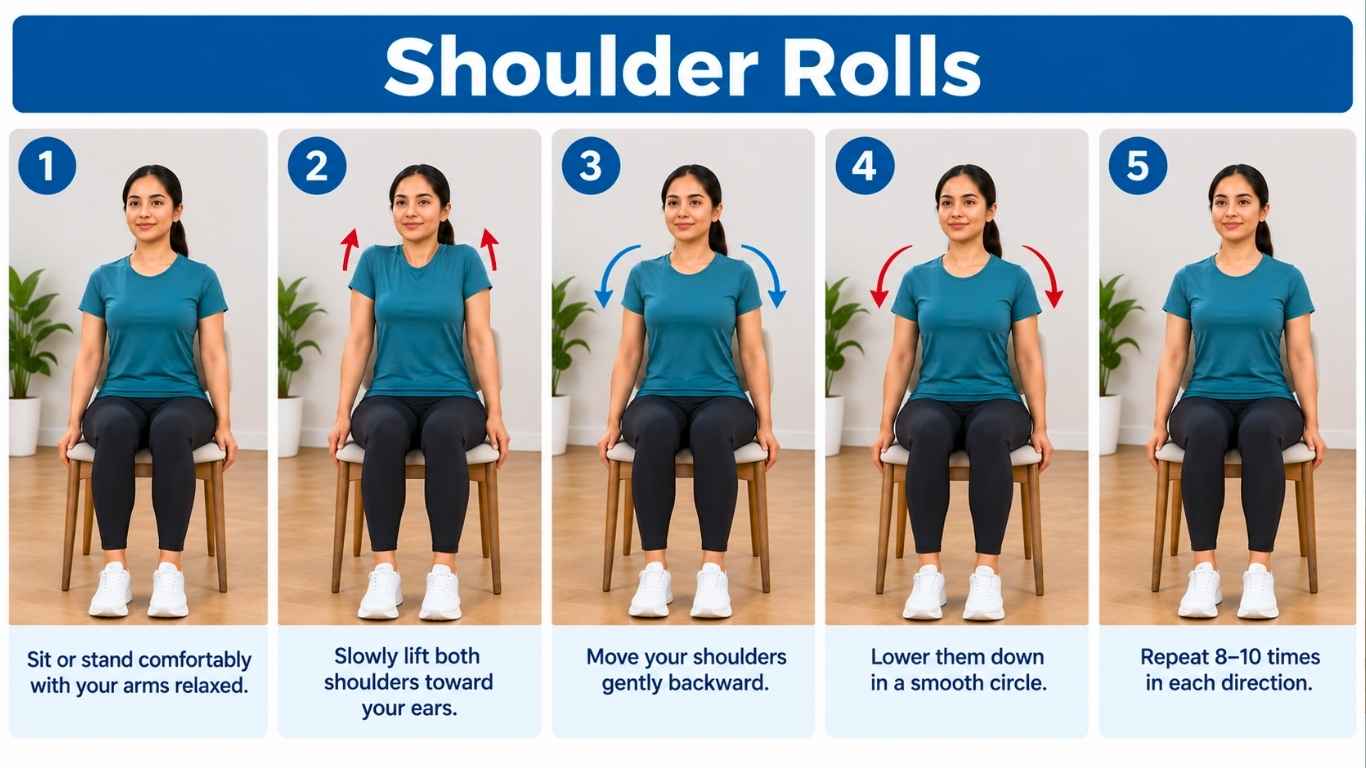
4. Shoulder Rolls
Keep your shoulders relaxed and move them smoothly without forcing a large circle. Avoid shrugging aggressively or moving too quickly. Breathe normally throughout the exercise, and reduce the range or stop if sharp or increasing discomfort appears.
Here’s shoulder movement step by step:
- Sit or stand comfortably with your arms relaxed.
- Slowly lift both shoulders toward your ears.
- Move your shoulders gently backward.
- Lower them down in a smooth circle.
- Keep your neck relaxed throughout.
- Repeat 8–10 times in each direction.
- Keep the movement comfortable and controlled.
Use a smooth, easy shoulder circle. Focus on the shoulders and upper back. Make the circles smaller if discomfort develops.
Benefits
Shoulder rolls gently move the upper body after periods of inactivity. They can also help when muscle and joint stiffness makes your shoulders feel restricted, particularly after working at a desk or sitting for extended periods.
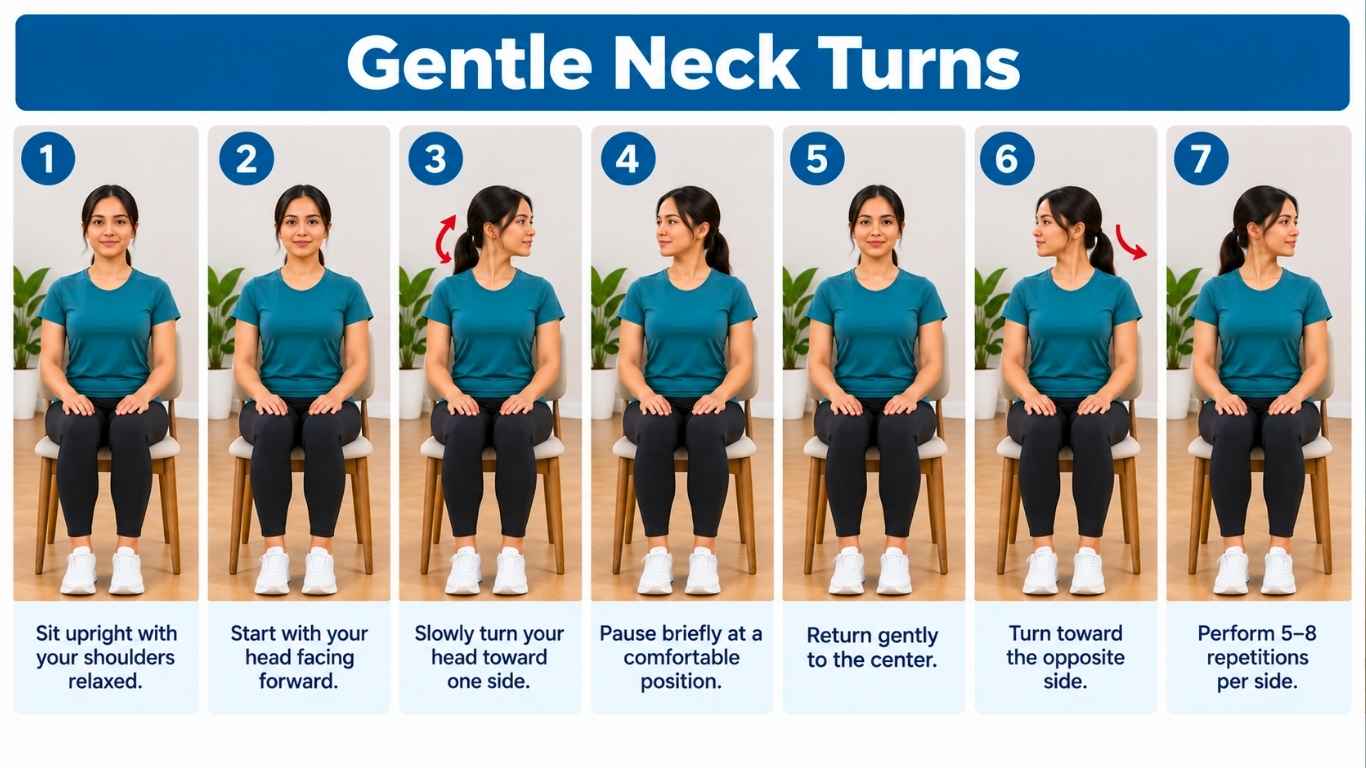
5. Gentle Neck Turns
Move your head slowly instead of trying to turn as far as possible. Keep your shoulders relaxed and avoid sudden movements. Stay within an easy range, and stop or reduce the movement if dizziness, sharp pain, or increasing discomfort occurs.
Neck movement guide:
- Sit upright with your shoulders relaxed.
- Start with your head facing forward.
- Slowly turn your head toward one side.
- Pause briefly at a comfortable position.
- Return gently to the center.
- Turn toward the opposite side.
- Perform 5–8 repetitions per side.
Comfortable range, Turn only as far as feels easy. Focus on movement through the neck. Stop or modify, Use a smaller turn if discomfort appears.
Benefits
Gentle neck turns encourage controlled side-to-side movement without requiring equipment. They can help maintain comfortable neck mobility and make it easier to move naturally after sitting, especially during desk-based daily routines.
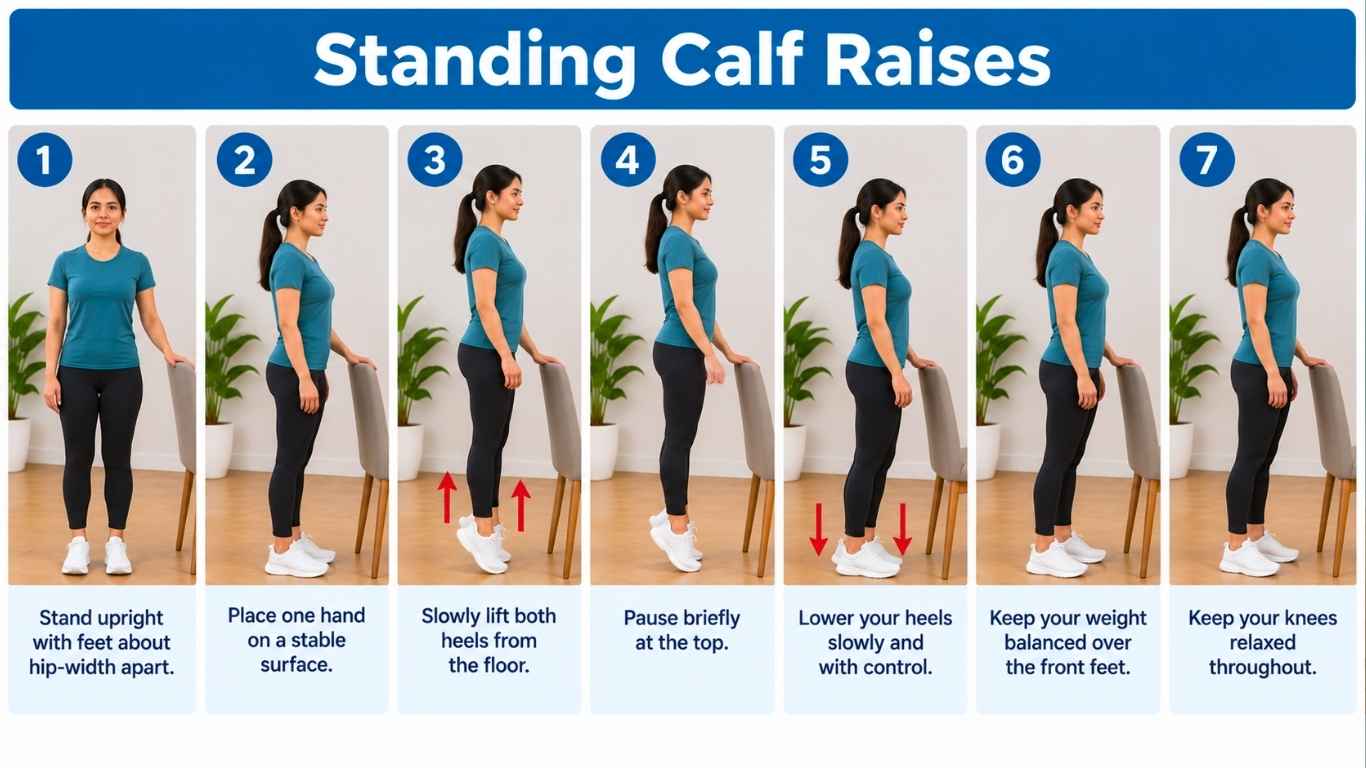
6. Standing Calf Raises
Use a wall, chair, or another stable surface for support if needed. Keep your feet steady and avoid rushing the movement. Lower your heels with control, and stop or modify the exercise if sharp or increasing discomfort appears.
Here’s important movement guide:
- Stand upright with feet about hip-width apart.
- Place one hand on a stable surface.
- Slowly lift both heels from the floor.
- Keep your weight balanced over the front feet.
- Pause briefly at the top.
- Lower your heels slowly and with control.
- Keep your knees relaxed throughout.
Benefits
Standing calf raises strengthen the lower legs while encouraging controlled ankle movement. They can support standing, walking, and other everyday movements without requiring complicated equipment.
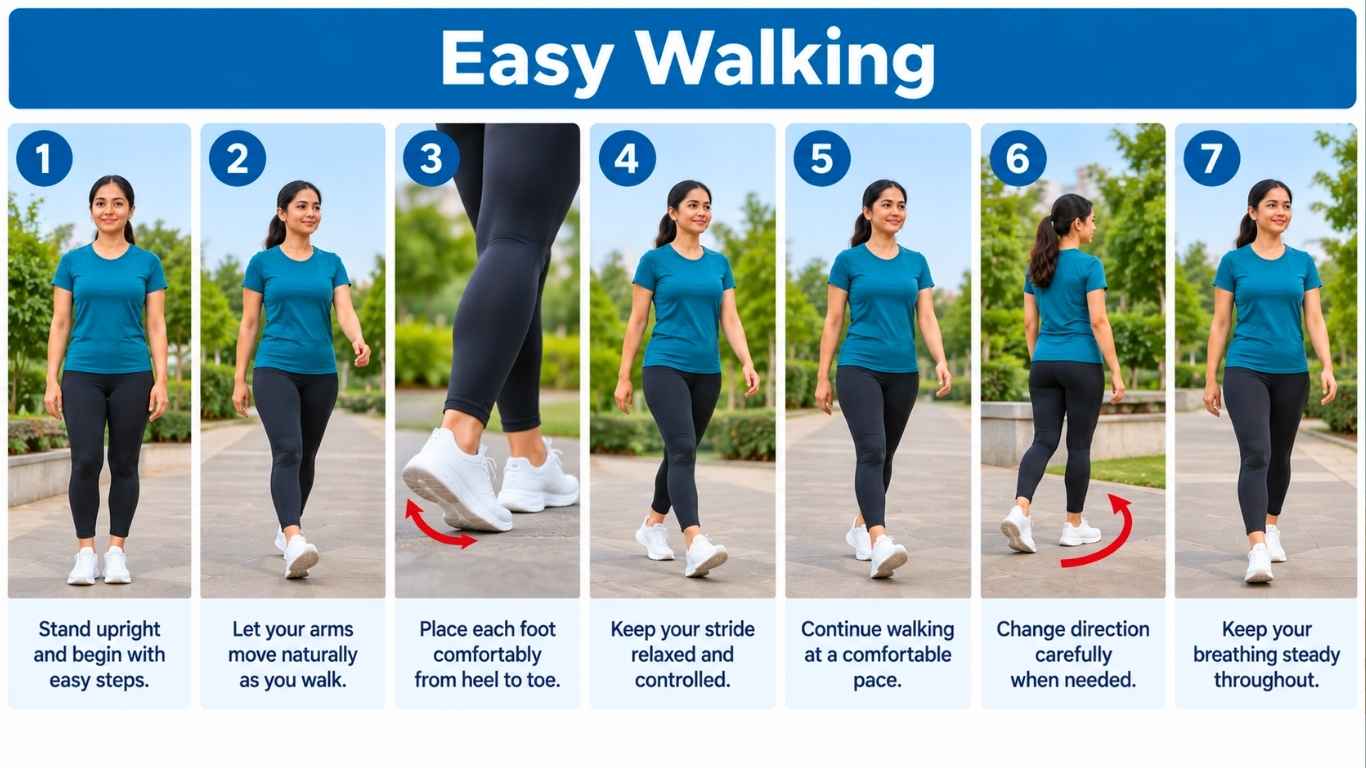
7. Easy Walking
Choose a clear, stable surface and begin at an easy pace. Keep your steps natural rather than exaggerating your stride. Notice how your body feels as you move, and slow down or stop if discomfort becomes stronger.
Walking movement:
- Stand upright and begin with easy steps.
- Let your arms move naturally as you walk.
- Place each foot comfortably from heel to toe.
- Keep your stride relaxed and controlled.
- Continue walking at a comfortable pace.
- Change direction carefully when needed.
- Keep your breathing steady throughout.
Use a natural stride that feels easy. Walking involves the ankles, knees, hips, and legs. Slow down or stop if discomfort increases.
Benefits
Easy walking gets several joints moving together and can make returning to daily activity feel more natural. It is a simple example of what helps joint stiffness without requiring equipment.
For more ways to keep your joints moving comfortably, explore our Joint mobility exercises for healthy movement guide.
What Research Found About Moving After Prolonged Sitting
A 2026 systematic review of six randomized controlled trials involving 210 sedentary adults found that short 2–10 minute movement breaks could reduce musculoskeletal discomfort compared with prolonged sitting or passive rest. The studies used stretching, walking, stair climbing, and dynamic movements, with four studies reporting significant improvements. The findings suggest that even brief activity can make breaking up long periods of sitting worthwhile, although the researchers noted differences between studies and limitations in evidence quality. This supports using short, gentle movement sessions throughout the day rather than waiting until stiffness becomes noticeable.
How to Make Joint Stiffness Go Away
Gentle movement help ease stiffness after periods of inactivity. Start slowly, avoid forcing restricted joints, and allow your body to adjust gradually as you begin moving again.
- Take a short walk to get moving.
- Move stiff joints through a comfortable range.
- Change positions regularly throughout the day.
- Try gentle stretches without forcing the movement.
- Stay active with regular daily movement.
- Break up long periods of sitting and inactivity.
Consistent movement can help manage what helps joint stiffness and support more comfortable mobility. Avoid expecting stiffness to disappear permanently from one short session.
How Can I Reduce Stiffness Naturally?
Regular movement throughout the day help your body feel less restricted after periods of inactivity. Walking, gentle mobility exercises, and comfortable stretching are simple ways to keep your joints and muscles moving without adding a demanding workout.
Try breaking up long sitting periods with brief activity breaks instead of waiting until stiffness becomes noticeable. Adequate daily activity can also support easier movement and help maintain flexibility. These habits may be particularly useful when muscle and joint stiffness develops after spending too much time in one position.
How to Reduce Knee Stiffness After Sitting
Knee stiffness feel more noticeable when you stand up after remaining seated for a while. Before walking normally, give your knees a moment to move gently. A few easy movements help you stand and walk more naturally before attempting deeper bends.
- Straighten and bend each knee gently.
- Move slowly before increasing your pace.
- Keep every movement within a comfortable range.
- Avoid deep bending when your knees feel restricted.
- Change position instead of sitting continuously for long periods.
If knee joint stiffness after sitting happens frequently or becomes increasingly uncomfortable, our guide to Gentle yoga for knee arthritis pain offers additional movement ideas.
How to Relieve Body Stiffness After Sitting All Day
After sitting for much of the day, stiffness may be felt across several areas rather than one specific joint. Gentle movement help you gradually become more comfortable, especially when your routine involves long periods of desk work or limited activity. For the legs and hips, try easy walking and gentle movements to get them moving again. Standing up and changing posture help the back and spine feel less restricted. Shoulder rolls and gentle neck movements are useful for releasing tension around the upper body. These simple habits can help manage muscle stiffness in legs after sitting and support easier movement overall.
How Often Should You Move When Sitting for Long Periods?
Long periods of uninterrupted sitting can make regular movement easier to forget. Short breaks give your body opportunities to change position, move different joints, and avoid remaining still for too long during long work hours.
- Stand up and move around regularly.
- Take brief walking breaks between sitting periods.
- Change your sitting position throughout the day.
- Add small movements between tasks or activities.
- Avoid remaining seated continuously for extended periods.
Consistent movement throughout the day can help reduce stiffness and make long sitting periods easier to manage. Taking brief breaks before discomfort builds can also support healthier movement habits. For joint stiffness after sitting, regular position changes can be useful. Add these movements to your morning routine with our Morning stretches for stiff joints guide.
Can Joint Stiffness Be Reversed?
Stiffness caused partly by inactivity may improve when movement becomes a regular part of your routine. However, progress varies from person to person. Your starting mobility, daily activity level, and the reason for the stiffness all influence how quickly you notice a difference.
Gentle exercise, walking, and changing positions regularly may make movement feel easier over time. what helps joint stiffness vary depending on its underlying cause, so one approach will not suit everyone.
How to Prevent Joint Stiffness From Sitting
Preventing stiffness is often easier when movement becomes part of your normal routine rather than something you only do after discomfort appears. Small changes during work, study, or travel help you avoid spending too much time in one position.
- Change your position regularly throughout the day.
- Take brief movement breaks between longer sitting periods.
- Walk around during work or study breaks.
- Avoid sitting continuously for several hours.
- Add simple mobility movements to your routine.
- Keep regular exercise as part of your week.
In practice, many people find that getting up for a few minutes before stiffness becomes noticeable feels easier than waiting until the body feels completely tight. These habits may support better mobility over time. If you frequently experience joint stiffness after sitting, regular movement breaks are a practical place to start.
When Should You Get Help for Joint Stiffness?
Occasional stiffness after inactivity may improve once you start moving, but persistent symptoms deserve more attention. In practice, people often notice that mild stiffness settles after walking or gentle movement, while symptoms that remain unchanged or become worse are harder to manage with simple daily habits alone.
Pay attention to significant swelling, severe pain, noticeable instability, or difficulty with normal activities. You should also seek professional guidance if symptoms repeatedly return without an obvious reason or do not improve with movement. Rather than trying to identify the cause yourself, a qualified healthcare professional can assess your symptoms and suggest appropriate next steps. This becomes particularly important when what helps joint stiffness at home does not provide meaningful relief.
A Simple 5-Minute Routine After Sitting
When you have been sitting for a while, you do not need a long workout to get moving again. This simple five-minute sequence gives different parts of your body a chance to move before you return to your usual activities.
Minute 1 — Easy Walking
Walk around at a relaxed pace and let your body loosen naturally.
Minute 2 — Seated Knee Extensions
Straighten one leg at a time while keeping the movement controlled.
Minute 3 — Seated Hip Marches
Lift your knees alternately while sitting upright and keeping your torso steady.
Minute 4 — Ankle Circles
Slowly circle each ankle through a comfortable range in both directions.
Minute 5 — Gentle Standing Movement
Stand comfortably and perform a few easy movements before continuing your day.
Keep the entire routine comfortable rather than trying to stretch or move as far as possible. If any movement causes sharp or increasing discomfort, reduce the range or skip that movement.
FAQs
Why are my joints stiff after sitting?
Remaining in one position for a long time can reduce normal joint movement and leave the surrounding muscles and tissues less active. Gentle movement after getting up can gradually restore a more comfortable feeling.
How do I make joint stiffness go away?
Start with gentle movement, short walks, comfortable stretching, and regular position changes. Avoid forcing restricted areas or expecting immediate results. If stiffness keeps returning or becomes difficult to manage, professional guidance may be appropriate.
How can I reduce stiffness naturally?
Regular walking, gentle mobility, and comfortable stretching can help you stay active throughout the day. Breaking up extended sitting with brief movement breaks may also make your body feel less restricted and support easier everyday movement.
How do I reduce knee stiffness after sitting?
Before walking normally, gently straighten and bend your knees several times. A short, easy walk can then help you transition into regular activity. Stay within a comfortable range and avoid forcing deep bends when the knees feel restricted.
Why do my legs feel stiff after sitting?
Remaining seated for a long time can leave the muscles and joints around your legs feeling less mobile. Getting up gradually, walking gently, and changing position can help restore comfortable movement without immediately demanding too much from your legs.
Can joint stiffness from sitting be reversed?
Stiffness linked partly to inactivity may improve when regular movement becomes part of your routine. However, progress depends on its underlying cause, your activity level, and consistency. Persistent symptoms should not automatically be attributed to sitting.
How often should I move if I sit all day?
Try breaking up extended sitting with regular position changes and brief periods of activity. Walking between tasks or adding gentle mobility during natural breaks can be easier to maintain than relying on one longer exercise session.
When should I see a doctor about joint stiffness?
Consider professional advice if stiffness persists, worsens, or interferes with normal activities. Significant swelling, severe pain, noticeable instability, or symptoms that remain unchanged despite gentle movement are also reasons to seek appropriate evaluation.
Conclusion
Learning how to reduce joint stiffness after sitting does not require a complicated exercise routine. Simple movement breaks, gentle mobility exercises, short walks, and regular position changes can help your body transition more comfortably after long periods of sitting. The key is to move consistently and stay within a comfortable range rather than forcing stiff joints.
If stiffness keeps returning, becomes worse, or starts affecting everyday activities, consider getting professional advice. For most daily routines, making movement a regular habit can be a practical way to support comfortable mobility and reduce the effects of prolonged sitting.
References
The following trusted research sources were reviewed to support the information
about joint stiffness, prolonged sitting, and movement breaks discussed in this article.
- PubMed — Exercise Snacks and Musculoskeletal Discomfort
- PubMed — Knee Stiffness Following Prolonged Sitting
- PMC — Systematic Review of Exercise Snacks
- PMC — Time Course of Knee Stiffness After Sitting
Verified by the YogaFlexZone Team