
Waking up with a stiff neck can make even the simplest morning movements feel uncomfortable. Turning your head, looking over your shoulder, or getting ready for the day may feel more difficult than usual. The good news is that a few morning stretches for a stiff neck can help loosen tight muscles, improve mobility, and ease stiffness before it affects the rest of your day. In this guide, you’ll learn simple stretches and practical tips to help you start every morning feeling more comfortable and ready to move.

Why Your Neck Feels Stiff After Sleeping
It’s frustrating to wake up with a stiff neck before your day has even started. In many cases, morning stiffness develops because your muscles and joints remain in the same position for several hours overnight. If your pillow doesn’t properly support your neck or you sleep in an awkward position, the surrounding muscles may feel tight when you wake up. Stress can also make you unconsciously tense your neck and shoulders while you sleep, adding to the discomfort.
It’s common for the stiffness to feel worst during the first few minutes after getting out of bed, then gradually ease as you start moving around. That’s because gentle movement helps wake up muscles that have been relatively inactive overnight. A few simple morning stretches are often enough to loosen tight areas, improve your range of motion, and help your neck feel more comfortable before the day gets underway.
If you also spend long hours looking down at your phone, poor posture could be making your symptoms worse. Our guide on How to Fix Text Neck From Phone Use explains simple ways to improve your posture and reduce unnecessary strain on your neck.
Before You Start Stretching
When your neck feels stiff first thing in the morning, it’s tempting to stretch right away. However, giving your body a minute or two to wake up before stretching often makes the movements feel more comfortable. A gentle start gives your muscles time to adjust after several hours in the same position.
It’s not unusual to notice your neck feels a little less restricted after simply standing up, taking a few steps, or rolling your shoulders. Giving your body a brief moment to loosen up can make stretching feel easier from the very beginning.
Before you begin, keep these simple tips in mind:
- Get out of bed slowly instead of making sudden movements.
- Roll your shoulders a few times to loosen the upper body before focusing on your neck.
- Take two or three slow, deep breaths to help release unnecessary muscle tension.
- Move within a comfortable range and avoid forcing your neck into a stretch.
- Consider a warm shower first if your neck feels especially tight, as warmth can help relax stiff muscles.
Taking just a minute to prepare before stretching can make your morning routine feel smoother, more comfortable, and easier to turn into a daily habit.
8 Morning Stretches for a Stiff Neck
Instead of forcing your neck to move all at once, these stretches gradually encourage your muscles and joints to loosen up, making everyday movements feel more comfortable. Move slowly, breathe naturally, and stop if you feel sharp pain. The goal isn’t to stretch as far as possible—it’s to help your neck feel more relaxed and ready for the day ahead. Start with the poses below and follow them step by step.

1. Chin Tuck
After a full night’s sleep, the muscles that support your head and neck can feel a little sluggish before they fully wake up. A chin tuck is one of the best morning neck stretches for gently activating these deep muscles and improving your neck’s natural alignment. It doesn’t require much movement, making it a comfortable way to begin your morning routine. If you spend long hours looking down at your phone during the day, you may also benefit from our guide on Chin Tucks for Forward Head Posture.
How to do it:
- Sit or stand with your spine tall and your shoulders relaxed.
- Keep your eyes looking straight ahead.
- Gently draw your chin straight backward, as if you’re making a double chin.
- Hold the position for 5–10 seconds.
- Relax and repeat 8–10 times.
Morning Tip: The movement should be slow and gentle. Avoid tilting your head up or down—your chin should glide straight back.

2. Upper Trapezius Stretch
If you usually sleep on the same side, you may notice one side of your neck feels tighter than the other when you wake up. That’s a common experience because the upper trapezius muscle can stay under mild tension for several hours overnight. A gentle stretch can help release that tightness before you begin your day.
Steps
Sit or stand with relaxed shoulders. Let your right arm rest comfortably by your side, then slowly tilt your head toward your left shoulder until you feel a gentle stretch along the right side of your neck. Hold the position for 20–30 seconds while breathing normally, then repeat on the opposite side.
Common Mistake
Many people instinctively lift the shoulder they’re stretching. Instead, keep both shoulders relaxed and level so the stretch targets the muscle without creating extra tension.

3. Levator Scapulae Stretch
Turning your head to check behind you or looking down at the breakfast table may feel uncomfortable if the levator scapulae muscle is stiff after sleeping. This stretch targets the muscle that runs from your neck to your shoulder blade, helping ease the tightness that can build up overnight. It’s one of the most effective neck stretches after sleeping when stiffness is concentrated on one side of the neck.
Try It This Way
Sit upright with your shoulders relaxed. Turn your head about 45 degrees to one side, then slowly lower your chin toward your armpit until you notice a gentle stretch along the back and side of your neck. If needed, place your hand lightly on the back of your head to deepen the stretch slightly. Hold for 20–30 seconds before repeating on the opposite side.
A comfortable pulling sensation along the back or side of your neck is normal. If you notice sharp pain, numbness, or tingling, reduce the stretch or stop and try again with a smaller range of motion.
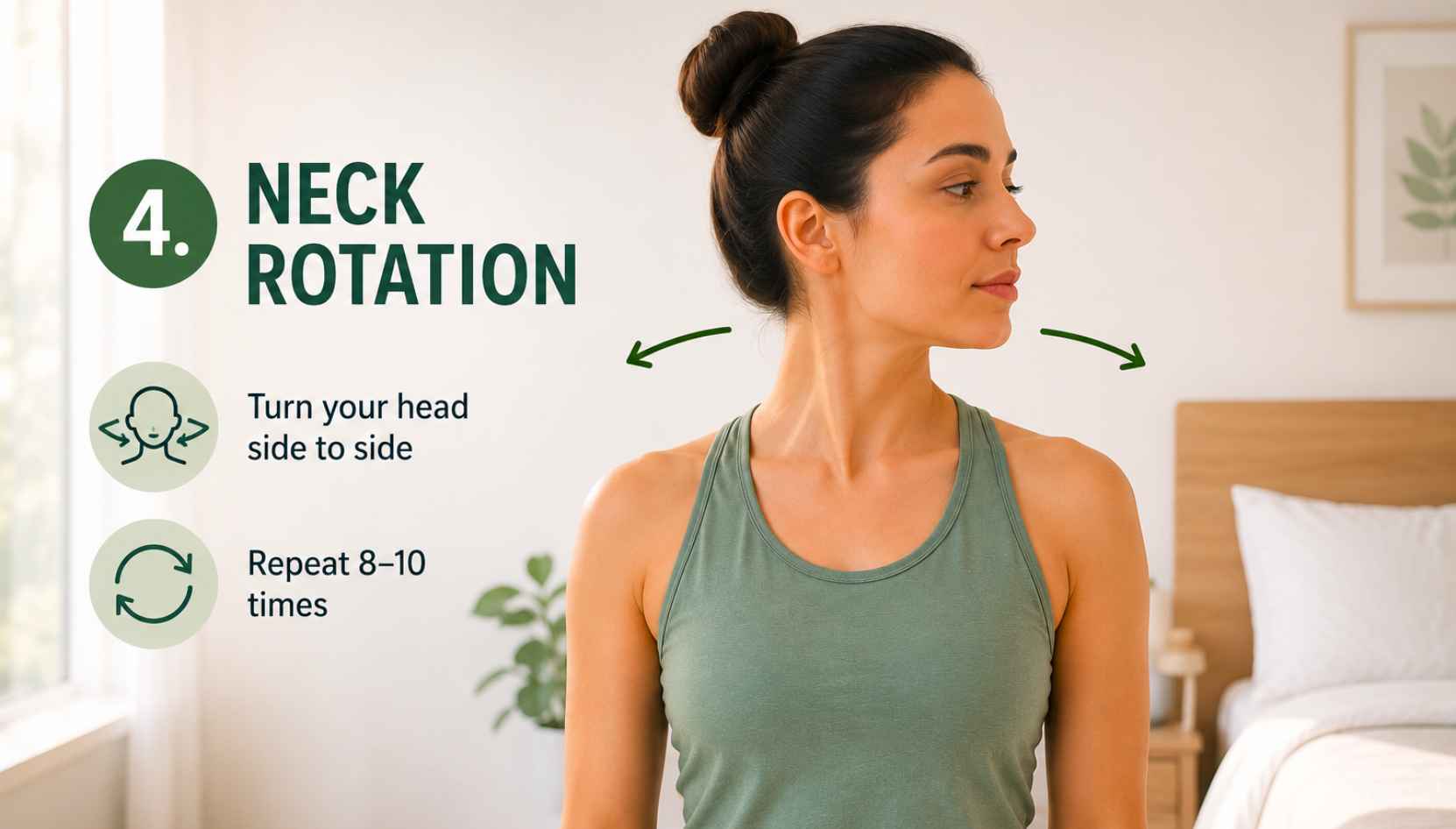
4. Neck Rotation
It’s common for your neck to feel a little stiff when you first turn your head after getting out of bed. Gentle neck rotations help restore comfortable movement by encouraging your joints and surrounding muscles to loosen up gradually, rather than all at once.
How to Practice
Sit or stand with your shoulders relaxed and your chin level. Slowly turn your head to the right as far as feels comfortable without forcing the movement. Hold for a second, then return to the center. Repeat on the left side. Continue alternating sides 8–10 times, moving smoothly and breathing normally throughout the exercise. Don’t try to rotate your neck to its maximum range right away. Your movement will often become easier after a few gentle repetitions, so let your neck loosen up gradually instead of pushing through stiffness.
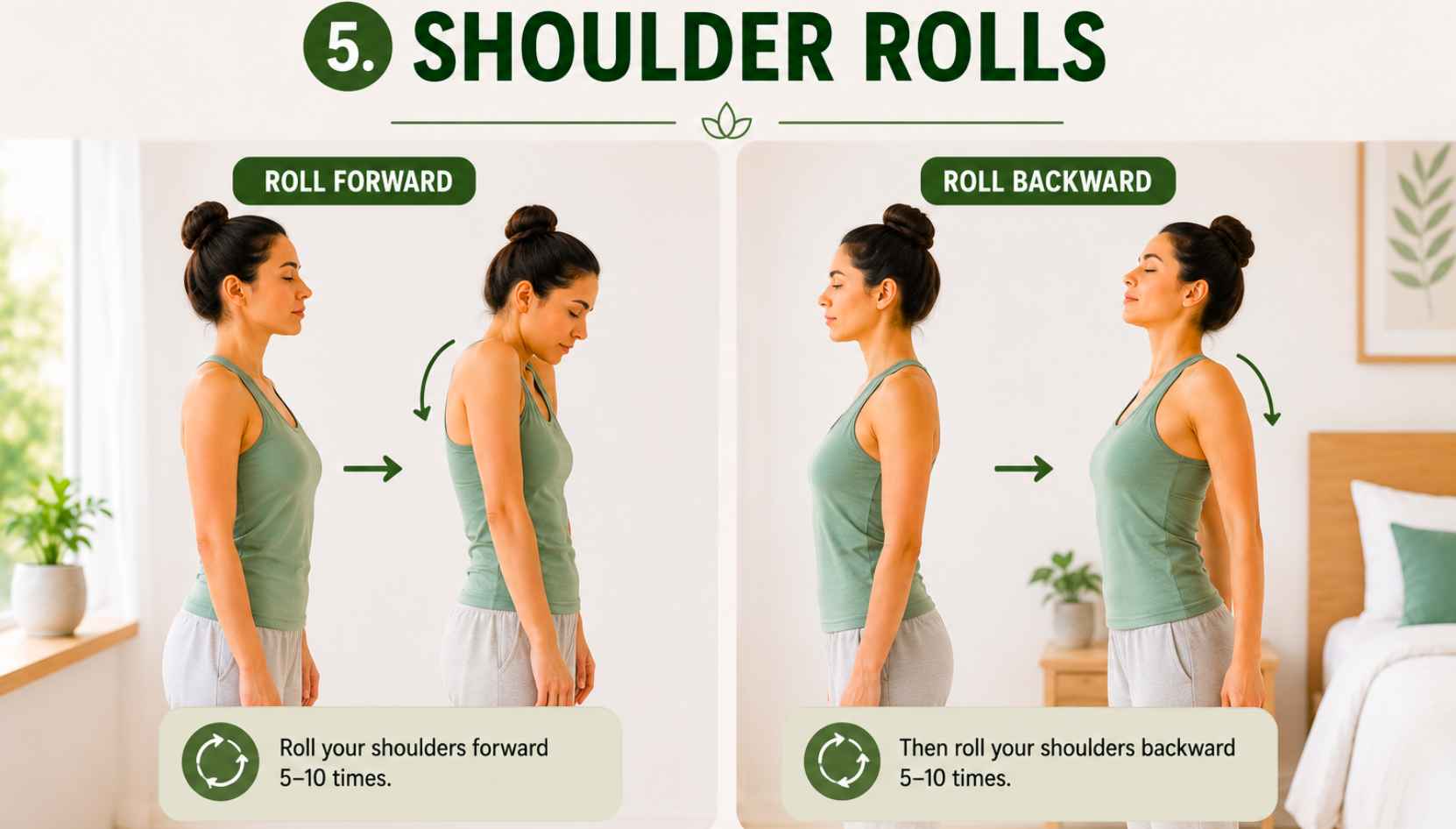
5. Shoulder Rolls
When your shoulders stay in the same position for hours overnight, they can contribute to the stiffness you feel in your neck after waking up. Shoulder rolls are a simple way to get both areas moving again, helping your upper body feel looser before you start the rest of your day. As part of a morning neck pain relief routine, this gentle movement can make other neck stretches feel more comfortable too.
Steps:
Stand or sit comfortably with your arms relaxed by your sides. Slowly roll both shoulders forward in a smooth circular motion five to ten times. Then reverse the direction and roll them backward another five to ten times. Keep the movement slow and avoid shrugging your shoulders toward your ears.
Benefits:
- Encourages better circulation around the neck and shoulders after sleeping.
- Helps reduce stiffness before moving on to deeper stretches.
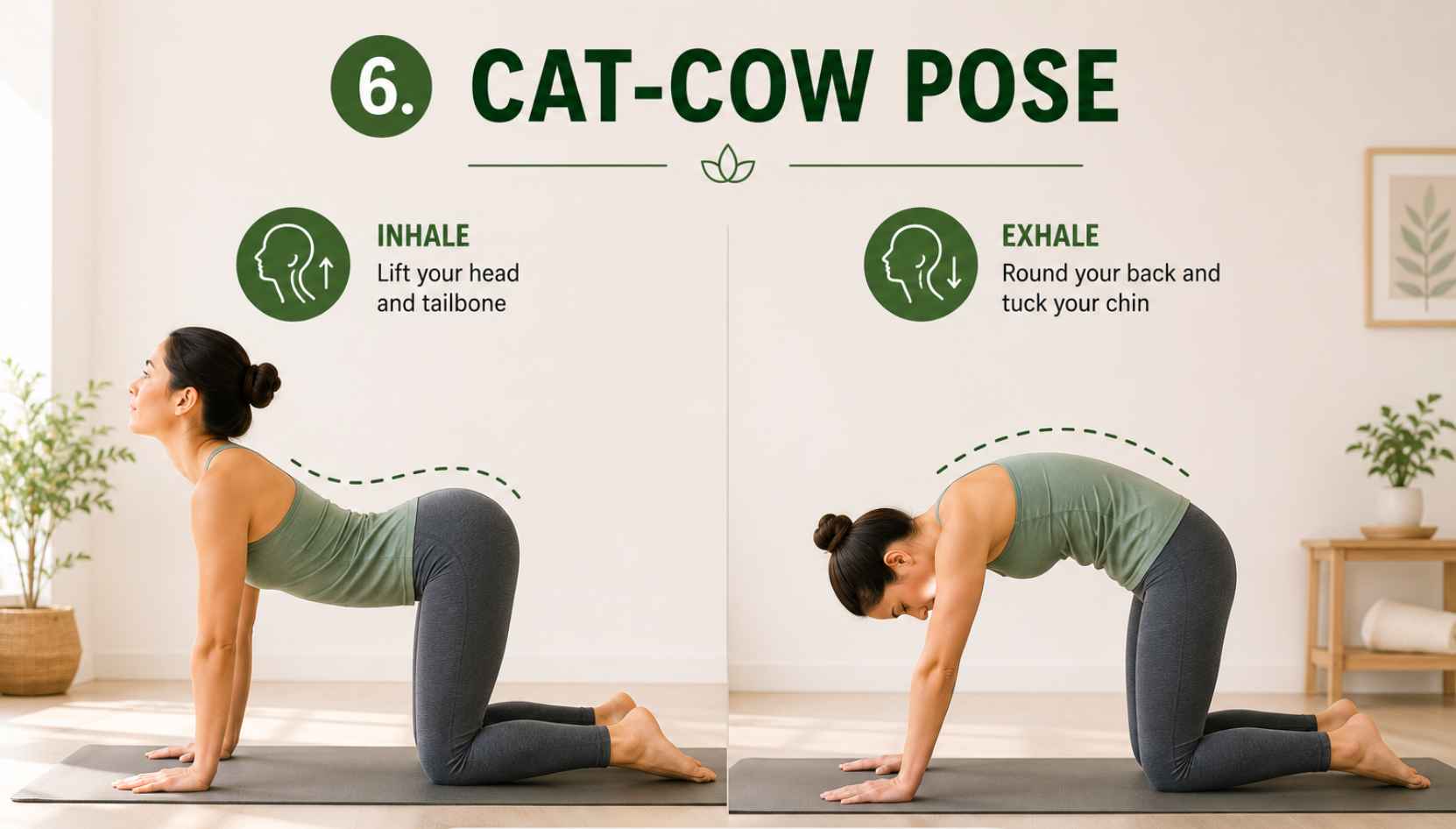
6. Cat-Cow Pose
Your neck doesn’t move on its own—it works together with your upper back and spine. If your back feels stiff after a night’s sleep, your neck may also feel less flexible. The Cat-Cow pose gently wakes up your entire spine, making your morning stretches feel more natural and comfortable.
How to Do It
- Start on your hands and knees with your wrists under your shoulders and your knees under your hips.
- Inhale as you lift your head and tailbone while allowing your belly to move toward the floor.
- Exhale as you round your back, gently tucking your chin toward your chest.
- Continue moving slowly between the two positions for 8–10 breaths.
Move with your breathing instead of rushing through the exercise. A slow, steady rhythm helps your muscles relax and allows your spine to warm up naturally.
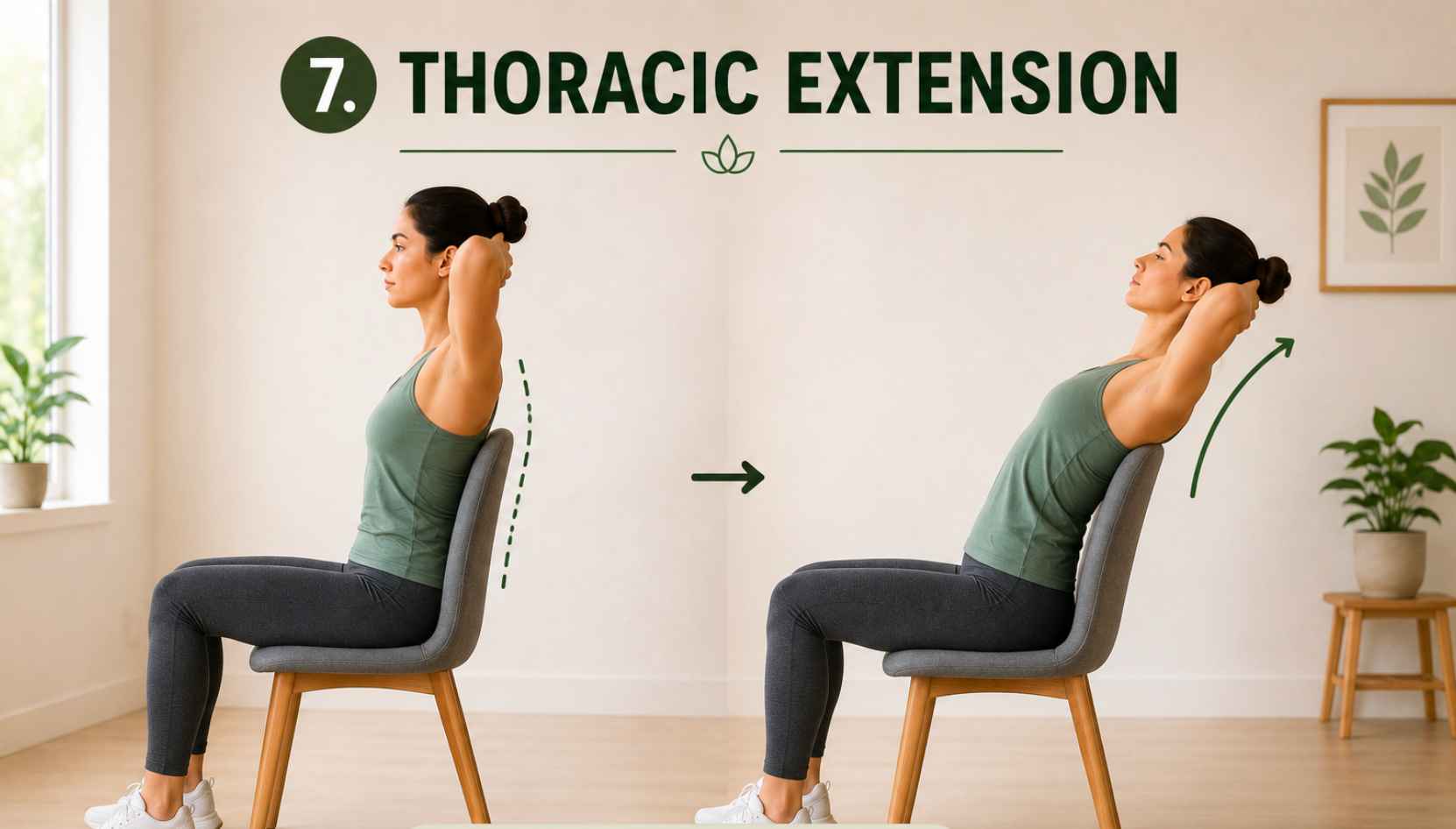
7. Thoracic Extension
Sometimes the stiffness you notice in your neck doesn’t start in your neck at all. After sleeping in one position for hours, your upper back can become less mobile, causing your neck to work harder during simple movements. Improving mobility through your thoracic spine can reduce some of that extra strain and help your neck move more comfortably. For a complete routine, see our guide on Upper Spine Mobility Exercises for Better Posture.
Follow These Steps
Sit on a chair with a supportive backrest that reaches your shoulder blades. Place both hands behind your head and gently lean your upper back over the top edge of the chair while keeping your lower back comfortable. Pause for a few seconds, then return to the starting position. Repeat the movement 8–10 times without forcing the stretch. When your upper back moves more freely, your neck doesn’t have to compensate as much during everyday activities. That’s why improving thoracic mobility can make your morning neck routine feel even more effective.
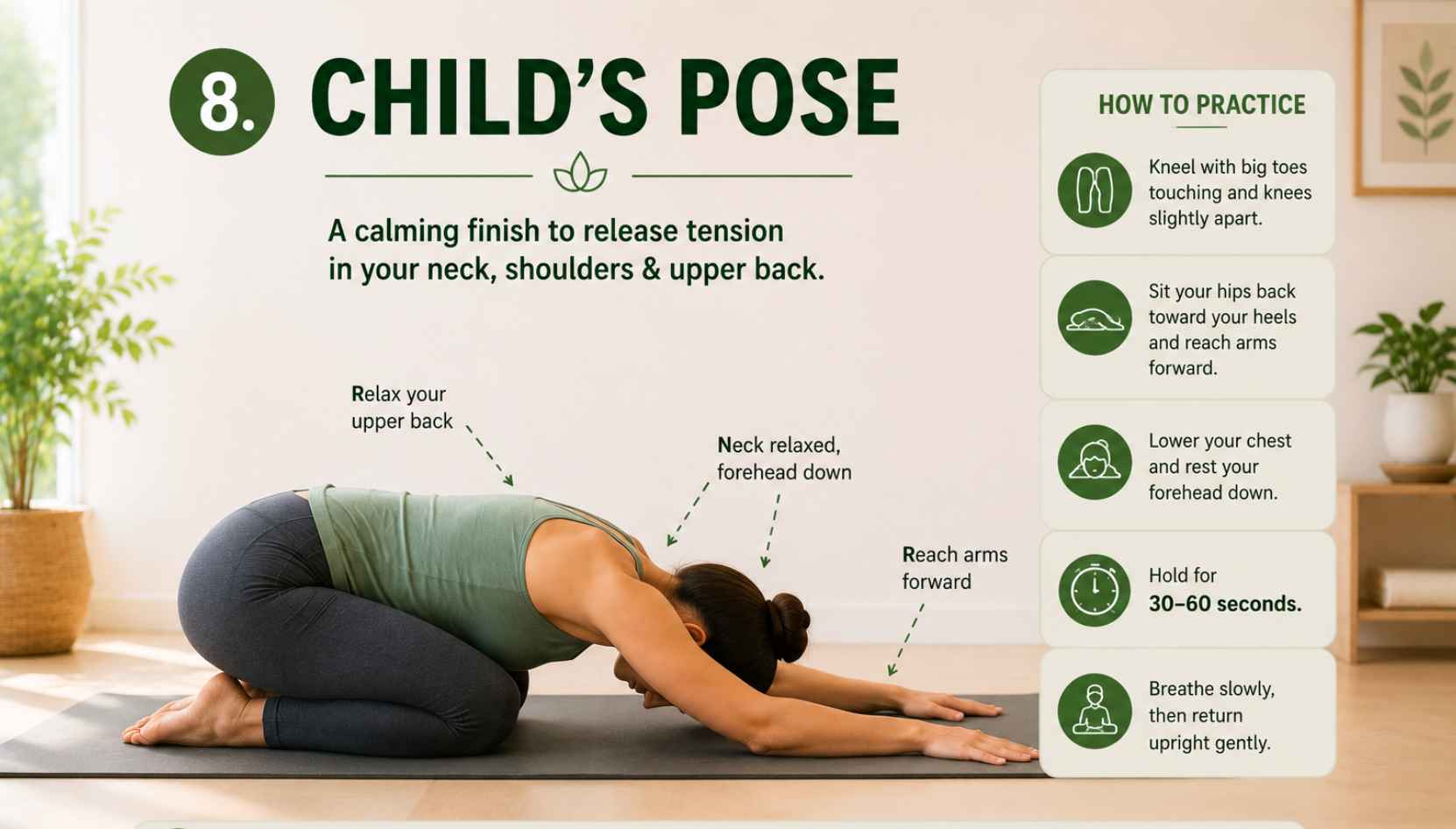
8. Child’s Pose
By the time you reach the final stretch, your neck should already feel a little looser than when you first got out of bed. Child’s Pose is a calming way to finish your routine, allowing your neck, shoulders, and upper back to relax together. Rather than targeting a single muscle, it encourages your entire upper body to release any remaining tension before you begin your day.
How to Practice
Kneel on the floor with your big toes touching and your knees slightly apart. Sit your hips back toward your heels, then slowly reach your arms forward as you lower your chest toward the floor. Let your forehead rest comfortably on the mat or a cushion, and allow your neck to stay relaxed. Breathe slowly and hold the position for 30–60 seconds before gently returning to an upright position. Take a few slow breaths and notice how your neck feels before standing up. There’s no need to rush into your morning. Giving your body a few extra moments to relax can help the benefits of your stretches last as you move into the rest of your day.
Morning Habits That Help Prevent Neck Stiffness
The way you start your morning can make a difference in how your neck feels throughout the day. Along with regular morning stretches, a few simple habits can help reduce stiffness and keep your neck more comfortable after waking up.
- Sleep on your back or side to help keep your neck in a more natural position overnight.
- Use a supportive pillow that keeps your head and neck properly aligned.
- Wait a few minutes before checking your phone to avoid putting immediate strain on your neck.
- Stand up slowly and give your body time to loosen up after sleeping.
- Keep moving during the first part of your morning so your muscles don’t tighten up again.
These small habits take very little effort, but over time they can make waking up with a stiff neck much less common.
Common Morning Mistakes That Make Neck Stiffness Worse
Small changes like these can help your neck feel more comfortable and allow your morning stretching routine to work more effectively, making it less likely you’ll wake up with a stiff neck.
Here are some common mistake:
- Stretching too hard before your muscles loosen up.
- Turning your head too quickly instead of moving slowly.
- Staying in bed too long after waking up.
- Skipping shoulder movement before stretching your neck.
- Looking down at your phone right away, which adds unnecessary strain.
Small changes like these can help your neck feel more comfortable and allow your morning stretching routine to work more effectively.
When Morning Neck Stiffness Could Be a Sign of Something More
Most cases of morning neck stiffness improve with gentle movement and neck stretches after sleeping. However, if your symptoms don’t get better after several weeks or keep getting worse, it’s a good idea to speak with a healthcare provider.
You should also seek medical advice if your neck pain is accompanied by numbness, tingling, or weakness in your arm, develops after an injury, or occurs along with a fever or chills. These symptoms aren’t typical of everyday muscle stiffness and should be evaluated by a medical professional.
FAQ
Why is my neck stiff every morning?
Morning neck stiffness is often caused by sleeping in one position for several hours, poor pillow support, muscle tension, or an awkward sleeping posture. In most cases, morning neck stretches and gentle movement help loosen the muscles and reduce stiffness.
What is the best morning stretch for a stiff neck?
There’s no single stretch that works best for everyone. Chin tucks, upper trapezius stretches, and gentle neck rotations are among the most effective because they improve mobility without placing too much strain on your neck.
Can my pillow cause neck stiffness?
Yes. A pillow that’s too high, too low, or doesn’t properly support your neck can leave it in an awkward position overnight, making it more likely you’ll wake up with a stiff neck.
Should I stretch before getting out of bed?
It’s usually better to get out of bed slowly, walk around for a minute, or gently roll your shoulders before stretching. Giving your muscles a little time to wake up often makes stretching feel more comfortable.
How long should I hold each stretch?
For most neck stretches after sleeping, holding each stretch for 20–30 seconds while breathing normally is enough. Avoid bouncing or forcing your neck beyond a comfortable range.
Is it normal to wake up with a stiff neck?
Occasional morning neck stiffness is common, especially after sleeping in an awkward position. If it happens regularly or doesn’t improve, it’s worth reviewing your sleeping posture, pillow, or talking to a healthcare provider.
Can morning stretches improve posture?
They can help over time. While morning neck stretches won’t correct posture overnight, they can improve flexibility, reduce muscle tightness, and encourage better head and neck alignment with regular practice.
When should I see a doctor?
Seek medical advice if your neck stiffness lasts for several weeks, gets worse instead of better, follows an injury, or is accompanied by numbness, tingling, weakness, fever, or other concerning symptoms.
Conclusion
Waking up with a stiff neck can make even simple morning activities feel uncomfortable, but the good news is that it often improves with the right approach. By practicing these morning stretches for a stiff neck consistently and building a few healthy morning habits, you can reduce muscle tightness, improve mobility, and start your day feeling more comfortable.
Remember, lasting results come from consistency rather than stretching harder. Even spending five to ten minutes each morning can make a noticeable difference over time.
If your neck tends to become stiff again while you’re working, don’t stop your routine there. Continue caring for your neck throughout the day with our guide on Desk Stretches for Office Neck Tension, which includes simple stretches to help you stay comfortable while sitting.