
Has turning your head, looking over your shoulder, or getting comfortable in bed become more difficult than it used to be? Cervical spondylosis can make everyday movements feel frustrating, but staying active is often an important part of managing your symptoms. These exercises for cervical spondylosis at home are designed to improve neck mobility, reduce stiffness, and support daily comfort. In this guide, you’ll learn a simple routine, safe exercises, and practical tips to help you move with greater confidence every day.

Can Home Exercises Really Help Cervical Spondylosis?
Cervical spondylosis is a common age-related condition that affects the joints, discs, and bones of the neck. Although these natural changes can’t be reversed, staying active often helps your neck function better than avoiding movement altogether. Regular exercise can support flexibility, reduce stiffness, and make everyday activities feel more comfortable.
The goal of exercise isn’t to cure cervical spondylosis but to manage its symptoms over time. With a consistent routine, many people notice better neck mobility, less discomfort during daily tasks, and fewer flare-ups. Progress is usually gradual, so focus on steady improvement instead of expecting quick or dramatic results.
Before starting your daily routine, explore our Morning Stretches for a Stiff Neck guide to help loosen tight muscles and make your exercises feel more comfortable.
Before You Start: Is Exercise Safe?
When your neck is already stiff or painful, it’s natural to want quick relief. However, exercising too aggressively can sometimes make your symptoms worse instead of better. Starting gently is one of the safest ways to help your neck move more comfortably while reducing the risk of unnecessary strain.
- A mild stretching sensation is normal, sharp pain isn’t.
- Avoid exercising during severe pain flare-ups.
- Stop if pain spreads into your arm or hand.
- Morning or evening are both good times.
- Aim for 10–15 minutes of daily movement.
- Warm up with gentle shoulder rolls first.
If you’re unsure whether these exercises are right for you, or you experience severe pain, numbness, tingling, or muscle weakness, speak with a qualified healthcare professional before starting a home exercise program.
Your 10-Minute Daily Exercise Routine
You don’t need to spend an hour exercising to help your neck feel better. A simple routine performed consistently is often more beneficial than occasional long sessions. These home exercises for cervical spondylosis are arranged into a short morning and evening routine that’s easy to fit into your day. Move slowly, breathe normally, and stay within a comfortable range throughout each exercise.
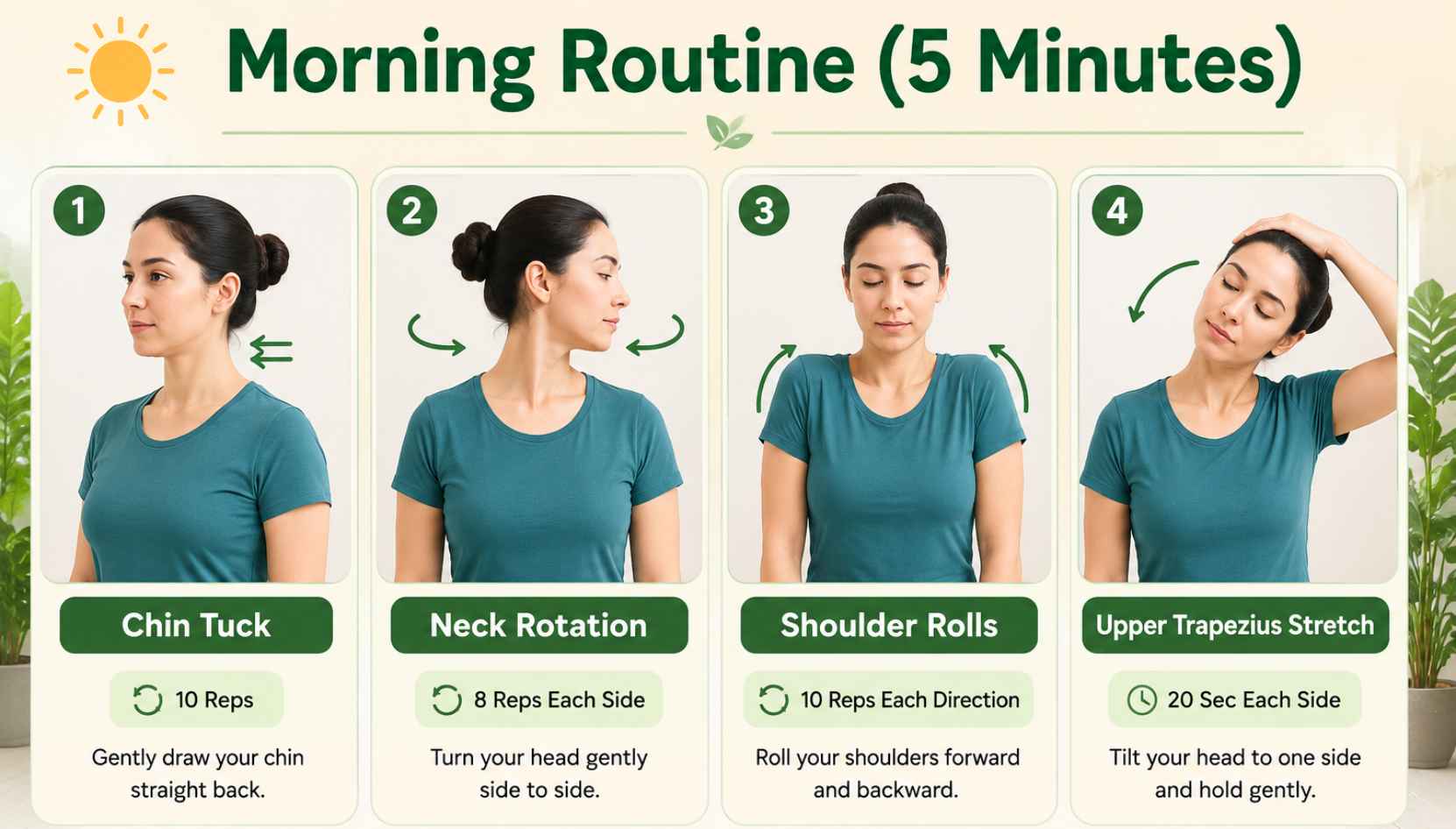
Morning Routine (5 Minutes)
Just five minutes each morning can be enough to loosen overnight stiffness and prepare your neck for the day ahead. Perform the following exercises slowly and in order, focusing on gentle, controlled movements instead of pushing through discomfort.
Chin Tuck
Sit or stand upright with your shoulders relaxed and eyes looking forward. Gently draw your chin straight back without tilting your head. Repeat 10 times, moving slowly and smoothly. This exercise activates the deep neck muscles, improves head alignment, and helps reduce stiffness caused by cervical spondylosis.
Neck Rotation
Sit comfortably with your shoulders relaxed. Slowly turn your head to one side until you feel a gentle stretch, then return to the center and repeat on the other side. Perform 8 repetitions on each side. This movement improves neck mobility and makes everyday movements feel smoother and less restricted.
Shoulder Rolls
Sit or stand comfortably with your arms by your sides. Slowly roll both shoulders forward in smooth circles, then reverse the direction. Complete 10 forward and 10 backward rolls. Shoulder rolls warm up the muscles around your neck and upper back, helping reduce tension before other exercises.
Upper Trapezius Stretch
Sit upright and relax your shoulders. Gently tilt your head toward one shoulder until you feel a comfortable stretch along the opposite side of your neck. Hold for 20 seconds on each side, then switch. This stretch releases tight muscles around the neck and shoulders, helping improve comfort and flexibility.
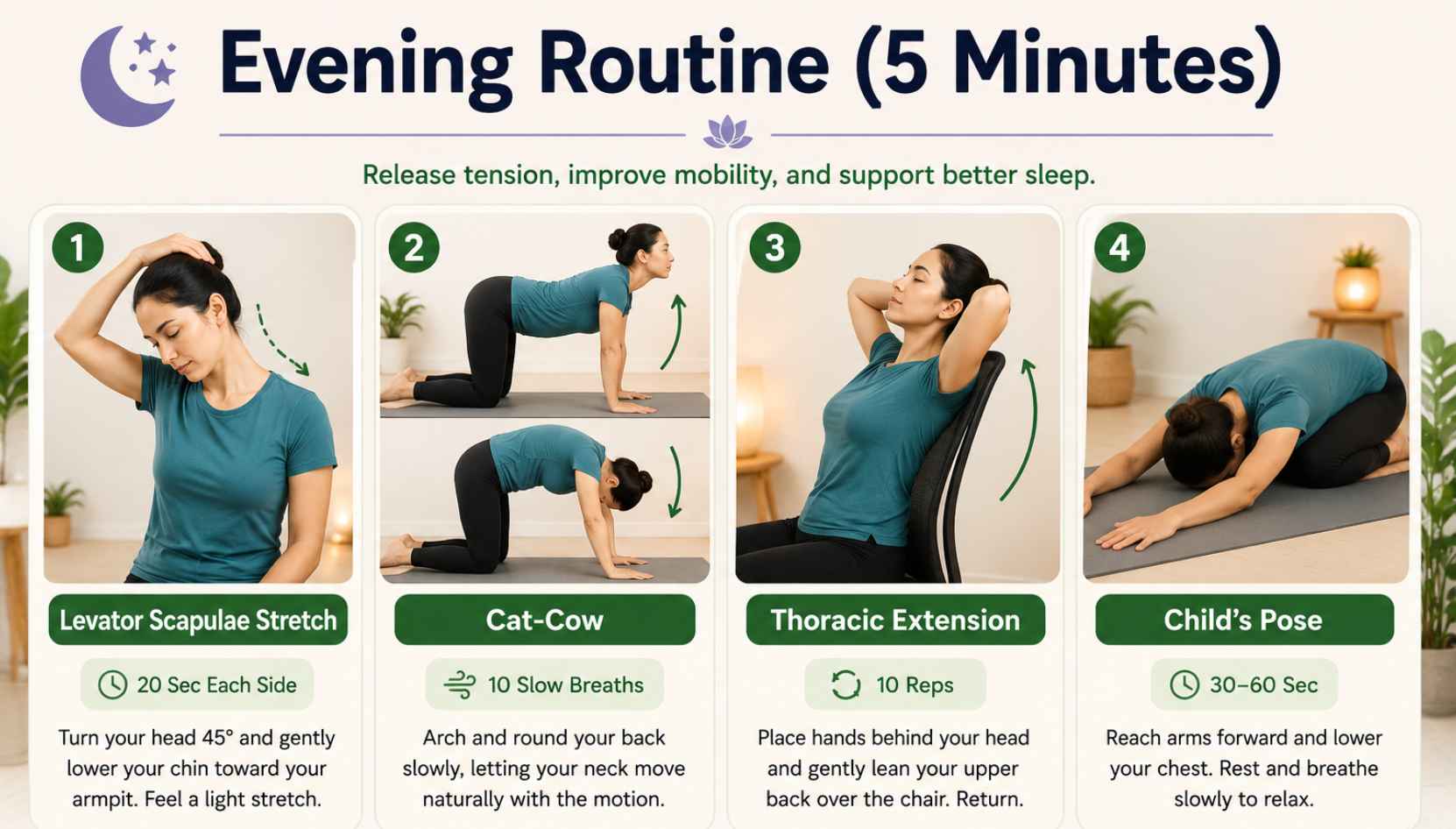
Evening Routine (5 Minutes)
By the end of the day, your neck and shoulders may feel tighter from working, driving, or looking at screens for long periods. This short evening routine combines gentle stretching and mobility exercises to help release built-up tension and support better cervical spondylosis neck pain relief before you rest for the night.
Levator Scapulae Stretch
Sit comfortably with your shoulders relaxed. Turn your head about 45 degrees to one side, then gently lower your chin toward your armpit until you feel a light stretch. Hold for 20 seconds on each side. This stretch targets a muscle that commonly becomes tight with cervical spondylosis and helps make neck movements feel more comfortable.
Cat-Cow
Start on your hands and knees with your wrists under your shoulders and your knees under your hips. Slowly alternate between arching and rounding your back while letting your neck move naturally with the motion. Continue for 10 slow breaths. This exercise improves spinal mobility and works well as part of your neck exercises for cervical spondylosis routine.
Thoracic Extension
Sit in a sturdy chair with a backrest reaching your shoulder blades. Place both hands behind your head and gently lean your upper back over the chair before returning to the starting position. Repeat 10 times. Improving upper back mobility can reduce unnecessary strain on your neck and make everyday movements feel smoother.
Child’s Pose
Kneel on the floor, sit your hips back toward your heels, and slowly reach your arms forward while lowering your chest. Rest your forehead comfortably and hold the position for 30–60 seconds while breathing slowly. This gentle pose helps relax your neck, shoulders, and upper back, making it an excellent way to finish your home exercises for cervical spondylosis.
You don’t need to exercise intensely to notice progress. A short routine performed every morning and evening is often more effective than exercising only when pain becomes severe. Stay consistent, move within a comfortable range, and allow your neck to improve gradually over time.
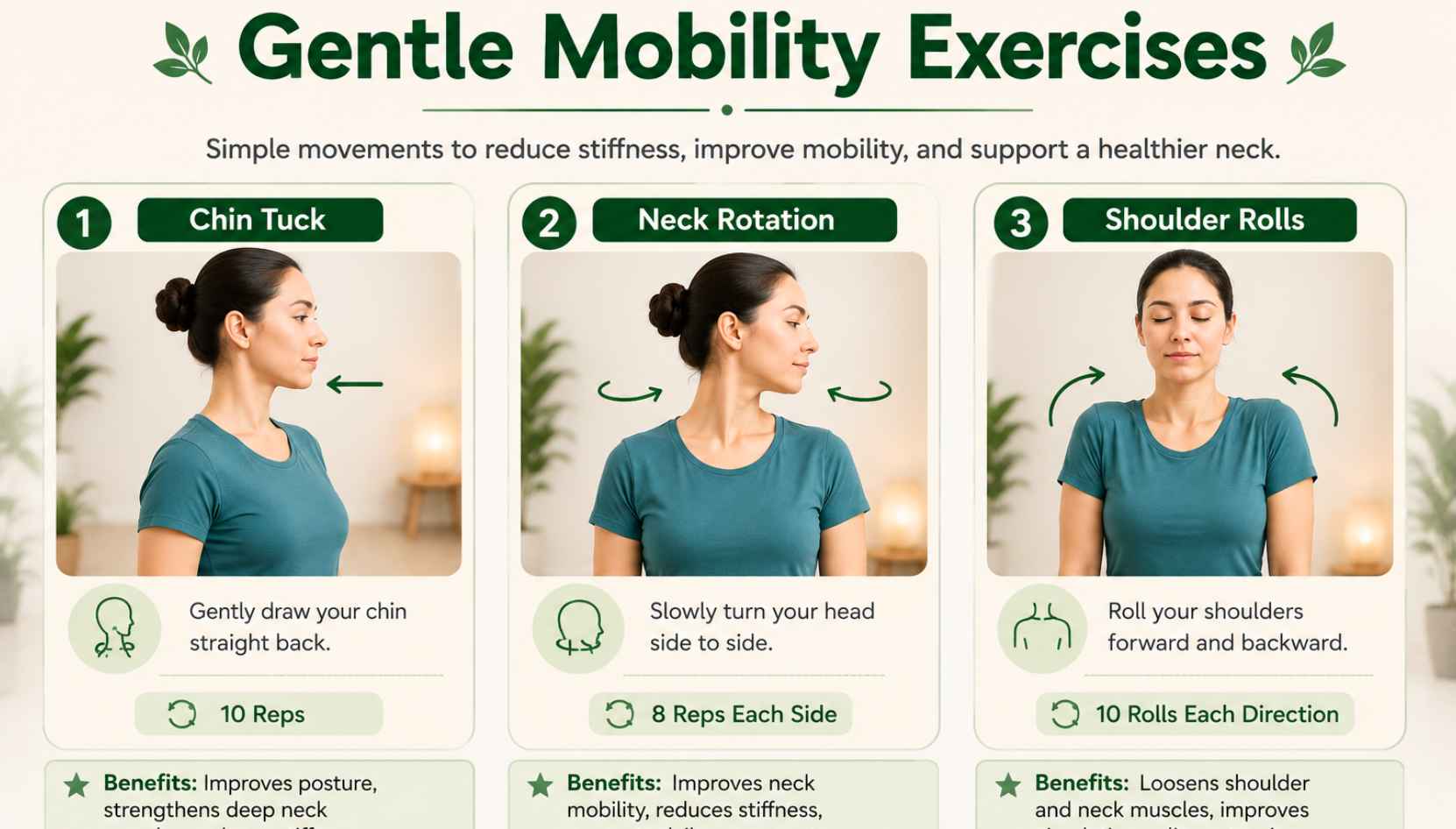
Gentle Mobility Exercises
When your neck feels stiff, gentle mobility exercises are often the best place to start. Rather than forcing a stretch, these movements gradually restore comfortable motion and prepare your neck for deeper stretching or strengthening exercises. Move slowly, stay within a pain-free range, and focus on smooth, controlled movements.
Chin Tuck
Chin tucks help activate the deep muscles that support your neck while encouraging better head alignment. They’re especially useful if cervical spondylosis is combined with forward head posture or long hours of desk work.
Learn how to perform this exercise correctly in our complete guide to Chin Tucks for Forward Head Posture.
Neck Rotation
Gentle neck rotations improve your ability to turn your head comfortably without placing unnecessary stress on stiff joints. Keep the movement slow and stop before you reach the point of pain.
Shoulder Rolls
Although they mainly target the shoulders, shoulder rolls also help loosen the muscles that support your neck. They’re an easy way to improve circulation and reduce tension before moving on to stretching exercises.
Why Mobility Comes First
Mobility exercises are designed to gently restore movement before asking your muscles to stretch or work harder. When your neck has been stiff for hours or days, beginning with slow, controlled movements helps the joints and surrounding muscles loosen up naturally. This often makes stretching feel more comfortable and allows strengthening exercises to be performed with better control. Think of mobility as the first step that prepares your neck for the rest of your routine, helping you move with greater confidence while reducing unnecessary strain.
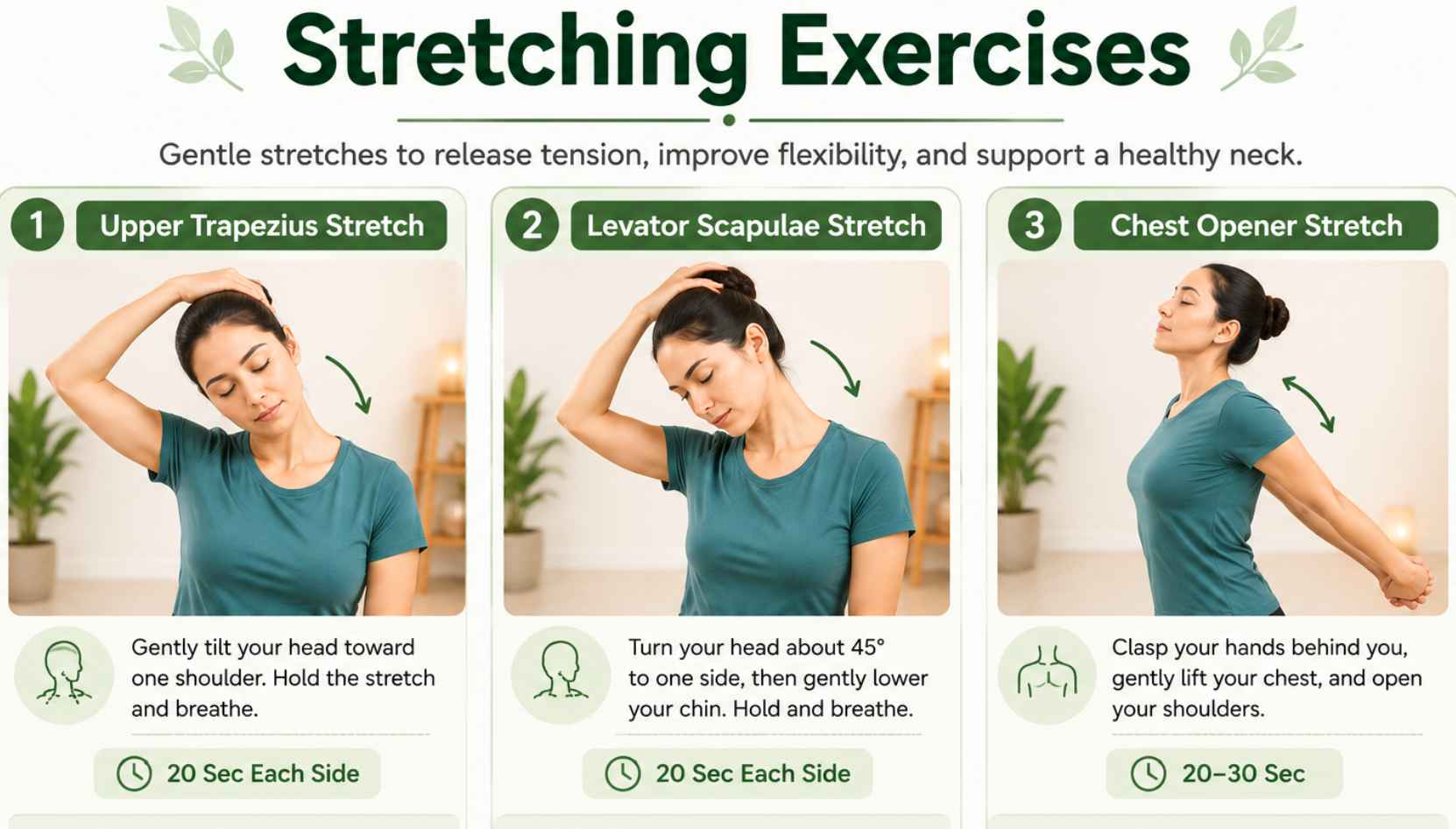
Stretching Exercises
Once your neck starts moving more comfortably, gentle stretching can help release muscles that have become tight from poor posture, daily activities, or cervical spondylosis. Unlike mobility exercises, stretching focuses on lengthening specific muscles to improve flexibility and reduce tension. These cervical spondylosis exercises are most effective when performed slowly without forcing your neck beyond a comfortable range.
Upper Trapezius Stretch
This stretch targets the muscles along the top of your shoulders and the sides of your neck, where tension often builds throughout the day. Regular practice can help improve comfort and make head movements feel less restricted.
Levator Scapulae Stretch
The levator scapulae muscle connects your neck to your shoulder blade and commonly becomes tight with prolonged sitting or poor posture. Stretching it gently may help reduce stiffness and make turning your head feel easier.
Chest Opener Stretch
Tight chest muscles can pull your shoulders forward and increase stress on your neck. Opening the front of your chest encourages better posture and helps reduce unnecessary tension around your neck and upper back.
Why Gentle Stretching Matters
A good stretch should create a gentle pulling sensation, never sharp pain. Stretching too aggressively can irritate already sensitive muscles and make your symptoms worse instead of better. Move slowly, breathe normally, and allow your flexibility to improve gradually with consistent practice rather than forcing a deeper stretch.
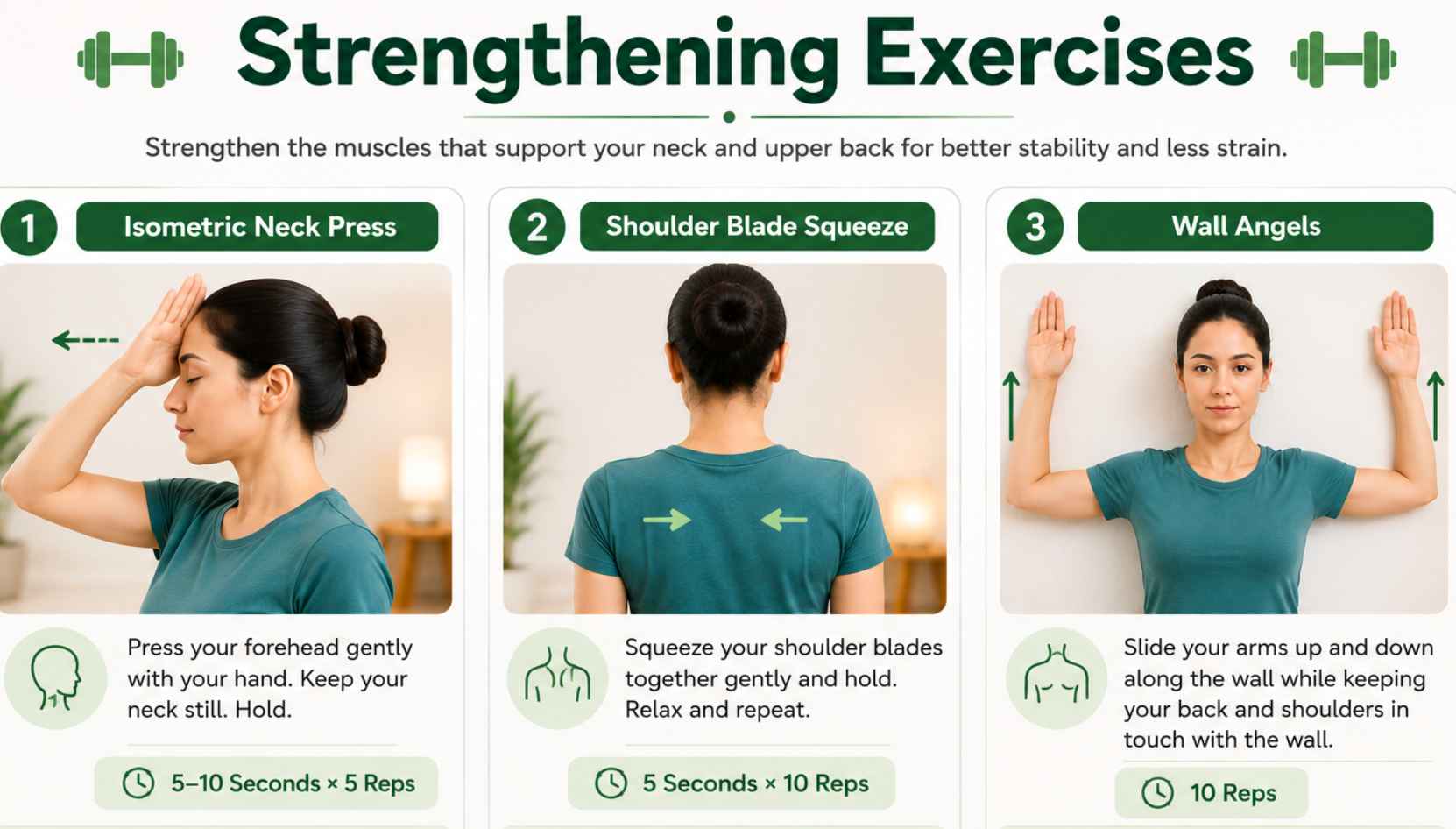
Strengthening Exercises
Once your neck is moving more comfortably, strengthening exercises help build the muscles that support your head, neck, and upper back. Stronger support muscles improve stability during everyday activities and may reduce unnecessary strain over time. These neck exercises for cervical spondylosis work best when performed with slow, controlled movements instead of forceful effort.
Isometric Neck Press
Unlike stretching exercises, isometric presses strengthen your neck without requiring large movements. They gently activate the supporting muscles while keeping your neck in a stable position, making them suitable for people with limited mobility.
Shoulder Blade Squeeze
The muscles between your shoulder blades play an important role in supporting healthy posture. Strengthening them can reduce the workload placed on your neck and make sitting, standing, and walking feel more comfortable.
Wall Angels
Wall Angels improve shoulder mobility while strengthening the muscles that help keep your head and upper back properly aligned. They also encourage better posture, which may reduce unnecessary stress on your neck during daily activities.
Want to improve upper back mobility and posture? Read our complete guide on Upper Spine Mobility Exercises for Better Posture.
Why Strength Matters
Strong muscles provide better support for your neck during everyday movements, helping reduce unnecessary strain over time. While strengthening exercises won’t cure cervical spondylosis, performing them consistently alongside mobility and stretching exercises can improve stability, posture, and overall neck function.
Daily Habits That Help Reduce Flare-Ups
Exercise is only part of recovery. Your everyday habits also affect how your neck feels. These simple changes can reduce daily strain and help prevent symptoms from returning.
- Use a supportive pillow for better neck alignment.
- Keep your phone closer to eye level.
- Hold books higher instead of bending your neck.
- Place your TV or monitor at eye level.
- Adjust your driving posture before long trips.
- Stay hydrated throughout the day.
- Move every 30–60 minutes instead of sitting continuously.
Small habits repeated every day often make a bigger difference than occasional exercise sessions. Over time, these simple changes can help keep your neck feeling more comfortable. If you spend most of your day sitting, our guide on Desk Stretches for Office Neck Tension includes simple movements you can do without leaving your workspace.
Common Mistakes That Slow Recovery
It’s common to feel motivated when you first start exercising, then gradually stop once your neck begins to feel a little better. Unfortunately, that’s also when many people notice the stiffness slowly returns. Small daily habits often have a bigger impact on recovery than occasional exercise sessions.
- Exercising only when pain begins.
- Stopping your routine as soon as you feel better.
- Wearing a cervical collar longer than advised.
- Frequently cracking or twisting your neck.
- Staying inactive for long periods.
- Ignoring your posture during daily activities.
Recovery usually comes from steady, consistent movement rather than occasional bursts of exercise. Building healthy habits into your daily routine can help you maintain the progress you make and reduce the chances of symptoms returning.
What Results Should You Expect?
Many people notice their neck feels a little looser after completing a few sessions. Simple movements, such as turning your head or looking over your shoulder, may begin to feel more comfortable. Within 1–2 weeks of regular practice, you may notice improved flexibility, less muscle tightness, and greater comfort during everyday activities. One thing people often notice first is that everyday movements feel easier, even before all of the stiffness disappears. Consistency is usually more important than exercising for longer periods.
After one month, if you’ve followed your routine consistently, these neck exercises for cervical spondylosis may start to feel like a natural part of your day rather than something you have to remember to do. Many people also notice smoother neck movement and fewer episodes of everyday stiffness.
Long-term, continuing your routine can help maintain better neck mobility, support healthier movement habits, and make daily activities more comfortable over time. Recovery doesn’t happen overnight, and results vary from person to person. Some people notice improvements within days, while others need several weeks of consistent practice. Focus on building a routine you can maintain rather than expecting immediate results.
When Home Exercise Isn’t Enough
Home exercises can help many people manage mild symptoms, but they aren’t the right solution for every situation. If you notice any of the following warning signs, it’s important to seek medical advice instead of relying on exercise alone.
- Pain spreading into your arm
- Numbness or tingling
- Weakness in your hand or arm
- Problems with balance
- Changes in bladder or bowel control
- Severe pain that continues to get worse
If you’re unsure whether it’s safe to exercise, speak with a qualified healthcare professional before continuing your routine.
FAQ
Can cervical spondylosis heal naturally?
Cervical spondylosis is a gradual age-related change in the spine, so it doesn’t completely heal on its own. However, many people find that regular exercise, better posture, and healthy daily habits help reduce discomfort and make everyday neck movements feel easier over time.
Which exercises should I avoid?
Avoid forceful neck twists, fast neck circles, heavy overhead lifting, or any movement that causes sharp pain. A gentle stretch is normal, but pain is a sign to stop and choose an exercise that’s more comfortable for your neck.
Is walking good for cervical spondylosis?
Yes. Walking is a low-impact activity that keeps your body moving without placing excessive stress on your neck. Many people find it works well alongside neck exercises for cervical spondylosis, helping them stay active and manage stiffness more comfortably.
Can I use heat before exercising?
Yes, if your muscles feel tight. A warm shower or heating pad for 10–15 minutes before exercising may help your neck feel more relaxed and make gentle movements easier. Avoid applying excessive heat or placing it directly on irritated skin.
Should I wear a cervical collar?
A cervical collar may be helpful for short-term use in certain situations, but it shouldn’t be worn for long periods unless your healthcare provider recommends it. Overusing a collar can weaken the muscles that naturally support your neck.
Can I exercise every day?
In most cases, yes. Gentle daily exercise is often more effective than long sessions performed only once or twice a week. Stay within a comfortable range, avoid pushing through pain, and let consistency—not intensity—be your goal.
Conclusion
One thing people often notice is that regular practice feels more rewarding than exercising only when symptoms flare up. Living with cervical spondylosis doesn’t mean giving up an active lifestyle. The right exercises for cervical spondylosis at home, combined with consistent daily habits, can gradually improve neck mobility and make everyday activities feel more comfortable. Small, consistent efforts are often more effective than occasional long exercise sessions, especially when they’re combined with good posture and regular movement throughout the day.
Start with the exercises that feel comfortable, follow your routine consistently, and let your progress build gradually. Pay attention to how your neck responds, adjust your routine when needed, and be patient with the process. If your symptoms continue to worsen or don’t improve despite regular exercise, consult a qualified healthcare professional for further evaluation.
📚 Additional Resources & Trusted References
For readers who want to learn more about cervical spondylosis, neck pain, posture, and safe home exercises, the following evidence-based resources provide reliable medical information and practical guidance.
- Cleveland Clinic – Cervical Spondylosis (Neck Arthritis)
- NHS – Neck Pain and Stiff Neck
- ChoosePT – Physical Therapy Guide to Neck Pain
- MedlinePlus – Neck Injuries and Disorders
- Spine-health – Cervical Spondylosis Overview
Medical Disclaimer: This content is for informational purposes only. Always consult a qualified healthcare professional for personalized medical advice or treatment.