
Does your lower back feel tight the moment you get out of bed? Overnight inactivity, sleeping position, and tight muscles leave your back feeling stiff before your day even begins. Fortunately, morning stretches for lower back stiffness help ease tension, improve flexibility, and prepare your body for everyday activities. In this guide, you’ll discover simple, beginner-friendly stretches and a quick routine that helps you start your morning feeling looser and more confident.

Why Your Lower Back Feels Stiff in the Morning
Waking up with a stiff lower back is common, especially after spending several hours in the same sleeping position. Overnight, your muscles and joints stay relatively inactive, which can leave your back feeling tight when you first get out of bed. Tight hips, reduced flexibility, poor sleeping posture, or an unsupportive mattress can also place extra stress on your lower back, making the stiffness more noticeable.
The good news is that this tightness often improves once your body starts moving. A few morning back stretches help warm up your muscles, improve flexibility, and restore your natural range of motion, making everyday activities feel easier. If discomfort continues after you’ve been up for a while, or you want a more complete routine to reduce everyday back pain, continue with our guide on Yoga for Lower Back Pain Relief.
Before You Start Stretching
Before you begin, remember that a light stretching sensation is normal, but sharp or increasing pain isn’t. Move slowly, breathe steadily, and never force a stretch beyond a range that feels natural. If you have a recent back injury, numbness, weakness, or persistent pain, speak with a qualified healthcare professional before starting a new stretching routine.
Best Morning Stretches for Lower Back Stiffness
Starting your day with a few simple stretches help loosen muscles that become tight overnight and prepare your back for everyday movement. Perform each stretch slowly, breathe naturally, and stop if you feel sharp or increasing pain. These stretches for stiff lower back work best when done in the order shown below.
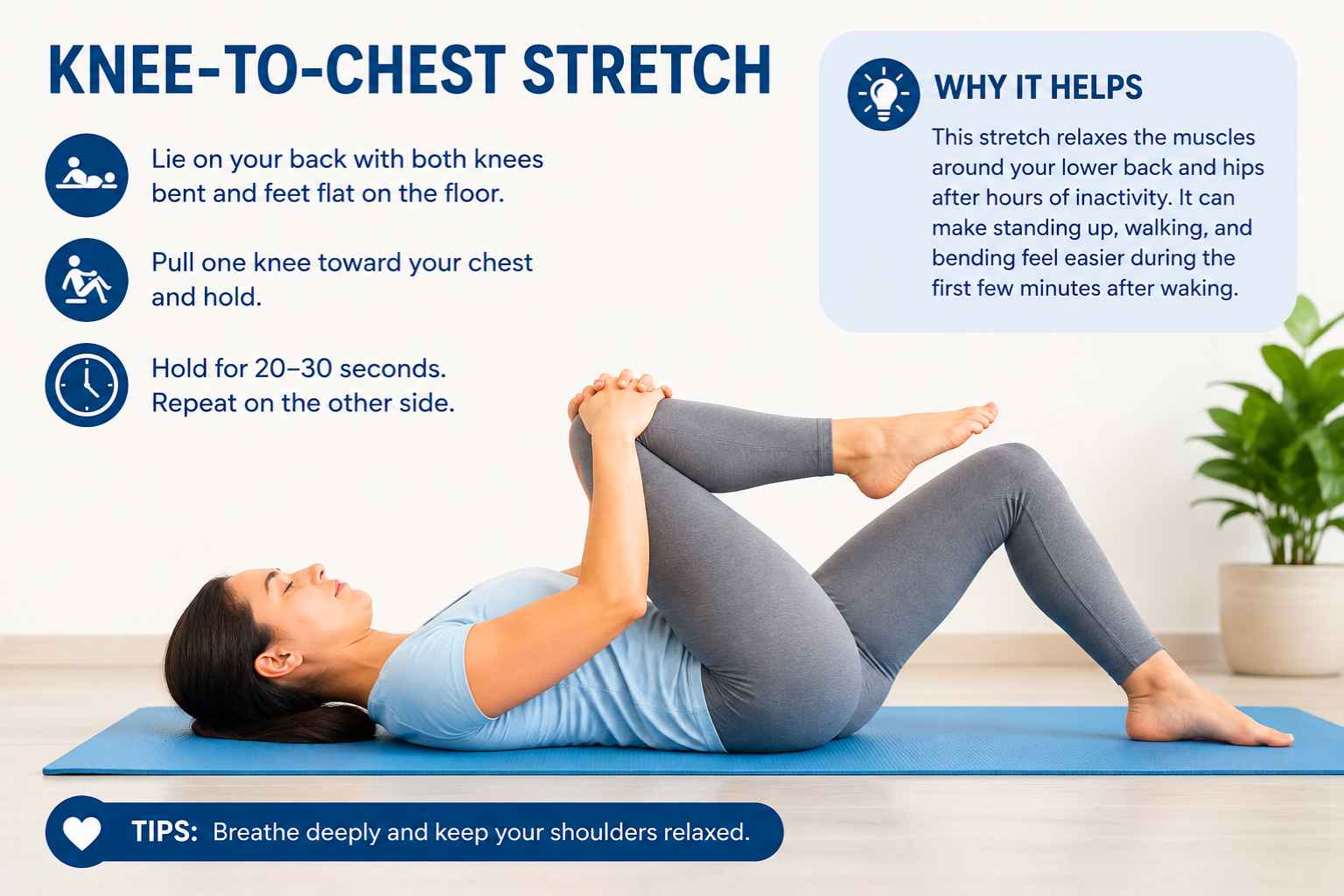
Knee-to-Chest Stretch
Lie comfortably on your back with both knees bent and your feet flat on the floor. Slowly lift one knee and gently pull it toward your chest using both hands. Keep your shoulders relaxed and the opposite foot resting on the floor. Hold the position for 20–30 seconds, then lower your leg slowly and repeat on the other side.
Why It Helps
This stretch relaxes the muscles around your lower back and hips after hours of inactivity. It can make standing up, walking, and bending feel easier during the first few minutes after waking.
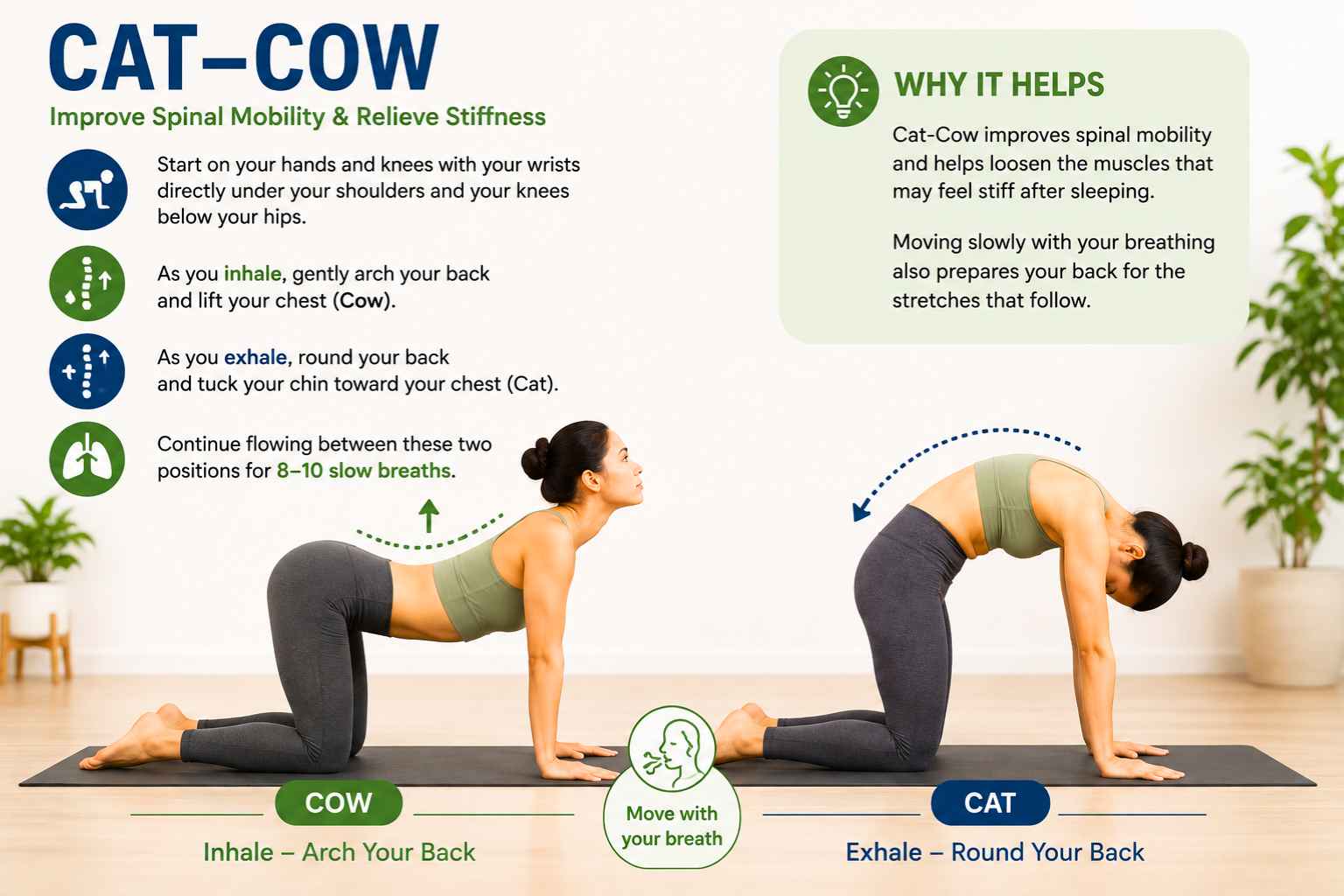
Cat-Cow
Start on your hands and knees with your wrists directly under your shoulders and your knees below your hips. As you inhale, gently arch your back and lift your chest. As you exhale, round your back and tuck your chin toward your chest. Continue flowing between these two positions for 8–10 slow breaths.
Why It Helps
Cat-Cow improves spinal mobility and helps loosen the muscles that may feel stiff after sleeping. Moving slowly with your breathing also prepares your back for the stretches that follow.
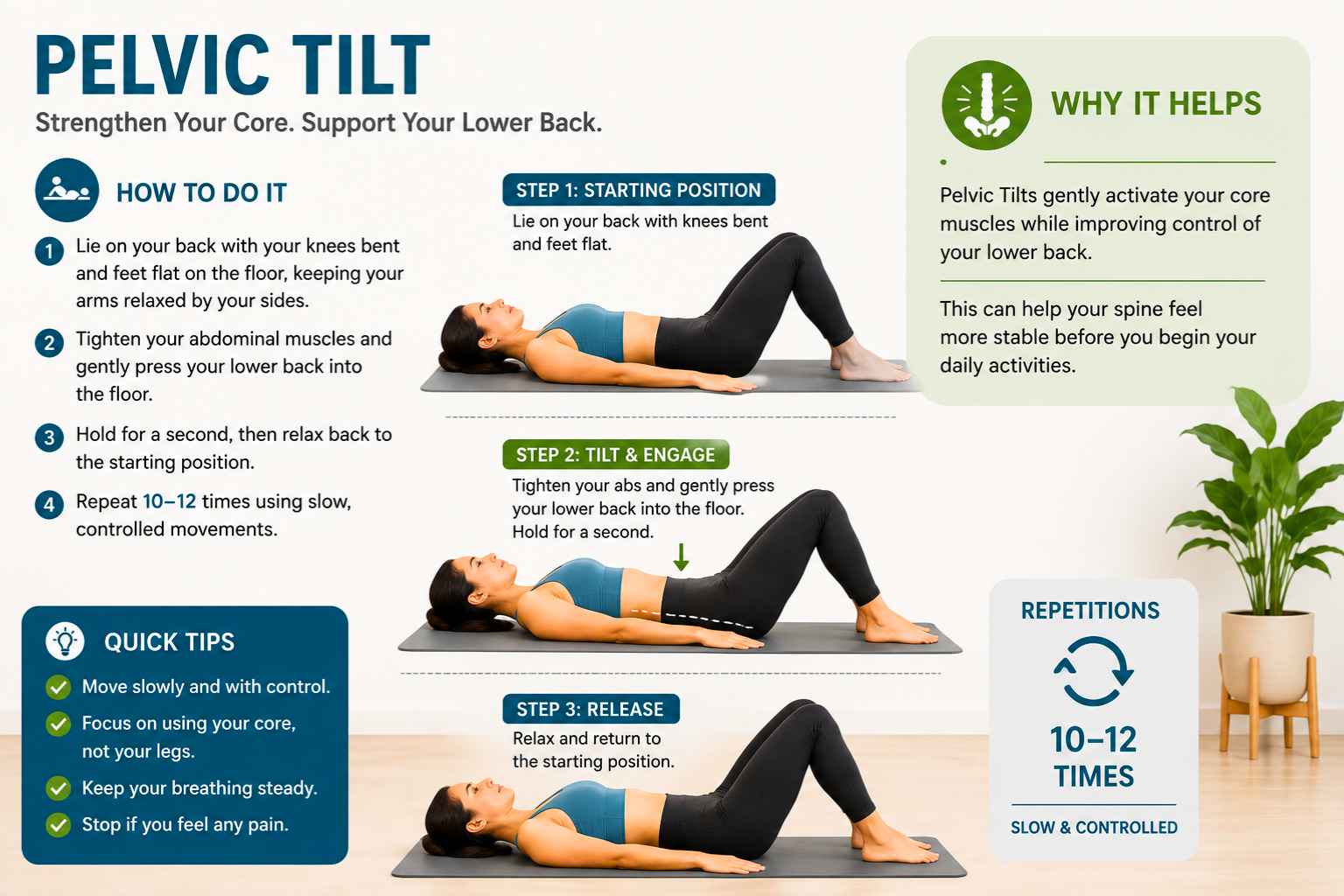
Pelvic Tilt
Lie on your back with your knees bent and feet flat on the floor, keeping your arms relaxed by your sides. Tighten your abdominal muscles and gently press your lower back into the floor. Hold for a second, then relax back to the starting position. Repeat 10–12 times using slow, controlled movements.
Why It Helps
Pelvic Tilts gently activate your core muscles while improving control of your lower back. This can help your spine feel more stable before you begin your daily activities.
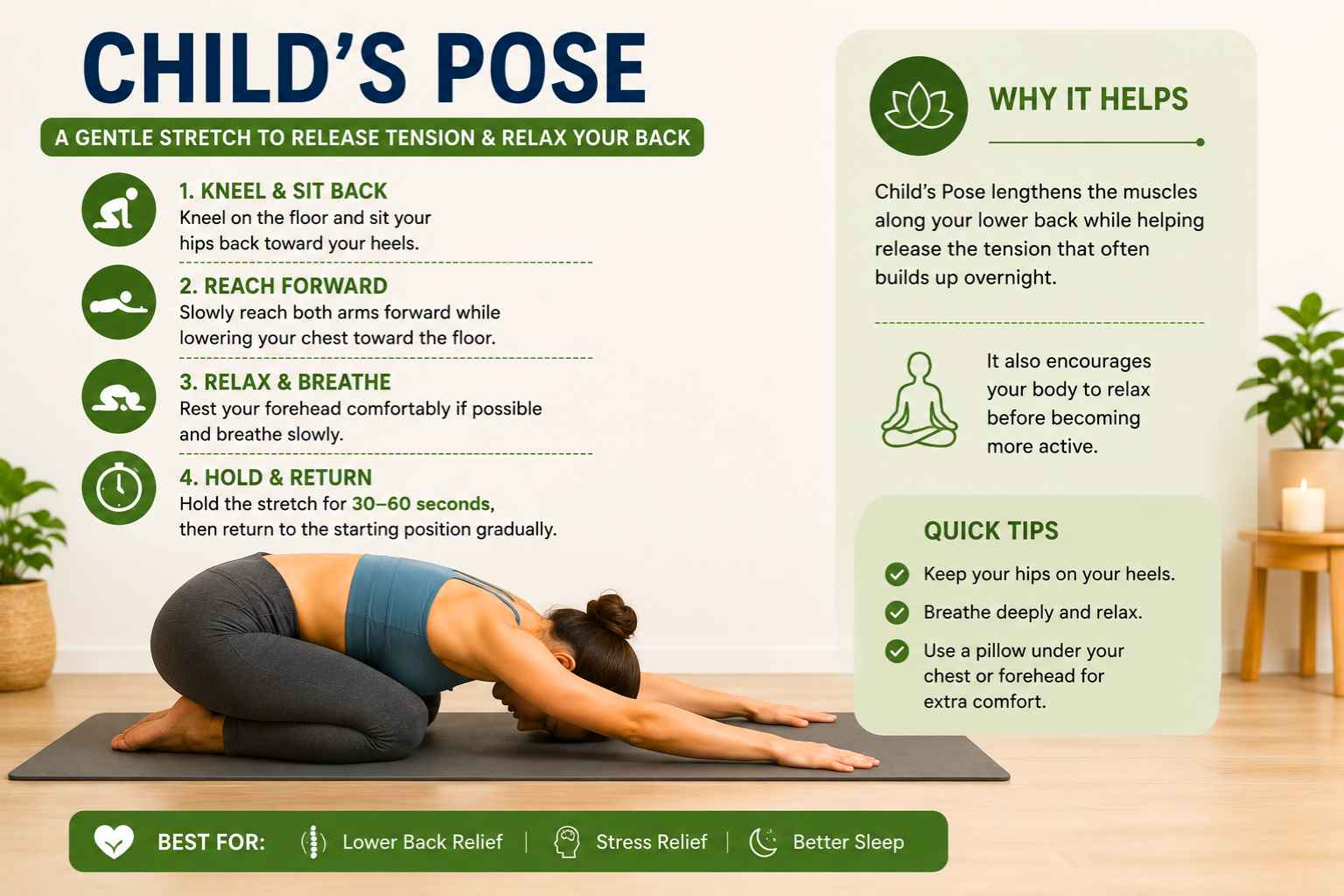
Child’s Pose
Kneel on the floor and sit your hips back toward your heels. Slowly reach both arms forward while lowering your chest toward the floor. Rest your forehead comfortably if possible and breathe slowly. Hold the stretch for 30–60 seconds, then return to the starting position gradually.
Why It Helps
Child’s Pose lengthens the muscles along your lower back while helping release the tension that often builds up overnight. It also encourages your body to relax before becoming more active.
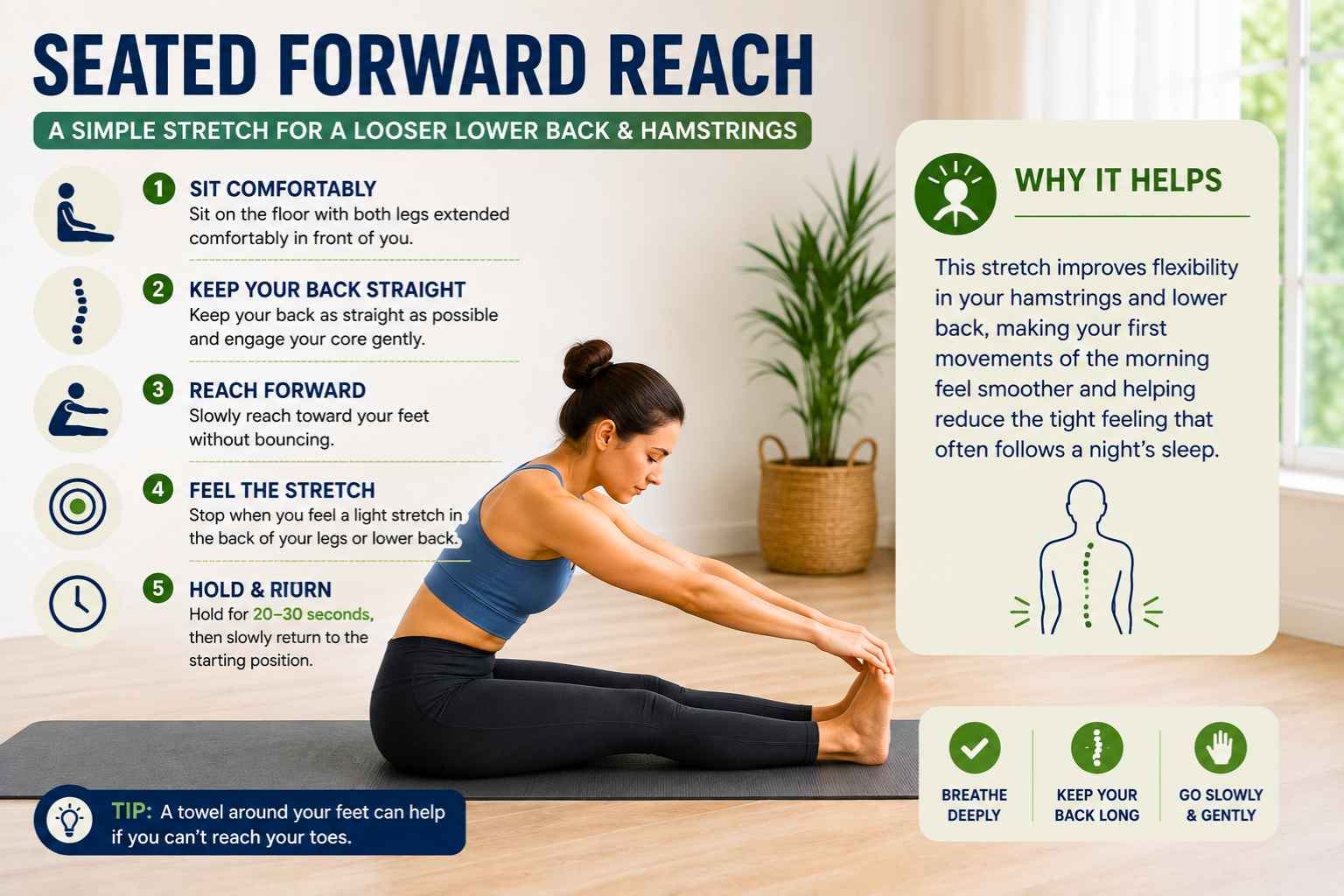
Seated Forward Reach
Sit on the floor with both legs extended comfortably in front of you. Keep your back as straight as possible and slowly reach toward your feet without bouncing. Stop when you feel a light stretch in the back of your legs or lower back. Hold for 20–30 seconds, then slowly return to the starting position.
Why It Helps
This stretch improves flexibility in your hamstrings and lower back, making your first movements of the morning feel smoother and helping reduce the tight feeling that often follows a night’s sleep.
Why These Stretches Work Better Together
Each stretch has a different purpose. Knee-to-Chest and Child’s Pose help release overnight tightness, Cat-Cow improves spinal mobility, Pelvic Tilt activates your core, and Seated Forward Reach improves flexibility. Performed in this order, they create a balanced morning routine that prepares your lower back for the day instead of placing too much stress on it all at once.
Your 5-Minute Morning Stretch Routine
You don’t need a long workout to ease morning stiffness. Spending just five minutes stretching after you wake up can help loosen tight muscles, improve flexibility, and prepare your back for the day ahead. Follow the routine below in order, move at a steady pace, and breathe naturally throughout each stretch.

Morning Routine
| Step | Stretch | Time / Repetitions |
|---|---|---|
| 1 | Knee-to-Chest Stretch | Hold 20–30 sec each side |
| 2 | Cat-Cow | 8–10 slow breaths |
| 3 | Pelvic Tilt | 10–12 repetitions |
| 4 | Child’s Pose | Hold 30–60 sec |
| 5 | Seated Forward Reach | Hold 20–30 sec |
Following these stretches in sequence helps your muscles warm up gradually instead of placing sudden stress on a stiff back. Making this short routine part of your mornings can make standing, walking, and bending feel easier as you begin your day.
Should You Stretch Before Getting Out of Bed?
Whether you begin stretching in bed or wait until you’re on the floor depends on how your back feels when you wake up. If getting out of bed is uncomfortable, a few lower back stretches in bed can help loosen tight muscles before you stand. Once your body feels less stiff, moving to the floor gives you more space to stretch with better control and a wider range of motion.
Bed stretches are a good starting point when morning stiffness is more noticeable, while floor stretches work well once your body has warmed up. Many people find that beginning with one or two simple stretches in bed, then finishing the rest of their routine on the floor, makes the transition into the day feel smoother and more natural.
Morning Habits That Help Prevent Stiffness
A few healthy morning habits can reduce stiffness before it starts. These small daily actions improve circulation, keep your muscles flexible, and help your back feel more comfortable throughout the day.
- Drink water to stay hydrated.
- Walk for 2–3 minutes.
- Avoid sitting immediately after waking.
- Improve your sleeping posture.
- Stay active throughout the day.
- Stretch gently every morning.
Building these habits into your daily routine can help keep your back moving comfortably. If you spend long hours sitting, read our Desk Stretches for Lower Back Pain from Sitting guide for simple exercises that support a healthier back.
Common Mistakes That Make Morning Stiffness Worse
A good stretching routine may not give the results you expect if a few everyday habits keep placing unnecessary stress on your back. One thing many people overlook is that what you do during the first few minutes after waking up can have just as much impact as the stretches themselves, especially when trying to manage morning lower back pain relief.
Avoid these common mistakes:
- Getting out of bed too quickly without letting your muscles wake up.
- Skipping your morning stretching routine on busy days.
- Stretching too aggressively instead of moving with control.
- Sitting or lying down for long periods immediately after stretching.
- Ignoring stiffness that becomes more frequent or continues to worsen.
Small, consistent habits often make the biggest difference. Taking a few extra minutes to move gradually each morning can help your back feel looser and make your routine more effective over time.
When Morning Stiffness Could Mean Something More Serious
Morning stiffness often improves within a few minutes after you start moving. However, if it lasts for more than an hour, becomes progressively worse, or is accompanied by pain that travels into your leg, numbness, weakness, fever, or follows a recent injury, it may indicate an underlying condition that requires professional medical attention rather than stretching alone.
It’s easy to assume that every type of morning back pain will improve with exercise, but that’s not always the case. If pain continues despite regular stretching or begins to radiate down one leg, sciatica could be contributing to your symptoms. If you’d like to learn more about this condition, explore our guide on Yoga Exercises for Sciatica Pain Relief at Home.
FAQ
Is it normal for my lower back to feel stiff every morning?
Yes. Mild morning stiffness is common, especially after sleeping in the same position for several hours. In many cases, it improves once your muscles and joints begin moving again. If the stiffness lasts longer than an hour or becomes more frequent, it’s a good idea to seek medical advice.
Should I stretch before getting out of bed?
If standing up feels uncomfortable, a few lower back stretches in bed can supports loosen tight muscles before you get up. Once your muscles begin to loosen, you can continue with floor stretches to move through a wider range of motion more comfortably.
How long should a morning stretching routine take?
Most people don’t need a long workout. Spending just 5–10 minutes performing morning back stretches is often enough to reduce stiffness and prepare your body for everyday activities. A short routine performed consistently usually works better than occasional long sessions.
Can I do these stretches every day?
Yes. Daily stretching is generally safe when performed slowly and within a pain-free range. Regular practice supports reduce muscle tightness, improve mobility, and make it easier to start your day without feeling as stiff.
What if stretching makes my pain worse?
A light stretching sensation is normal, but sharp or increasing pain isn’t. Stop immediately if a stretch makes your symptoms worse or causes pain to spread into your leg. If the discomfort continues, seek advice from a qualified healthcare professional.
Which stretch is best for morning stiffness?
There’s no single stretch that’s best for everyone. Combining stretches for stiff lower back, such as Knee-to-Chest, Cat-Cow, Child’s Pose, and Pelvic Tilt, usually provides better results than relying on just one exercise.
Conclusion
Starting your day with a few morning stretches for lower back stiffness can make a noticeable difference in how your back feels throughout the day. You don’t need an intense workout—just a few minutes of consistent stretching can ease tight muscles, support better mobility, and supports you move with greater confidence after waking up.
Listen to your body, progress at a comfortable pace, and stay consistent with your routine. Over time, these simple habits can support a healthier back, reduce morning stiffness, and make it easier to start each day feeling more comfortable.
Evidence-Based Resources
This article is based on current recommendations for back pain management, therapeutic stretching, and safe physical activity from internationally recognized healthcare organizations and trusted yoga education resources.
- Mayo Clinic – Back Pain: Symptoms & Treatment
- NIAMS – Back Pain Overview
- American Physical Therapy Association (APTA) – Movement & Physical Activity
- Yoga Journal – Yoga Practice & Beginner Guides
Disclaimer: Always perform stretches within a comfortable range and consult a qualified healthcare professional if pain is severe, persistent, or associated with numbness, weakness, or recent injury.