
If your lower back feels stiff after sitting, sore when you stand up, or tight when you wake up in the morning, you’re certainly not the only one. These everyday aches are common, especially if you spend long hours at a desk or don’t move enough during the day. Fortunately, yoga for lower back pain relief offers a simple way to improve flexibility, build strength, and support a healthier back without expensive equipment or complicated routines. In this guide, you’ll learn safe yoga poses, a simple daily routine, and practical tips to help you care for your back at home.

Why Lower Back Pain Happens and How Yoga Can Help
Lower back pain often develops gradually rather than overnight. Long hours of sitting, poor posture, weak core muscles, tight hips, and repetitive daily mobility can all place extra strain on your lower back. Over time, even simple activities like standing up, bending to tie your shoes, or walking for a while may start to feel uncomfortable.
One thing people often notice is that their back feels less stiff once they begin moving instead of staying in the same position. That’s where yoga for lower back pain relief can help. Yoga combines stretching, strengthening, and controlled breathing to improve flexibility, support your spine, and encourage healthier motions patterns. While it isn’t a cure for every type of back pain, regular practice may reduce stiffness, improve mobility, and make everyday activities feel easier.
Warning Before You Start Yoga
When your lower back is already stiff or sore, it’s natural to want immediate relief. However, moving too quickly or forcing a stretch can sometimes make your discomfort worse instead of better. Starting gently gives your muscles time to warm up and helps your body adjust to each pose more comfortably.
Before stepping onto your mat keep these points in mind:
- Practice yoga with slow, controlled spinal mobility.
- Avoid yoga after a serious back injury without medical advice.
- A light stretching sensation is normal but sharp pain isn’t.
- Never force a pose beyond your comfortable range.
If you experience severe pain, numbness, weakness in your leg, or symptoms that continue to worsen, stop exercising and speak with a qualified healthcare professional before starting or continuing a yoga routine.
Best Yoga Poses for Lower Back Pain Relief
When your lower back feels tight or uncomfortable, choosing the right yoga poses matters more than doing a long workout. A balanced routine should gently improve spinal mobility, stretch tight muscles, and strengthen the areas that support your spine. These yoga poses for lower back pain are beginner-friendly and can be adjusted to match your comfort level. Move slowly, breathe steadily, and never force a position that causes pain.
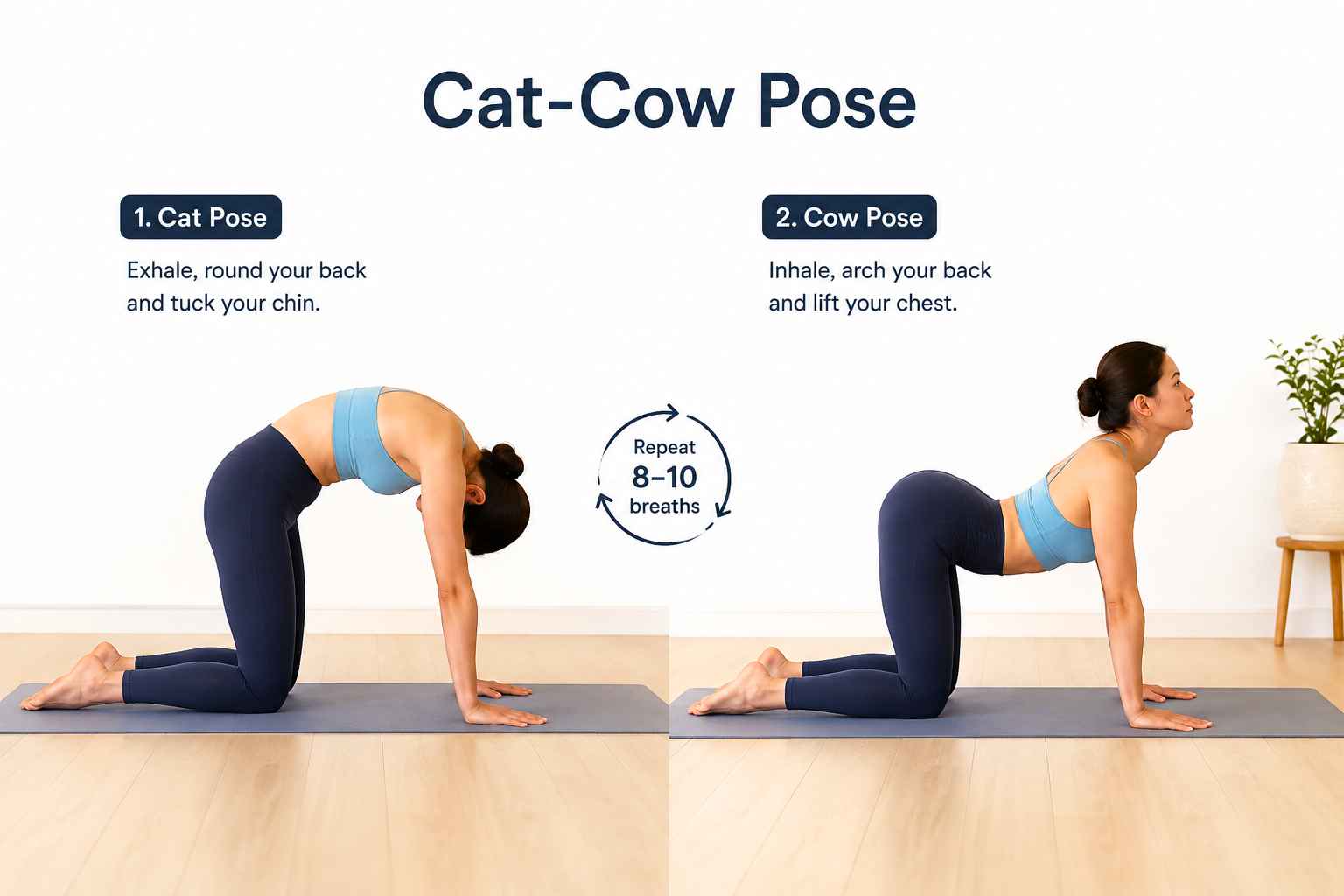
Cat-Cow Pose
Cat-Cow is a easy way to wake up your spine before moving into deeper stretches. The slow, flowing motion encourages each part of your back to move naturally, which can make stiffness feel less noticeable. Coordinate each poses with your breathing and continue for 8–10 slow breaths, allowing your body to settle into a comfortable rhythm.
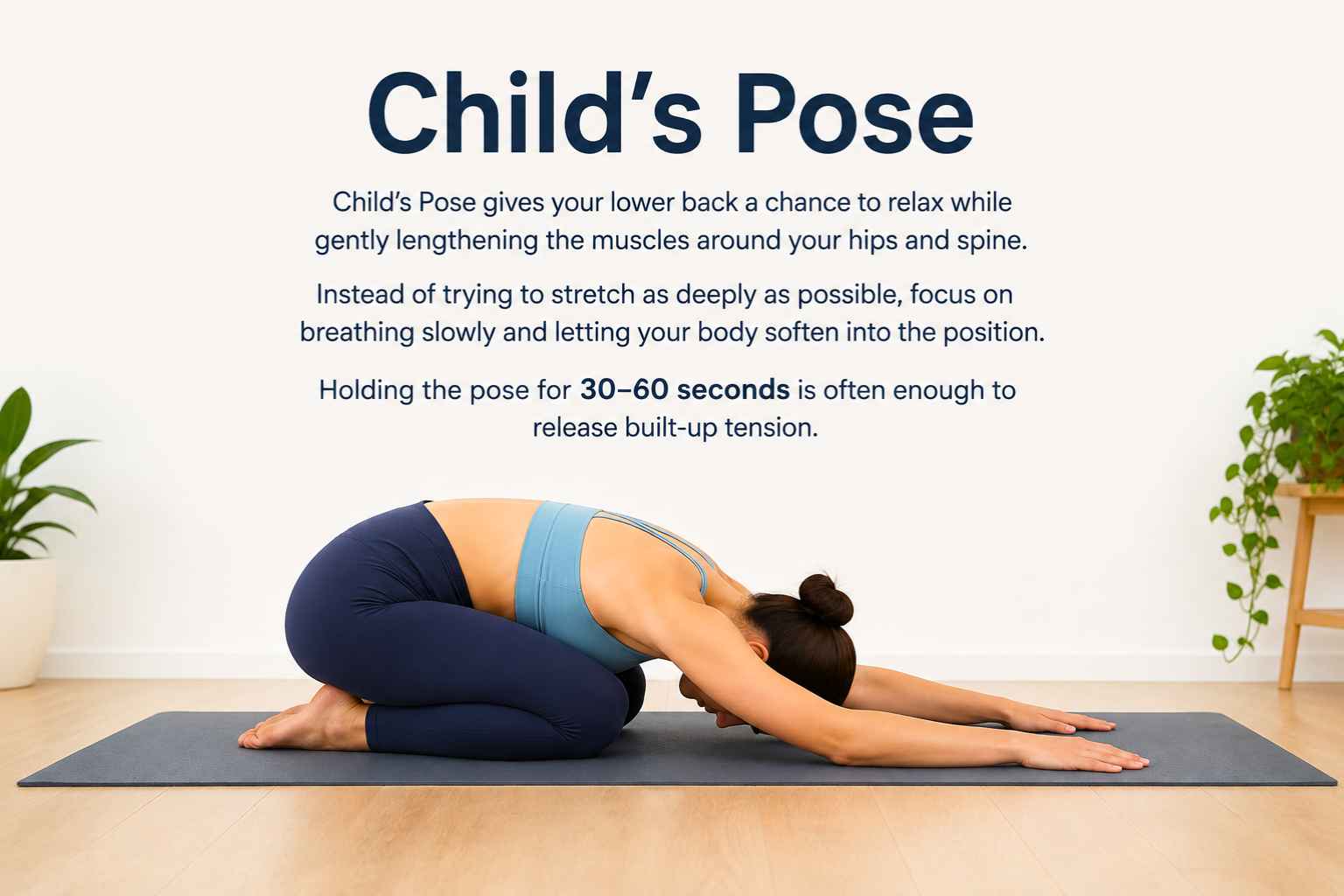
Child’s Pose
Child’s Pose gives your lower back a chance to relax while gently lengthening the muscles around your hips and spine. Instead of trying to stretch as deeply as possible, focus on breathing slowly and letting your body soften into the position. Holding the pose for 30–60 seconds is often enough to release built-up tension.
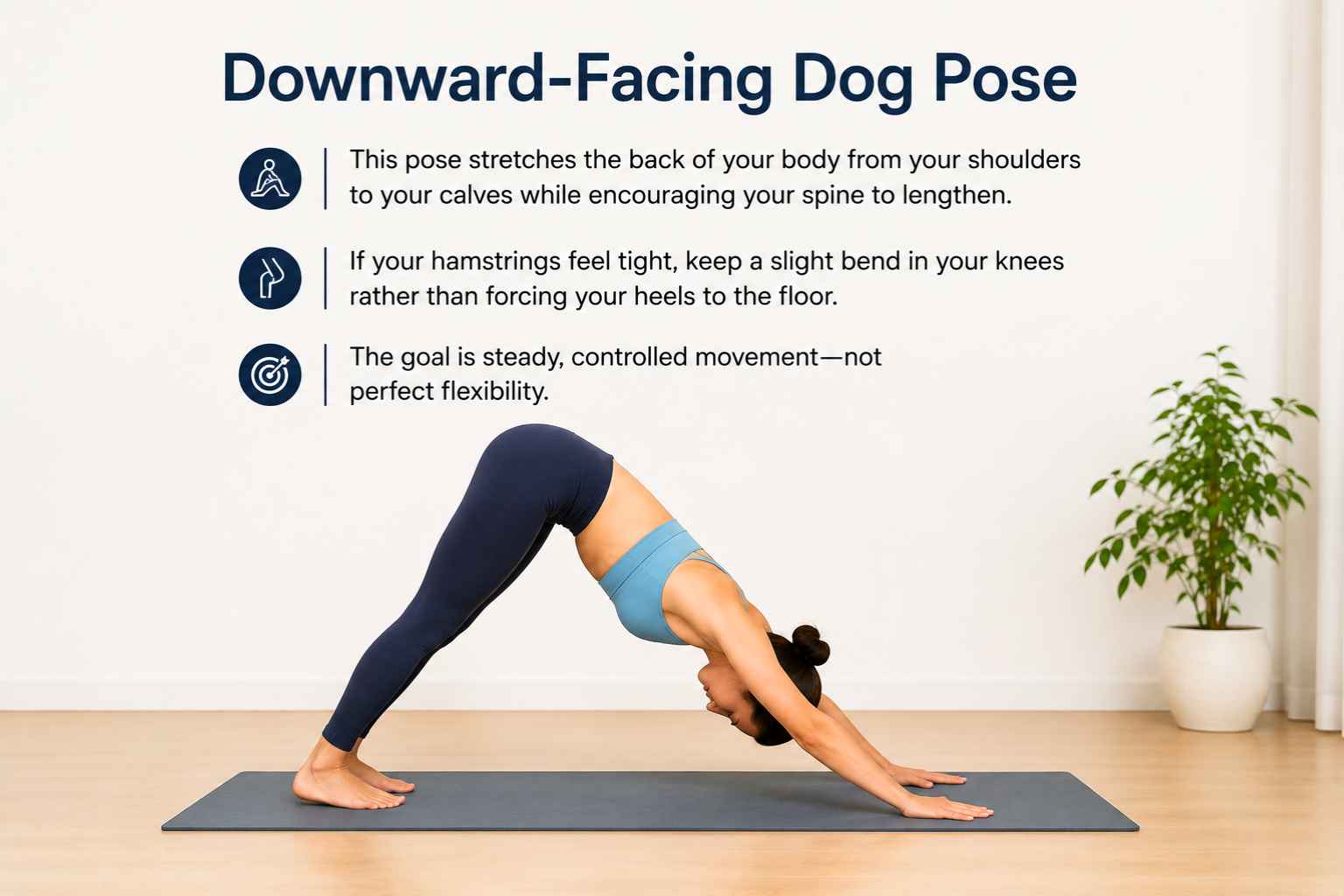
Downward-Facing Dog Pose
This pose stretches the back of your body from your shoulders to your calves while encouraging your spine to lengthen. If your hamstrings feel tight, keep a slight bend in your knees rather than forcing your heels to the floor. The goal is steady, controlled movement—not perfect flexibility.
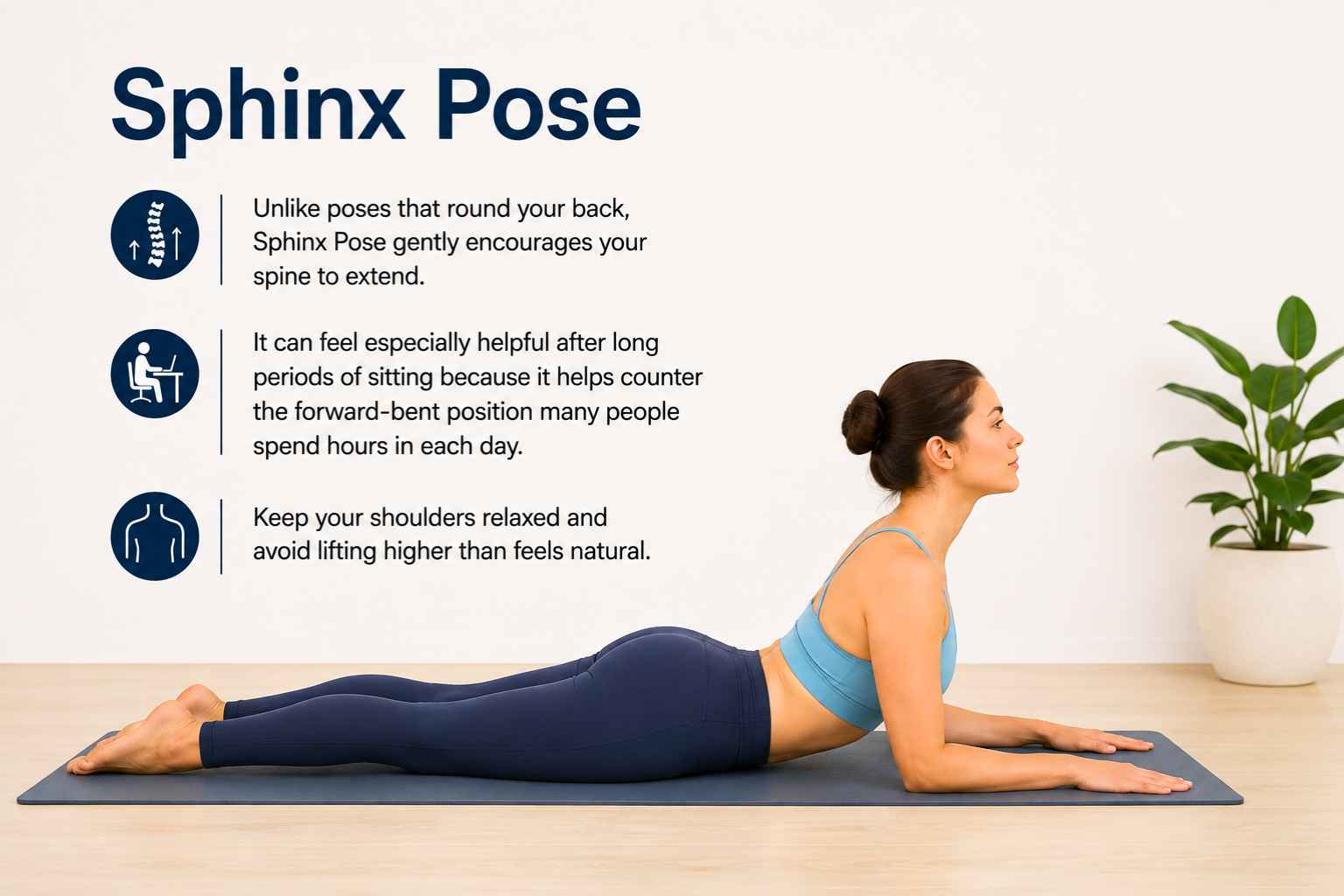
Sphinx Pose
Unlike poses that round your back, Sphinx Pose gently encourages your spine to extend. It can feel especially helpful after long periods of sitting because it helps counter the forward-bent position many people spend hours in each day. Keep your shoulders relaxed and avoid lifting higher than feels natural.
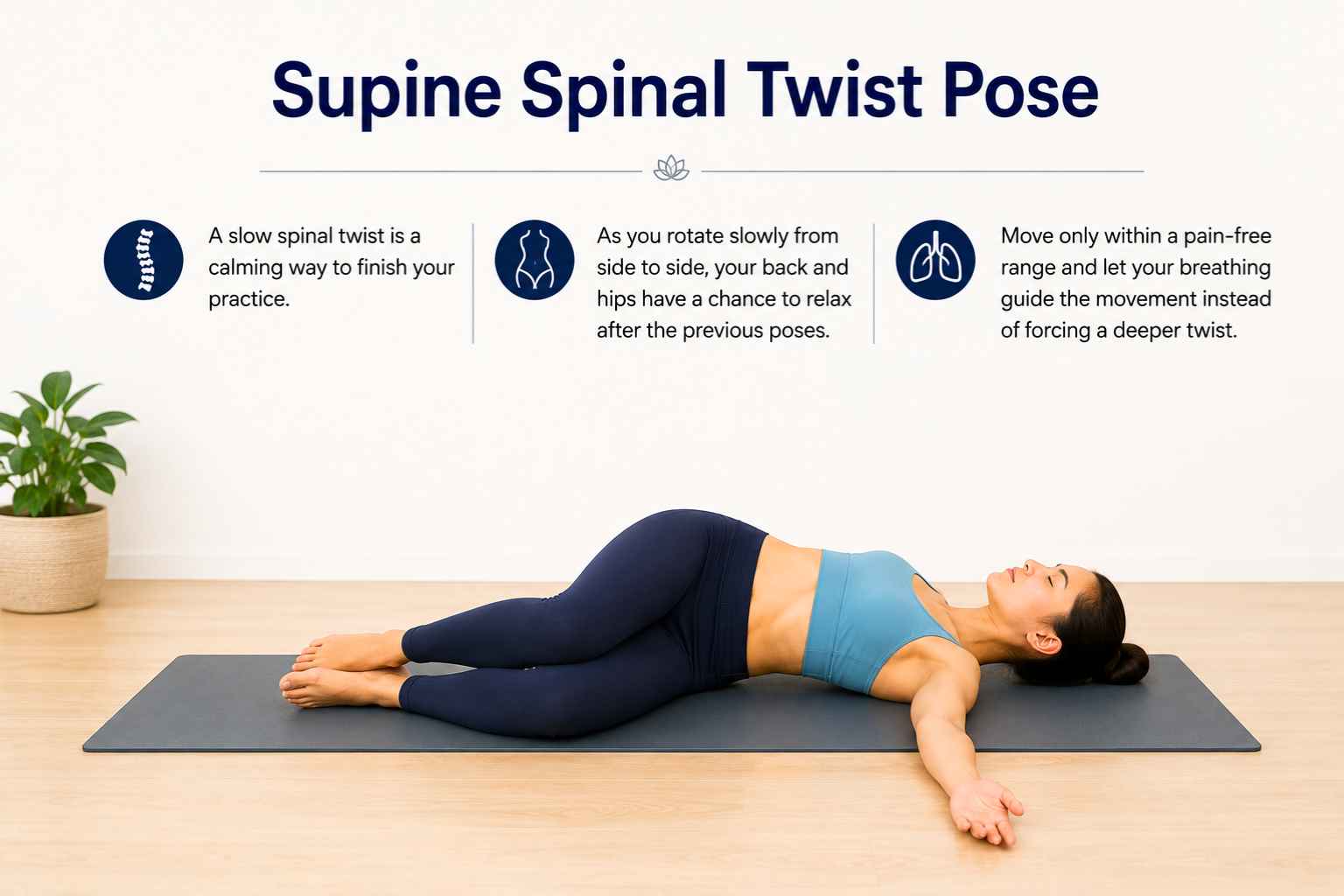
Supine Spinal Twist Pose
A slow spinal twist is a calming way to finish your practice. As you rotate slowly from side to side, your back and hips have a chance to relax after the previous poses. Move only within a pain-free range and let your breathing guide the movement instead of forcing a deeper twist.
Why These Poses Work Better Together
Each pose supports your back in a different way. Cat-Cow improves spinal mobility, Child’s Pose and Downward-Facing Dog help release tight muscles, Sphinx Pose encourages gentle extension, and Supine Spinal Twist promotes relaxation after movement. Practiced together, they create a balanced lower back pain yoga routine that addresses flexibility, mobility, and muscle support more effectively than relying on a single pose alone.
Create Your 10-Minute Daily Yoga Routine
You don’t need a long workout to support your lower back. A simple 10-minute routine practiced consistently is often more effective than exercising only when pain appears. Perform the poses in the following order and move at a slow, steady pace throughout the session.
Morning Routine
| Step | Yoga Pose | Time | Purpose |
|---|---|---|---|
| 1 | Cat-Cow | 8–10 breaths | Warm up the spine |
| 2 | Child’s Pose | 30–60 sec | Relax the lower back |
| 3 | Downward-Facing Dog | 20–30 sec ×2 | Stretch the posterior chain |
| 4 | Supine Spinal Twist | 20–30 sec/side | Release tension |
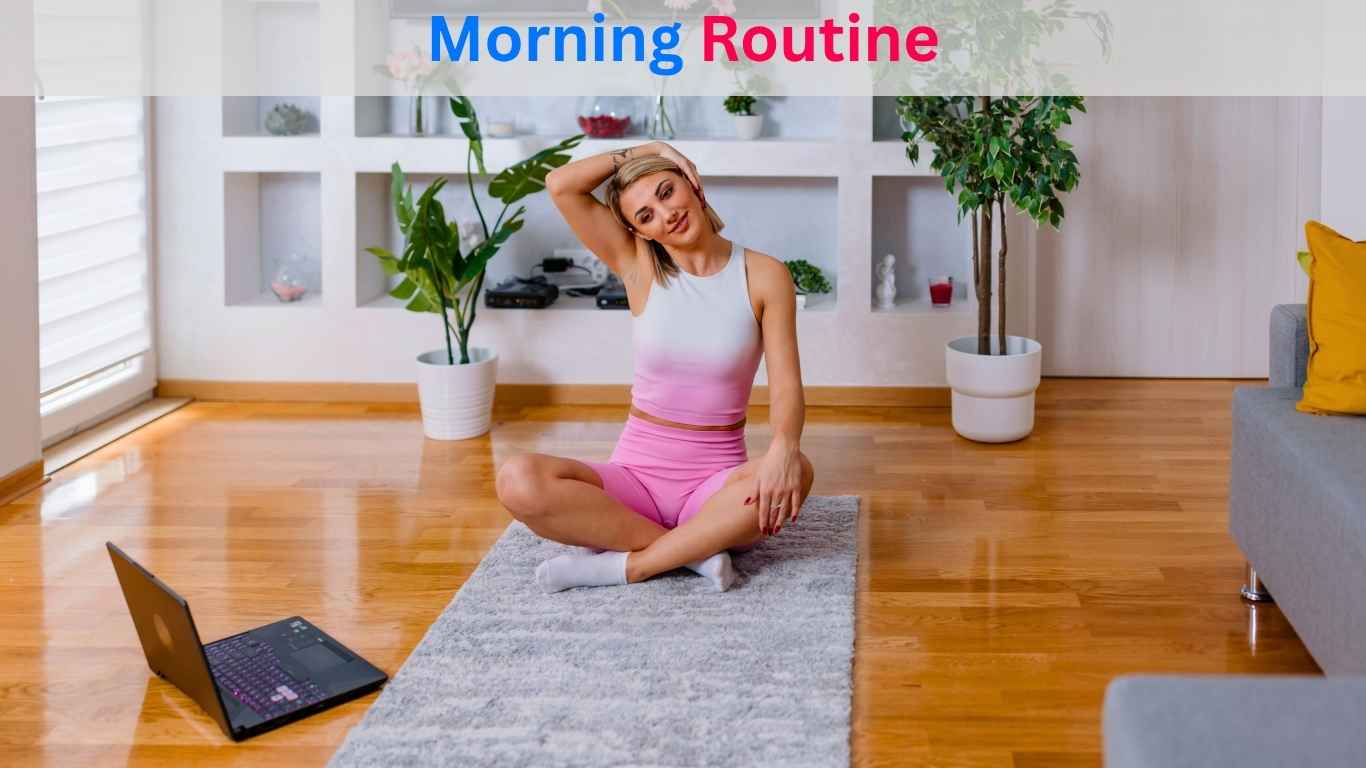
This sequence is designed to flow naturally from gentle spinal practice to stretching and relaxation. Following the poses in order often feels easier than choosing them randomly, especially if your lower back feels stiff before you begin.
Evening Routine
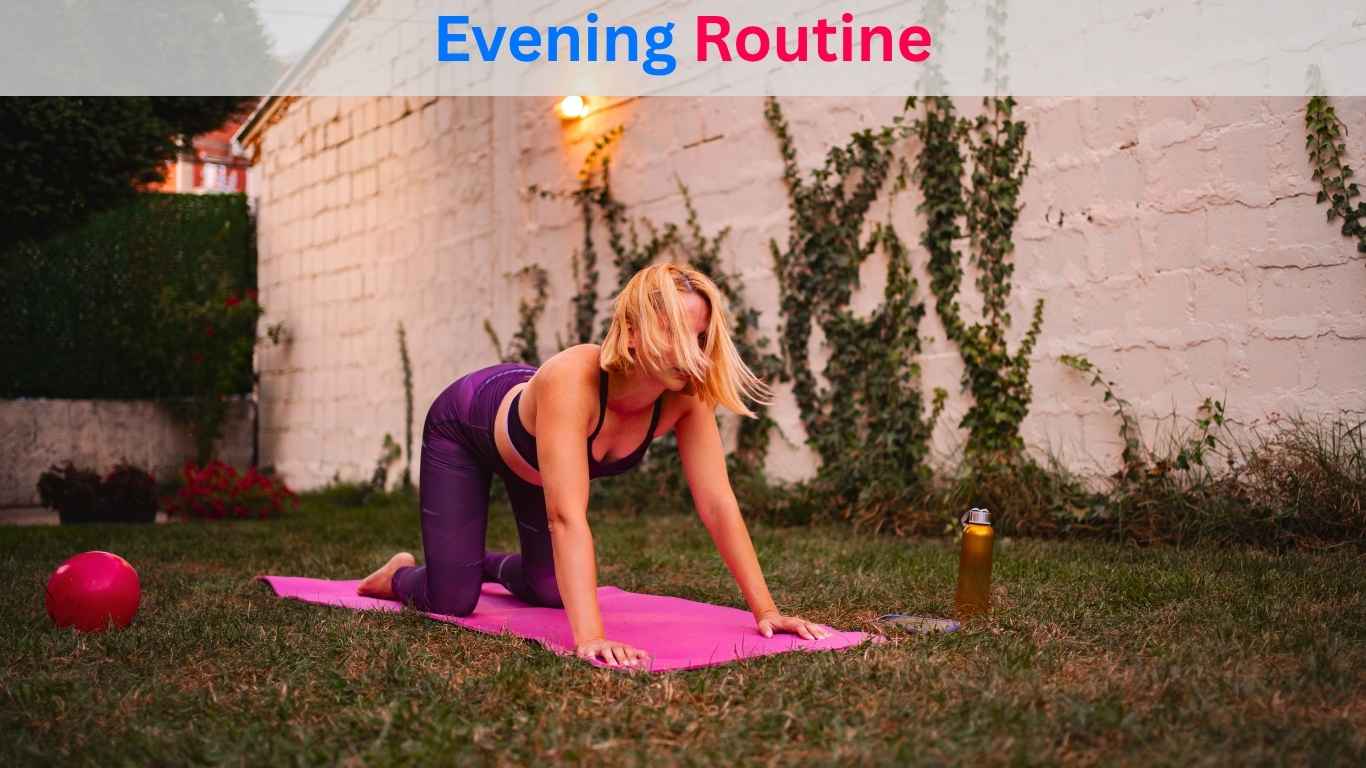
End your day with gentle yoga that helps release built-up tension from sitting, standing, or daily activities. This short routine focuses on relaxing your lower back, improving spinal mobility, and preparing your body for a more restful night’s rest. Move slowly, breathe deeply, and avoid forcing any position.
| Step | Yoga Pose | Time | Purpose |
|---|---|---|---|
| 1 | Sphinx Pose | Hold 20–30 sec | Gently extend the spine |
| 2 | Reclined Knee-to-Chest | Hold 20–30 sec each side | Release lower back tension |
| 3 | Happy Baby Pose | Hold 30–45 sec | Relax the hips and lower back |
| 4 | Legs-Up-the-Wall Pose | Hold 1–2 minutes | Reduce tension and promote relaxation |
Finishing your day with a few gentle yoga poses gives your muscles time to relax after hours of activity. Combining this routine with simple lower back pain stretches and consistent daily practice can help your back feel more relaxed, flexible, and ready for the next day.
Morning or Desk Yoga? Choose the Right Routine
The best routine depends on when your lower back feels the most uncomfortable. If you usually wake up with stiffness, a gentle morning yoga routine can help loosen tight muscles and prepare your body for the day ahead. On the other hand, if your back starts aching after hours of sitting at work, a few simple desk stretches are often the better choice to ease tension before it becomes more painful.
You don’t have to choose just one. Many people find that combining a short morning routine with a few movement breaks during the day helps keep their back feeling looser from morning until night.
➡ Learn the complete morning routine: Morning Stretches for Lower Back Stiffness
➡ Explore simple desk stretches: Desk Stretches for Lower Back Pain from Sitting
Is It Lower Back Pain or Sciatica?
Although lower back pain and sciatica can occur together, they don’t always cause the same symptoms. Lower back pain is usually felt around the lumbar spine, while sciatica often causes pain that travels through the buttock and down one leg. Some people also experience numbness, tingling, or muscle weakness when the sciatic nerve is affected.
One thing people often notice is that sciatica symptoms follow a path down the leg rather than staying in the lower back. Because of this, the exercises that help sciatica aren’t always the same as those used for lower back pain yoga. Choosing the right routine for your symptoms is an important first step.
➡ Learn the complete routine: Yoga Exercises for Sciatica Pain Relief at Home
Why Your Upper Back Matters Too
Your lower back doesn’t work in isolation. When your upper back becomes stiff or your shoulders begin to round forward, your lower back often has to compensate to keep your body balanced. Over time, this added strain can make everyday practice feel less effectively, even if the discomfort seems to start lower down.
One thing people often notice is that improving upper back mobility also helps their overall back flexibility. When your spine moves more freely as a connected system, your lower back doesn’t have to work as hard during everyday activities. Learn the complete routine: Yoga Stretches for Upper Back Pain and Tightness
Improve Your Spine Mobility for Long-Term Relief
One thing people often notice is that their back doesn’t just feel tight in one place. When one part of your spine moves less freely, the surrounding areas often have to work harder to make up for it. Over time, this can leave your entire back feeling less naturally during everyday movements.
Improving spinal mobility isn’t about becoming more flexible overnight. It’s about helping each part of your spine move more naturally so no single area has to carry extra strain. Combined with regular yoga, gentle mobility exercises can help your back move more comfortably over time.
➡ Read the complete guide: Spine Mobility Exercises for Better Back Movement
Common Mistakes That Make Back Pain Worse
It’s easy to focus on the right yoga poses, but everyday habits often have just as much influence on how your back feels. One thing people often overlook is that small mistakes repeated every day can slow progress, even when following beginner yoga for lower back pain consistently.
Avoid these common mistakes for the best results:
- Skipping your warm-up before starting yoga.
- Rushing through poses instead of moving with control.
- Holding your breath during each movement.
- Practicing only when your back starts to hurt.
- Staying in one position for too long after finishing your routine.
Recovery is usually built through consistent movement rather than occasional intense sessions. A few mindful adjustments to your daily routine can help you get more from your yoga practice while keeping unnecessary strain off your back.
When to See a Doctor
Many cases of lower back pain improve with gentle movement, regular yoga, and healthy daily habits. However, it’s common for people to assume every type of back pain will improve with exercise alone. In some cases, continuing to exercise despite worsening symptoms can delay proper treatment.
- Severe back pain that continues to worsen.
- Numbness or tingling in your legs or feet.
- Weakness that makes walking or standing difficult.
- Back pain following a serious injury or accident.
- Loss of bladder or bowel control.
If you notice any of these warning signs, stop your yoga routine and arrange an evaluation with a qualified healthcare professional as soon as possible.
FAQ
Is yoga good for lower back pain?
Yes. Gentle yoga can improve flexibility, strengthen the muscles that support your spine, and reduce everyday stiffness. Many people find that practicing lower back pain yoga consistently fits more easily into their routine than relying on occasional long workouts.
Which yoga pose is best for lower back pain?
There’s no single pose that’s best for everyone. Cat-Cow, Child’s Pose, Sphinx Pose, and Supine Spinal Twist are popular because they encourage smooth, controlled movement, enhance mobility, and help ease muscle tension without placing excessive stress on the lower back.
Can beginners do yoga for lower back pain?
Yes. Beginner yoga for lower back pain focuses on slow, controlled movements that are easy to learn. It’s common to feel slightly stiff at first, so move within a comfortable range and allow your flexibility to boost gradually over time.
How often should I practice yoga?
For most people, practicing for 10–15 minutes a day or at least three to five times a week is a practical goal. Small, consistent sessions often become easier to maintain than longer workouts performed only occasionally.
Should I stop if a pose hurts?
Yes. Yes. It’s normal to feel a light stretch, but not sharp or increasing pain. If a pose makes your symptoms worse, stop immediately, adjust the movement, or seek advice from a qualified healthcare professional.
Can yoga help sciatica?
Yoga may help some people by improving mobility and reducing muscle tension. However, the exercises that work well for general lower back discomfort aren’t always the best choice for sciatica, so it’s important to follow a routine designed for your specific symptoms.
Is walking better than yoga for lower back pain?
Walking and yoga work well together rather than replacing one another. Walking helps keep your body active, while lower back pain stretches and regular yoga increase flexibility, mobility, and the muscles that support your spine.
Conclusion
Living with lower back pain doesn’t mean you have to avoid movement. In fact, many people discover that the hardest part isn’t doing the exercises—it’s turning them into a consistent habit. Small improvements often come from showing up for your body a few minutes each day rather than waiting until the pain becomes difficult to ignore.
Practicing yoga for lower back pain relief isn’t about achieving perfect flexibility or mastering advanced poses. It’s about helping your body move with greater comfort, building strength over time, and supporting a healthier spine through regular, consistent movement. Stay patient, listen to your body, and celebrate steady progress—because lasting results are usually built one session at a time.
📚 References & Trusted Resources
This guide was developed using evidence-based recommendations and educational resources from trusted medical organizations and established yoga authorities.
- NHS – Back Pain
- American Academy of Orthopaedic Surgeons (AAOS) – Low Back Pain
- Mayo Clinic – Back Pain Overview
- Yoga Journal – Yoga Poses, Practice & Expert Guidance
Disclaimer: This article is for educational purposes only and is not a substitute for personalized medical advice from a qualified healthcare professional.