
Sciatica make simple activities like walking, sitting, or getting out of bed feel much more challenging than usual. The good news is that yoga exercises for sciatica pain relief at home help reduce muscle tightness, improve mobility, and support the tissues surrounding the sciatic nerve when performed gently and consistently. In this guide, you’ll learn beginner-friendly yoga poses, discover a simple home routine, and understand when yoga may help—and when it’s important to seek professional medical advice instead.
 What Is Sciatica and Why Does It Happen?
 What Is Sciatica and Why Does It Happen?
Sciatica develops when the sciatic nerve becomes irritated or compressed, most commonly because of a herniated disc, age-related spinal changes, or pressure from nearby muscles. Instead of remaining in the lower back, the discomfort often travels through the buttock and down one leg. Some people may also notice tingling, numbness, or reduced muscle strength on the affected side.
If you’d like a better understanding of general lower back discomfort before exploring sciatica, our complete guide on Yoga for Lower Back Pain Relief is a great place to start.
Is It Sciatica or Ordinary Lower Back Pain?
Although both conditions can cause lower back discomfort, they affect the body differently. Understanding the key differences makes it easier to choose the right self-care approach and avoid mistaking nerve-related symptoms for ordinary muscle tightness. Recognizing these signs is especially important before trying yoga for sciatica nerve pain.
| Sciatica | Ordinary Lower Back Pain |
|---|---|
| Pain travels down one leg | Pain stays mainly in the lower back |
| Tingling or pins-and-needles | Muscle stiffness or tightness |
| Numbness may occur | No nerve-related symptoms |
| Burning or shooting pain | Dull, aching discomfort |
| Often linked to sciatic nerve irritation | Usually related to muscles or ligaments |
Many people initially mistake sciatica for a simple back strain because the symptoms can seem similar at first. Identifying the correct cause early helps you choose safer exercises and recognize when a professional evaluation may be the better option.
Can Yoga Really Help Sciatica?
Yoga isn’t a cure for sciatica, but it may reduce muscle tightness, improve mobility, and encourage gentle movement around the affected area. Many people find gentle yoga for sciatica easier to practice when symptoms are mild and each pose is performed with control. If a movement increases leg pain, worsens numbness, or causes significant discomfort, stop immediately and seek professional advice.
Muscle stiffness without nerve symptoms? Explore Morning Stretches for Lower Back Stiffness.
Before You Start These Yoga Exercises
Before trying any yoga pose, remember that sciatica affects everyone differently. What feels gentle for one person may feel uncomfortable for another. Move within a pain-free range, take your time, and let your body guide each movement instead of trying to stretch as deeply as possible.
Keep these tips in mind:
- Move slowly and avoid sudden position changes.
- Never stretch into sharp or increasing pain.
- Breathe naturally throughout every pose.
- Use pillows or blocks if extra support feels helpful.
- Stop immediately if your symptoms become worse.
Taking a cautious approach often makes yoga feel safer and more manageable. Listening to your body’s signals is just as important as choosing the right poses, especially when nerve-related symptoms are present.
Best 6 Yoga Exercises for Sciatica Pain Relief at Home
Not every yoga pose is appropriate when you’re dealing with sciatica. Gentle, controlled movements are generally a safer choice because they place less stress on sensitive tissues. These sciatica stretches at home focus on improving mobility, easing muscle tension, and supporting comfortable daily activities without forcing your body beyond its limits.
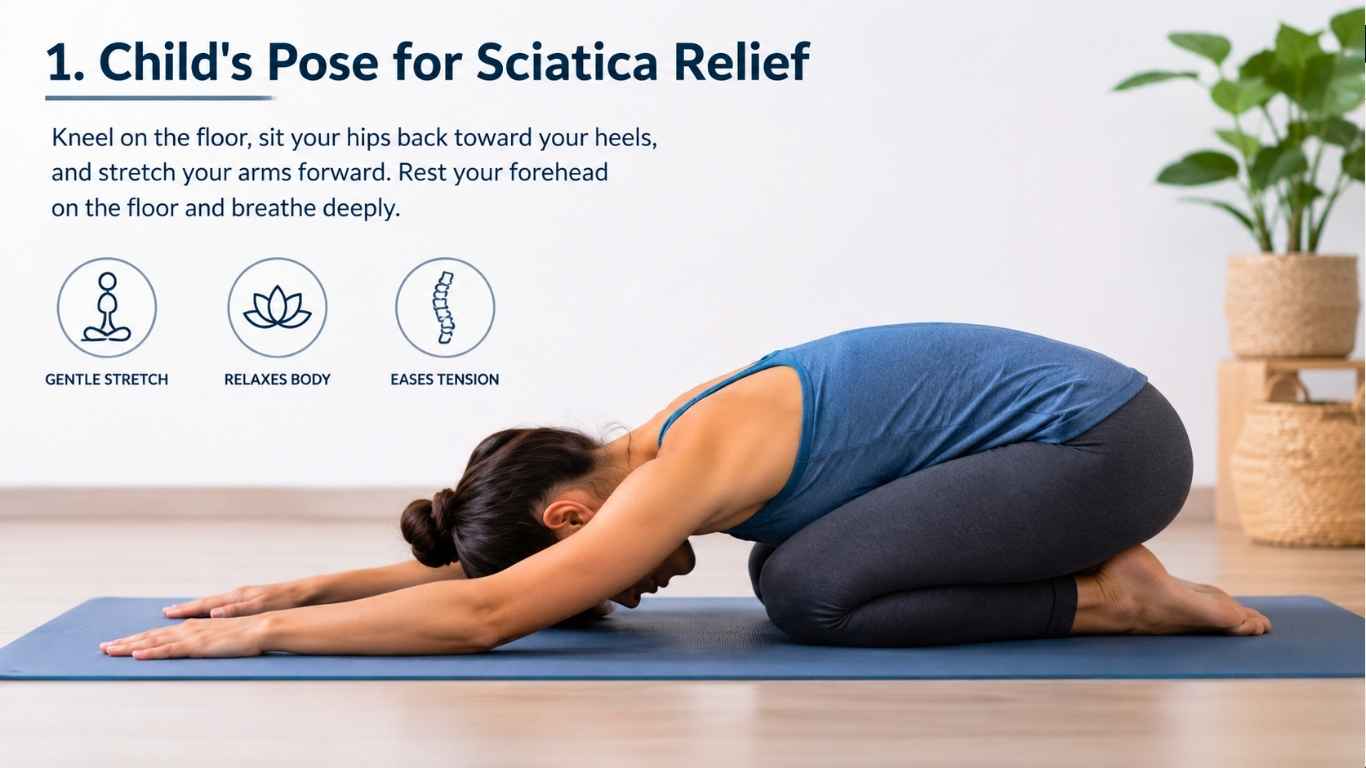
1. Child’s Pose for Sciatica Relief
Begin on your hands and knees, then slowly lower your hips toward your heels while reaching both arms forward. Rest your forehead on the floor or a cushion if needed. Stay in the position for 20–30 seconds, breathing slowly and allowing your body to relax with each exhale. Keep your shoulders soft and return to the starting position gradually.
Why This Pose Works
Child’s Pose gently lengthens the muscles surrounding the hips and lower back while encouraging your body to relax. Many yoga instructors use it as a starting pose because it allows people to settle into gentle movement before progressing to more active exercises, especially when stiffness is present.
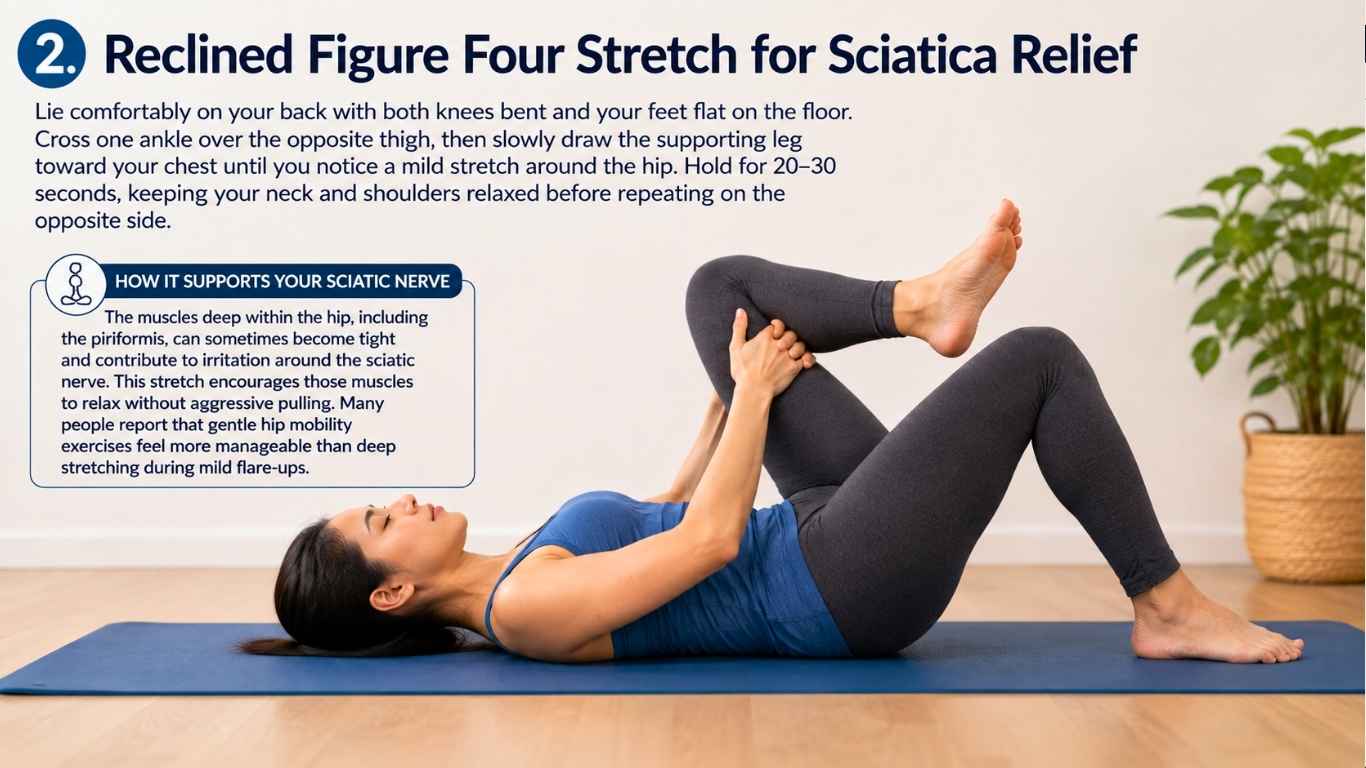
2. Reclined Figure Four Stretch for Sciatica Relief
Lie comfortably on your back with both knees bent and your feet flat on the floor. Cross one ankle over the opposite thigh, then slowly draw the supporting leg toward your chest until you notice a mild stretch around the hip. Hold for 20–30 seconds, keeping your neck and shoulders relaxed before repeating on the opposite side.
How It Supports Your Sciatic Nerve
The muscles deep within the hip, including the piriformis, can sometimes become tight and contribute to irritation around the sciatic nerve. This stretch encourages those muscles to relax without aggressive pulling. Many people report that gentle hip mobility exercises feel more manageable than deep stretching during mild flare-ups.
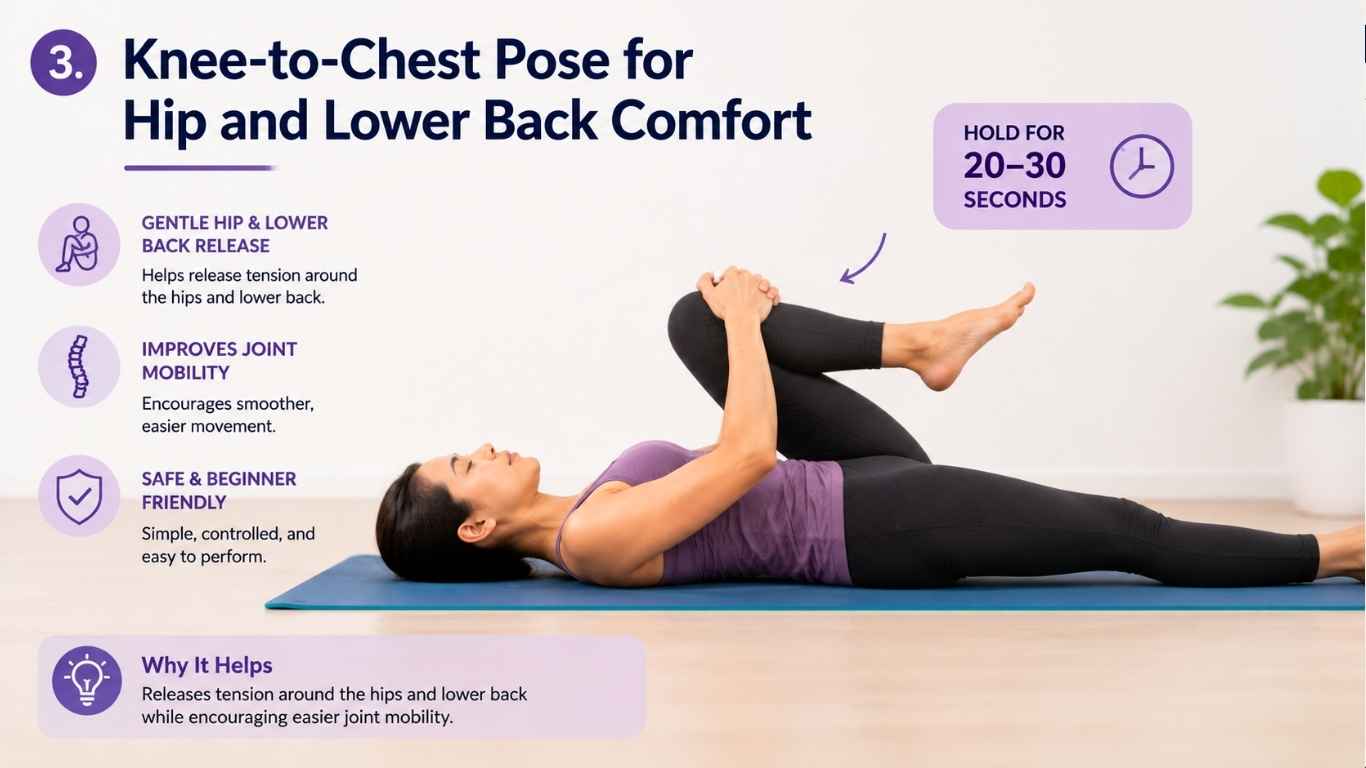
3. Knee-to-Chest Pose for Hip and Lower Back Comfort
Lie on your back with both knees bent and your feet flat on the floor. Slowly bring one knee toward your chest and hold it lightly with both hands. Keep the opposite leg relaxed and your shoulders resting on the floor. Hold for 20–30 seconds, then repeat on the other side.
Benefits
This pose releases tension around the hips and lower back while encouraging easier joint mobility. Physical therapists frequently introduce similar exercises during early rehabilitation because they are simple, controlled, and easy for most beginners to perform.
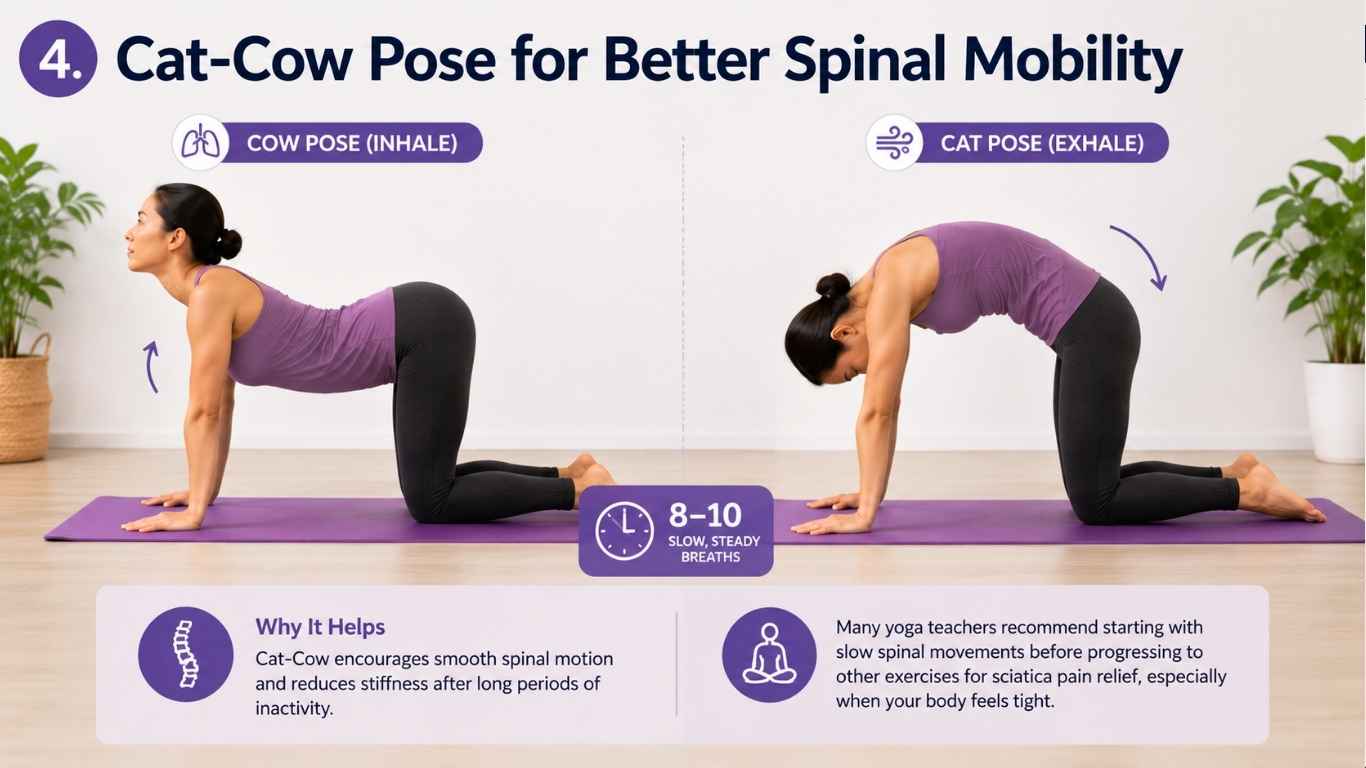
4. Cat-Cow Pose for Better Spinal Mobility
Position yourself on your hands and knees with your wrists beneath your shoulders and knees beneath your hips. As you inhale, lift your chest and gently arch your back. As you exhale, round your spine and lower your head. Continue for 8–10 slow, steady breaths.
Why It Helps
Cat-Cow encourages smooth spinal motion and reduces stiffness after long periods of inactivity. Many yoga teachers recommend starting with slow spinal movements before progressing to other exercises for sciatica pain relief, especially when your body feels tight.
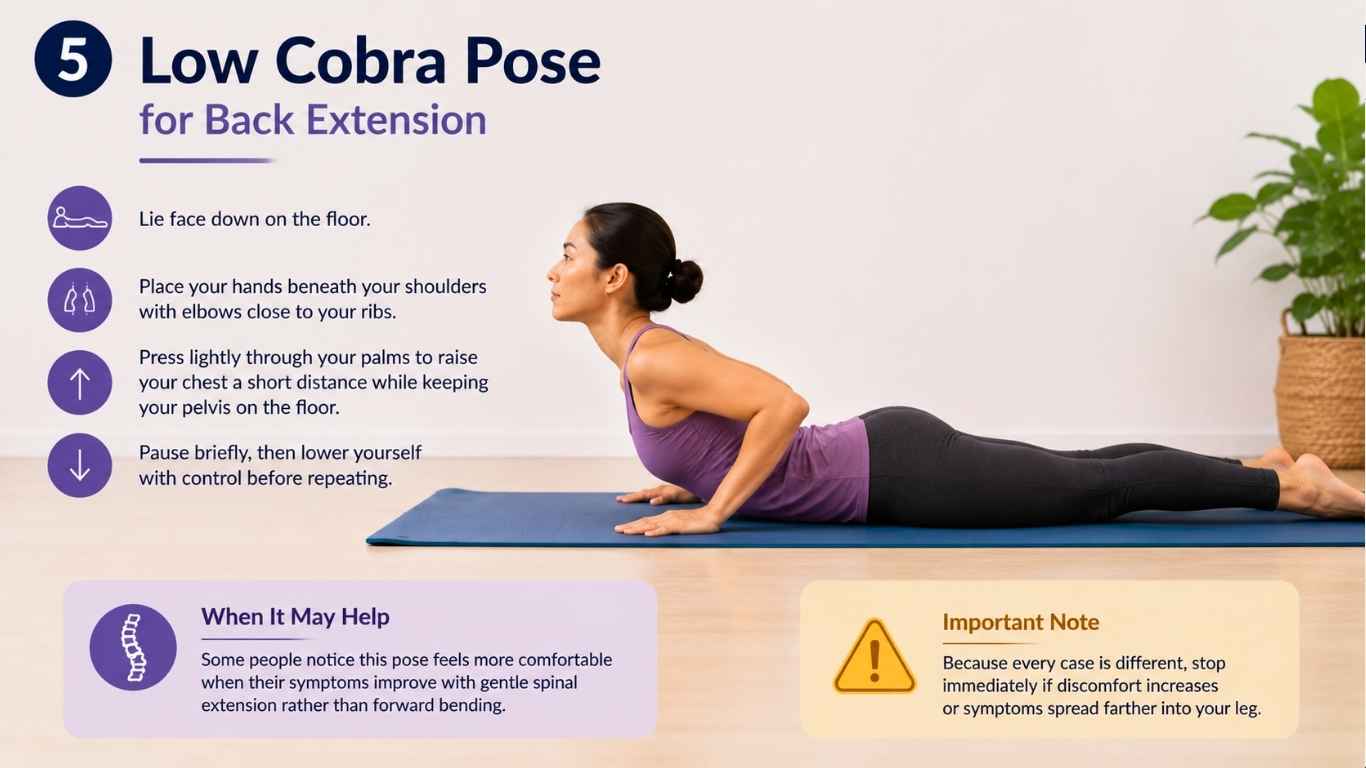
5. Low Cobra Pose for Back Extension
Lie face down with your hands beneath your shoulders and elbows close to your ribs. Press lightly through your palms to raise your chest a short distance while keeping your pelvis in contact with the floor. Pause briefly, then lower yourself with control before repeating.
When It May Help
Some people notice this pose feels more comfortable when their symptoms improve with gentle spinal extension rather than forward bending. Because every case is different, stop immediately if discomfort increases or symptoms spread farther into your leg.
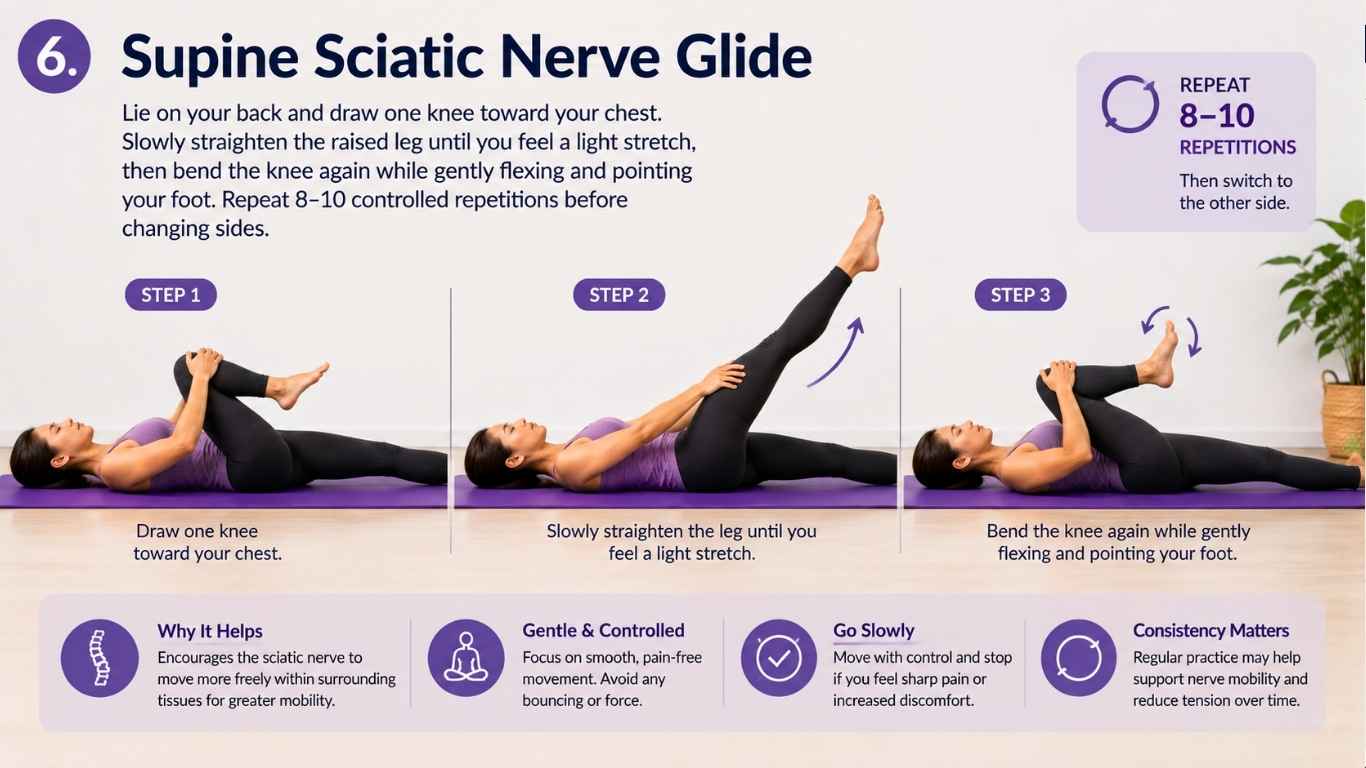
6. Supine Sciatic Nerve Glide
Lie on your back and draw one knee toward your chest. Slowly straighten the raised leg until you notice a light pulling sensation, then bend the knee again while gently flexing and pointing your foot. Repeat 8–10 controlled repetitions before changing sides.
Why Gentle Nerve Gliding Can Help
Unlike traditional stretching, nerve gliding focuses on encouraging the nerve to move more freely within surrounding tissues. Rehabilitation specialists sometimes include similar techniques in individualized recovery programs after assessing a person’s symptoms and movement tolerance.
Why These Poses Work Well Together
After reviewing guidance from reputable health resources and regularly practicing these poses myself, I’ve found that no single exercise makes the biggest difference on its own. Because I spend long hours working at a desk, I include this sequence in my routine several times each week. During the first couple of days, some movements felt unfamiliar and occasionally caused mild discomfort because my body wasn’t used to them. As I continued practicing with slow, controlled movements, those exercises became much easier to perform.
My experience won’t be the same as everyone else’s, but it reinforced an important point: consistency matters more than stretching deeply. These poses work on different muscles and movement patterns around the hips, spine, and lower back, rather than directly treating the sciatic nerve. If any exercise increases your symptoms instead of easing them, stop and seek guidance from a qualified healthcare professional.
Build a 10-Minute Sciatica Relief Routine
A short routine is often easier to follow than a long workout, especially when you’re experiencing nerve-related discomfort. Combining these yoga for sciatica nerve pain poses in a gentle sequence allows your body to warm up gradually without placing unnecessary stress on sensitive areas.
10-Minute Routine
| Step | Yoga Pose | Time |
|---|---|---|
| 1 | Child’s Pose | 1 minute |
| 2 | Cat-Cow Pose | 1–2 minutes |
| 3 | Knee-to-Chest Pose | 1 minute per side |
| 4 | Reclined Figure Four Stretch | 1 minute per side |
| 5 | Low Cobra Pose | 1 minute |
| 6 | Supine Sciatic Nerve Glide | 8–10 repetitions per side |
Many people find this sequence easier to follow because it begins with gentle mobility before progressing to slightly more active movements. Move at a comfortable pace, avoid rushing between poses, and remember that consistency is usually more beneficial than trying to stretch further each day.
Everyday Habits That May Irritate Sciatica
Some everyday habits can make sciatica symptoms more noticeable, especially if they’re repeated for long periods. Recognizing these triggers early can help you avoid unnecessary irritation and support a smoother recovery.
Habits to watch:
- Sitting too long without taking breaks.
- Lifting heavy objects incorrectly.
- Twisting suddenly while carrying weight.
- Spending hours on long car journeys.
- Ignoring early warning signs.
- Returning to strenuous activities too soon.
Small daily changes often make a noticeable difference. If desk work is part of your routine, explore Desk Stretches for Lower Back Pain from Sitting.
Best Sleeping Positions for Sciatica
The way you sleep can affect how your body feels after waking up. Although there’s no single sleeping position that works for everyone, keeping your spine in a neutral position often places less strain on the lower back and surrounding tissues. Finding the position that feels most supportive may take a little trial and adjustment.
Better sleeping habits:
- Sleep on your side whenever it feels comfortable.
- Place a pillow between your knees.
- Sleep on your back if preferred.
- Put a pillow beneath your knees for support.
- Choose a supportive mattress for better alignment.
Many people notice small improvements after adjusting their sleeping position for several nights rather than expecting immediate results. If a position consistently increases your symptoms, try another option or speak with a qualified healthcare professional.
When You Should Stop Exercising and See a Doctor
Yoga can be part of a self-care routine for some people with sciatica, but it isn’t appropriate in every situation. Stop exercising and arrange a medical evaluation if you develop progressive leg weakness, severe numbness, loss of bladder or bowel control, fever, unexplained weight loss, or symptoms that begin after a recent injury. These warning signs may indicate an underlying condition that requires prompt medical assessment rather than home exercise alone.
Recovery Tips Beyond Yoga
Yoga is only one part of recovering from sciatica. The choices you make throughout the day can also influence how your body feels. Building a few simple habits into your routine may support recovery and make it easier to stay active without placing unnecessary strain on your back.
Simple habits that support recovery:
- Take a short walk every day.
- Avoid sitting for long periods.
- Keep a neutral, upright posture.
- Stay active within your comfort level.
- Follow your healthcare provider’s advice.
Many people notice steady progress when they combine these daily habits with gentle exercise instead of relying on yoga alone. To improve overall spinal mobility, explore Spine Mobility Exercises for Better Back Movement.
FAQ
Can I practice yoga every day if I have sciatica?
It depends on your condition. Gentle daily practice is often well tolerated when movements stay within a comfortable range and don’t increase symptoms. If you notice worsening discomfort after exercising, pause your routine and speak with a qualified healthcare professional before continuing.
Which yoga pose is best for beginners with sciatica?
Child’s Pose, Cat-Cow, and Knee-to-Chest Pose are commonly recommended because they encourage slow, controlled mobility. Yoga for sciatica nerve pain should begin with simple poses before progressing to more challenging movements.
How long does it take to notice improvement?
Recovery varies from person to person. Some individuals notice gradual progress within a few weeks, while others require more time depending on the underlying cause, activity level, and overall health.
Should I stop exercising if a pose causes pain?
Yes. A light stretching sensation can be expected, but sharp pain, increasing numbness, or discomfort that travels farther down the leg are signs to stop. Continuing despite these warning signs isn’t recommended.
Are sciatica stretches at home enough on their own?
Not always. Sciatica stretches at home can improve flexibility and mobility, but they aren’t a substitute for professional treatment when symptoms are severe, persistent, or related to an underlying spinal condition.
Is walking better than yoga for sciatica?
Walking and yoga serve different purposes. Walking keeps your body active, while exercises for sciatica pain relief focus on improving flexibility, mobility, and muscle control. Combining both is often more effective than relying on only one approach.
Can I exercise during a sciatica flare-up?
Only if your symptoms remain mild and the movements don’t make them worse. Choose slow, controlled exercises and avoid forcing any position. If weakness, severe numbness, or loss of bladder or bowel control develops, stop exercising and seek immediate medical attention.
Conclusion
Recovering from sciatica often requires patience rather than rushing through exercises. Yoga exercises for sciatica pain relief at home may improve mobility, reduce muscle tightness, and make everyday activities feel easier when practiced consistently. While researching this topic and incorporating these poses into my own routine after long hours of desk work, I found that slow, controlled movements were far more sustainable than trying to stretch deeply from the beginning.
Everyone’s recovery journey is different, so focus on steady progress instead of quick results. If your symptoms become more severe or don’t improve, seek advice from a qualified healthcare professional before continuing your routine.
📚 References
This article is based on guidance from trusted medical organizations and evidence-informed resources covering sciatica, low back pain, physical activity, and exercise-based rehabilitation.
- National Institute of Arthritis and Musculoskeletal and Skin Diseases (NIAMS) – Back Pain
- American Academy of Orthopaedic Surgeons (AAOS) – Low Back Pain
- NHS – Sciatica
- Cochrane – Evidence-Based Health Reviews
- Centers for Disease Control and Prevention (CDC) – Physical Activity
Medical Disclaimer: Our goal is to help you understand safe yoga practices for everyday self-care. If your symptoms are severe, continue to worsen, or don’t improve, seek advice from a qualified healthcare professional.