
Sitting for long periods put continuous pressure on your lower back, making it feel tight, stiff, or achy as the day goes on. Fortunately, desk stretches for lower back pain from sitting offer a simple way to ease muscle tension, improve posture, and keep your back moving comfortably without leaving your workspace. In this guide, you’ll discover beginner-friendly stretches, a quick 5-minute desk routine, and practical tips to help prevent sitting-related back pain before it becomes part of your daily routine.

Why Sitting Hurts Your Lower Back
Your body is designed to move throughout the day, not remain in one position for hours at a time. When you sit for long periods, the muscles around your hips gradually tighten, your core becomes less active, and your posture often begins to slump. Together, these changes increase the workload on your lower back, making it feel tired, stiff, or uncomfortable by the end of the day.
The good news is that regular movement can help reduce this strain before it becomes a daily problem. Standing up, changing positions, and taking short stretch breaks throughout the day can keep your back feeling more comfortable and support healthier posture over time. If you’d like a complete recovery routine, explore our guide on Yoga for Lower Back Pain Relief.
Is Your Desk Setup Making Back Pain Worse?
Many people focus on stretching but overlook their workstation. A chair that’s too high, a screen below eye level, unsupported feet, or a poorly positioned keyboard can gradually affect your posture throughout the day. Improving your desk setup alongside office stretches for lower back pain often provides better long-term results than relying on stretching alone.
5 Warning Signs You Need a Stretch Break
Your body often gives subtle signals before stiffness turns into persistent discomfort. Recognizing these early signs allows you to take a short break, reset your posture, and restore healthy movement before strain builds up throughout the day.
- Lower back feels stiff after sitting for 30 minutes.
- Tight hips make standing feel slow and awkward.
- You frequently shift positions while sitting.
- Standing upright feels difficult after long meetings.
- Aching increases the longer you stay seated.
- Your posture gradually begins to slump forward.
Responding to these warning signs early is one of the simplest ways to keep your back feeling better during the workday. A brief stretch break every hour is often more effective than waiting until stiffness becomes difficult to ignore.
Best Desk Stretches for Lower Back Pain
Hours of desk work can leave your back feeling stiff because your muscles stay in the same position for too long. A few seated stretches for lower back performed during short work breaks can improve circulation, restore natural mobility, and reduce the strain that builds up throughout the day. The key is to move regularly instead of waiting until discomfort becomes noticeable.
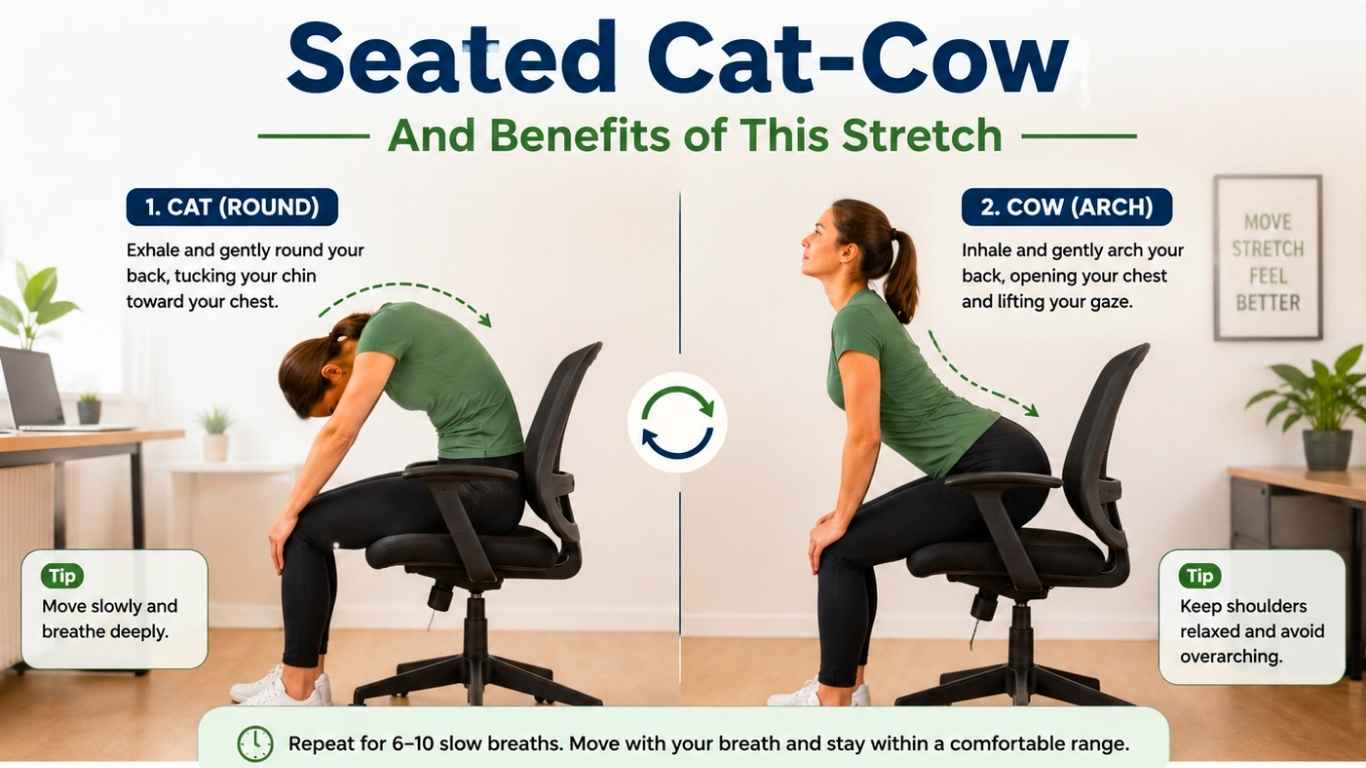
Seated Cat-Cow And Benefits of This Stretch
Clinical guidance and recent exercise resources recommend Cat-Cow as an effective way to restore spinal mobility after prolonged sitting. It’s commonly used by physical therapists and yoga instructors because slow, controlled spinal movement can ease stiffness before it becomes more noticeable.
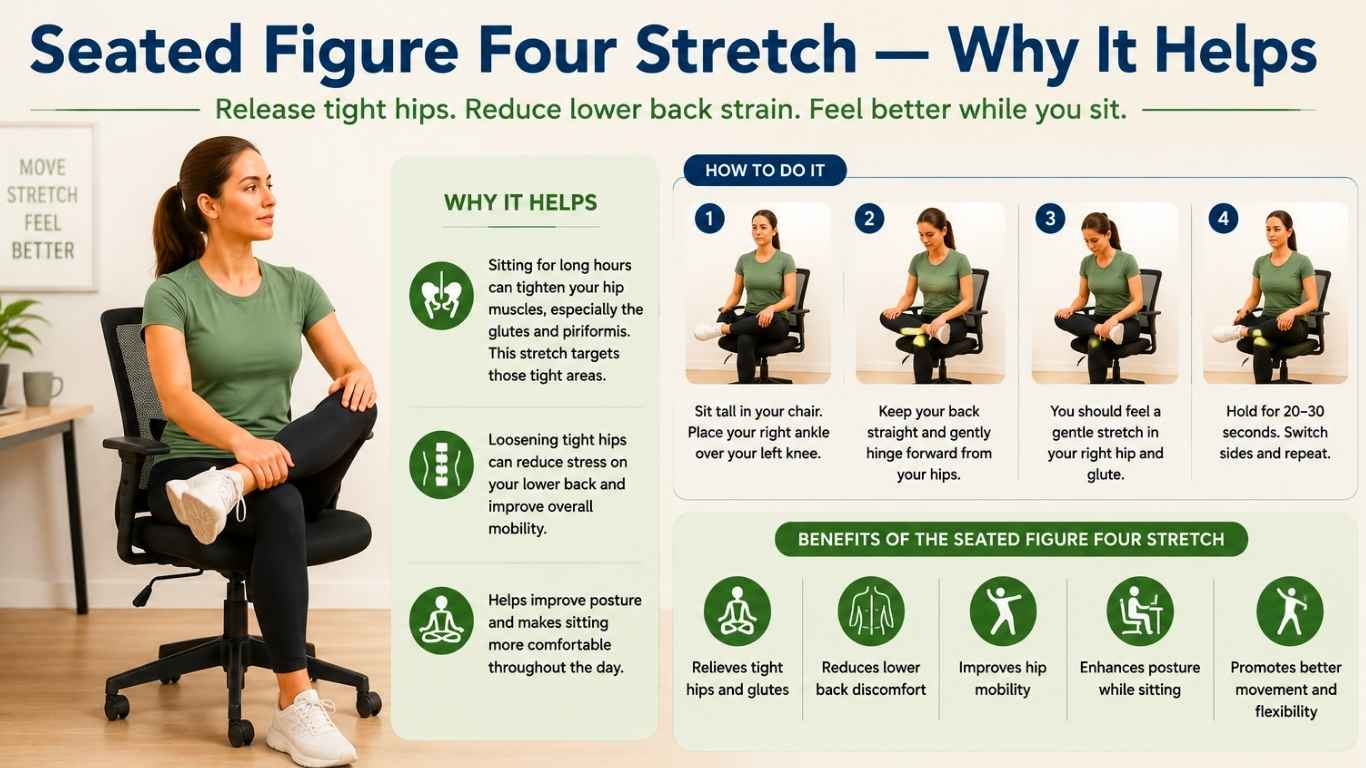
Seated Figure Four Stretch — Why It Helps
Tight hips are a common complaint among desk workers. Physical therapists frequently recommend the seated Figure Four Stretch because it targets the hip muscles that often become restricted after hours of sitting, helping reduce the load placed on the lower back.
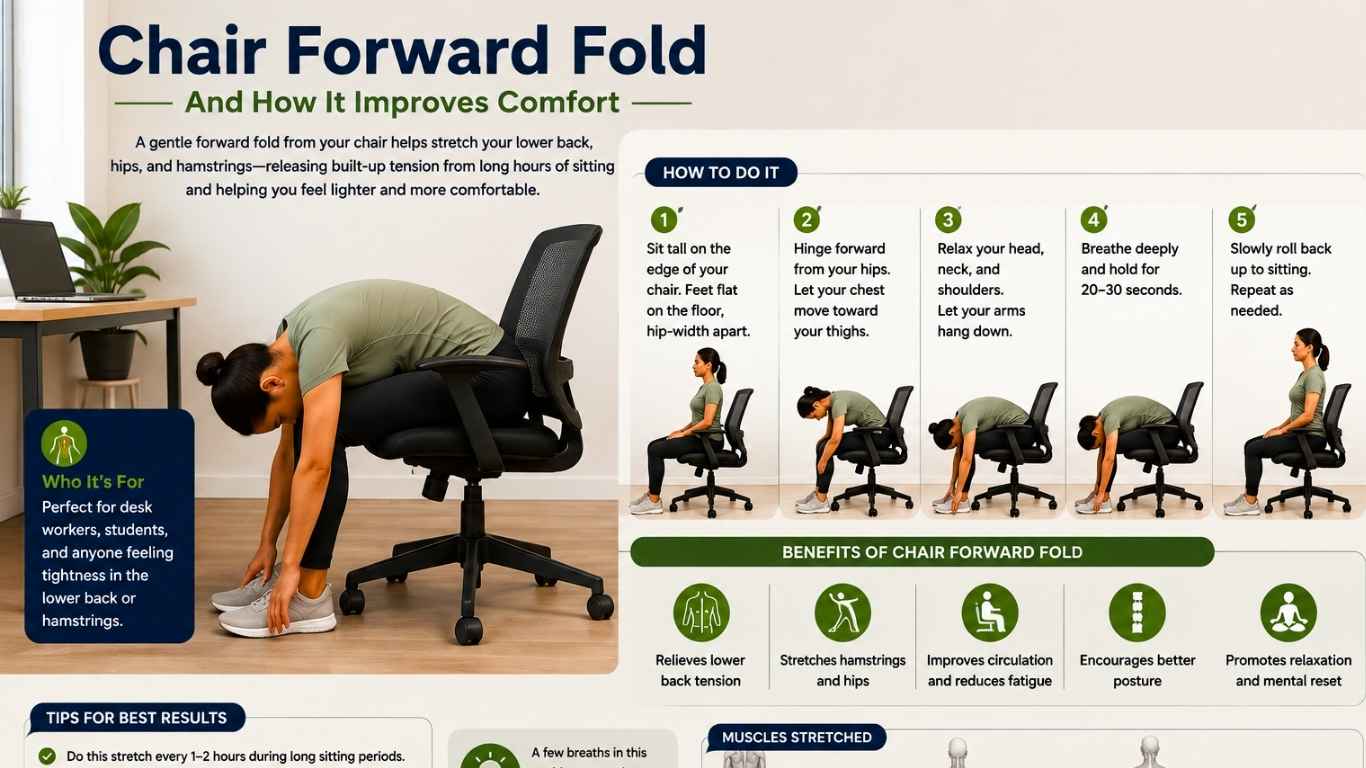
Chair Forward Fold And How It Improves Comfort
Many office workers say a simple forward fold provides quick relief after spending several hours at a computer. While individual results vary, taking regular mobility breaks is consistently encouraged over remaining in one position for long periods.
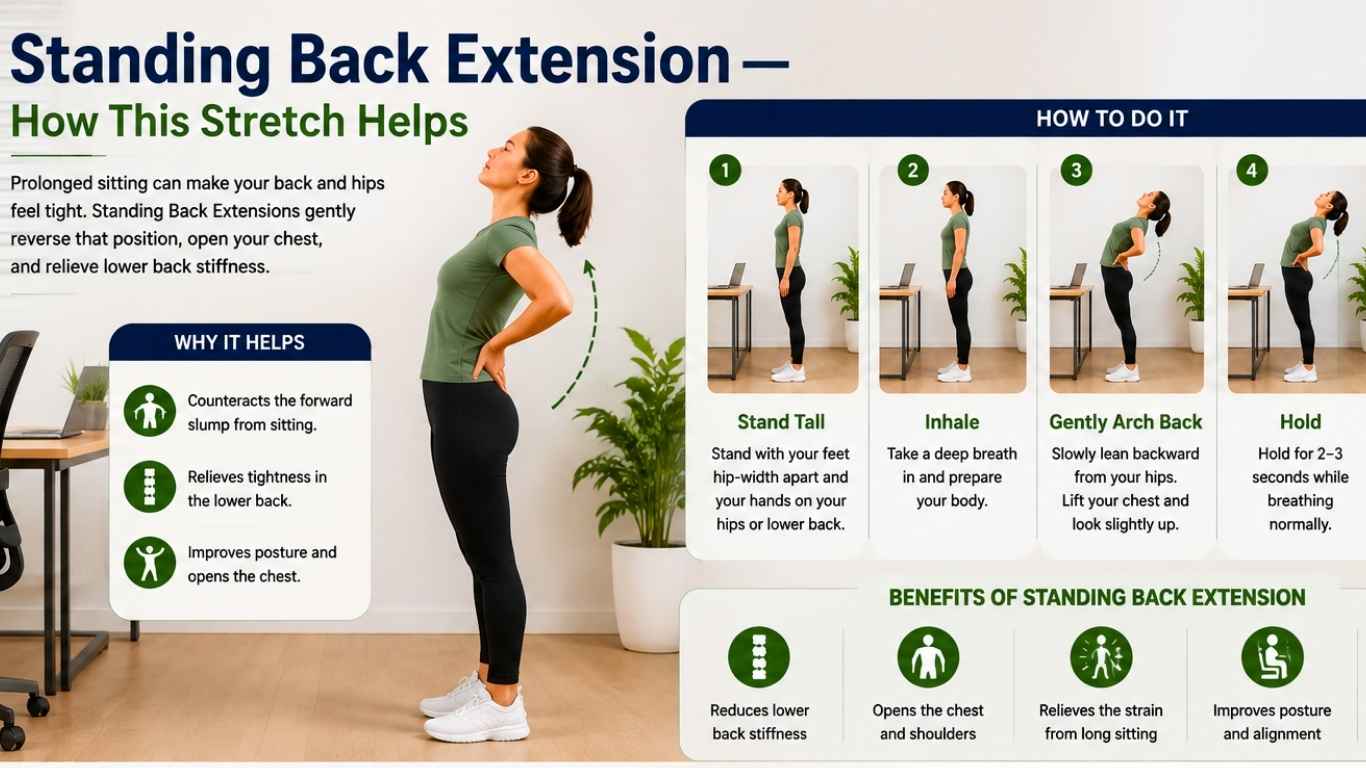
Standing Back Extension — How This Stretch Helps
Research on workplace sitting suggests that changing posture regularly is more beneficial than staying in a fixed seated position. Standing Back Extensions encourage your body to move in the opposite direction of prolonged sitting, which many people find refreshing during the workday.
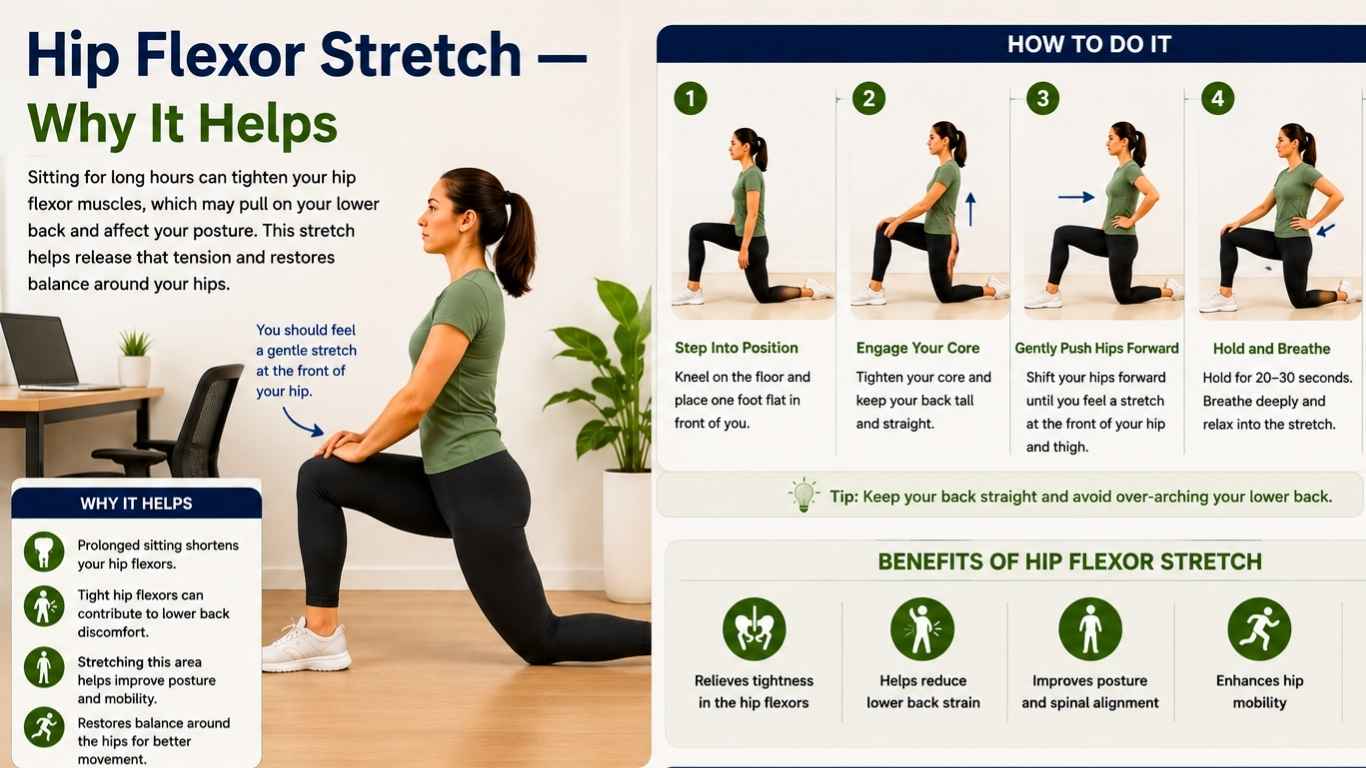
Hip Flexor Stretch — Why It Helps
Research has shown that prolonged sitting can leave the hip flexor muscles in a shortened position, which may contribute to postural changes and lower back discomfort. Stretching this area is often included in movement programs designed for people who spend much of the day at a desk.
Why These Stretches Work Better Together
Each stretch targets a different area affected by prolonged sitting. Seated Cat-Cow improves spinal mobility, Figure Four releases tight hips, Chair Forward Fold lengthens the muscles along your back, Standing Back Extension counters a forward-leaning posture, and the Hip Flexor Stretch helps restore balance around your pelvis. Research suggests that changing positions regularly throughout the day is more beneficial than remaining in one posture for long periods, making a varied routine more effective than relying on a single stretch.
Build a 5-Minute Desk Reset
A short movement break can do more than simply interrupt long periods of sitting. Spending just five minutes away from your desk allows your muscles to loosen, encourages healthier posture, and helps your body feel more refreshed before you return to work. This quick routine combines desk exercises for back pain into an easy sequence you can repeat throughout the day.
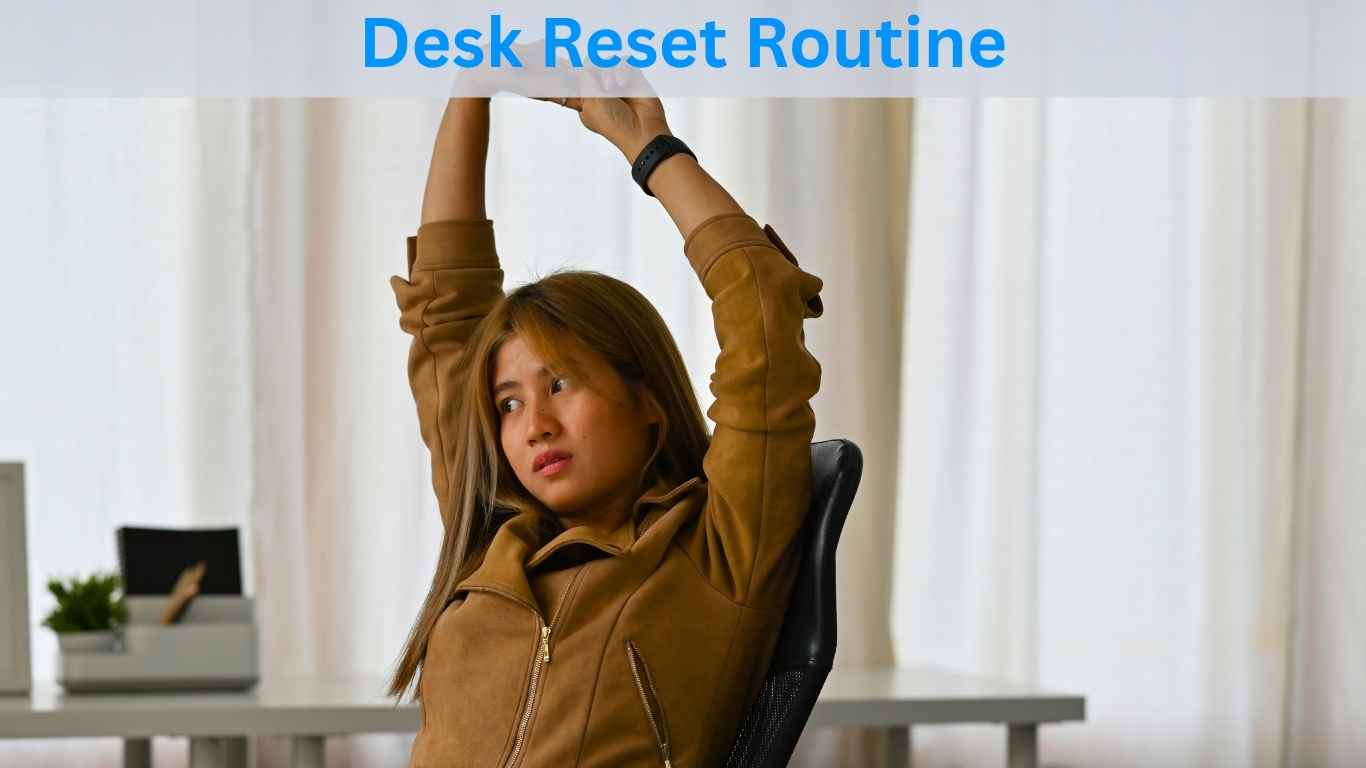
Desk Reset Routine
| Step | Stretch | Time / Repetitions |
|---|---|---|
| 1 | Seated Cat-Cow | 8–10 slow breaths |
| 2 | Seated Figure Four Stretch | Hold 20–30 sec/side |
| 3 | Chair Forward Fold | Hold 20–30 sec |
| 4 | Standing Back Extension | 8–10 repetitions |
| 5 | Hip Flexor Stretch | Hold 20–30 sec/side |
Finish Your Reset
Many office workers find it easier to stay comfortable when they take several short movement breaks instead of waiting until stiffness becomes noticeable. Repeating this routine every hour or two can help reduce accumulated tension and support healthier posture throughout your workday.
Stretch Break or Walking Break?
A stretch break and a walking break don’t do exactly the same thing, so the better choice depends on how your body feels. Stretching is useful when your muscles feel tight after staying in one position, while walking encourages circulation and gives your joints a chance to move naturally. Combining office stretches for lower back pain with short walks throughout the day is often more effective than relying on either one alone.
Choose a stretch break if your back or hips feel stiff after desk work. Choose a short walk when you’ve been sitting for an hour or more and want to refresh your whole body before returning to your desk. Many people find that alternating between these two habits helps them stay more comfortable and reduces the urge to remain seated for long periods.
Healthy Desk Habits That Protect Your Back
Looking after your back isn’t just about taking stretch breaks. The way you sit, how often you stand, and the amount of time you spend in one position all influence how your body feels during the workday. Many people notice fewer aches once they begin making simple adjustments to their daily desk routine instead of relying on exercise alone.
Healthy habits to follow:
- Stand up at least once every hour.
- Change your sitting position regularly.
- Keep a water bottle within easy reach.
- Walk for a few minutes during breaks.
- Use proper lumbar support when needed.
These habits don’t require extra equipment or major changes to your schedule. Repeating them consistently throughout the day can reduce unnecessary strain and make long hours at your desk easier to manage. If you’d like to improve the way your spine moves, discover our guide on Spine Mobility Exercises for Better Back Movement.
Can Desk Work Lead to Sciatica?
Sitting at a desk doesn’t directly cause sciatica, but spending long hours in the same position may increase pressure on the lower back and irritate nearby muscles. Over time, poor posture and limited movement can make existing nerve-related symptoms more noticeable. While lower back stretches at work may reduce muscle tightness, they aren’t intended to treat sciatica or other underlying spinal conditions.
If pain begins to travel below your knee, is accompanied by numbness or weakness, or doesn’t improve with regular movement, it’s worth seeking a professional evaluation rather than relying on stretching alone. If you’d like to learn more about exercises designed specifically for sciatica, explore our guide on Yoga Exercises for Sciatica Pain Relief at Home.
Don’t Ignore Your Upper Back
Lower back discomfort isn’t always caused by the lower back itself. Rounded shoulders and a stiff upper back can change the way your spine is aligned, causing the muscles below to work harder to keep you upright. After weeks or months of desk work, this added strain may contribute to ongoing aches and reduced mobility.
Improving upper back flexibility and posture allows your spine to share movement more evenly instead of placing extra demand on one area. Many people notice their posture feels more balanced when they give the upper and lower back equal attention. If you’d like to improve upper back mobility, explore our guide on Yoga Stretches for Upper Back Pain and Tightness.
When Should You See a Doctor?
Most people find that back discomfort from desk work improves with regular mobility, better posture, and consistent stretch breaks. However, if your symptoms continue for several weeks, become progressively worse, spread below your knee, or are accompanied by numbness, weakness, or changes in bladder or bowel control, it’s important to seek medical attention.
Although it’s easy to assume prolonged sitting is the only cause, persistent or worsening symptoms may point to an underlying condition that needs a professional evaluation. Getting the right advice early can help you choose the most appropriate treatment and avoid unnecessary discomfort.
FAQ
How often should I take a stretch break while working?
Most workplace health experts recommend getting up at least once every 30–60 minutes instead of remaining in the same position for hours. Many office workers notice they feel less stiff when they take brief mobility breaks regularly instead of waiting until discomfort becomes more noticeable.
Can I do these stretches without leaving my desk?
Yes. Most office stretches for lower back pain are designed to fit easily into a normal workday and require very little space. If standing isn’t practical, you can still perform several seated stretches until you have an opportunity to move around.
Will desk stretches completely eliminate back pain?
No. Desk stretches can reduce muscle tightness, improve mobility, and support healthier posture, but they can’t treat every cause of back pain. If symptoms persist, become more severe, or continue to return, it’s important to seek professional advice rather than relying on stretching alone.
Is walking better than stretching during work breaks?
Walking and stretching each offer different benefits. Walking encourages your whole body to stay active, while desk exercises for back pain target muscles that often become tight during prolonged desk work. Many people find alternating between the two is easier to maintain than relying on just one habit.
What if I feel pain while doing a stretch?
A light stretching sensation is expected, but sharp or increasing pain isn’t. Stop immediately if a movement worsens your symptoms or causes pain to travel into your leg. If the discomfort doesn’t improve, arrange an evaluation with a qualified healthcare professional.
Can these stretches help prevent stiffness from returning?
Yes, especially when they’re combined with regular mobility and healthy desk habits. Performing lower back stretches at work consistently is often more effective than waiting until your muscles already feel tight. Many people find that shorter, frequent stretch breaks are easier to maintain than one long session.
Conclusion
Long hours at a desk don’t have to leave your back feeling tired every day. Taking a few minutes to practice desk stretches for lower back pain from sitting and breaking up long periods of sitting can make a noticeable difference in how your body feels throughout the workday. Many people find that regular movement breaks are easier to maintain than waiting until stiffness becomes difficult to ignore.
The goal isn’t to stretch perfectly—it’s to keep your body moving consistently. By combining better desk habits with short, regular breaks, you can place less strain on your back and create a work routine that supports healthier posture for the long term.
📚 Trusted References
This article is based on evidence-informed guidance from reputable healthcare organizations and educational resources covering workplace ergonomics, lower back pain, stretching, and physical activity.
- National Institute of Arthritis and Musculoskeletal and Skin Diseases (NIAMS) – Back Pain
- Occupational Safety and Health Administration (OSHA) – Ergonomics
- Centers for Disease Control and Prevention (CDC) – Physical Activity Basics
- Yoga Journal – Yoga Practice & Mobility Guides
Disclaimer: This article is for educational purposes only and is not a substitute for professional medical advice, diagnosis, or treatment. Stop exercising if you experience sharp pain and consult a qualified healthcare professional if symptoms persist or worsen.