
Your upper back plays an important role in everyday activities, from reaching for objects on a high shelf to carrying a backpack or spending hours at your desk. As the muscles and joints in this area become tight, simple movements may start to feel less comfortable and your posture can gradually change. Yoga stretches for upper back pain and tightness may improve mobility, ease muscle tension, and restore natural movement when practiced regularly. In this guide, you’ll discover seven beginner-friendly stretches, learn which areas each one targets, and build a simple routine to keep your upper back feeling more flexible.
Signs Your Upper Back Needs More Movement
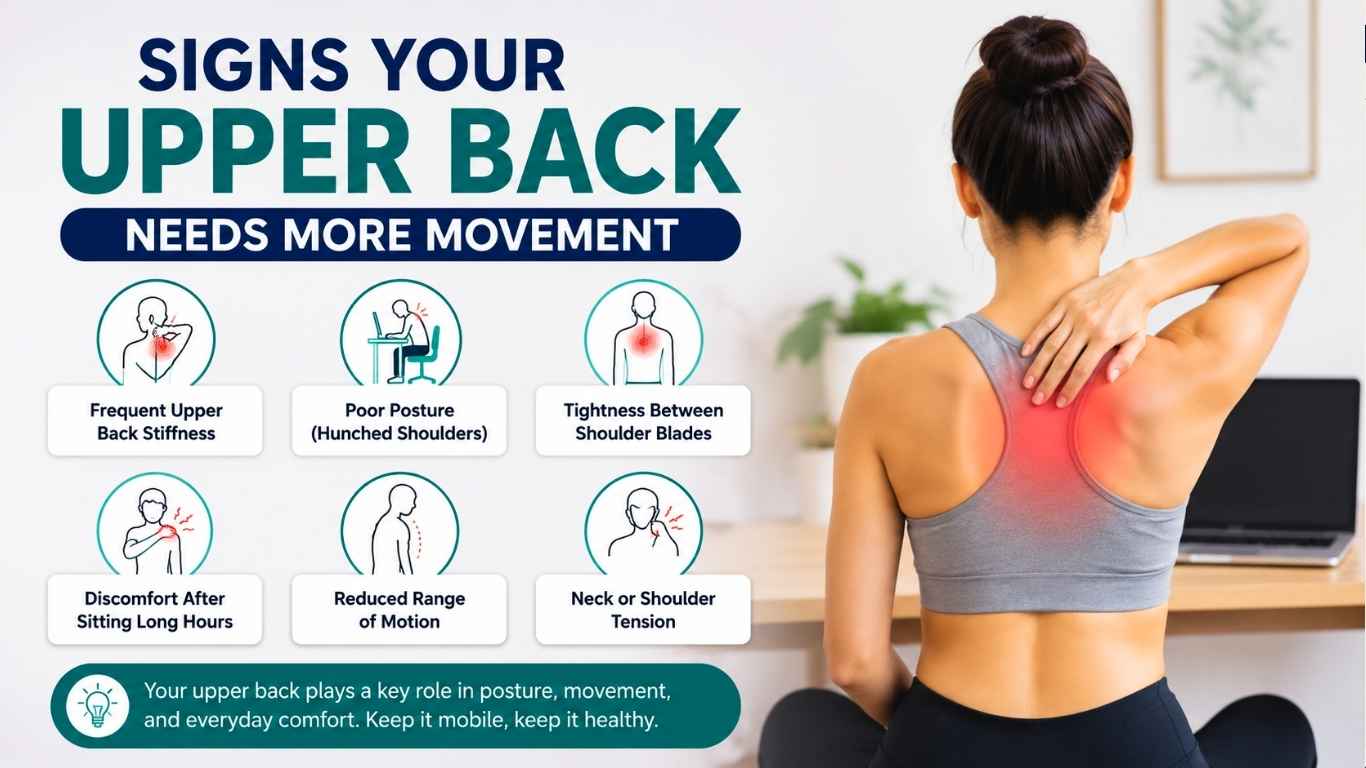
Your upper back doesn’t always become painful before it becomes stiff. In many cases, your body gives small warning signs that mobility is gradually decreasing. Recognizing these early changes can make it easier to restore comfortable movement before everyday activities start feeling more restricted.
Here are some common signs:
- Tightness between your shoulder blades.
- Difficulty turning your upper body comfortably.
- Rounded shoulders while sitting or standing.
- Neck tension after computer or phone use.
- Stiffness through the middle of your back.
- Tired upper back after long desk sessions.
These signs often develop gradually rather than appearing overnight. If you spend most of your day sitting, explore Desk Stretches for Lower Back Pain from Sitting for simple movement breaks.
Why Your Thoracic Spine Matters
The thoracic spine forms the middle part of your back and plays an important role in how your shoulders, chest, and upper body move together. When this area becomes less flexible, simple actions like reaching overhead, turning to look behind you, or sitting upright for long periods may start to feel more difficult. This is one reason thoracic mobility exercises are commonly included in posture and flexibility routines.
As mobility decreases, nearby muscles often work harder to make up for the limited movement. Over time, this can contribute to rounded shoulders, upper back tightness, and a reduced range of motion. From both research and regular yoga practice, it’s clear that restoring movement in the thoracic spine often makes everyday activities feel smoother without forcing deeper stretches.
Explore: Spine Mobility Exercises for Better Back Movement
Easy 7 Yoga Stretches That Release Upper Back Tightness
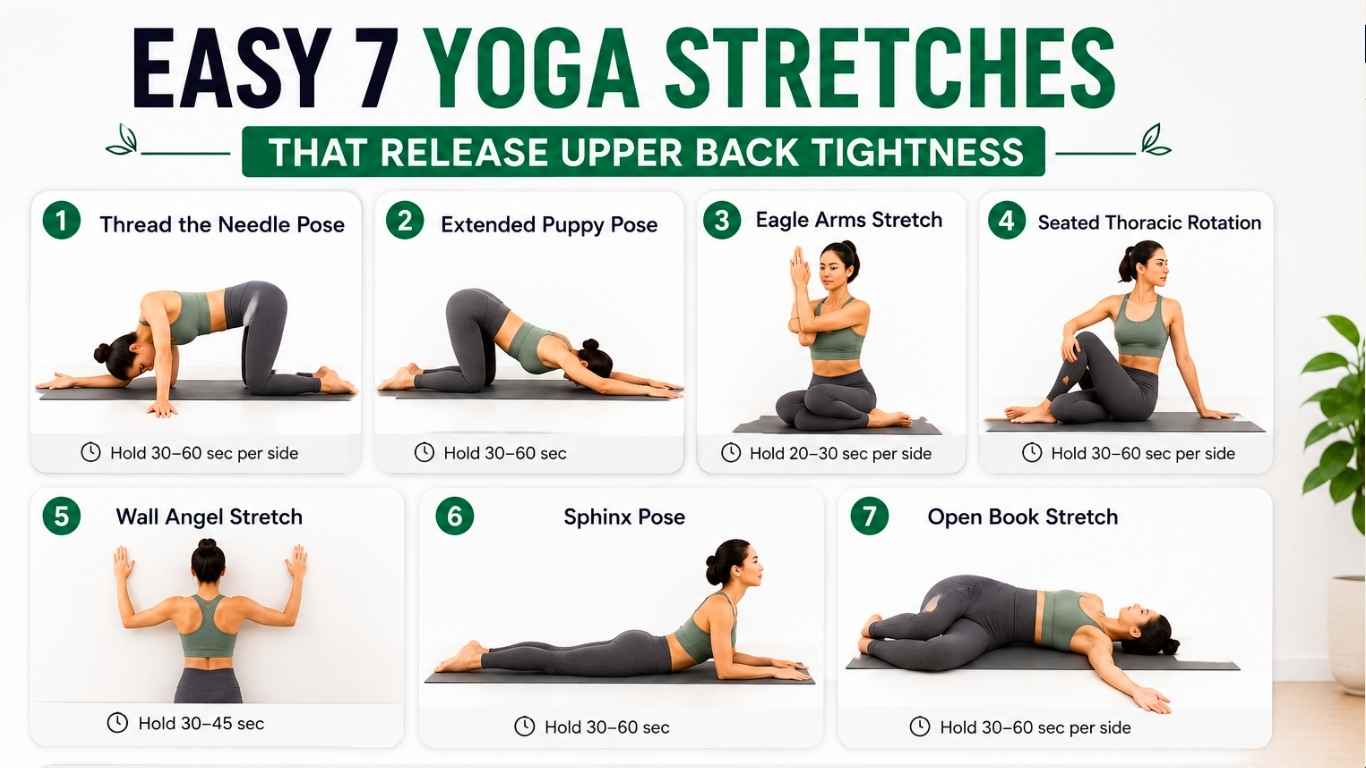
Upper back tightness often develops gradually from limited movement, long desk hours, or poor posture. Practicing upper back stretches regularly can improve flexibility, reduce muscle tension, and restore smoother movement across the shoulders and upper back without requiring special equipment.
Thread the Needle Pose
This stretch gently rotates your upper back while opening the shoulders. It’s a simple way to loosen areas that often become stiff after prolonged sitting or repetitive daily activities.
Here are the steps:
- Start on your hands and knees.
- Slide one arm underneath your chest.
- Rest your shoulder and the side of your head.
- Hold for 20–30 seconds with steady breathing.
- Return slowly and repeat on the opposite side.
You may notice the stretch between your shoulder blades, across the back of the shoulder, and through the upper back. Many yoga instructors use this pose early in a session because it prepares the body for more dynamic movements.
Extended Puppy Pose
Extended Puppy Pose creates a deep stretch through the chest, shoulders, and upper back while keeping the lower body supported. It’s often chosen by people who spend long hours working at a desk or using a computer.
Practice guide:
- Begin on your hands and knees.
- Walk both hands forward slowly.
- Lower your chest toward the floor.
- Hold for 20–30 seconds while breathing naturally.
- Return to the starting position with control.
This pose works well for rounded shoulders, chest tightness, and limited overhead reach. From my own regular practice after desk work, I’ve found it feels most effective when performed slowly without forcing the stretch.
Eagle Arms Stretch
Eagle Arms Stretch gently opens the muscles across the back of your shoulders while improving flexibility around the shoulder blades. It’s especially useful if your arms feel restricted after long hours of computer work or repetitive daily tasks.
Getting into position:
- Sit or stand with a tall spine.
- Extend both arms forward.
- Cross one arm over the other.
- Bend your elbows and bring your palms together if comfortable.
- Hold for 20–30 seconds before changing sides.
You’ll usually notice a pulling sensation between the shoulder blades, across the rear shoulders, and around the upper trapezius. It’s often included in yoga for upper back pain routines because it gently opens areas that become stiff after prolonged desk work.
Seated Thoracic Rotation
This exercise encourages the middle section of your spine to rotate more freely, making everyday activities such as looking behind you or reaching across your body feel less restricted. Focus on quality rather than twisting as far as possible.
Movement guide:
- Sit tall with both feet flat.
- Rest one hand on the opposite knee.
- Turn your chest gradually.
- Keep your hips facing forward.
- Repeat on both sides.
The middle spine is designed to rotate during many everyday activities, but long periods of sitting can gradually reduce this ability. Restoring healthy rotation encourages smoother body mechanics and places less demand on nearby muscles.
Wall Angel Stretch
Wall Angel Stretch improves shoulder positioning while increasing awareness of how your upper body moves. It also helps identify differences in flexibility from one side to the other without placing excessive strain on your joints.
How to practice:
- Stand with your back against a wall.
- Bend your elbows to about 90 degrees.
- Keep your head lightly touching the wall.
- Raise and lower your arms smoothly.
- Complete 8–10 repetitions.
Avoid arching your lower back, lifting your shoulders, or rushing each repetition. From my own experience after spending several hours at a desk, slowing the exercise down has consistently felt more effective than trying to complete extra repetitions with poor form.
Sphinx Pose
Sphinx Pose gently encourages your middle spine to extend while opening the front of your torso. It’s a comfortable option for people who spend long periods leaning over a laptop, desk, or mobile phone.
Step-by-step:
- Lie face down with both legs extended.
- Place your forearms beneath your shoulders.
- Press lightly into your elbows.
- Lift your chest without shrugging.
- Hold for 20–30 seconds, then relax.
This pose is often easiest after you’ve completed a few gentle warm-up exercises instead of starting with it immediately. In my own practice after desk work, easing into this position gradually has always felt more comfortable than lifting too high too soon.
Open Book Stretch
Open Book Stretch introduces gentle rotation through the middle spine while opening the front of the shoulders. It adds a different direction of motion than the previous poses, creating a more balanced sequence.
How to perform:
- Lie on one side with bent knees.
- Extend both arms in front of you.
- Open the top arm toward the opposite side.
- Follow your hand with your eyes.
- Return slowly and repeat on both sides.
Unlike the earlier poses, Open Book Stretch introduces gentle rotation through the middle spine while opening the chest and shoulders. Adding this direction of movement supports upper back mobility and creates a more balanced stretching routine instead of focusing on a single area.
Why These Stretches Work Better Together
Each pose serves a different purpose. Some improve shoulder flexibility, while others encourage spinal extension or rotation, creating a more balanced approach than repeating the same movement every day. Clinical guidance for musculoskeletal rehabilitation generally supports combining different mobility patterns instead of relying on a single exercise alone.
While researching this topic and practicing these stretches myself after long hours of desk work, I noticed that moving through several positions felt more comfortable than spending extra time on just one pose. Everyone’s experience is different, so progress gradually and stay within a comfortable range.
Common Stretching Mistakes
Getting the most from your stretching routine isn’t only about choosing the right poses. Small technique errors can reduce their effectiveness and make it harder to improve upper back mobility over time. Paying attention to proper form usually produces better results than stretching harder.
- Holding your breath throughout the stretch.
- Lifting your shoulders toward your ears.
- Pushing beyond a comfortable range.
- Rushing through every repetition.
- Practicing only once in a while.
From both reviewing rehabilitation guidance and practicing regularly after long desk hours, I’ve learned that slowing each movement and staying consistent makes a bigger difference than trying to stretch deeper. Focus on quality, not intensity.
Daily Habits That Keep Your Upper Back Flexible
The small choices you make throughout the day can influence how your upper back feels just as much as your yoga practice. Building a few simple habits into your daily routine helps keep your muscles active and reduces stiffness before it has a chance to build up.
Habits worth practicing:
- Change your position every 30–60 minutes.
- Open your chest several times each day.
- Strengthen the muscles between your shoulder blades.
- Take short walking or movement breaks.
- Keep your screen at eye level.
I’ve found that these habits make the biggest difference on busy workdays when there’s less time for a full yoga session. Even a few brief posture resets throughout the day can feel more beneficial than remaining in the same position for hours.
When Stretching Isn’t Enough
Although yoga for upper back pain can support flexibility and reduce muscle tension for many people, it isn’t the right solution for every situation. If you experience persistent numbness, weakness in one or both arms, discomfort following a recent injury, fever, or pain that regularly wakes you at night, it’s important to seek medical evaluation instead of relying on stretching alone. These warning signs may point to an underlying condition that requires professional assessment and appropriate treatment.
FAQ
Can I practice these stretches every day?
Yes, as long as they don’t increase discomfort. Short, regular sessions are usually easier to maintain than occasional longer workouts, especially if you spend much of the day sitting.
Which stretch is best for beginners?
Thread the Needle and Extended Puppy Pose are excellent starting points because they encourage gentle flexibility without requiring advanced balance. Beginners often include them in a yoga for upper back pain routine before progressing to more challenging poses.
How long does it take to notice improvement?
The timeline varies from person to person. Some people notice small changes within a few weeks, while others need longer depending on muscle tightness, daily activities, and how consistently they practice.
Can these stretches improve posture?
They can increase flexibility around the shoulders and middle spine while supporting healthier upper back mobility. Combining stretching with strengthening exercises and regular movement usually produces the best long-term results.
When should I stop stretching?
Stop immediately if you experience sharp pain, increasing numbness, arm weakness, or discomfort that becomes worse instead of easing. If these symptoms continue, arrange an evaluation with a qualified healthcare professional.
Conclusion
Upper back tightness usually develops gradually, so lasting improvement rarely comes from a single stretch or one workout. Yoga stretches for upper back pain and tightness may improve flexibility, reduce muscle tension, and support smoother everyday movement when practiced consistently with proper technique.
As someone who spends long hours working at a desk, I’ve found that rotating between different stretches works better than repeating the same pose every day. Opening the chest, improving thoracic rotation, and restoring shoulder mobility together created a routine that was easier to maintain than focusing on just one area.
Stay patient, pay attention to how your body responds, and make small adjustments as needed. If your symptoms continue to worsen or are accompanied by numbness, arm weakness, fever, or night pain, seek advice from a qualified healthcare professional before continuing your practice.
📚 References
This guide is informed by evidence-based resources covering upper back pain, posture, spinal mobility, therapeutic exercise, and musculoskeletal rehabilitation.
- ChoosePT (American Physical Therapy Association) – Physical Therapy & Healthy Movement
- National Institute of Arthritis and Musculoskeletal and Skin Diseases (NIAMS)
- Chartered Society of Physiotherapy (CSP) – Exercise & Musculoskeletal Advice
- NHS – Muscle, Joint and Back Health
Disclaimer: The information in this article is intended for general educational purposes and isn’t a substitute for professional medical care. Seek advice from a qualified healthcare professional if your symptoms persist, worsen, or are accompanied by numbness, weakness, fever, or pain following an injury.