
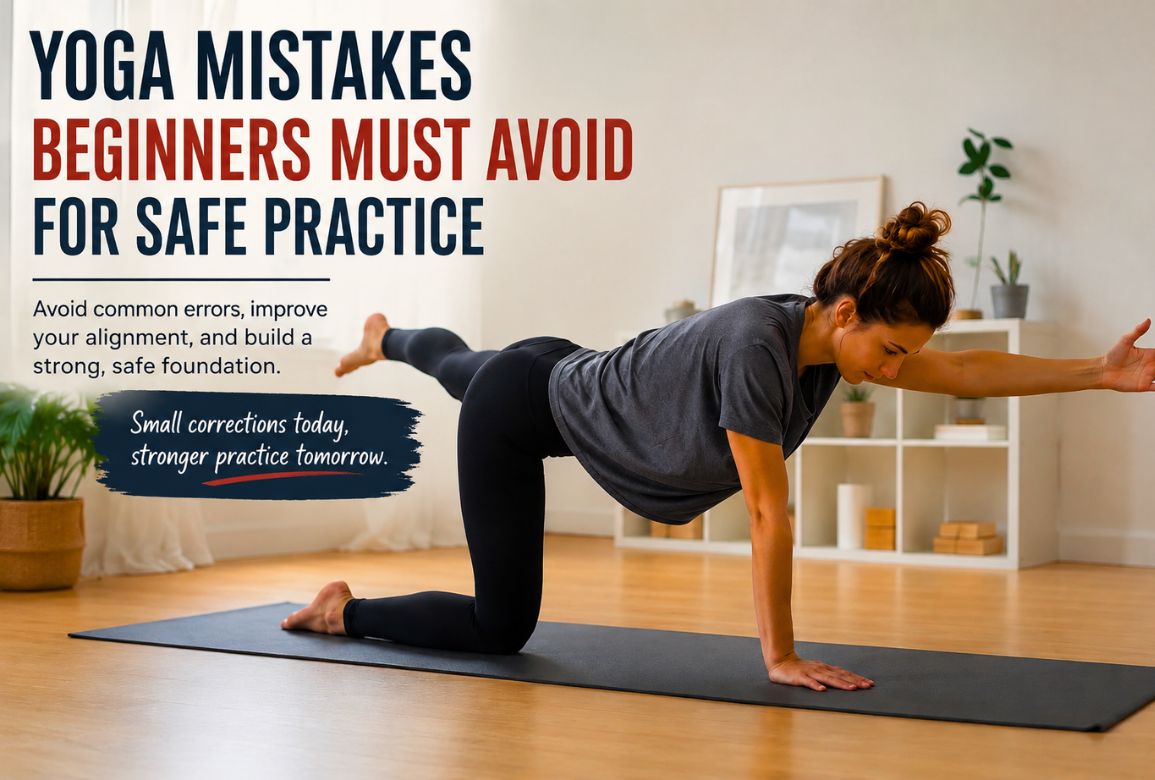
Why Yoga Mistakes Beginners Must Avoid for Safe Practice
At first, small mistakes in yoga may not seem very serious, but repeating them regularly can slowly affect your alignment, coordination, and overall comfort during sessions. Problems like poor posture, unstable breathing, or rushing through poses often place extra pressure on muscles and joints without immediate discomfort. As sessions continue, these issues usually become easier to notice, especially during poses that require more stability and body awareness. Understanding these common mistakes early helps create safer movement habits and better body awareness from the beginning.
Common Yoga Mistakes Beginners Make and How to Fix Them
Incorrect movement habits are very common in beginner routines because people often focus more on copying poses than maintaining stable alignment and steady breathing. Uneven weight distribution and rushed transitions often make poses feel unstable and harder to maintain consistently. Beginners also notice instability more often when moving quickly between poses like Downward Dog or Warrior II, especially when they lack body awareness.
Correcting these habits early can make yoga poses feel more stable, natural, and easier to maintain over time with regular practice. Understanding common yoga mistakes beginners make also helps improve coordination, safer movement patterns, and overall confidence during regular yoga routines.
If you want to learn more about common yoga mistakes, read this article: Fix Common Yoga Mistakes For Beginners Safely
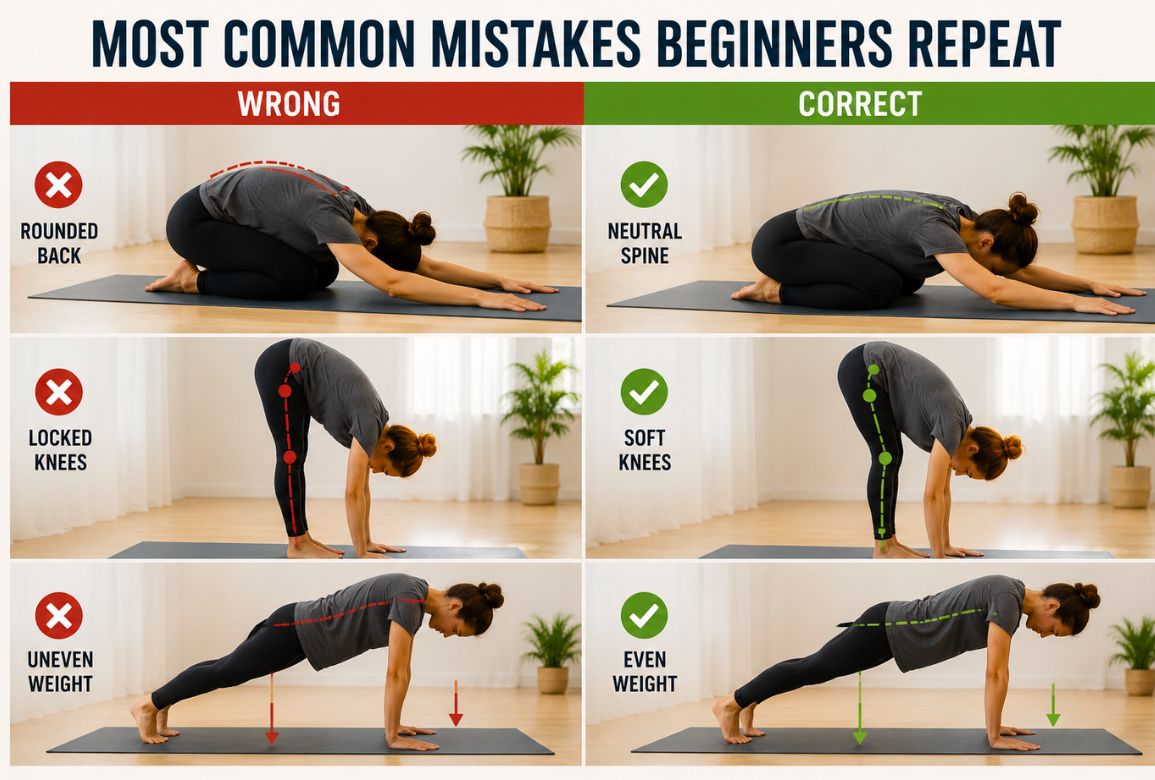
Most Common Mistakes Beginners Repeat
Incorrect yoga habits often become part of regular yoga routines when poses are repeated without enough awareness or proper posture. In the early stages, these problems may not seem serious, but they can gradually affect stability, alignment, and overall pose transitions. Gradually, repeated mistakes may also create extra pressure on areas like the wrists, shoulders, or lower back during different yoga poses.
The most common mistakes beginners repeat are listed below:
- Moving too quickly between poses without steady breathing
- Holding the breath during poses like Plank or Chair Pose
- Forcing flexibility instead of moving with coordination
- Ignoring proper alignment during transitions
- Placing uneven pressure on hands, wrists, or legs
- Starting sessions without warming up the body
These mistakes are very common in beginner routines and often occur when beginners try to improve too quickly without sufficient awareness or stable posture. Small corrections made consistently often help poses feel smoother, safer, and easier to maintain over time.
Why These Mistakes Affect Progress
Incorrect movement habits in yoga often seem harmless at first because the body may still feel stable during sessions. Gradually, poor alignment, rushed transitions, and inconsistent breathing patterns can reduce steadiness and create extra strain on muscles and joints. This is one of the main reasons beginner yoga mistakes to avoid should be corrected early for safer and more controlled movement.
As these habits continue, they can slowly affect posture, flexibility, and overall pose stability. Inconsistent alignment also makes poses harder to maintain during different movements. Many beginners notice shaking or loss of balance during poses when breathing and posture are not properly coordinated. Learning how to correct these mistakes early can make movements feel smoother and more controlled.
Yoga Alignment Mistakes That Affect Your Form
Proper alignment plays an important role in maintaining balance, body awareness, and smoother movement during yoga practice. In early stages, incorrect posture often goes unnoticed because discomfort may not appear immediately. Over repeated sessions, alignment problems can affect flexibility and create unnecessary pressure on muscles and joints during different poses. Small alignment mistakes often become easier to notice during poses like Warrior II or Forward Fold, where balance and posture matter more.
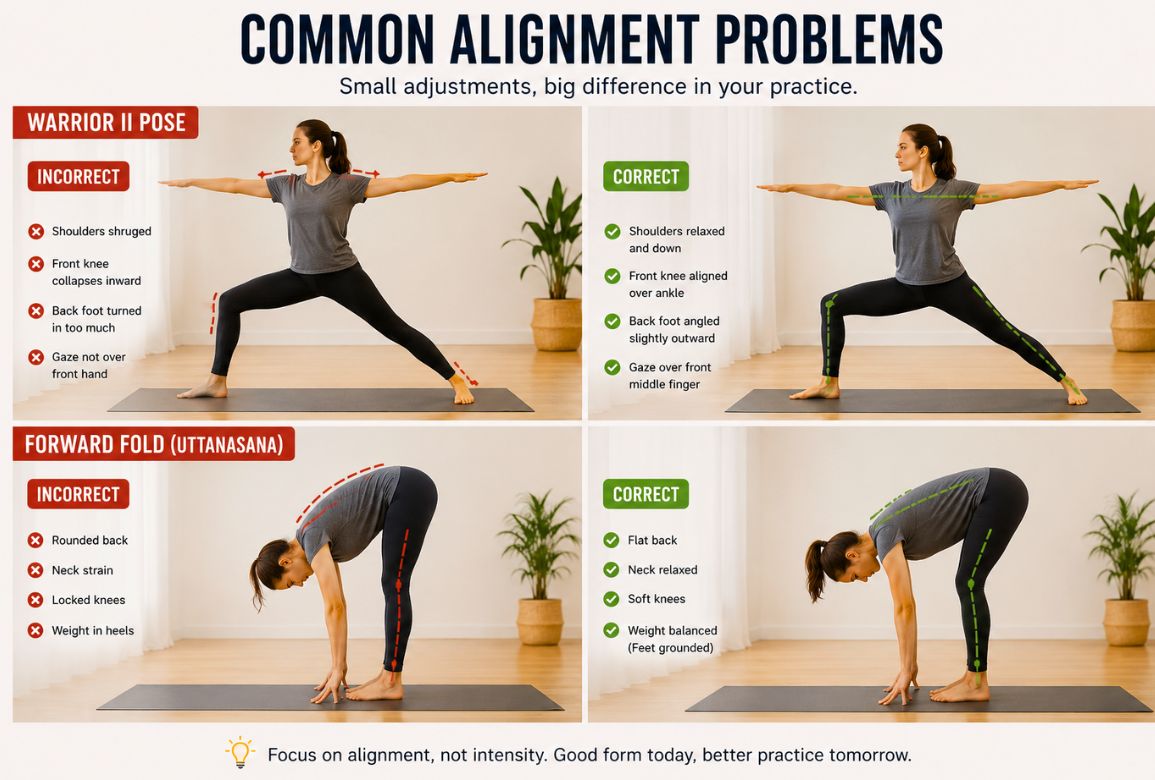
Common Alignment Problems
Incorrect alignment is one of the most common issues that affects yoga form and overall pose stability. Unstable posture and rushed transitions often make poses feel harder to maintain and less natural during movement.
The most common alignment problems are listed below:
- Rounding the back during forward bends
- Locking the knees in standing poses
- Placing uneven pressure on hands or legs
- Dropping the shoulders too low during poses like Plank or Downward Dog
- Moving into poses too quickly without steady breathing
Many beginners also notice wrist pressure or loss of balance when weight is not distributed evenly in support poses.
These alignment problems usually happen when flexibility is forced too early without maintaining stable posture and body awareness. Correcting these habits gradually helps improve balance, flexibility, and overall alignment in different poses. Keeping the knees slightly soft and spreading the fingers evenly during support poses can also improve balance.
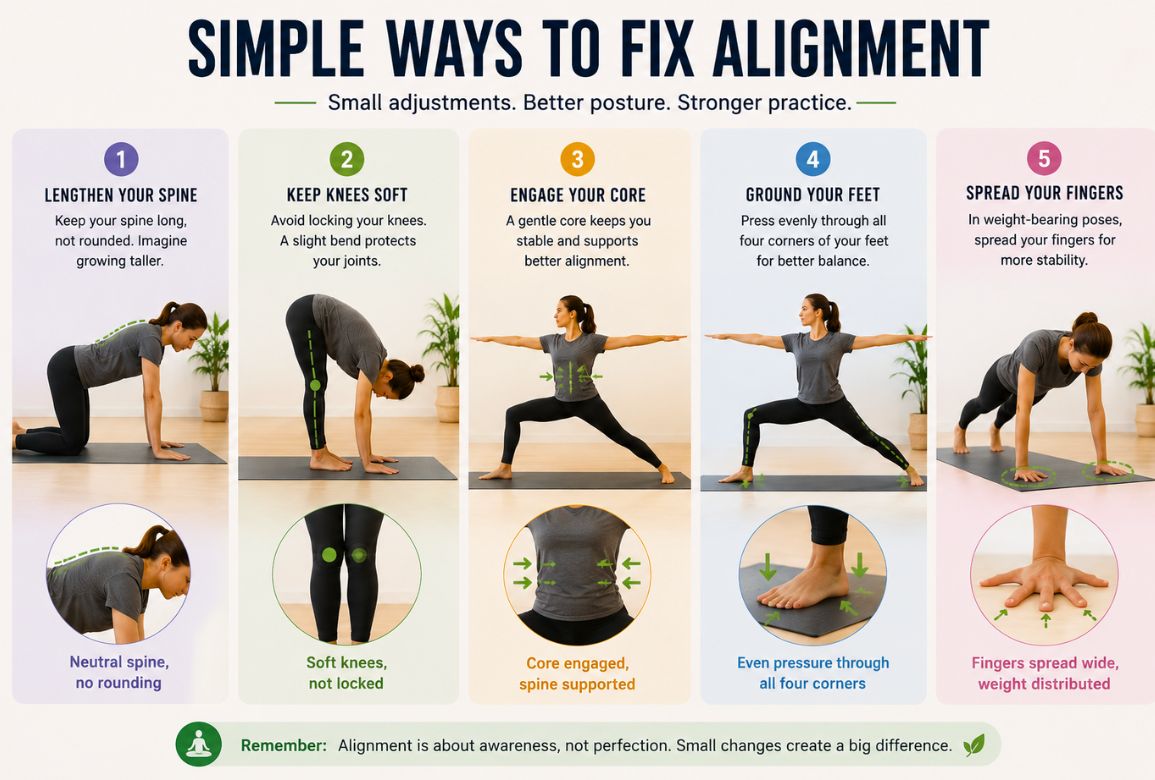
Simple Ways to Fix Alignment
Improving alignment becomes easier when posture is corrected slowly instead of forcing deeper movement too early. Stable posture and more controlled transitions help reduce extra pressure on muscles and joints while making poses feel more balanced and easier to maintain. Small corrections in alignment also improve alignment awareness and support safer movement in beginner yoga routines.
Here are 5 easy ways to fix alignment:
- Keep your spine in a natural position during movement
- Distribute body weight evenly in each pose
- Move slowly with better awareness and steadiness
- Avoid locking the knees or elbows completely
- Focus on support before increasing flexibility
Learning proper alignment through a beginner yoga pose alignment guide can help poses feel more natural and easier to maintain. Keeping the knees slightly soft and spreading the fingers evenly in weight-bearing poses can also improve balance and body awareness.
If you want to improve posture and body positioning in yoga, read this alignment guide: Beginner Yoga Pose Alignment Guide Step-by-Step
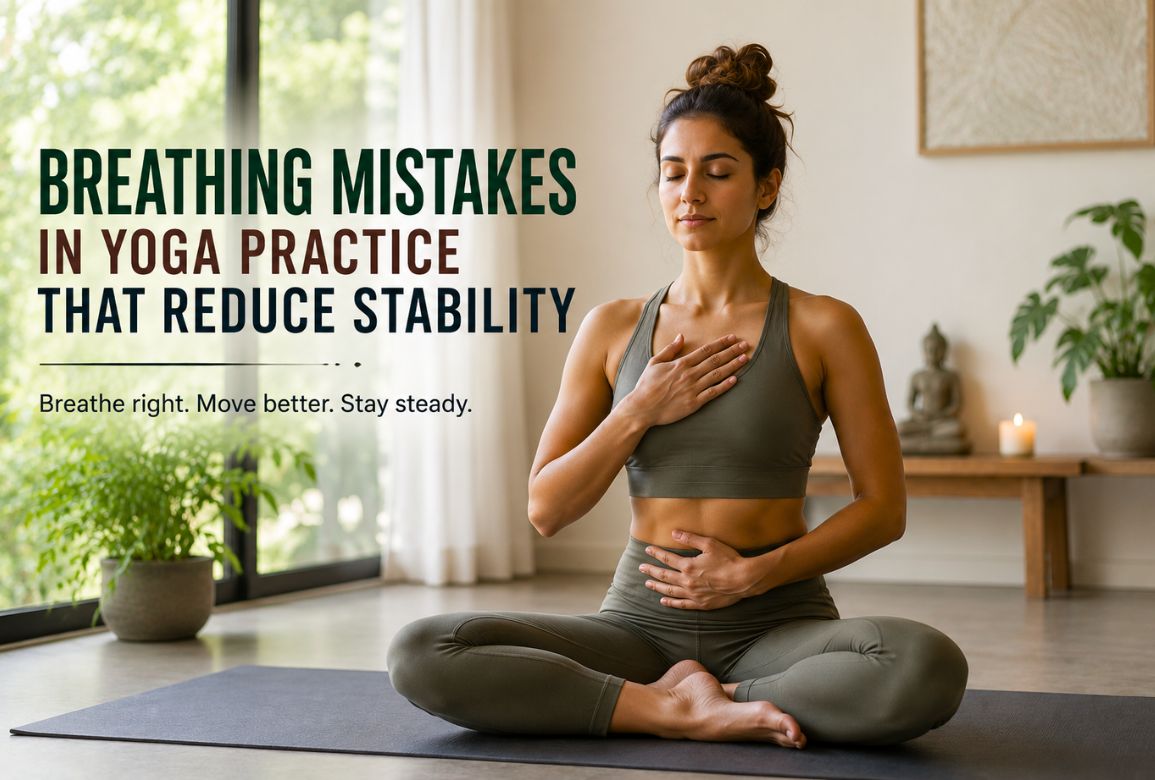
Breathing Mistakes in Yoga Practice That Reduce Stability
Breathing plays an important role in maintaining balance, more controlled transitions, and overall posture awareness during yoga sessions. In early stages, incorrect breathing habits often go unnoticed because beginners focus more on poses than breathing rhythm. Rushed breathing and uneven breath coordination can make balance-focused poses feel harder to maintain, especially during movements that require slower transitions.
Common breathing mistakes beginners make in yoga are often connected to rushed movement and unstable breathing rhythm. Holding the breath during poses like Plank or Chair Pose, breathing too quickly, or losing steady nasal breathing during transitions can affect alignment and movement awareness. Some beginners notice that rushed breathing makes balance-focused poses feel less steady during sessions.
Slowing the breath slightly before transitions can improve body awareness and help movements feel more balanced. Correcting breathing mistakes early can make transitions feel more controlled and easier to maintain.
Read this article to learn how breathing mistakes can affect balance and stability during yoga practice: Common Breathing Mistakes Beginners Make in Yoga & Fixes
Why Wrist Pain Happens in Yoga and How to Reduce Pressure
Wrist discomfort is a common problem that can affect safe yoga practice for beginners, especially in support poses that place body weight on the hands. In early stages, incorrect hand placement and uneven pressure often create extra strain on the wrists without immediate discomfort. Wrist strain also increases when too much weight shifts forward during poses like Plank or Downward Dog.
Poor weight distribution, unstable shoulder placement, and incorrect alignment are some of the main reasons wrist pressure increases during yoga sessions. Placing too much body weight directly on the wrists instead of pressing evenly through the fingertips often makes poses feel harder to support. Keeping the shoulders stacked more evenly over the wrists can also reduce unnecessary strain.
Understanding what causes wrist discomfort during yoga can help improve hand placement and reduce strain in weight-bearing poses. Spreading the fingers evenly and engaging the core lightly can also make support poses feel more stable and comfortable.
Want to understand what causes wrist discomfort in yoga? Explore this detailed guide: Why Do My Wrists Hurt During Yoga? Causes, Mistakes & Easy Fixes
Safe Yoga Practice for Beginners to Prevent Injury
Practicing yoga safely is important for improving balance, flexibility, and posture stability without creating unnecessary strain on the body. In early stages, rushing into deeper stretches, unsupported posture, and poor alignment often increase the risk of discomfort and instability. Understanding beginner yoga mistakes to avoid helps create safer movement habits and improves body awareness during yoga routines.
Steady breathing and controlled transitions help reduce pressure on muscles and joints across different poses. Moving slowly, maintaining a supported posture, and avoiding forced flexibility can make poses feel easier to maintain consistently. Many beginners notice discomfort more often when flexibility is forced before posture becomes more balanced. Developing safer yoga habits early can make routines feel more balanced and comfortable.
Read this guide to learn simple ways to practice yoga more safely and reduce the risk of injury: Yoga Safety Tips for Beginners to Prevent Injury the Right Way
Step-by-Step Guide to Fix Common Yoga Mistakes
Correcting yoga mistakes becomes easier when small posture adjustments are practiced consistently during practice. In early stages, poor alignment, unstable transitions, and incorrect breathing patterns often make poses feel harder to maintain. Following a step-by-step approach helps improve body awareness and supports safer and more controlled movement.
Check Posture and Alignment
Proper posture and alignment are important for maintaining balance and reducing unnecessary pressure during yoga routines. Incorrect body positioning often affects stability and pose consistency without immediate discomfort. Warrior II may feel unstable when body weight shifts unevenly between the feet.
These adjustments can improve posture and alignment:
- Keep your spine in a natural position
- Distribute body weight evenly in poses
- Avoid locking the knees during transitions
- Keep shoulders relaxed and properly balanced
- Maintain a supported posture before increasing flexibility
- Move slowly and avoid rushing between poses
Improving posture slowly with consistent alignment practice helps poses feel steadier and easier to maintain. Better alignment also supports safer and more comfortable yoga routines.
Control Movement and Breathing
Controlled transitions and steady breathing help improve balance and overall body awareness during yoga sessions. Rushed transitions and unstable breathing patterns often make poses feel harder to maintain and less comfortable during longer sessions.
These habits can improve posture awareness and breathing consistency:
- Move slowly between different yoga poses.
- Maintain steady breathing during each transition.
- Avoid holding your breath during poses.
- Focus on smoother pose transitions.
- Stay relaxed during difficult yoga movements.
Many beginners notice unstable breathing more often during poses like Plank or Chair Pose when transitions become rushed.
Correcting breathing mistakes early can help poses feel steadier and more comfortable during transitions.
Simple Daily Tips to Improve Yoga Form and Balance
Improving yoga form and balance often depends on small daily habits that support better posture awareness and steadier pose transitions during yoga sessions. In early stages, inconsistent posture, rushed transitions, and unstable breathing can slowly affect pose consistency and overall comfort. Building simple and consistent habits helps poses feel more natural and easier to maintain.
Simple daily tips to improve yoga form and balance are listed below:
- Practice yoga with slow and steady transitions.
- Focus on posture before increasing flexibility.
- Maintain steady nasal breathing during longer poses.
- Keep body weight evenly distributed.
- Pause briefly between transitions to reset posture.
- Stay consistent with regular yoga sessions.
Small, consistent habits often make poses feel more balanced and easier to maintain. Consistent posture adjustments also help yoga routines feel steadier and more comfortable.
FAQ
Can small yoga mistakes really affect progress?
Yes, small mistakes can slowly affect posture, flexibility, and overall balance during yoga sessions. Problems like rushed movement, poor alignment, and unstable breathing often make poses harder to hold steadily with regular movement.
Why do beginners lose balance during yoga poses?
Balance problems usually happen when posture, breathing, and weight distribution are not properly coordinated. Many beginners also rush transitions between poses, which often makes body positioning become less balanced during yoga sessions.
How can beginners improve yoga alignment safely?
Practicing poses slowly and focusing on posture awareness often improves alignment more safely. Using a beginner yoga pose alignment guide and avoiding forced flexibility can help movements become more balanced and easier to support comfortably.
What are the most common breathing mistakes in yoga?
Common breathing mistakes beginners make in yoga include holding the breath, breathing too quickly, and losing steady nasal breathing during transitions. These habits often make poses become harder to control during longer yoga sessions.
Why does wrist pain happen during yoga practice?
Wrist discomfort usually increases when too much body weight shifts forward in support poses like Plank or Downward Dog. Uneven pressure, poor shoulder alignment, and weak posture awareness can also increase wrist strain gradually.
How can I practice yoga more safely as a beginner?
Safe yoga practice for beginners often starts with slower movement, steady breathing, and better posture awareness. Avoiding rushed transitions and forcing flexibility too early can help yoga routines become more comfortable and supported.
How long does it take to correct beginner yoga mistakes?
Correcting beginner yoga mistakes to avoid usually depends on consistency and body awareness. Small posture adjustments practiced regularly often help poses become steadier, smoother, and easier to hold within a few weeks.
Conclusion
Small yoga mistakes may seem harmless at first, but repeated ones can gradually affect posture, balance, breathing, and overall comfort during yoga sessions. Problems like poor alignment, rushed transitions, unstable breathing, and uneven pressure often make poses harder to hold steadily and more difficult during longer sessions. Understanding yoga mistakes beginners must avoid helps create safer yoga habits and better posture awareness from the start.
Improving yoga form does not require perfect flexibility or advanced poses. Small posture corrections, steady breathing, and controlled transitions often make yoga routines feel more balanced and easier to support comfortably. Building these habits gradually can reduce unnecessary strain and help create a more natural and stable yoga experience.
References
This article is based on beginner yoga safety principles, alignment guidance, breathing techniques, and posture awareness supported by trusted yoga and fitness resources.
- Yoga Journal – Yoga for Beginners Guide
- Yoga Journal – Alignment Articles and Safe Pose Guidance
- Verywell Fit – Beginner Yoga Poses and Proper Form Tips
- YogaBasics – Yoga for Beginners and Alignment Basics
- Verywell Health – Beginner Yoga Poses and Safety Tips
Disclaimer: This content is for educational purposes only and does not replace professional medical advice. Consult a qualified healthcare provider for persistent pain or severe discomfort.
Reviewed & Compiled by: YOGA FLEX ZONE Editorial & Research Team.